Flamingo Flock News

August 15, 2025


Hello Friends,


Exciting updates continue this month at the Palo Alto Junior Museum & Zoo. The JMZ welcomed two ring-tailed lemurs, Val and Shug, the zoo’s very first primate residents. Shug was rescued from the exotic pet trade before her time at the Fresno Chaffee Zoo. Shug's story is a great reminder that wild animals belong in the wild—not in our homes. Lemurs, like all wild creatures, have special needs that can only be met in natural or carefully managed environments. Whether they’re sunbathing or exploring their new home, I hope you’ll stop by soon to meet these curious newcomers!


For this month’s newsletter, we take a closer look at the zoo’s flamingo chick—which hatched this summer to everyone’s surprise and delight. In celebration of this amazing new bird, the JMZ is hosting a Baby Flamingo Storytime in collaboration with the Palo Alto Library on Tuesday, August 19 at 12:30 p.m. This event is free with admission to the JMZ. To purchase your tickets, visit the JMZ's website.


With gratitude,

Lauren Angelo


President, Friends of the Palo Alto Junior Museum & Zoo


Animal Spotlight: The JMZ's Flamingo Chick

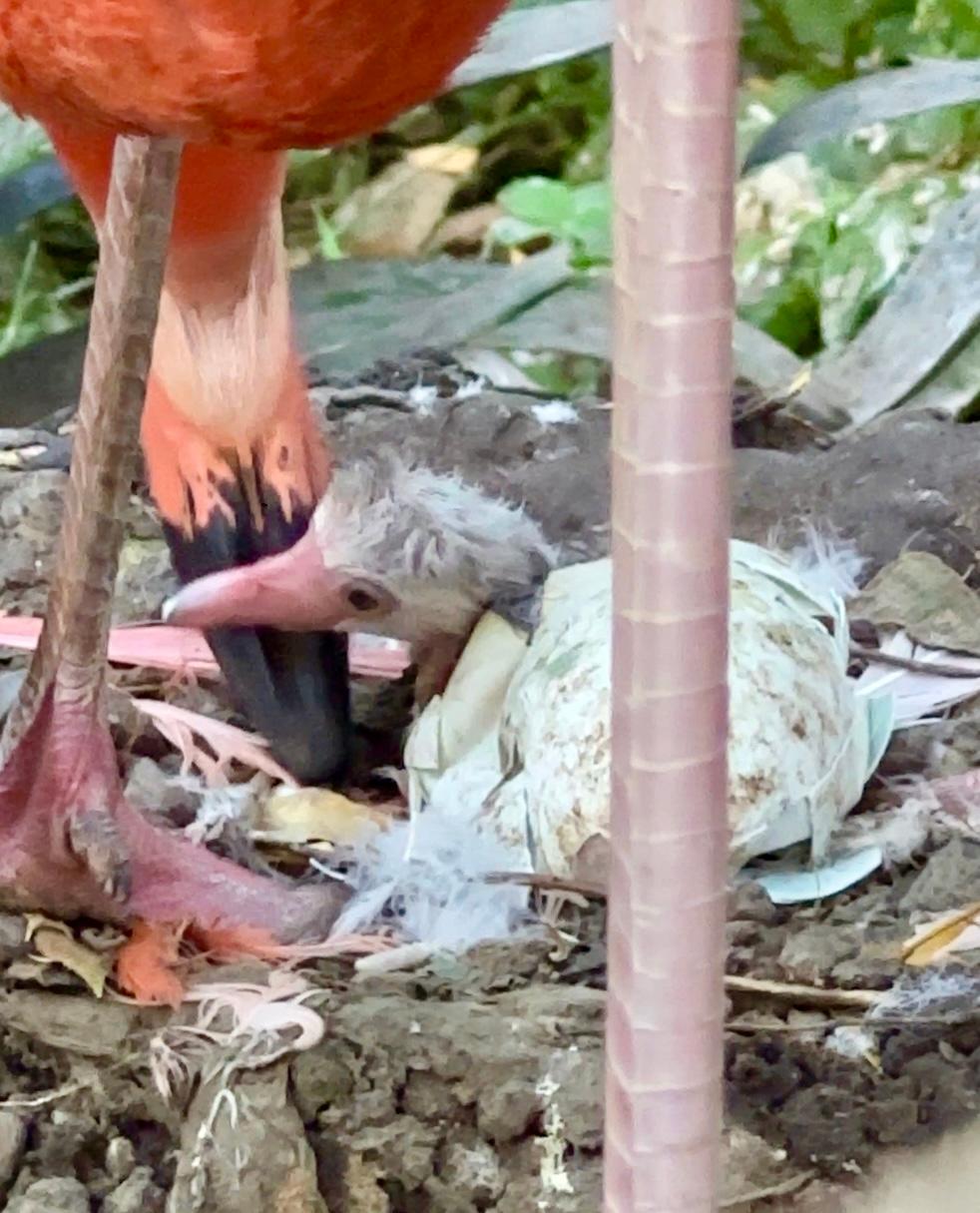
The JMZ’s flamingo chick hatched on June 22—the same night as a Super Family Sunday event. At just under two months old, the flamingo chick has grown rapidly, which is typical for birds compared to many other animals.


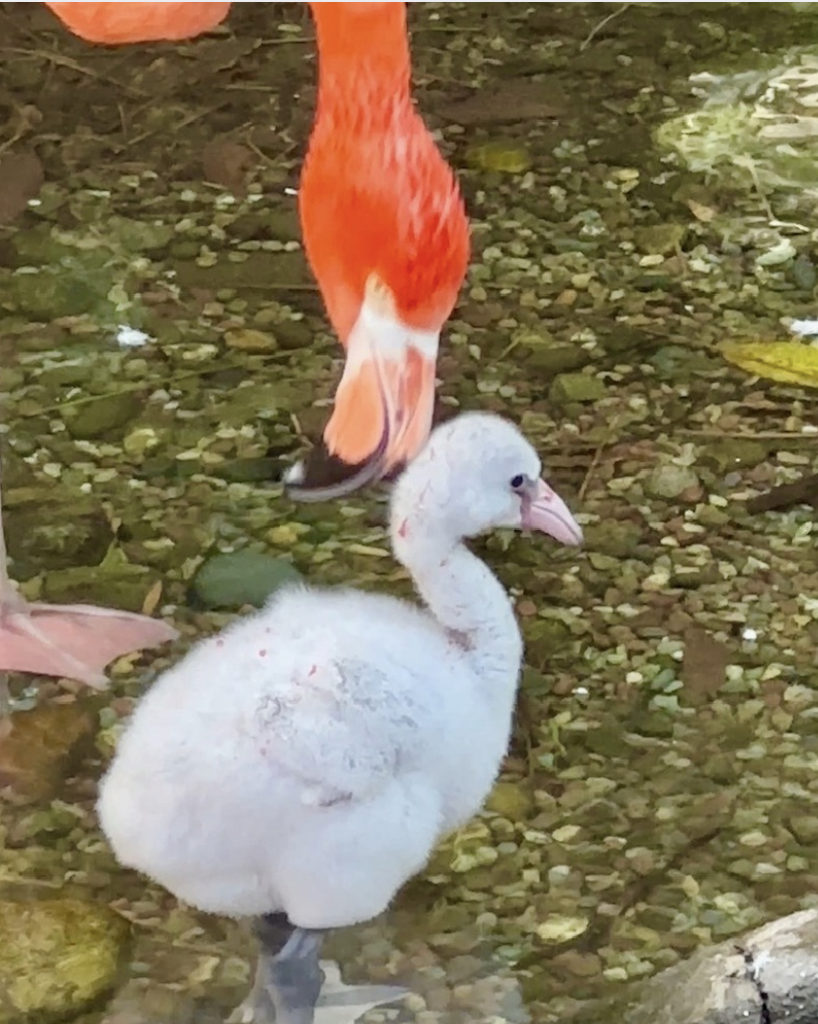
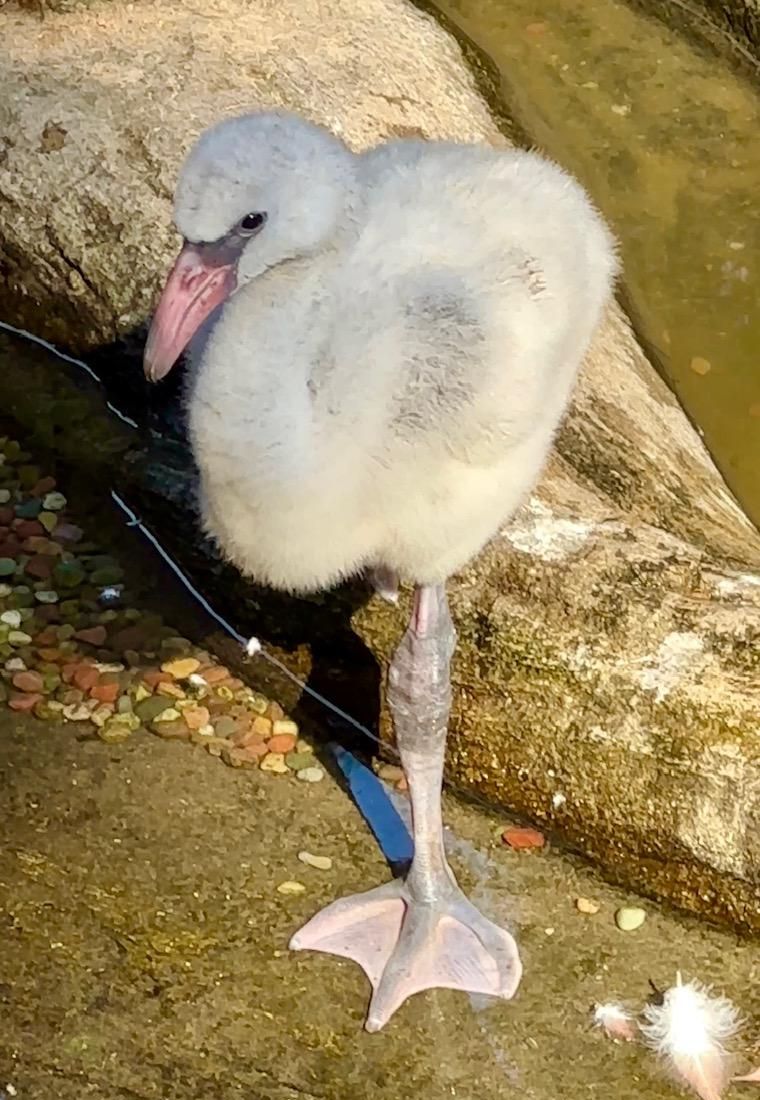
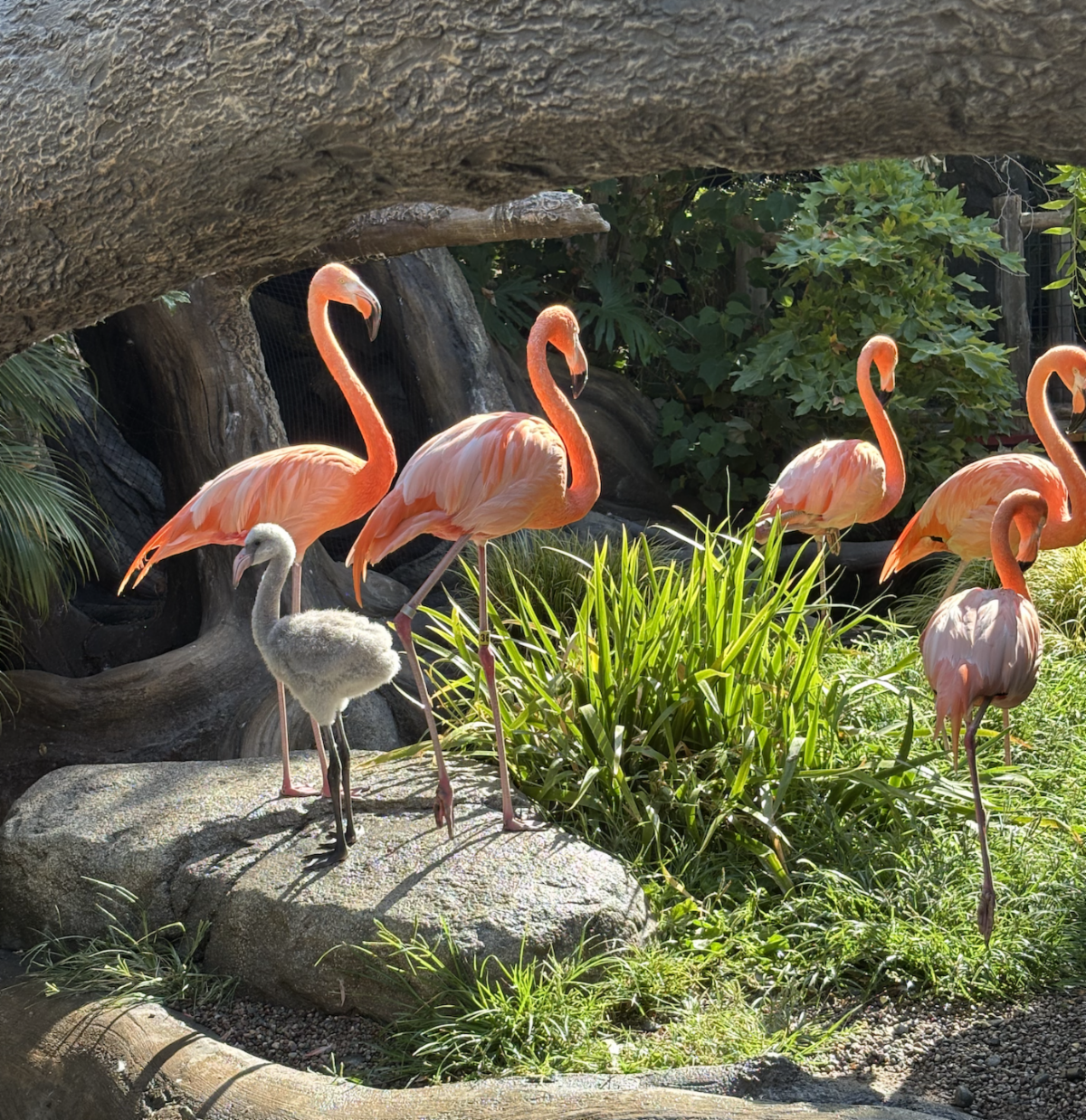
The public feedings are currently paused because the chick needs continuous access to food. The JMZ's zookeepers are still in the Wildlife Circle daily at 11 a.m. and 3 p.m. with a photo album that documents the chick's growth. Below are just some of the photos that you can see in the album during your next visit to the JMZ.

Photo courtesy of Lee Harper.

Flamingos usually require a larger flock to successfully lay and hatch eggs. With only six adult flamingos at the JMZ, the animal care team was surprised when parents Ruby and Sal had an egg.


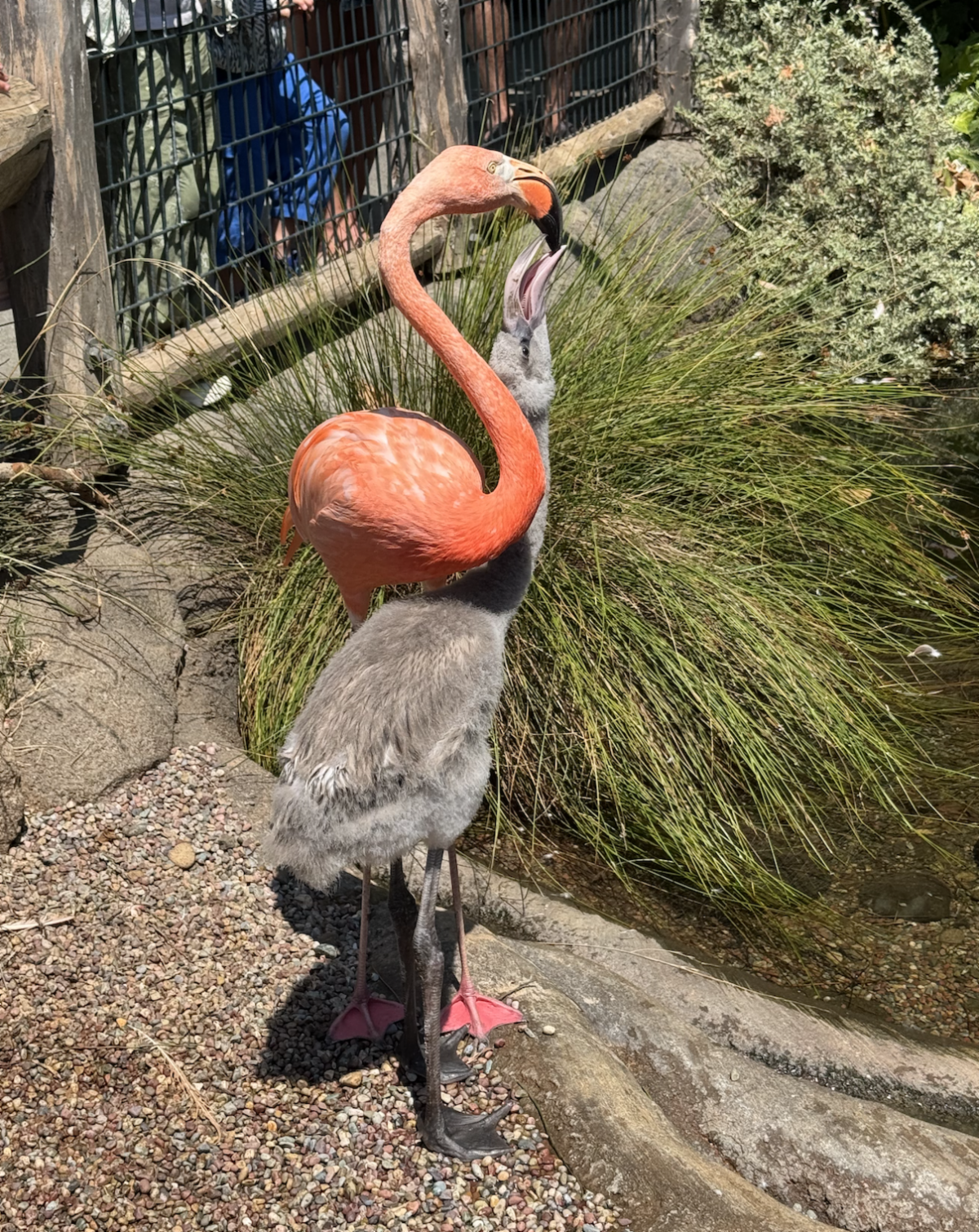
For the first few days after the chick hatched, Ruby and Sal traded places tending to the small chick by keeping it warm and feeding it crop milk—a nutrient-rich substance produced in the crop (a pouch in the throat) of some birds, both male and female. Adult flamingos feed their chicks by dripping bright red crop milk from their beaks into the baby’s.

Photo courtesy of Lee Harper.

Flamingo chicks are white and fuzzy with a straight beak when they first hatch. Pretty quickly, their feathers begin to turn gray. This is an adaptation that allows young flamingos to hide in the shadows of adult members of the flock.


Gradually, flamingos turn a distinctive pink color from their carotenoid-rich diet—just like the adults in the flock. The animal care team estimates the chick will turn pink within the next two to three years.

Photo courtesy of Lee Harper.

As the chick has grown taller, its feathers continue to turn a darker gray. Its straight beak also begins to curve, more closely mirroring the appearance of adult flamingos in the flock. All of this change happened within five weeks of hatching.

Photo courtesy of Anoek Grosmann.

It's hard to believe that the chick is only two months old. Even as it becomes more independent, the flamingo chick still stops Ruby and Sal to ask for crop milk, despite their encouragement for it to eat on its own.


The young flamingo has already brought so much excitement to the JMZ community, and its rapid growth continues to amaze both visitors and staff alike. We can’t wait to watch as it gradually turns pink over the next two to three years. We hope you can visit soon and see this special chapter of the JMZ’s story in person!

Photo courtesy of Lee Harper.


Friends of the Palo Alto Junior Museum & Zoo
1451 Middlefield Road, Palo Alto, CA 94301
 
Facebook  Instagram  Linkedin