|
The jail houses about 2,900 people, a majority of whom are awaiting trial. They’ve been arrested, but they haven’t yet had their chance to work their way through the legal system. Not a lot of employers will hold your position when you’re in jail, so even if they’re found not guilty, their lives will be forever changed by their time spent in jail. Families are disrupted and incomes are lost. And from a fiscal perspective, the cost of housing an inmate in the Pinellas County Jail is about $153 per person, per day. That cost adds up quickly, and is ultimately shouldered by taxpayers who fund the Pinellas County Sheriff’s Office (PCSO).
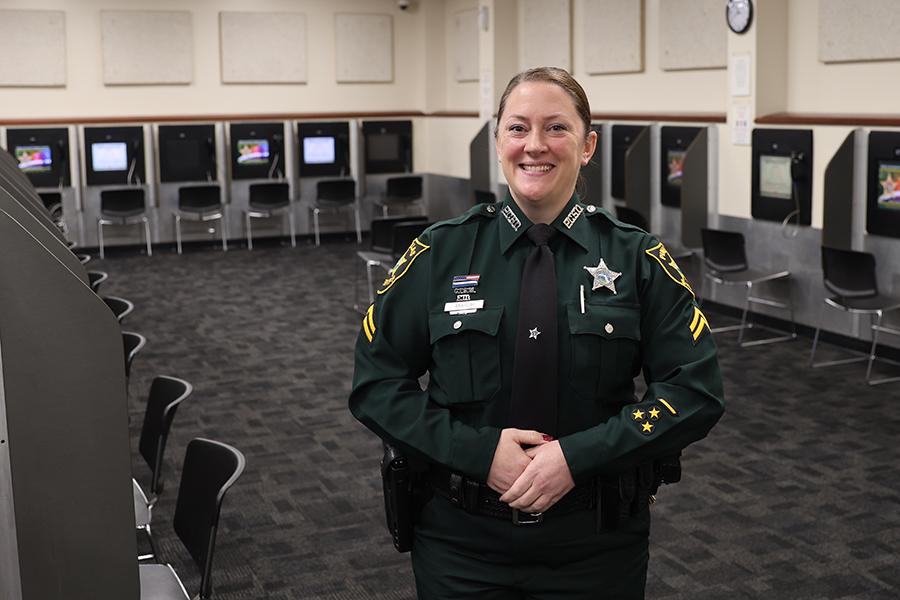
Enter the Alternative Sentencing Unit (ASU), which has several programs to keep people out of jail pre-trial, while also holding them accountable and keeping the county safe until the final disposition of their case. Importantly, the ASU saves a LOT of money. “We save the county millions of dollars per year,” said ASU Sergeant Jessica Mackesy.
Although jail is certainly the place to be for people charged with serious crimes, or who are a flight risk or a danger to the community, incarceration isn’t always the best alternative. The judge might decide that a person can spend the time between arrest and trial outside of the jail. They might set a bond – an amount of money that the judge determines a defendant must post as surety that they will appear at trial. They can present the entire amount, or work with a bail bond agent, which charges a percentage of the bond amount.
Or the judge may place them on Supervised Release on Recognizance (ROR). ROR always requires certain conditions to keep tabs on the released person. At a minimum, they have to call once a week to check in, but there may be other requirements. One of the more stringent requirements is for them to wear an ankle monitor of some kind.
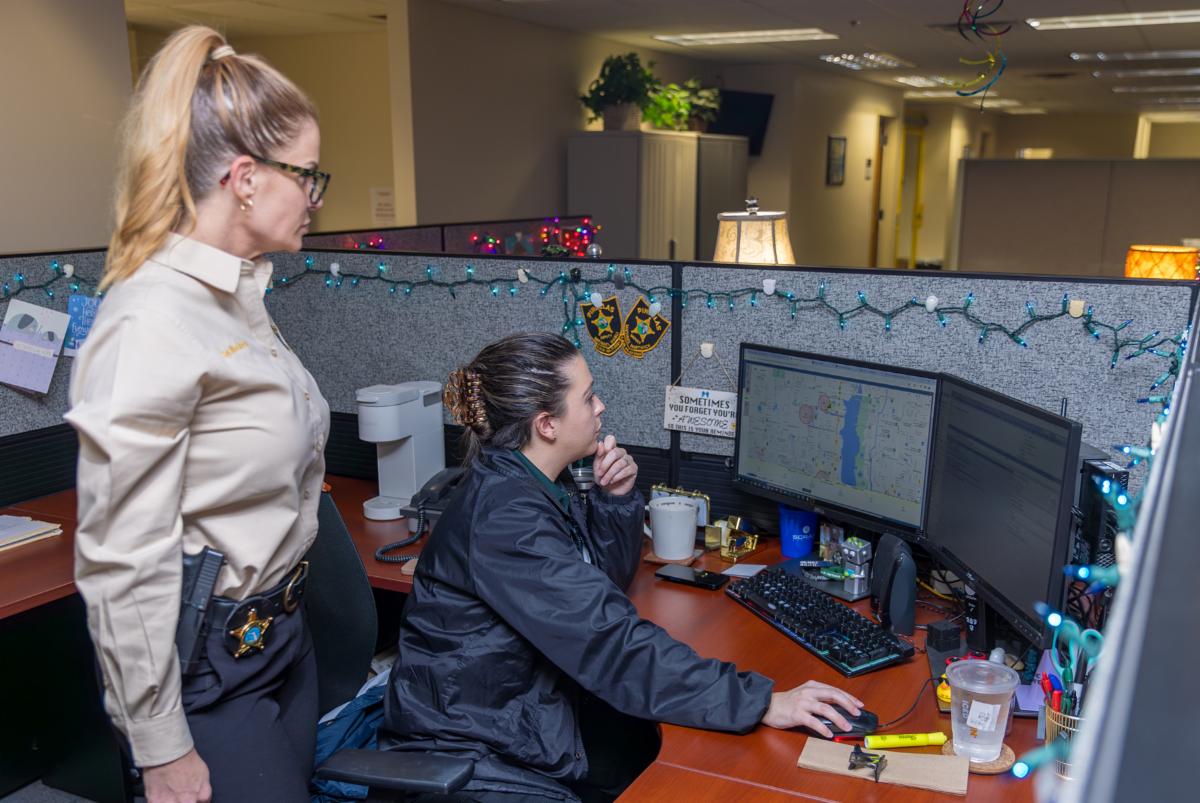
There are two commonly used ankle monitors. The traditional kind is a GPS system that tracks the wearer’s location. The GPS monitoring costs $7 per day. Right now the unit tracks about 460 pre-trial defendants on GPS monitors. ASU can keep track of where they are and how fast they are moving.
“You have inclusion zones and exclusion zones,” said Sergeant Mackesy. An inclusion zone is a place they may be required to be, such as at their workplace, or home after curfew. “Exclusion zones are places they can’t be.” For example they won’t be allowed near a victim’s residence or workplace. “If the border of an exclusion zone touches US 19, but we can see that they’re just traveling through, we’re not so worried about it. We can see their speed. But if they’re circling an exclusion zone we’ll make contact to see if they’re in violation.” The ASU includes seven uniformed deputies who can make contact with people violating their court ordered conditions, or arrest them after a judge issues a warrant.
“Our goal is the successful completion of our program, which includes appearing at court hearings and receiving a final disposition of the case,” said Sergeant Mackesy. “We want people to make it through. We try everything we can to get them through the program successfully.” They’re understanding about schedule changes. If someone has to work late, all they have to do is call the ASU and let them know. Then, when their GPS monitor shows them away from home past the designated time, they won’t be in violation.
The GPS batteries have to charge for three hours a day. If the monitor loses power, they’re in violation because they can’t be tracked. But the ASU knows that mistakes can happen. The charger could get disconnected while the person is asleep, or they could simply forget. If the battery gets low, they’ll be getting a call to remind them to charge it. If no contact is made, the ASU will reach out to their emergency contacts. Some incidents result in counseling and remediation, but others are absolute, such as no contact with the victim. “That’s always an immediate violation.”
If the charge involves alcohol in some way – and so many of them do, such as DUI, domestic violence, or disorderly conduct – the judge might make wearing a Continuous Alcohol Monitor (CAM) one of the conditions of their release. The CAM costs $10 per day. Right now the ASU has about 580 pre-trial defendants wearing a CAM. Some people even have both a GPS and a CAM, one on each ankle.
The plate on the underside of the CAM has to remain in contact with the skin, so it fits a little more snugly than the GPS. It takes a reading within 30 minutes. Alcohol is absorbed and eliminated from the body at a predictable rate, and there is a lag of from 30 minutes to four hours from when a person takes a drink to when its byproducts can be measured through the skin. The CAM can also pick up environmental exposure. Personal products such as mouthwash or facial cleanser may contain alcohol which could spill on the monitor and cause an alert. But someone who has a drink can’t claim this excuse, because the measurements read very differently – a gradual rise and fall of levels for consumed alcohol, and a sharp spike and rapid fall for environmental alcohol.
If the strap is cut, or if the monitor is removed in another way, an alert immediately goes to the ASU and the subject will be arrested. People have tried to block the GPS monitor to interrupt the signal, but any interruption also triggers an alert. Putting a barrier between the CAM plate and the skin doesn’t work either.
ASU hopes to keep people out of jail, and make sure they attend their court date. “The failure to appear rate for Supervised ROR is very low, about three percent,” said Sergeant Mackesy. “We want to keep that as low as possible, so people go to court and get through the system and be done with it.”
“We try to make it as easy as we can,” she said. “And we have success stories. People have come in and said if I didn't have the CAM on my ankle I would have never stopped drinking. We love that part. They knew they'd go back to jail if they didn't stop drinking and that was the incentive they needed.”
|