| Reasons Eating Disorder Center's eNewsletter Fall 2016 |
|
|
|
"She learned the intricacy of loneliness: the horror of color, the roar of soundlessness and the menace of familiar objects lying still."
-Toni Morrison
Dear Reasons friends and family,
One of the major themes we explore in our programs is loneliness.
We are profoundly social creatures; social bonds are as vital to us as oxygen is to fire. This thirst for connection is embedded deep in our collective DNA and in fact, just this year, neuroscientists from MIT identified a region of the brain, the dorsal raphe nucleus, that they believe represents the subjective experience of loneliness and isolation. When this core need is not met, it is painful and can be devastating.
Eating Disorders do not exist without loneliness, isolation and shame, so addressing it is a necessary component of recovery. The antidote to loneliness is connection and understanding. We often talk about it as a gut feeling of being "gotten" by someone else, of being understood and, most importantly, of being accepted. Connections help us navigate through the onslaught of Pandora's proverbial box and allow us to find solace in what was left at the bottom. Connections bring us to Hope.
So given the importance of these themes in the process of recovery, we are especially proud and honored to share with you the following:
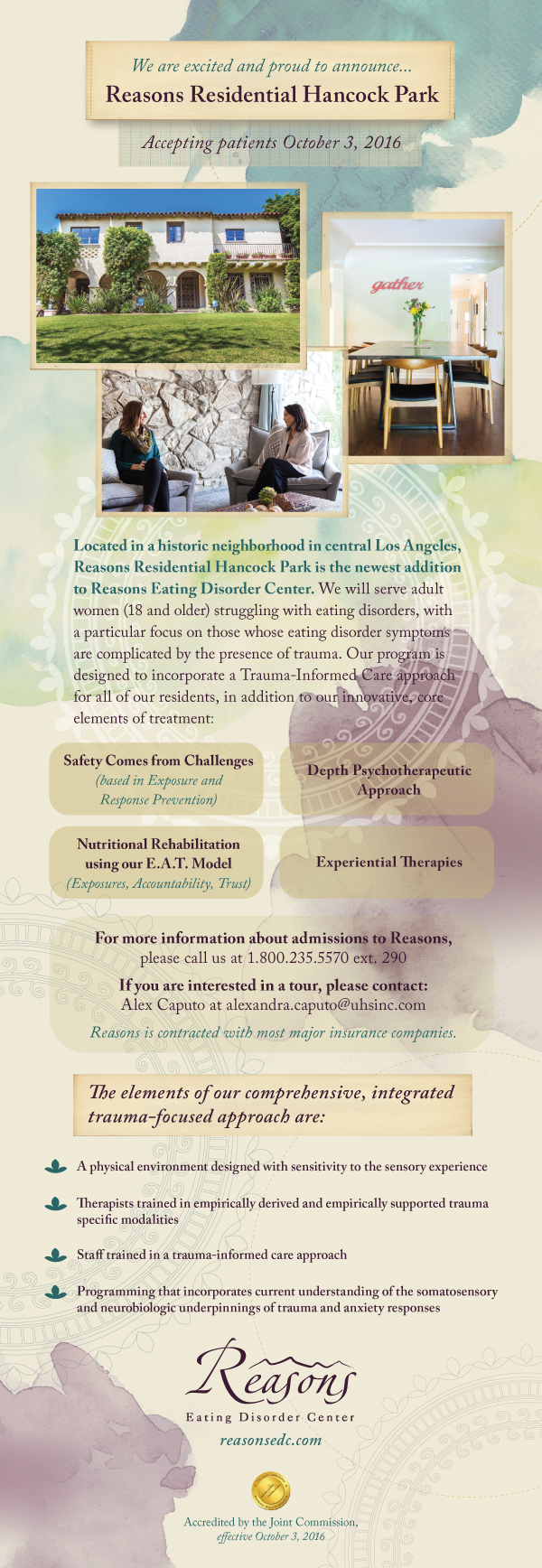
- Our new Residential program in the historic Hancock Park neighborhood of Los Angeles is now open! We are serving adult women with eating disorders, with a program incorporating a Trauma Informed Care approach designed to provide safety and connection.
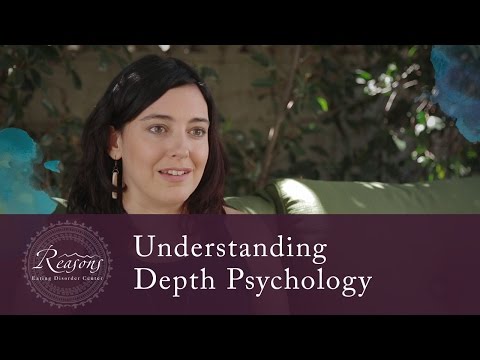
- Our National Director, Nikki Rollo, PhD, LMFT, discusses how we integrate a depth psychological approach to honoring and coming to a deeper understanding of the role of eating disorder symptoms and their larger meaning in someone's life.
- Our Clinical Supervisor, Nadia Akhtar Sim, LCSW, writes about the complexity of culture, race, discrimination, and identity. This is the second installment of our special series "Reasons for Cultural Identity: How we can embrace our culture in pursuit of healing."
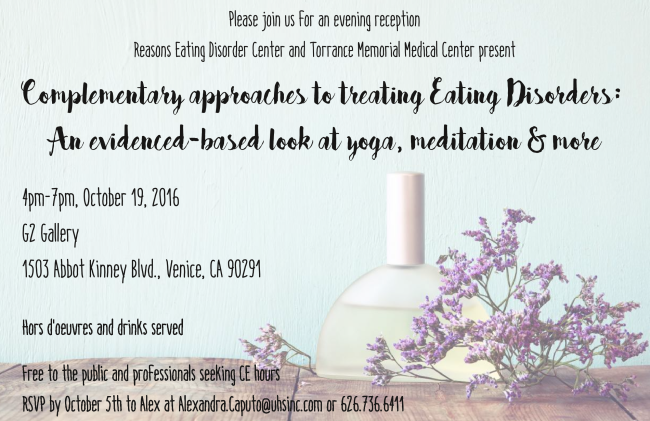
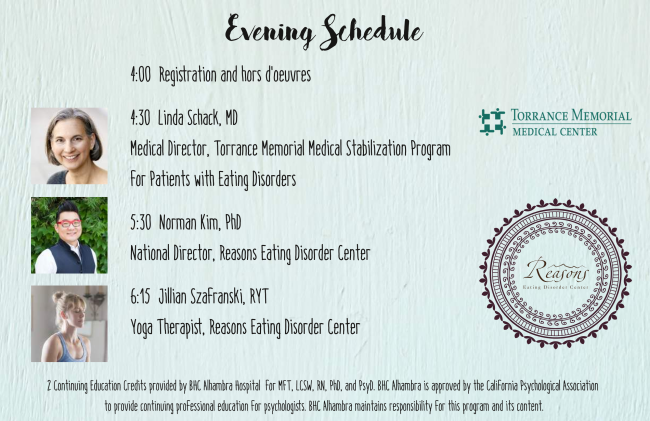
- We will be presenting a CE event and evening reception on October 19 at the G2 Gallery in Venice titled "Complementary approaches to treating Eating Disorders: An evidence-based look at yoga, mediation, and more." Our good friend, Dr. Linda Schack from Torrance Memorial, will be presenting with our other National Director, Norman Kim, and our Yoga Therapist, Jillian Szafranski.
As always, thank you for your support and friendship. We so appreciate THESE relationships, as they are what allow us to help our patients attend to making their connections and finding hope.
Sincerely,
The Reasons Team
|
Video Blog: Wholeness and Integration
Presented by Nikki Rollo, PhD, LMFT ~ National Director of Program Development
A key philosophical tenant at Reasons is a focus on wholeness and integration. While as a program we do implement behavioral interventions that address eating disorder symptoms we also spend time honoring, recognizing, and coming to a deeper understanding of the role that these symptoms have played in the lives of each patient and how they helped in coping with certain stresses and uncertainties of life.
There are three major elements to the depth psychological approach we utilize at Reasons EDC.

The Complexity of Culture, Race, Discrimination and Identity
By Nadia Akhtar Sim, LCSW
A key component of treatment at Reasons is to create awareness and discussion around topics, such as culture, that play a pivotal role in our lives and have ultimately helped shape our individual identities. By creating a comfortable and safe space to focus on the meaning of culture and the different relationship and experiences we each have with the concept, we are able to incorporate this into recovery and self-discovery.
This blog post is the second installment of a special series on Reasons for Cultural Identity: How we can embrace our culture in our pursuit of healing. 
As a second generation Pakistani American, there are truths I have learned about love, family, and acceptance. Among these truths have also been realities of discrimination, isolation, and feeling like an outsider from not only the American culture within which I was born and raised, but also from the traditions of my parents and extended family.
Being a second generation immigrant is a complex experience for me as I'm sure it is for many others. Like anything else in our lives, our relationship with culture can be multilayered. There are traditions and rituals that feel deeply nostalgic and nourishing. And then there are those that may feel embarrassing, uncomfortable, and foreign. There are also those aspects of culture with which our relationship morphs and matures; something that may have seemed bizarre to us as children feels comforting as an adult, and vice versa.
Within all of these traditions, beliefs and rituals is the search for our own identity and how we may or may not fit within the different cultures that surround our lives.

|
 Upcoming Events Upcoming Events |
Announcing Reasons Residential
Hancock Park |
|
|
|
| Referral Network |

Treatment that Respects and Understands Co-occurring Trauma
Reasons Eating Disorder Center offers four levels of care for a wide range of client needs:
⇴ Inpatient Psychiatric Hospitalization at BHC Alhambra
⇴ Residential Treatment at our residential facilities in Pasadena, CA and Hancock Park, CA
⇴ Partial Hospitalization and Intensive Outpatient at BHC Alhambra.
⇴ Independent Living also available.
We provide gender inclusive treatment for ages 12 and up and are a contracted provider with most insurance companies.
Additionally, we are certified TRICARE® provider.
Reasons is accredited by the Joint Commission.
|
|
At Reasons, we feel it is vitally important for us to have a
relationship with other treatment providers working in the field of mental health and those specializing in the treatment of eating disorders. In the admissions process, having a relationship with the referring treatment providers allows us to work collaboratively in the helping the client feel more comfortable admitting into a higher level of care, as well as, provides us the ability to develop a comprehensive treatment plan to meet the client's individual needs. Upon discharge, Reasons will work to establish outpatient treatment team for the client to be referred out to for ongoing support and care, if the client does not already have one in place. Transitions are often the most stressful time for our clients and we recognize the more communication we can have with the outpatient treatment team the better in providing a smooth transition for the client. We truly believe that with the difficult work we do we need to have relationships with other treatment providers and outpatient treatment teams. We feel this is just another step in trying to provide our clients with the best chance at overcoming their eating disorder and staying on the path to recovery.
To become a part of our referral network,
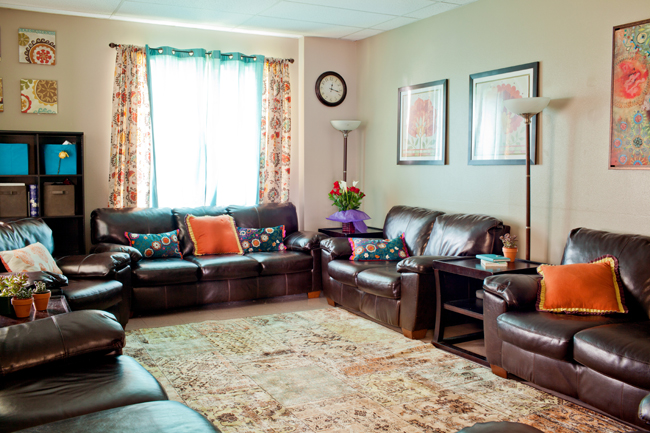
Our Inpatient Group Room
|
|
|
|
Reasons Philosophy
|
- Reasons is a program founded on the essential work of tending to deeper wounds and re-regulating emotions on a foundation of clinical research and best practices.
- We work to provide an environment where patients can infuse meaning into painful narratives through intentionality, curiosity, and interaction.
- We work as a team to create an inclusive culture that promotes integration of body, mind, and soul.
- We have a whole person focus and work with patients on re-integrating the disconnected system s regulating emotions and thoughts, and the sensory pathways of the body.
- We believe in individualized treatment, where the patient is the most important member of the team and we have full faith in each person's internal capacity to recover.
- Relationships are important and this includes patients' relationship to body, self, food, and others as well as our relationship as a treatment team to the patient and referral sources.
|
For more information on Reasons Eating Disorder Center,
or you can call us at1.800.235.5570 ext. 290
We look forward to working with you!
|
|
|
|