|
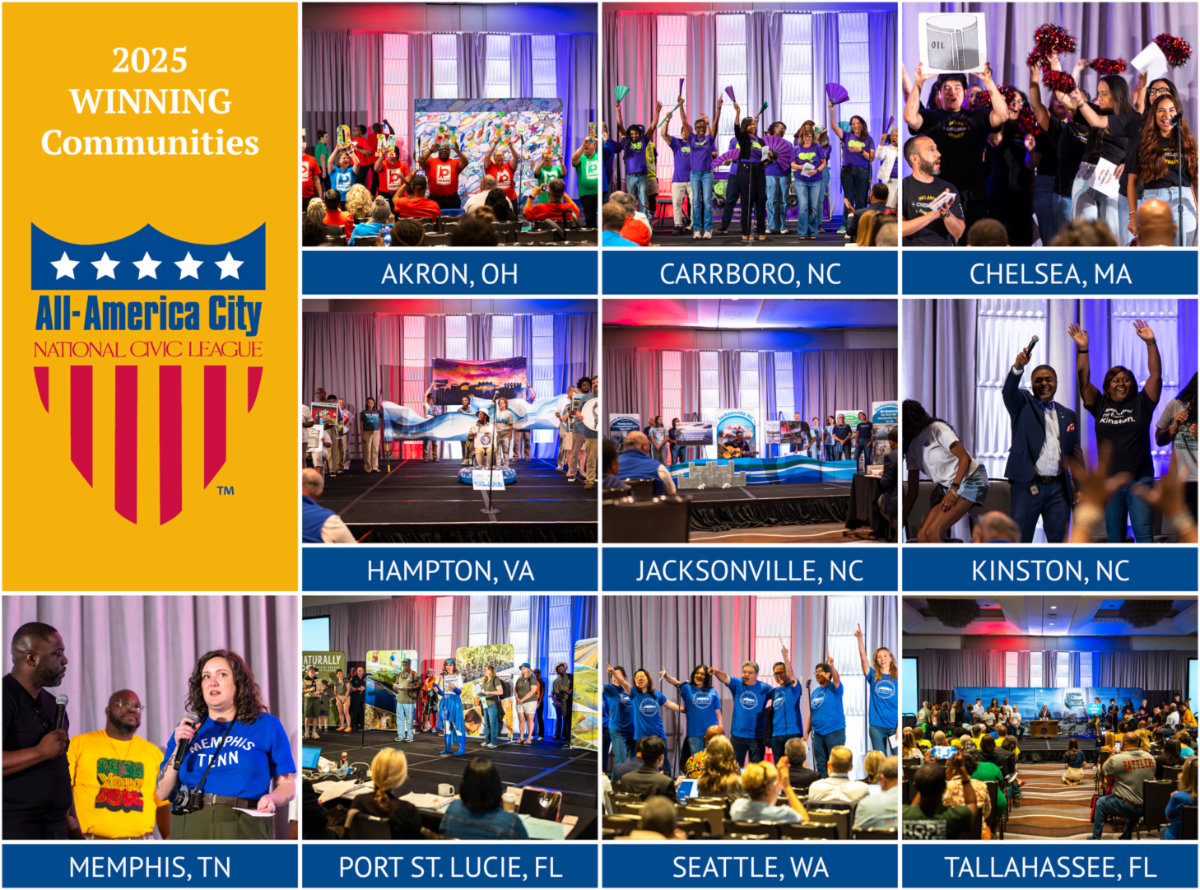
Akron, Ohio
As Akron celebrates its 200th anniversary, the city is embracing a legacy of reinvention rooted in equity, innovation, and community voice. Once the Rubber Capital of the World, Akron has transformed into a hub for environmental sustainability. The Recycle Right Campaign dramatically reduced recycling contamination through hands-on education, creating a model of environmental leadership. Reimagining the Civic Commons reconnects historically divided neighborhoods through parks, trails, and gathering spaces. And with Akron Waterways Renewed, the city combines large-scale infrastructure upgrades with award-winning public engagement to restore the Cuyahoga River, protect public health, and create new opportunities for recreation.
Carrboro, North Carolina
Carrboro, North Carolina continues to advance its racial equity and climate goals through initiatives like Carrboro in Motion Fest, which brings civic engagement directly to underrepresented renters through bilingual neighborhood block parties, and the Green Neighborhoods Grant Program, which funds resident-led climate projects. Additionally, Carrboro’s award-winning Bolin Creek Watershed Restoration project united residents, home owner associations, and state agencies to tackle stormwater issues with nature-based solutions, turning a persistent challenge into a collaborative success.
Chelsea, Massachusetts
Chelsea, Massachusetts exemplifies resilience and reinvention. The city has overcome significant challenges through strong collaboration between residents, local government, and community organizations. Chelsea’s diverse, multilingual population is reflected in a local government guided by over two dozen resident-led boards and commissions. Initiatives like the Cool Block Project address environmental injustices by transforming heat-vulnerable areas with resident-planted trees, cooling infrastructure, and new green spaces. A community-driven microgrid will power critical infrastructure with solar energy and battery storage. Meanwhile, a growing network of over 80 air quality sensors, built in partnership with Northeastern University, empowers residents with real-time pollution data and creative public outreach.
Hampton, Virginia
Hampton, Virginia is confronting climate threats head-on with a holistic, community-driven approach to resilience. Facing rising seas and chronic flooding, the city launched its “Living with Water” strategy: an innovative plan that weaves together flood protection, environmental restoration, and public engagement. Through efforts like the Hampton Clean City Commission and the Phoebus Living Shoreline project, residents of all ages help lead cleanups, grow community gardens, and design more resilient public spaces. In Aberdeen Gardens, a historic Black neighborhood, the city and its partners are putting a resident-informed resilience plan into action to protect homes and the neighborhood’s heritage.
Jacksonville, North Carolina
Jacksonville, North Carolina has transformed an environmental crisis into a national model through restoration, civic engagement, and a strong commitment to future generations. After pollution devastated the New River, the community came together to revive it through oyster reefs, new green spaces, and a sustainable wastewater system. These early efforts led to lasting change, including the creation of the Sturgeon City Environmental Education Center, youth leadership institutes, and the New River Roundtable. Through initiatives like Clean & Green Jacksonville and expanded trails and public transit, the city continues to improve water quality, public health, and access to nature.
Kinston, North Carolina
Kinston, North Carolina is showing how deep-rooted community engagement can drive lasting change. Through projects that center youth leadership, public art, and neighborhood investment, the city is creating spaces that reflect local voices and respond to real needs. From the transformation of Emma Webb Park to the creation of the East Kinston Neighborhood Hub and the vibrant murals downtown, each effort demonstrates a commitment to equity, culture, and resilience. Kinston’s approach pairs creativity with collaboration, making clear that revitalization is most powerful when it’s led by the people who call the city home.
Memphis, Tennessee
Memphis is redefining resilience by confronting inequality and climate vulnerability with people-powered solutions. Through Memphis 3.0, the city is repairing the consequences of disinvestment by centering future development in walkable, transit-connected hubs shaped by residents. Workforce programs train Memphians for green jobs, expanding opportunity in communities most impacted by systemic inequities. Meanwhile, the city’s Healthy Homes Partnership is tackling lead exposure through collaboration, education, and direct action—from water testing in schools to door-to-door outreach in high-risk neighborhoods.
Port St. Lucie, Florida
Once a retirement community without basic infrastructure, Port St. Lucie has transformed into one of America’s fastest-growing and most forward-thinking cities through bold, resident-driven innovation. Major sustainability efforts include one of the nation’s largest septic-to-sewer conversion programs and Naturally PSL, a community-led initiative to preserve 744 acres of green space. The city’s inclusive governance ensures all residents shape its future. Projects like the McCarty Ranch filtration system, which treats six billion gallons of water annually, and the Conservation Corps reflect PSL’s deep environmental commitment. Paired with robust public engagement, regional climate partnerships, and grassroots programs like cleanups and tree giveaways, Port St. Lucie is building a cleaner, more resilient future from the ground up.
Seattle, Washington
Seattle is building a future grounded in equity, resilience, and community-led solutions. Through the Department of Neighborhoods, civic engagement is embedded in governance, ensuring residents help shape citywide initiatives. The updated Food Action Plan centers racial and economic equity with 50 co-created actions to improve sustainability and food access. The 2025–2030 Transportation Electrification Plan prioritizes equitable EV infrastructure and green workforce development through extensive community input. Meanwhile, Cedar River Watershed Tours reconnect diverse residents to their water source through multilingual, accessible programming.
Tallahassee, Florida
In celebration of its 200th anniversary, Tallahassee, Florida continues to champion inclusive growth, sustainability, and community well-being through major initiatives like the Clean Energy Plan, Southside Action Plan, and 100Parks program. The Clean Energy Plan, developed with broad community input, has tripled solar capacity, reduced household energy burdens, and improved grid resilience with a goal of 100% renewable energy by 2050. The Southside Action Plan prioritizes historically underserved neighborhoods through over $200 million in investments in housing, infrastructure, and public transit, shaped by direct resident engagement. Meanwhile, the 100Parks initiative has expanded green space access, especially in underrepresented areas, with 12 new parks, upgraded amenities, and a 92% park access rate. Together, these efforts reflect Tallahassee’s collaborative, future-focused approach to equity and sustainability.
You can learn more about all the finalists and their projects here.
Videos of all presentations will be available on this webpage shortly.
|