|
Chelsea, Massachusetts
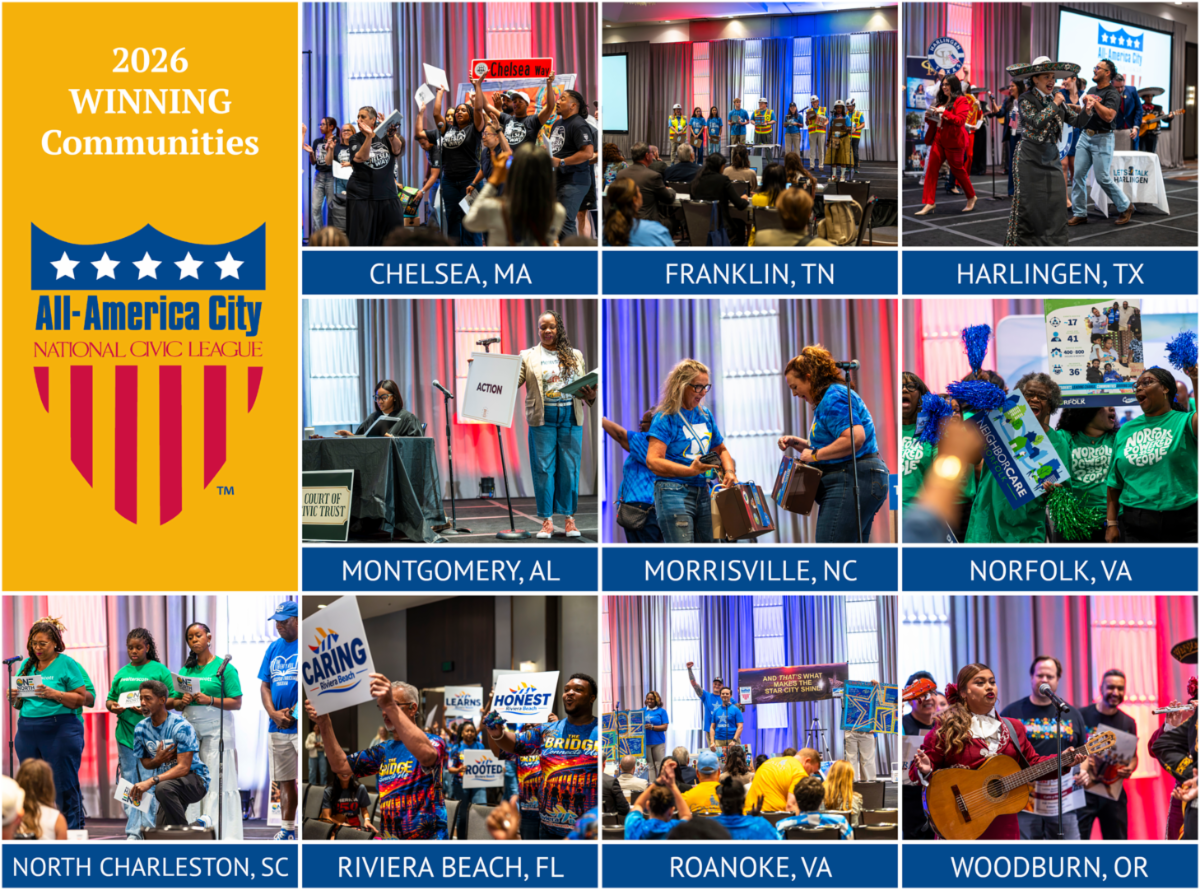
Guided by “The Chelsea Way,” Chelsea, Massachusetts, treats civic health as a shared responsibility, bringing together public, private, nonprofit, and faith-based partners to address challenges through collaboration and resident engagement. Chelsea has strengthened community trust through relationship-based policing, fostering dialogue and partnership between residents and the Chelsea Police Department. During the COVID-19 pandemic, the city and its partners built a coordinated food distribution network that evolved into a lasting system of support for vulnerable residents — proof that residents could count on local institutions in crisis. Chelsea also invests in youth through the Chelsea Opportunity Academy, an innovative high school model designed for students at risk of dropping out, offering flexible pathways to graduation and long-term success. Together, these efforts reflect the foundation of Chelsea's civic health: trust built through partnership, sustained through crisis, and extended to every resident.
Franklin, Tennessee
As one of the nation's fastest-growing cities, Franklin, Tennessee, works hard to ensure that growth strengthens the distinct qualities that make it a vibrant hometown. That commitment was tested in 2023 when extremist groups sought to influence local politics. Residents, civic leaders, businesses, and local institutions responded with overwhelming participation, record voter turnout, and a public affirmation of the community's values. In Franklin, engagement doesn’t stop after the polls close — initiatives such as Breakfast with the Mayors and FrankTalks create regular opportunities for residents to engage with one another on local issues. The city is also expanding civic leadership opportunities, strengthening transparency, and creating new pathways for youth participation in public life through its collaboration with Franklin Tomorrow on the Healthy Democracy Project.
Harlingen, Texas
Harlingen, Texas, spent the past decade rebuilding residents' confidence that their input actually matters by putting transparency and resident voice at the center of how it governs and grows. Residents who were once skeptical that public input shaped outcomes now see their priorities reflected in a coordinated ten-year planning system, built through community meetings, workshops, surveys, and bilingual, neighborhood-level outreach designed to reach those historically left out. The same commitment extends to the city's young people, with schools, colleges, and workforce institutions co-developing clearer pathways from classroom to career. Trust shapes economic development too: through the Revitalize Harlingen Program, small businesses receive matching grants of up to $10,000 for storefront and site improvements, while residents guide public funding decisions for infrastructure, housing, and neighborhoods through the Community Development Block Grant process. Across all of it, trust is being rebuilt as residents can trace their input to visible outcomes.
Montgomery, Alabama
Montgomery, Alabama — both the Cradle of the Confederacy and the Birthplace of the Civil Rights Movement — knows better than most cities that civic trust, once broken, must be deliberately rebuilt. Over the past decade, Montgomery has confronted its history directly, expanding participation, strengthening neighborhoods, and making local government more responsive to the residents it once excluded. Montgomery's first comprehensive plan in more than 50 years was shaped by residents themselves: a Community Summit drew more than 500 participants and generated 3,000 ideas, producing a roadmap for growth tied to measurable outcomes. The Neighborhood Services Department is building a new generation of community leaders through training, mentorship, and neighborhood-driven projects. At the same time, the Montgomery Innovation Team is partnering directly with residents in historically disinvested neighborhoods to co-design solutions related to housing, economic opportunity, and community resilience. By treating residents as partners and co-designers, Montgomery is creating a more equitable, collaborative, and resilient local democracy.
Morrisville, North Carolina
Morrisville, North Carolina, is pairing rapid growth with intentional investments in engagement, transparency, and community well-being. Residents helped shape a new generation of digital tools, from an upgraded website and interactive strategic plan dashboard to Morris the Cricket, an AI chatbot featuring video answers from town staff and council members. Morrisville also nurtures civic leadership through Morrisville 101, a hands-on program that introduces residents and students to the realities of local government, creating a pipeline that has carried graduates onto advisory committees and even elected office. Beyond Town Hall, public safety personnel build trust through CPR training, school partnerships, wellness programs, and community outreach that extends across generations. Engagement in Morrisville is woven into how the town plans, communicates, and serves.
Norfolk, Virginia
Norfolk, Virginia, governs with residents, not for them. When the city launched the St. Paul's Transformation, redeveloping the neighborhoods of families who had long been excluded from decisions shaping their lives, it began not with demolition but with people. Through People First, residents selected home types, green spaces, playgrounds, and even the new neighborhood's name, Kindred. With 89% of participating families stably housed and 133 residents securing jobs in the past year, the resident-led design clearly paid off. Safety follows the same logic. Community 1ST puts violence prevention in the hands of more than 60 credible messengers — trusted neighbors trained in trauma-informed intervention — whose daily presence in courtyards and schools has contributed to a 40% citywide drop in homicides. And when residents described services as too scattered to reach, Norfolk responded with NeighborCare, bringing agencies directly into neighborhoods, with event timing and topics shaped by resident feedback. In Norfolk, engagement isn't episodic, it's structural.
North Charleston, South Carolina
North Charleston, South Carolina, knows what broken trust costs. After the 2015 killing of Walter Scott exposed deep fractures between residents and law enforcement, the city committed to rebuilding that relationship through accountability rather than assurances — body cameras, a citizen advisory commission, a racial-bias audit, and recurring neighborhood Roll Calls. That same commitment to listening reshaped the city's public spaces: when evaluations revealed that children with disabilities couldn't fully participate in outdoor recreation, North Charleston spent three years planning with parents, therapists, and disability advocates to build Park Circle Reimagined, the largest inclusive playground in the world. And in Liberty Hill, an afterschool program founded by two men who grew up in the neighborhood is helping students build literacy, explore careers, and see beyond their immediate surroundings. North Charleston is proving that trust is rebuilt through listening, accountability, and spaces where everyone belongs.
Riviera Beach, Florida
Riviera Beach, Florida, builds on-ramps to civic life for residents of every generation, and for the neighborhoods they call home. The first on-ramp is for young people: high school students from communities without traditional access to leadership opportunities join the Riviera Beach Youth Council to work alongside city officials, travel to Tallahassee to meet state legislators, and lead their own initiatives. Adults follow a parallel path through the Citizens Leadership Academy, which treats residents as essential partners rather than constituents. The academy boasts a 98 percent completion rate, and its alumni now serve on advisory boards, attend city meetings, and draw their neighbors into local decision-making. The on-ramps extend to place as well: the Neighborhood Reclaim program offers mini-grants so seniors and longtime homeowners can afford critical repairs. In Riviera Beach, no one has to find their own way into civic life, the city builds the road.
Roanoke, Virginia
Roanoke, Virginia, has answered a decade of economic upheaval and declining civic trust by relying on the strengths of its community partnerships. When vacate orders kept displacing the same people from homeless encampments, two Roanoke police officers partnered with city leadership and service providers to launch STAR, a twice-weekly outreach effort bringing behavioral health care, addiction treatment, and housing navigation directly into encampments, proving that public safety and compassion are complementary values. Grant Ready Roanoke strengthens the people already doing the work, training grassroots leaders in governance, finance, and fundraising so neighborhood organizations can compete for public dollars. And through Arts Connect Roanoke, any group of eight households can request a free workshop or performance; after more than 100 activities across two dozen neighborhoods, residents report meeting neighbors for the first time after years on the same street. In Roanoke, civic health depends on relationships, and the city keeps building the places where they form.
Woodburn, Oregon
Woodburn, Oregon, calls itself the City of Unity, and the numbers back the motto: 58 percent of residents speak a language other than English at home, 95 percent of city center businesses are Latino-owned, and local students speak more than 30 languages. The city has built its civic life on that diversity rather than around it. The North Marion Tourism Collaborative's American Dream video series tells the stories of immigrant entrepreneurs who came to Woodburn to build businesses, homes, and futures, deepening trust between business owners and city leaders. The Family Resource Center brings multilingual services close to home, leasing space to nonprofit providers at 66 cents per square foot against a $16 market rate so that housing, behavioral health, and family support stay affordable and centralized. And downtown, resident input has shaped placemaking investments from a zócalo-inspired plaza to a restored 1911 theater, creating gathering spaces that reflect the cultures of the people who use them. In Woodburn, unity is the city's daily practice.
You can learn more about all the finalists and their projects here.
Videos of all presentations will be available on this webpage shortly.
|