Looking Toward the Policy Year Ahead | | |
With Congress back in session and agencies within the U.S. Department of Health and Human Services (HHS) announcing key policy updates, 2026 is already shaping up as a year when federal health policy shifts from direction-setting to action. The Centers for Medicare & Medicaid Services (CMS) continues to advance new payment and delivery models, revisit long-standing program structures, and test approaches to drug pricing and utilization, with direct implications for providers, manufacturers, and beneficiaries. Where last year raised questions about policy direction, this year is likely to be defined by implementation.
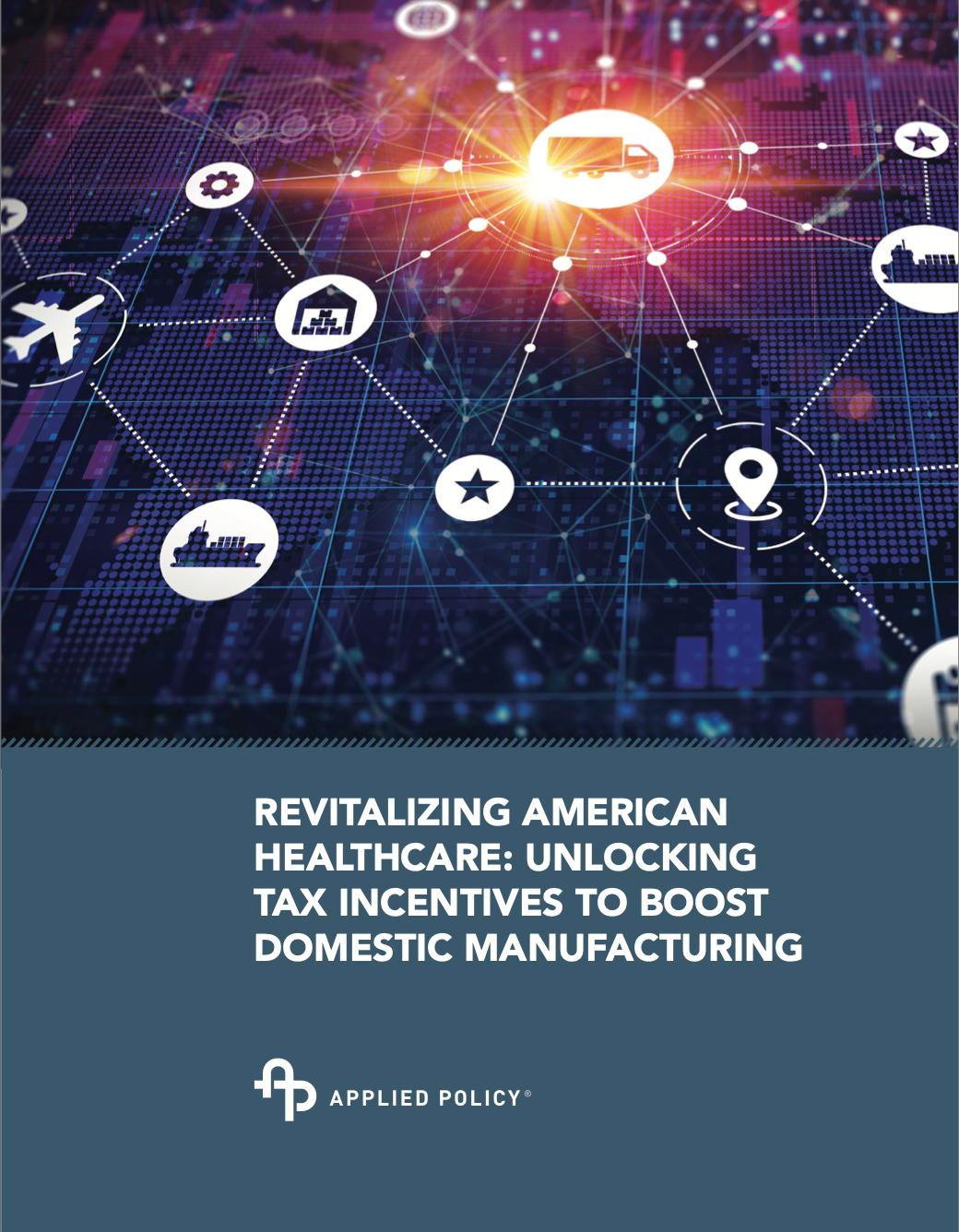
Our January issue of Insight reflects that focus. Senior Health Policy Manager Stephanie Lomas, Health Policy Manager Emma Hammer, and Senior Health Policy Associate Caitlyn Bernard Shreve examine the origin and history of the 340B Drug Pricing Program as congressional scrutiny, litigation, and administrative activity shape its future. Vice President for Health Policy Linda Rouse O’Neill and Health Policy Associate Sabrina Luther share insights from a new white paper exploring how federal tax incentives could support domestic production of pharmaceuticals, medical devices, and other essential healthcare products.
You will find an overview of recent Innovation Center activity, as CMS invites stakeholder input on proposed models that signal shifts in drug pricing policy. We also invite you to join us on January 27 as the Northern Virginia Health Policy Forum begins the year with a discussion on the future of Medicaid and the decisions that could shape the program in the years ahead.
Thank you for starting the year with us. We look forward to sharing further updates and analysis in the coming months.
| | |
The 340B Drug Pricing Program: Origins and Ongoing Questions
By Stephanie Lomas, Senior Health Policy Manager; Emma Hammer, Health Policy Manager; and Caitlyn Bernard Shreve, Senior Health Policy Associate
| | |
It has been more than three decades since Congress established the 340B Drug Pricing Program to offset the unintended consequences of earlier legislative efforts to address rising healthcare costs.
Enacted with bipartisan support as part of the Veterans Health Care Act of 1992, the program was designed to preserve safety-net providers’ access to affordable outpatient drugs. As the program has grown, it has come under increased scrutiny from lawmakers, regulators, and industry stakeholders, with some now asking whether it may be generating unintended consequences of its own.
Taking its name from the section the Veterans Health Care Act added to the Public Health Service Act, 340B grew out of congressional efforts to address the downstream effects of the Medicaid Drug Rebate Program (MDRP), established two years earlier.
The MDRP, which was created through the Omnibus Budget Reconciliation Act of 1990, requires drug manufacturers to provide state Medicaid programs with their “best price” on covered outpatient drugs. Changes in manufacturer pricing practices following MDRP’s implementation reduced the availability of discounts previously offered to certain hospitals, federally qualified health centers, and other organizations serving high proportions of low-income and uninsured populations.
The 340B Drug Pricing Program introduced a new framework for purchasing discounts by requiring manufacturers that participate in Medicaid and Medicare Part B to sell outpatient drugs at discounted prices to eligible safety-net providers.
| | New White Paper Examines the Potential of Tax Incentives to Strengthen Domestic Healthcare Manufacturing | | |
In a recently released white paper, members of the Applied Policy medical devices and diagnostics verticals examine how federal tax incentives could be used to strengthen domestic production of pharmaceuticals, medical devices, and other essential healthcare products.
The analysis considers the complexity of the healthcare supply chain and the United States’ reliance on foreign sources for both key inputs and finished products.
| | | |
Linda Rouse O’Neill, Vice President of Health Policy and one of the paper’s lead authors, said that only about one-quarter of active pharmaceutical ingredient (API) facilities supplying the U.S. market are based in the United States. She noted that API production is concentrated in a limited number of countries, including India and China.
“This reliance on global production has left the U.S. healthcare sector vulnerable to disruption and has complicated efforts to ensure consistent access to critical products,” O’Neill explained.
The issue has also drawn attention from the Trump administration. As John Knox, Principal Deputy Assistant Secretary for Preparedness and Response at HHS, stated in 2025, “manufacturing medicines from start to finish in the United States ensures a secure supply of essential medications.”
Health Policy Associate Sabrina Luther, another lead author, observed that healthcare manufacturing differs in important ways from other advanced manufacturing sectors. “Long development timelines, Food and Drug Administration regulatory requirements, high capital intensity, and uncertainty around coverage and reimbursement all shape decisions about where production is located,” she explained, noting that tax incentives alone may be insufficient to offset these factors, particularly for products with narrow margins or uncertain demand.
Luther added that incentives effective in other industries may fall short in healthcare if they do not account for regulatory approval and clinical validation requirements. The paper highlights considerations related to incentive structures focused on capital investment, noting that workforce availability and other operational variables are often critical to the viability of domestic manufacturing.
| | Update on CMS Skin Substitute Coverage Policy | | On December 24, 2025, CMS announced that its Medicare Administrative Contractors will withdraw the finalized Local Coverage Determinations for certain skin substitute grafts and cellular and tissue-based products for diabetic foot ulcers and venous leg ulcers. The LCDs had been scheduled to take effect January 1, 2026, and will not be implemented. The restructured payment approach for skin substitutes outlined in the CY 2026 Physician Fee Schedule remains in effect. Our December 2025 story on skin substitutes has been updated to reflect this announcement. | | Applied Policy Welcomes Katie Lawler as Health Policy Associate | | |
She also supported the development of a Physician Fee Schedule payment projection model and has been instrumental in maintaining and updating Applied Policy’s executive order tracker. In her new role, Lawler will work with the firm’s medical devices and diagnostics verticals.
Lawler holds bachelor’s degrees in global health and the environment and in legal studies from Washington University in St. Louis. She is currently completing a Master of Public Health degree with a concentration in policy analysis and biostatistics.
| | CMS Innovation Center Announces New Models | | |
The CMS Innovation Center announced several new and proposed models in December. The models span prevention, lifestyle interventions, and prescription drug pricing.
Make America Healthy Again: Enhancing Lifestyle and Evaluating Value-based Approaches Through Evidence (MAHA ELEVATE) Model (12.11.25)
MAHA ELEVATE is a voluntary model that will provide approximately $100 million in cooperative agreement funding over three years to support up to 30 pilot projects focused on chronic disease prevention and health promotion. The model will test evidence-based lifestyle and functional medicine interventions—such as nutrition, physical activity, behavioral, and self-care strategies—that are not currently covered under Medicare fee-for-service. All projects must include a nutrition or physical activity component, and CMS has reserved three awards for interventions addressing dementia. CMS expects to release the Notice of Funding Opportunity in early 2026, with the first cohort launching September 1, 2026.
Global Benchmark for Efficient Drug Pricing (GLOBE) Model (12.19.25)
The proposed GLOBE Model is a mandatory Innovation Center model that would modify how inflation rebates are calculated for certain high-expenditure, sole-source Medicare Part B drugs by referencing international pricing benchmarks rather than domestic inflation. Applicable drugs would be subject to a rebate based on whether U.S. prices exceed an international benchmark derived from economically comparable countries. The model would apply in selected geographic areas representing roughly 25 percent of Medicare beneficiaries, with a proposed performance period from October 2026 through September 2031. CMS estimates the model would reduce Medicare Part B net spending by $11.9 billion over seven years.
Public comments on the Notice of Proposed Rulemaking (NPRM) may be submitted by February 23, 2026.
Guarding U.S. Medicare Against Rising Drug Costs (GUARD) Model (12.19.25)
Released alongside GLOBE, the proposed GUARD Model would apply a similar international benchmarking framework to select high-cost, sole-source Medicare Part D drugs. Under the model, manufacturers would owe rebates when Medicare net prices exceed an international benchmark, replacing the standard Part D inflation rebate where applicable. The model would run from 2027 through 2033, with rebate payments continuing through 2035. CMS estimates GUARD would reduce Medicare spending by approximately $14.1 billion between 2028 and 2033.
Public comments on the NPRM may be submitted by February 23, 2026.
Better Approaches to Lifestyle and Nutrition for Comprehensive hEalth (BALANCE) Model (12.23.25)
The BALANCE Model is a voluntary Innovation Center initiative designed to expand access to GLP-1 medications for weight management for Medicare and Medicaid beneficiaries, paired with required lifestyle interventions. CMS will negotiate drug pricing and coverage terms directly with manufacturers on behalf of participating state Medicaid agencies and Medicare Part D plan sponsors. Participation will be voluntary for states, plans, and manufacturers, and coverage would be subject to negotiated eligibility criteria. In parallel, CMS announced a short-term Medicare GLP-1 payment demonstration beginning in July 2026 to provide earlier access ahead of BALANCE, with beneficiaries paying a $50 monthly copayment.
| | |
Join NVHPF on January 27 for
What's Next for Medicaid
| | |
As 2026 gets underway, federal discussions on Medicaid policy continue, with several proposals under consideration that could have meaningful implications for providers, beneficiaries, and state health systems. Against this backdrop, the Northern Virginia Health Policy Forum will convene a webinar on the current Medicaid policy landscape at noon ET on January 27.
The forum will feature Verlon Johnson, Executive Vice President and Government & Corporate Affairs Chief at Acentra Health, and Cheryl Powell, Vice President of Health Policy at Applied Policy. Drawing on their combined leadership experience across IBM, CMS, and Johnson’s service as Chair of the Medicaid and CHIP Payment and Access Commission, the conversation will explore key federal policy topics, including provider financing, workforce participation strategies, and other proposed reforms shaping the future of Medicaid.
Disclaimer: The views expressed during this discussion are those of the speakers and do not necessarily reflect the views of Acentra Health, the Medicaid and CHIP Payment and Access Commission, or any federal agency.
| | |
NVHPF Considers How Healthcare Organizations
Can Meet Accessibility Responsibilities
| | |
The Northern Virginia Health Policy Forum closed out 2025 with a discussion of HHS’s updated implementation of Section 504 of the Rehabilitation Act.
On December 11, NVHPF welcomed Lauren Erickson of the Institute for Exceptional Care for a conversation with Applied Policy President and CEO Jim Scott on what the revised requirements mean for healthcare organizations participating in Medicare and Medicaid.
Drawing on both professional and personal experience, Scott and Erickson discussed how accessibility issues arise in everyday care settings and how those barriers can prevent individuals with disabilities from receiving appropriate, nondiscriminatory care on equal terms with other patients. Erickson described how the absence of wheelchair-accessible exam tables or scales can limit access to routine preventive care and how communication practices can unintentionally undermine patient trust. She also placed the updates in broader context, including lessons from the COVID-19 pandemic and how disability intersects with Medicare, Medicaid, and commercial coverage.
A recording of the event is available below. Download a written summary here.
| | MedPAC and MACPAC Updates | | |
MedPAC Considers Physician Payment and Other Issues
By Hugh O'Connor, Health Policy Associate
| | At its December 2025 meeting, the Medicare Payment Advisory Commission considered a modest increase in physician payment, assessed payment adequacy for inpatient and outpatient hospital services, and examined a draft recommendation for a 4 percent reduction in payments for skilled nursing facilities beginning in 2027. The Commission also discussed broader recommendations for fee-for-service Medicare, Medicare Advantage, and alternative payment models, and reviewed a mandated report on the home health prospective payment system, the Patient-Driven Groupings Model. | | |
MACPAC Examines Oversight of Medicaid MCOs
By Hugh O'Connor, Health Policy Associate
| On December 11, 2025, the Medicaid and CHIP Payment and Access Commission held a public meeting that included a session on state and federal oversight of Medicaid managed care organizations (MCOs). The discussion of accountability tools and oversight practices was particularly relevant given that 41 states and the District of Columbia contract with MCOs and that managed care serves roughly 73 percent of Medicaid beneficiaries. | | The AP Podcast: PDAC Experience Informing DME Coding | | |
On the latest episode of the Applied Policy podcast, Health Policy Manager Sampat Nidadavolu discusses how his prior experience as a biomedical engineer on the Pricing, Data Analysis, and Coding contract informs his work supporting clients through the durable medical equipment coding process.
Find this and previous episodes on your favorite podcast platform, or click the icon to listen.
| | Happy Anniversary to the Medicare Card | | |
January marks 60 years since Americans began checking their mailboxes for cards confirming their enrollment in the newly established Medicare program.
As Applied Policy’s Chief Medical Officer Dr. Bill Rogers noted in his 2025 story on the history of Medicare, the legislation establishing Medicare and Medicaid was signed into law on July 30, 1965.
| |
However, the Medicare program did not take effect until July 1, 1966. The intervening months saw a flurry of activity as the Social Security Administration worked to explain the new program and enroll beneficiaries. At the time, an estimated 19 million Americans were eligible for Medicare, and the agency mailed handbooks to seniors nationwide while also reaching out to hospitals and clinicians to prepare providers for the program’s launch.
On January 20, 1966, President Lyndon B. Johnson traveled to Independence, Missouri, to present former President Harry S. Truman and his wife, Bess Truman, with new Medicare cards reflecting their enrollment in Hospital Insurance (Part A). Calling Truman “the real daddy of Medicare,” Johnson also presented the Trumans with enrollment forms for Medicare’s voluntary Medical Insurance benefit (Part B). That same day, the Social Security Administration announced that it would begin mailing the then white, red, and blue Medicare cards to other Americans who had completed enrollment, with the first round going to those enrolled in both hospital and medical insurance.
Sometimes implementing policy takes a lot of postage.
| | On the Docket/Under Review | | |
Applied Policy is following these rules under review at the Office of Management and Budget:
- Amendments to Rules Governing Organ Procurement Organizations (CMS-3409)
- Ensuring Safety through Domestic Security with Made in America Personal Protective Equipment (PPE) and Essential Medicine Procurement by Medicare Providers and Suppliers (CMS-1516)
- HHS Notice of Benefit and Payment Parameters for 2027 (CMS-9883)
- Preserving Medicaid Funding for Vulnerable Populations – Closing a Health Care-Related Tax Loophole (CMS-2448)
- Advance Notice of Methodological Changes for Calendar Year (CY) 2027 for Medicare Advantage (MA) Capitation Rates and Part C and Part D Payment Policies
- Amending the Indirect Hold Harmless Threshold of Health Care-Related Taxes (CMS-2452)
See all rules under OMB review here.
| | Applied Policy continues to track executive orders that could impact healthcare and health policy. Access our regularly updated page below. | | |
On December 18, 2025, President Trump signed an executive order directing the expansion of federal government research on medical marijuana and cannabidiol (CBD) to better inform patients and clinicians about their safety, efficacy, and appropriate use.
The EO calls for completing the rescheduling of marijuana from Schedule I to Schedule III under the Controlled Substances Act, modernizing the regulatory framework for hemp-derived cannabinoid products, and developing real-world evidence research models across HHS, CMS, the Food and Drug Administration, and the National Institutes of Health to close gaps between widespread use and medical guidance.
| | Insight Joke of the Month for January | | How did the doctor determine the witch had vertigo? | | | | Follow Applied Policy on LinkedIn for updates on our research, events, and policy analysis. | | Questions, comments, or concerns? Please contact us at news@appliedpolicy.com | | | |
Applied Policy, L.L.C., is a health policy and reimbursement consulting firm strategically located minutes from Washington, D.C.
| | | | |