|
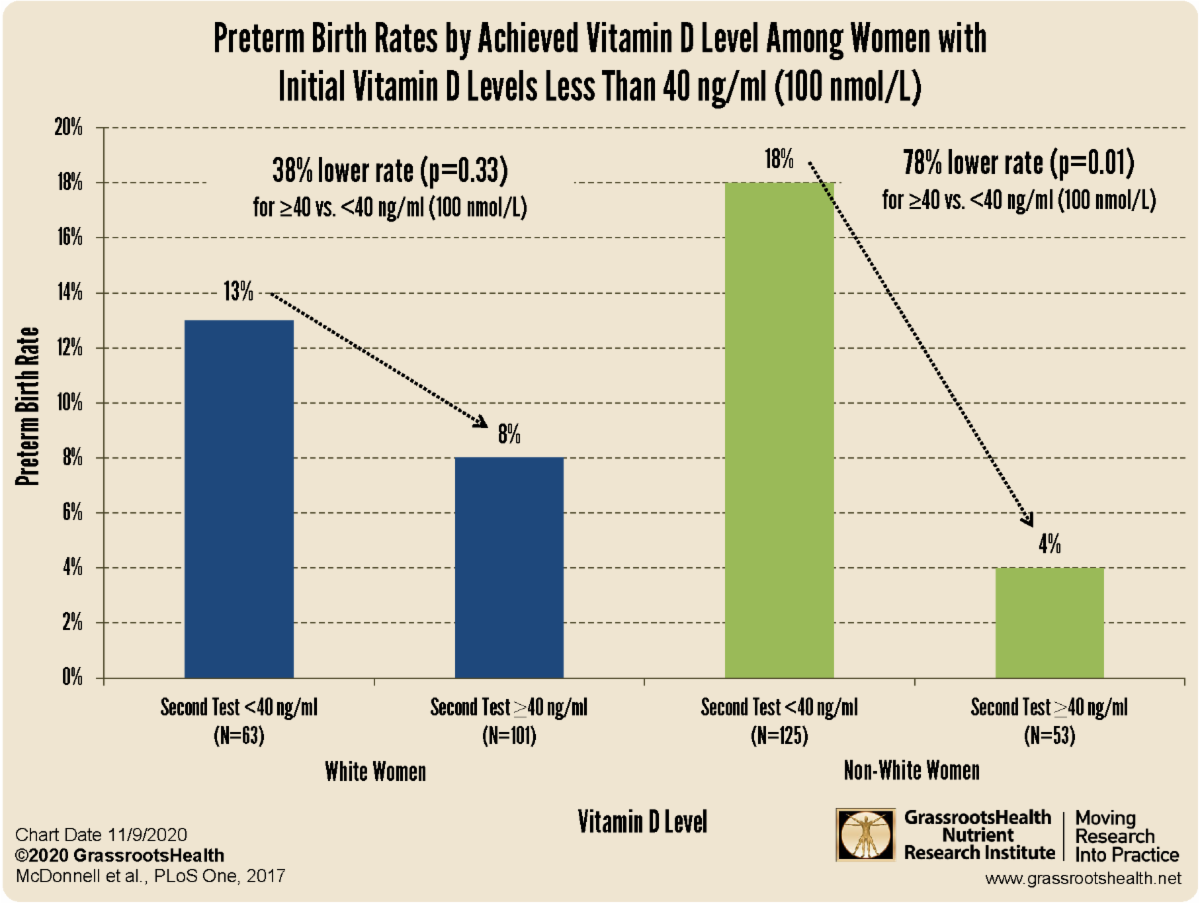
The most telling part of this analysis comes toward the end of the results section of the paper:
Differences by race/ethnicity were not statistically significant when 25(OH)D concentration was included as a covariate in multivariable regression analysis.
What Does This Mean?
When statisticians crunch data, to sort out findings from a study, there are times when they want to make sure that the finding wasn’t due to a separate variable. For example, many times in vitamin D trials, they account for BMI, which is used as a marker for obesity.
Multivariable regression testing is a way to look at many variables within your trial and see how they affect each other. So, in the BMI example, did vitamin D lower all heart disease? Or only for those that had a BMI < 25? We won’t get into the math to make this computation happen, let’s just say the statisticians know their numbers.
So, the statement above is really the key to disparity and the plausible conclusion that vitamin D levels in recommended ranges (40-60 ng/ml) could level the playing field for all races.
To a statistician this statement means…
there was NO difference in preterm birth rates (what was measured in the study) by ethnicity if vitamin D levels were equal.
Now, we KNOW that there is a huge disparity in preterm birth rates among racial groups. And, as you can now see, we can erase disparity in preterm birth caused by vitamin D deficiency, according to this analysis, by bringing everyone’s vitamin D levels to at least 40 ng/ml (100 nmol/L).
|