April 2023 Program Newsletter | |
In early March, Regional Sustainability and Resilience Program (RSRP) staff attended the 2023 Maine-New Hampshire Climate Networks Exchange meeting on climate migration. This meeting was hosted in conjunction with the ongoing Northeast Safe and Thriving for All (NEST) project, which is examining the Northeast region as a destination for people migrating from areas of the country that are severely impacted by climate change. We got the chance to hear from multiple speakers including the inspiring Dr. Linda Shi from Cornell! Click here to view her talk on climate migration. | |
Read on to learn what the RSRP has been up to! | |
|
Upcoming Virtual Workshop:
Coastal Water Quality in Southern Maine
| | |
|
|
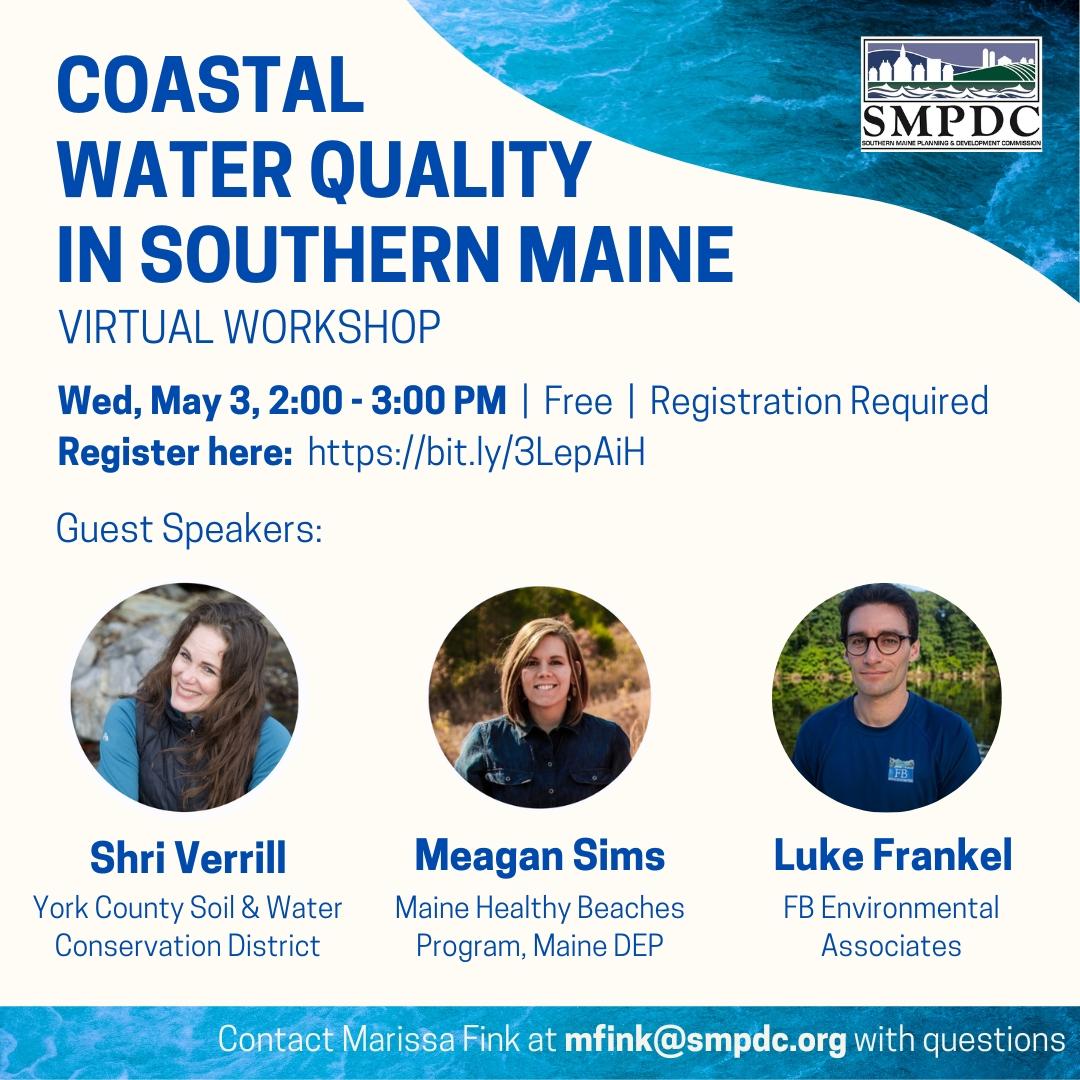
Join us on Wednesday, May 3rd at 2:00 PM for a virtual workshop on coastal water quality issues in southern York County.
We will hear from guest speakers about coastal water quality issues, challenges, impacts, monitoring and management efforts in the region, and discuss opportunities for regional coordination and collaboration to address these issues. The intended audience for this workshop is municipal staff, conservation commissions, volunteer municipal boards, and elected officials.
| | |
Climate Action Planning Cohort Update | |
|
Public engagement highlights: All four task forces are busy conducting exciting public engagement this Spring.
-
Biddeford: Photovoice contest and exhibition, tabling at Earth Day event
-
Kennebunkport: Survey and community sounding board
-
Kennebunk: Survey and community sounding board
-
Kittery: Community Conversations, tabling at Seacoast Environmental Film Festival
| | |
|
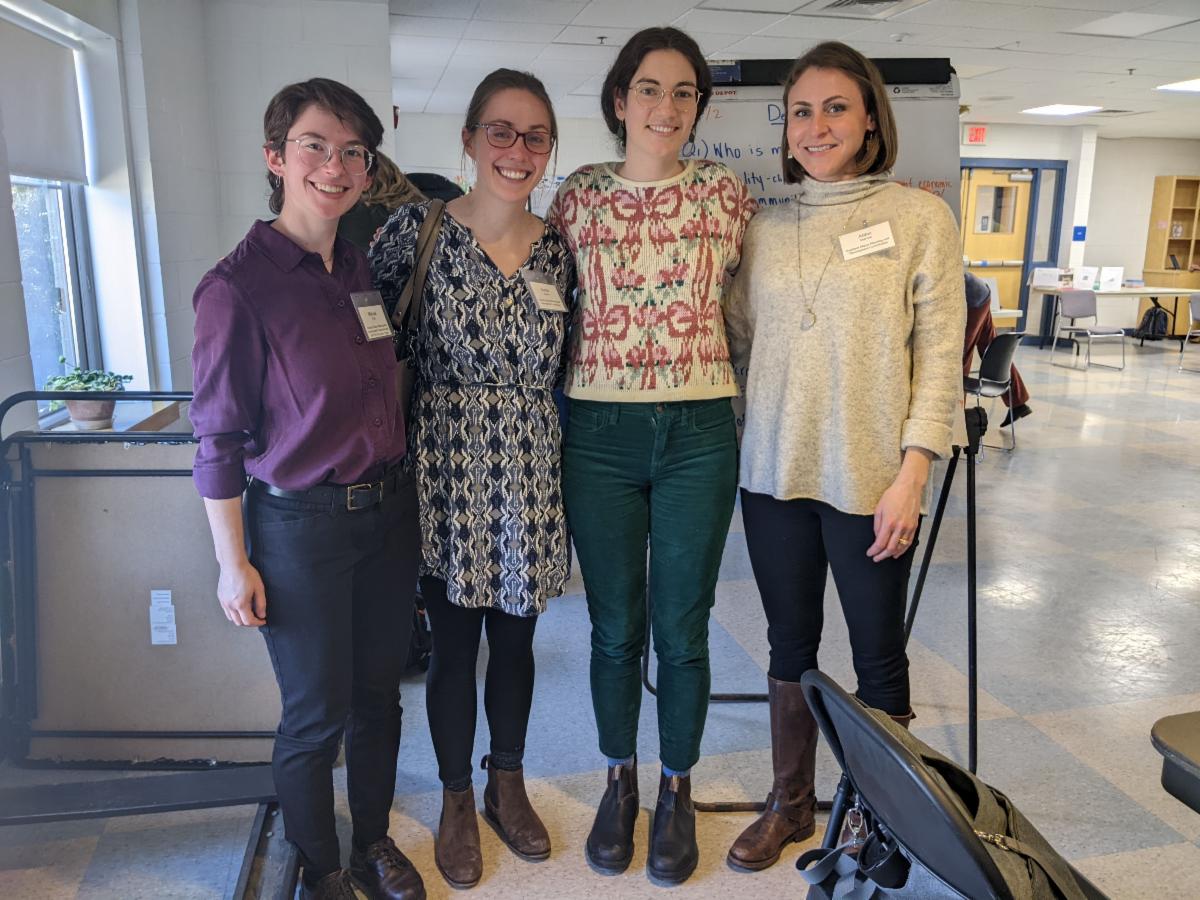
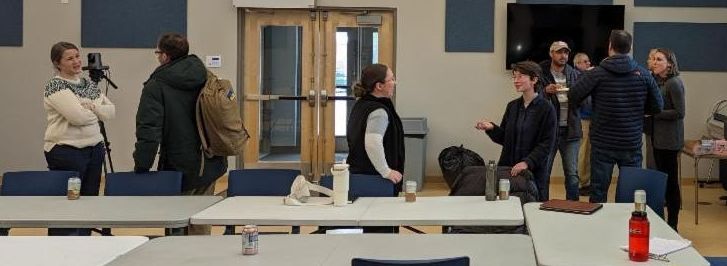
In early March, SMPDC held a roundtable session for local municipal planners to discuss ongoing work, emerging issues, and priorities for land use and climate change planning. RSRP staff facilitated a group discussion and presented new model ordinance resources for coastal resilience and enhanced storm water management. Featured resources included the ‘Municipal Guidance for Coastal Resilience: Model Ordinance Language for Maine Municipalities’ and the ‘Maine Model Low Impact Development (LID) Strategies’.
Discussion topics centered on housing issues, PFAS and wastewater treatment sludge disposal concerns, and climate resilience. Another planners’ roundtable event will be held this summer to continue intermunicipal discussion and coordination regarding priority planning needs for the region.
| | |
New Project! Advancing Nature Based Solutions for Coastal Resilience in Southern Maine | |
|
The RSRP is excited to announce that we have partnered with the Wells Reserve and York County Soil and Water Conservation District on a new grant-funded project Nature-Based Solutions for a Climate Ready Southern Maine. The project arose from the ongoing Climate Ready Coast – Southern Maine (CRCSM) project and aims to fill knowledge gaps identified through CRCSM regarding where nature-based solutions (NBS), such as living shorelines, might be appropriate along southern Maine’s coastline.
Over the next 2 years, the project team will develop an online interactive mapper showing coastal locations where NBS might be suitable based on site conditions and characteristics. The project will provide crucial information to municipalities, property owners, and coastal adaptation professionals about coastal sites where NBS could be implemented to mitigate erosion and flood hazards while enhancing resilience. Project activities include:
-
Develop a web-based decision support tool to identify sites that could be suitable for NBS.
-
Create conceptual designs of NBS at priority locations in three coastal geomorphic settings (beach/dune, back barrier marsh/estuary, and coastal bluff).
- Research lessons learned for incorporating local, indigenous, and traditional knowledge into the design of nature-based coastal resilience projects.
-
Foster community engagement through listening sessions and host a culminating workshop for municipal officials, committee members, community members, and regional coastal adaptation practitioners.
| | |
Maine Climate Resilience Hub Survey | |
|
A new climate resilience planning tool is being developed and you can be part of it by taking the survey at the link below.
This new tool, being developed by the Maine Department of Agriculture, Conservation and Forestry (DACF), will help communities with climate planning, including acting as a clearinghouse of information on funding opportunities, technical assistance and mapping services. The survey is for anyone who is involved or interested in climate/resilience planning in Maine, from volunteer committee members to municipal staff, to organizations providing technical support to towns.
| | |
|
Community Resilience Partnership Building Stronger Communities Online Learning Series: Designed for community members and leaders of municipalities already enrolled in the Community Resilience Partnership, those currently enrolling, as well as those interested in enrolling. Upcoming webinar:
-
Municipal Solar Site Planning & Ordinance Development: Wednesday, May 3, 10:00 AM – 11:00 AM. No registration required. Simply click this Zoom link to join the presentation.
2023 Communities Leading on Climate Conference: The Community Resilience Partnership, a program of the Governor's Office of Policy Innovation and the Future annual conference to highlight the actions and accomplishments of Partnership communities. Hear from community leaders from across Maine about all they've learned from their interesting and vital work. Speakers will discuss planning aspects including community outreach, equity, federal funding, and more. In-person Thursday, May 11, 8:00 AM - 4:00 PM Wells Conference Center, University of Maine, 131 Munson Road, Orono, ME. Learn more and register here.
Demystifying the Language of Climate Resilience Financing: This guide clarifies key financial terms and industry jargon with simple definitions and real life examples to address information gaps and share innovative options for small municipalities, tribes, nonprofits, and other community groups to finance climate resilience needs. View the guide here.
| | |
Transportation
-
Efficiency Maine Rural Level 2 EV Charging: Efficiency Maine is seeking applications for Level 2 electric vehicle (EV) chargers that are available to the public in rural communities in Cumberland and York Counties. This opportunity falls under Efficiency Maine’s Electric Vehicle Initiatives and aims to expand public EV charging infrastructure in rural and remote areas in Maine. Application deadline is June 30, 2023. Learn more here.
Resilience
-
Coastal Community Planning Grants: The Department of Agriculture, Conservation and Forestry's Municipal Planning Assistance Program (MPAP) is seeking applications for a new round of Coastal Community Grants (CCG). CCG applications are due Friday, June 2, 2023. Learn more here.
-
Shore and Harbor Planning Grants: Maine Coastal Program is currently seeking applications for a new round of coastal planning grants for FY2024. Shore and Harbor Planning Grants support municipal and regional projects in Maine’s Coastal Zone. Proposals are due on Friday, June 2, 2023. Learn more here.
-
Small Public Water System Emerging Contaminant Grants: Maine Center for Disease Control and Prevention Division of Environmental and Community Health is offering grant funding for up to $60,000 for small public water systems projects to mitigate PFAS contamination. Grants are up to $50,000 with additional $10,000 available for engineering fees. This grant is offered on a rolling basis. If PFAS contamination is a concern for your community, contact Bill Dawson at Maine Department of Health and Human Services to discuss your project: William.Dawson@maine.gov or (207) 287-6196. Learn more here.
-
USDA Community Facilities Direct Loan Program: The CF Direct Loan Program provides affordable funding to develop essential community facilities. An essential community facility is defined as a facility that provides an essential service to the local community for the orderly development of the community. It must carry out a function customarily provided by a local unit of government. The facility must be located in a rural area and primarily serve rural residents. Funding in the form of grants and low interest loans is available for rural areas including cities, villages, townships, and towns including Federally recognized Tribal lands with no more than 20,000 residents. Contact your Regional Planning Office for more information. Learn more here.
Energy
| | |
Thanks for reading.
Feel free to reach out to learn more, and follow our social media accounts for more frequent updates.
| |
Southern Maine Planning & Development Commission | Website
| |
| | | |