MoIP Vision: Missouri is committed to reducing the impact of invasive plants through early detection and control.
MoIP Mission: To benefit Missouri, MoIP advances efforts to reduce the impact of invasive plants.
| | Spring 2026 • State of Invasives | | Call for 2026 MoIP Award Nominations | | |
The Missouri Invasive Plant Council (MoIP) is accepting nominations for the 2026 Invasive Plant Action Awards. There are four award categories: Individual Citizen or Individual Organization, Individual Professional, Group Collaborators, and Researchers. The deadline to submit nominations is April 30, 2026. Find the application form and other information on the MoIP Invasive Plant Action Awards webpage.
Initiated in 2019, the MoIP Invasive Plant Action Award program recognizes outstanding work in Missouri to control invasive plants. Not only do these awards celebrate hard work and leadership, but they also demonstrate to Missourians that control of invasive plants is possible and essential to overall land stewardship efforts.
Past winners have included individuals, schools, non-profit organizations, and collaborative working groups. We encourage you to learn about past winners and their important work here.
| | |
In this spring 2026 issue of State of Invasives, please find more news and resources, summarized here with details that follow:
–April 10: Free MoIP Invasive Plant & ID Workshop in Doniphan, Missouri
–April 21: MoIP Callery Pear Buyback Event. Registration closes April 16.
–Congratulations to Matt Arndt and Bill Ruppert
–Emerging Threat: Chaff Flower
–Success Story: Invasive Plant Removal in Columbia, Missouri
–Upcoming Invasive Plant Workdays in St. Louis, Columbia, and Kansas City
–Invasive Plant Control Job Opening with MPF
–Invasive Plant Research News: Public Gardens Prove Valuable Sentinels for Invasive Plants
–Invasives to Treat in Spring: Japanese hop, crown vetch, common and cut-leaved teasels, and reed canary grass
Please read and share this issue of State of Invasives, and, as always, let us know if you have questions and ideas about invasive plant early detection and control.
Thank you for taking action to identify and control invasive plants!
On behalf of the Missouri Invasive Plant Council,
Carol Davit, MoIP Chair
Above, from left, is Cole Dannull, a high school senior representing Principia School in St. Louis, the 2023 MoIP Invasive Plant Action Awardee in the Individual Organization category; Dale Dufur, the 2023 MoIP Invasive Plant Action Awardee in the Individual Citizen category; and John Pertzborn, co-anchor of Fox 2 News in the Morning, who oversaw the on-air award presentation.
| | April 10: Free MoIP Workshop in Doniphan, Missouri | | |
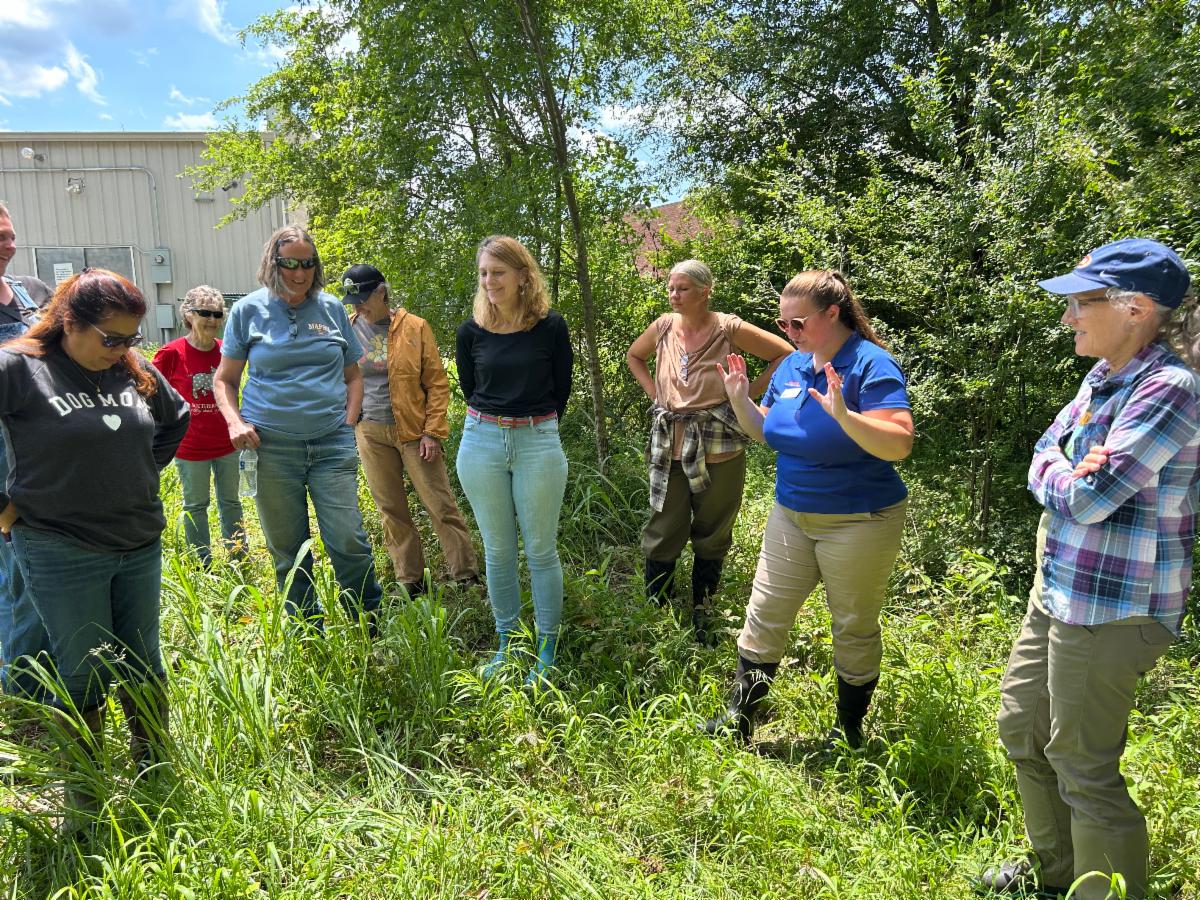
To protect Missouri's habitats, tree farms, and forest products industry, managing invasive plants is one of the most critical actions we can take. MoIP is offering a free training for landowners and land management professionals on invasive plant identification, including emerging invasives in the Ozarks; invasive plant control strategies; and how to connect with local resources for support.
The training will be on Friday, April 10, from 10:00 a.m. to 3:00 p.m. in Doniphan, which is in southeastern Missouri, and will include classroom and field components.
Registration is free, but required. Lunch and a selection of native plants will be provided with registration. To register, contact Lilly Germeroth at lilly@moprairie.org or 314-390-5035 no later than April 7.
MoIP thanks the L-A-D Foundation for underwriting the costs of this workshop.
Photo of participants learning how to identify and treat invasive plants by Valarie Kurre
| | April 21, 2026: MoIP Callery Pear Buyback Event | | |
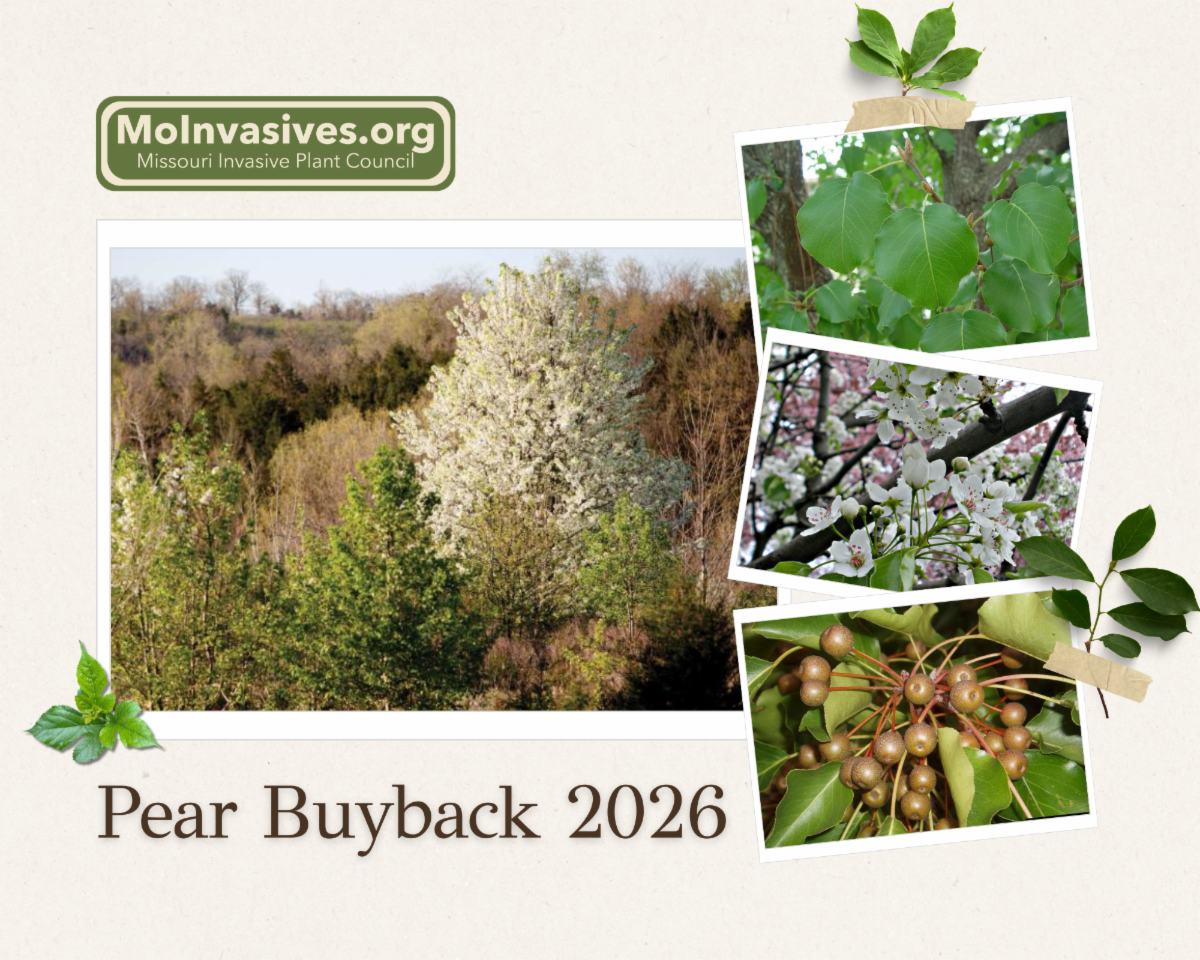
MoIP has set the date for its 2026 Callery Pear Buyback event as April 21, 2026, from 3:00 to 6:00 p.m. Registration is open now and ends April 16, 2026.
During the registration period, Missouri residents can take a photo of their cut-down callery pear tree(s) and sign up to receive a free native replacement tree.
The 2026 MoIP Callery Pear Buyback event will be held in 23 locations: Cape Girardeau, Columbia, Doniphan, Hannibal, Jefferson City, Joplin, Kansas City, Kirksville, Lebanon, Liberty, Moberly, Park Hills, Parkville, Pineville, Riverside, Rolla, Sikeston, Springfield, St. Charles, St. Joseph, St. Louis, Warrensburg, and West Plains. MoIP thanks Forest ReLeaf of Missouri, Forrest Keeling Nursery, Missouri Community Forestry Council, L-A-D Foundation, Magnificent Missouri, the Missouri Department of Conservation, and the Missouri Prairie Foundation for financial and in-kind support for this invasive plant awareness and action event.
| | Congratulations to Matt Arndt and Bill Ruppert | | |
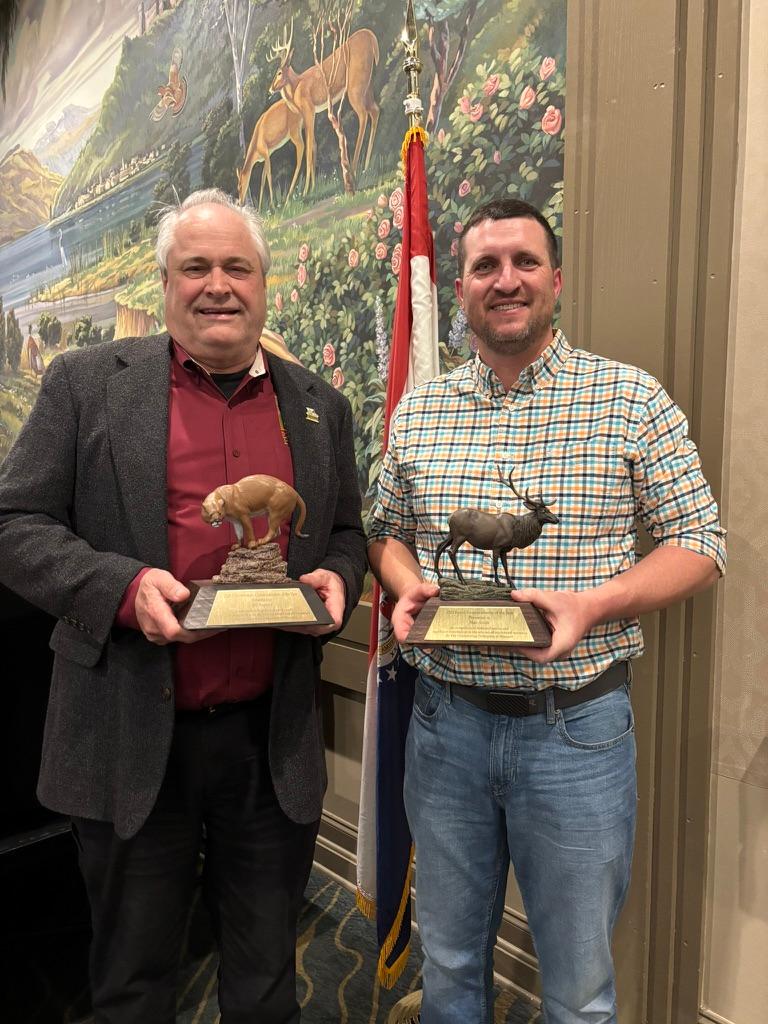
On March 6, 2026, at the Conservation Awards Ceremony of the 90th convention of the Conservation Federation of Missouri, two MoIP Council members were recognized for their exceptional contributions to conservation.
Bill Ruppert, who spearheaded the formation of MoIP in 2015, received the Conservation Communicator of the Year Award. A consummate connector and communicator for conservation causes in Missouri, Bill brings people together around shared visions for healthy landscapes and sound land stewardship. With a career in horticulture, Bill's advocacy was instrumental in promotiong passage of Missouri's Invasive Plant Bill in 2025.
Matt Arndt, Vice Chair of MoIP, was honored with the Forest Conservationist of the Year Award. As a consulting forester for 20 years, Matt has provided forest and wildlife management consulting to private landowners across Missouri, and since 2013, he has served as president of the Missouri Consulting Foresters Association. In his role as MoIP Vice Chair, Matt has contributed significantly to MoIP's growth and has devoted countless hours to tabulating invasive plant data sets, which were crucial in supporting the passage of Missouri's Invasive Plant Bill in 2025.
Photo by Bill Ruppert, left, and Matt Arndt, right, by Carol Davit
| | Expanding Threat: Chaff Flower | | |
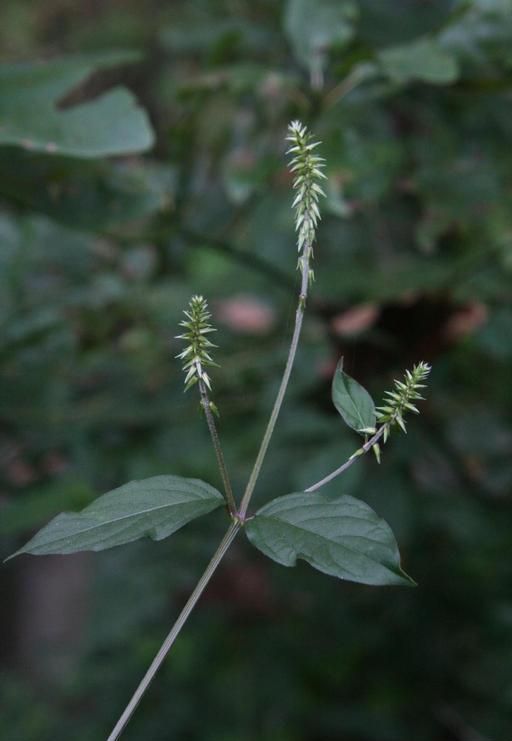
Japanese chaff flower (Achyranthes japonica) may not be as readily known in Missouri compared to other invasive plants, but its spread is increasing—now is the best time to stop its expansion!
This non-native perennial is established along the Ohio River Valley and has been documented in Missouri's Mississippi Lowlands and Bootheel area for some time, as well as in the Missouri River floodplains. Japanese chaff flower produces copious amounts of seed that can travel via animal fur, water, and also by mowing and equipment.
Although Japanese chaff flower prefers partial sun and moist soils, it can survive in shade and dry conditions. It readily invades bottomland forests, wooded riverbanks, roadsides, ditches, and field edges. Japanese chaff flower can form dense monocultures, shading and outcompeting native plant species.
Japanese chaff flower can grow to 6.5 feet tall. Stems are hairless or slightly pubescent. Ovate-elliptic leaves are opposite and simple. Margins are entire and slightly wavy. The small flowers have no petals and are clustered tightly on the inflorescence, which occurs at the ends of the stems and upper branches. They flower in summer, with fruits—each containing one seed—forming in August. Each fruit has a pair of stiff bracts that can attach to fur or clothing, allowing the seed to be easily spread. Fruits remain on the plants through winter.
A Japanese chaff flower video with Chris Benda of Illinois, as well as a detailed fact sheet with identification, control, and look-alike native plants from Purdue Extension, is available here.
Photo of Japanese chaff flower, above, by Chris Evans, Bugwood.org
| | Invasive Plant Success Story in Columbia, Missouri | | |
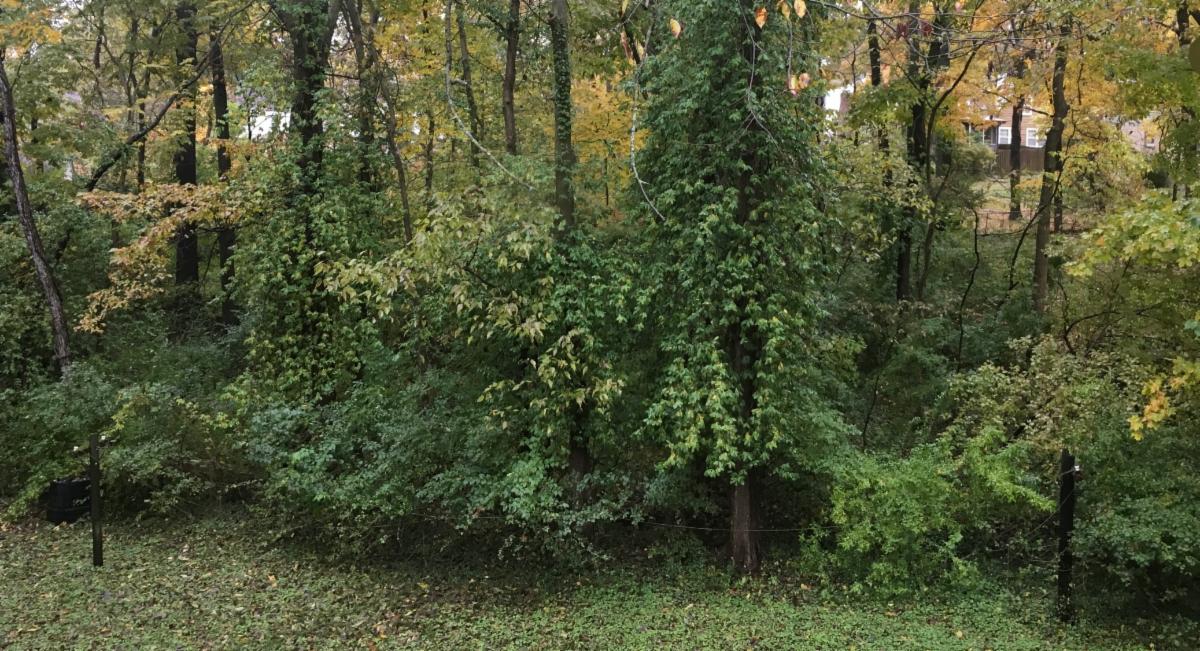
Do you find the photo above daunting or motivating? For Columbia, Missouri, homeowner Emily Gustafson, the answer is likely “both.”
“My partner, Victor, and I moved into our house in Columbia in 2018,” said Emily. “Our backyard, which is mostly wooded and had been left unmanaged for decades, was so choked with invasives that we couldn't even see most of it. However, we were lucky to have beautiful, mature native trees, including oaks, hickories, maples, and others. With the invasives now removed, we especially enjoy watching the many bird species that now consistently use our yard, from our neighborhood red-tailed hawks and all seven of Missouri’s woodpecker species to the tiny warblers that flit around the canopy during migration.”
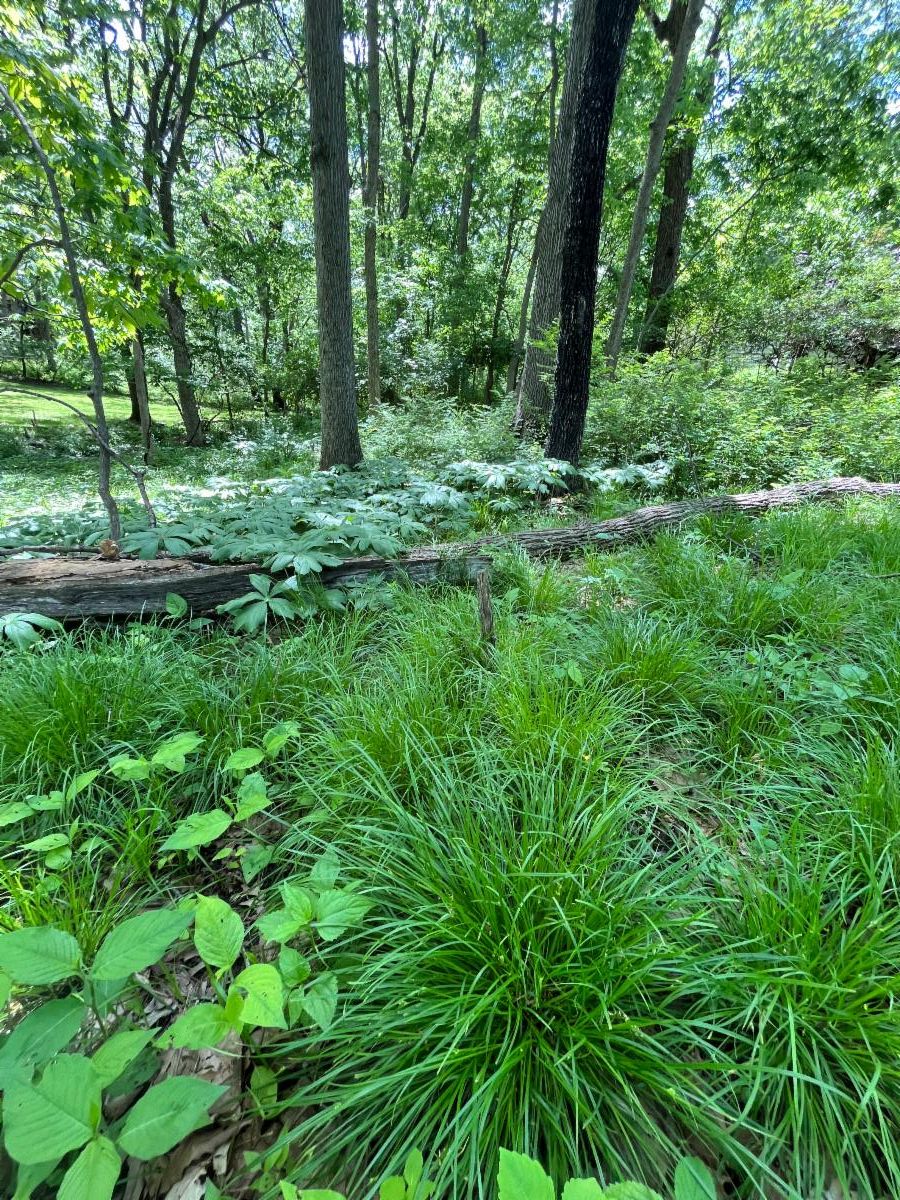
Here’s how Emily and Victor tackled their invasive plant removal project. Beginning in 2019, they focused first on killing the wintercreeper that vined up nearly every tree. Next, they worked in sections to remove the large bush honeysuckle, burning bush, and privet shrubs. Then they pulled small plants and wintercreeper vines on the ground. The entire project took about two years, and the stunning results are evident in the photo below.
Emily and Victor chose not to use herbicide treatments, which was possible because, at less than half an acre, their yard is relatively small, and they personally had the time to invest in mechanical removal and repeated passes through the area.
They cut back the dense vegetation with anvil loppers, a 10-inch folding saw, and a battery-operated reciprocating saw. In some cases, they sliced into the lateral roots of invasives with a heavy, steel-handled shovel and popped the root crowns out of the ground. They solarized large individual plants after cutting them down, and when they spotted regrowth, they cut it back periodically until it stopped coming back.
Continue reading, and see "in progress" photos here.
Before (above) and after (below) backyard photos by Emily Gustafson
| | Invasive Plant Control Job Opening | | |
For its prairie stewardship technician position, the Missouri Prairie Foundation (MPF) seeks a motivated, hard-working self-starter to help steward some of the rarest and most beautiful habitat on the planet, right here in Missouri. This position is seasonal and full-time, from approximately May 15 through August (position will accommodate academic schedules). The duties of this field position include scouting for and treating invasive plants on MPF prairies, primarily in southwestern Missouri. Application deadline is April 1. Read more about this job position and find application instructions here.
| | |
A Weed Science Society of America (WSSA) journal, Invasive Plant Science and Management, recently published a research article that shows public gardens in the U.S. and Canada can serve as sentinels to invasive plant species in North America. Researchers examined data collected through Public Gardens as Sentinels against Invasive Plants (PGSIP), a project that links data from a network of botanical gardens and arboreta across North America to provide information on plants within their collection that are escaping cultivation.
Plants that escape from cultivation demonstrate an early invasion stage. According to the research authors, “as of November 2024, participating gardens had submitted 996 reports to the PGSIP database, representing 597 unique species. Some of the most reported species, such as Amur corktree (Phellodendron amurense), burning bush (Euonymus alatus), and wintercreeper (Euonymus fortunei), are frequently recognized as invasive species. However, 36% of the species reported were not listed as invasive by any U.S. state or Canadian province, suggesting that gardens may be detecting these plants at the earliest stage of invasion.” Read more about the study at this Weed Science Society of America webpage.
| | Invasive Plant Control Spring Work Days:
Register Now | | |
Columbia, Missouri:
• The Missouri Conservation Corps is hosting a volunteer work event in Kiwanis Park on Wednesday, April 8, from 4:00 p.m. to 6:00 p.m. on the west side of the park, meeting at Odor Shelter, 926 College Park Drive. Visit this webpage for more information and to register.
• On Thursday, April 9, from 4:00 to 6:00 p.m., the Missouri Conservation Corps will lead Columbia Public School teachers and community volunteers to control invasive honeysuckle and autumn olive at the Boone County Nature School, 8989 South Tom Bass Road, Boone County. The Missouri Conservation Corps will provide tools, training, gloves, and herbicide for this event. For more information, contact Missouri Conservation Corps Project Director Stephen Bybee at stephen@missouriconservationcorps.org.
• Volunteers skilled at herbicide application are needed on Saturday, April 25, 9:00 a.m. to noon, when the Missouri Conservation Corps will engage a team of 20 to 30 volunteers with the "For Columbia" initiative to begin removing invasive plants in the 200-acre Alspaugh Park. The newest of Columbia's city parks, this tract features forested land, creeks, and former farm fields. Needed are two or three skilled volunteers who can help apply herbicide and manage volunteers during a three-hour habitat event. The Missouri Conservation Corps will provide all tools, training, gloves, and herbicide. Address: Alspaugh Park, 4216 Mexico Gravel Road, Columbia. For more information, contact Stephen Bybee at stephen@missouriconservationcorps.org.
St. Louis area:
• Open Space STL has organized numerous "honeysuckle hack" volunteer work days this spring. Check out the Open Space event calendar here.
• Great Rivers Greenway has organized two bush honeysuckle volunteer work days along greenways, on April 18 and April 25. Learn more here.
Kansas City:
• KC WildLands has organized invasive plant control volunteer work days on April 9, April 24, and May 12. Click the links to learn more and register.
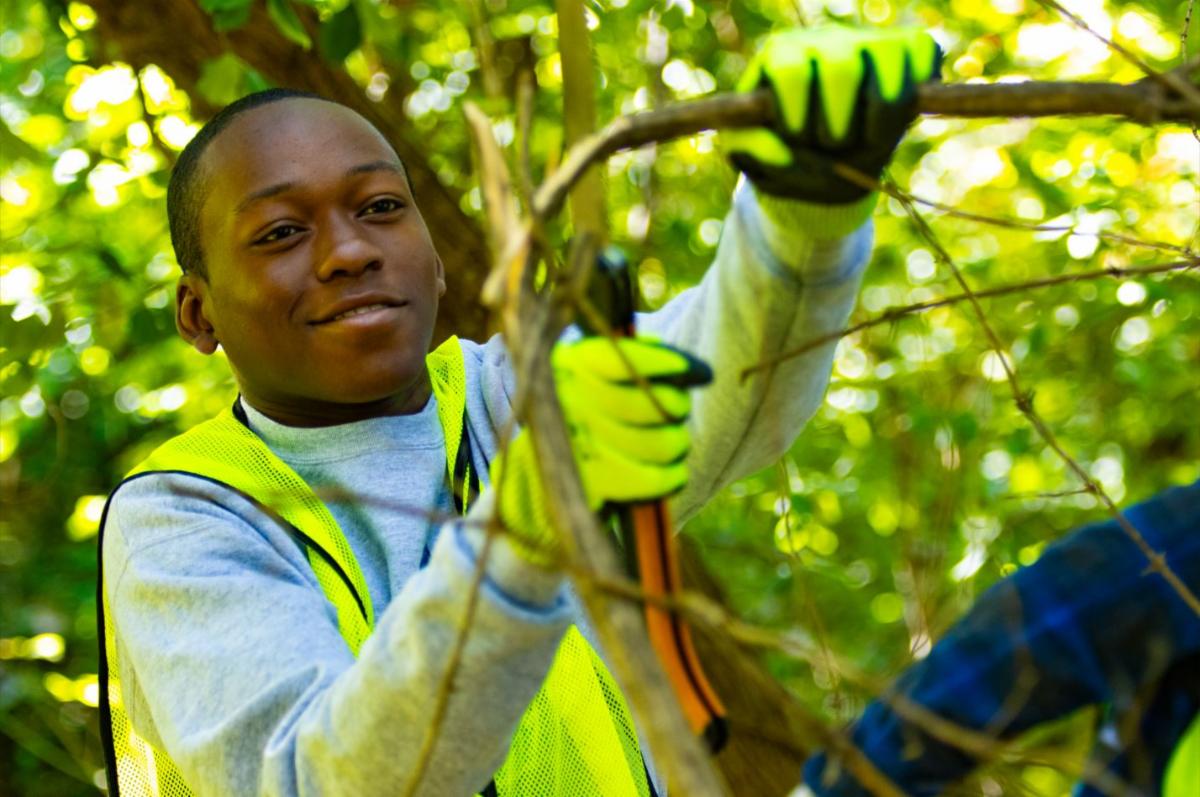
In the photo above, a young volunteer controls bush honeysuckle at a past Great Rivers Greenway event. Used with permission from Great Rivers Greenway.
| | MoIP Workshop at 2026 MNRC | | |
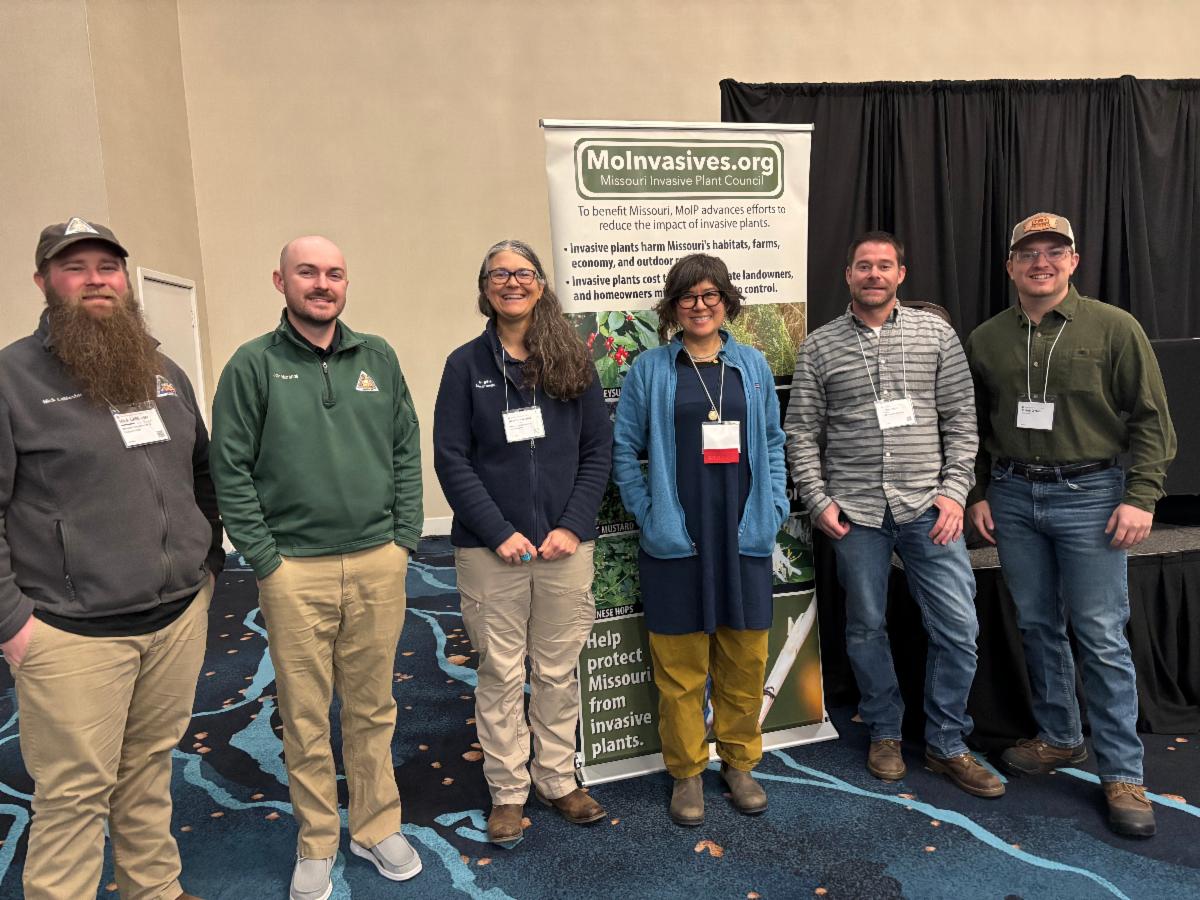
Many thanks to MoIP Council member Angela Sokolowski, Invasive Species Coordinator for the Missouri Department of Conservation (MDC), for organizing the MoIP Invasive Species Workshop at the 2026 Missouri Natural Resources Conference (MNRC). During this two-hour session, MNRC attendees, who included conservation professionals and students, learned about not just invasive plants, but two invasive animals as well:
• Cheyenne Stratton, MDC Aquatic Invertebrate Ecologist, presented on a red swamp crayfish control project, highlighting a collaborative effort to eradicate this invasive invertebrate from a central Missouri pond through trapping, chemical treatment, and habitat modification.
• Drone contractor Caleb O’Neal, along with panelists Nick LeMaster and John Marshall, both with MDC, and Luke Miller with the USDA, presented on and discussed Drone Spraying for Invasive Plants: Insights from the Field. The panelists shared insights on the pros and cons of using drones for herbicide application for invasive plant control.
• U.S. Forest Service Invasive Species Specialist and MoIP Council member Jen Larson presented on two expanding invasive plant threats: Japanese chaff flower (Achyranthes japonica; discussed above) and small carpetgrass (Arthraxon hispidus), also known as hairy jointgrass. This low-growing, creeping annual grass is native to Asia, but has been reported in 26 states in the eastern half of the United States—including Missouri—as well as in Oregon and Hawaii.
• MDC Wildlife Management Coordinator Alan Leary provided an update on the efforts of the Missouri Feral Hog Elimination Partnership, which have been largely successful.
Pictured above from left are Nick LeMaster, John Marshall, Angela Sokolowski, Jen Larson, Luke Miller, and Caleb O'Neal. Not pictured: Cheyenne Stratton and Alan Leary. Photo by Carol Davit
| | Invasive Plants to Treat in Spring | | |
Not all invasive plants are most effectively treated at the same time of year, and treatment methods can differ according to the seasons. Here, we highlight several species to treat in spring. The first three may not flower or be as vigorous until summer, but treating them as early as possible in the growing season can involve less work and be more effective. You can find treatment guidelines for many invasive plants other than those highlighted below at moinvasives.org.
Note: Treatment methods may differ considerably if invasives are found in otherwise intact, highly biologically diverse areas, in disturbed areas/altered landscapes, or if invasives are found in or near water. When using chemicals to treat invasives, always read label instructions.
| | |
Japanese hop (Humulus japonicus) is an herbaceous annual vine. Native to eastern Asia, it was imported to the United States in the late 1800s for use in Asian medicine and as an ornamental vine. Within Missouri, Japanese hop is found most commonly in the Missouri and Mississippi river corridors, but it is increasing its range within certain floodplains. Japanese hop outcompetes established vegetation in sunny areas with exposed moist soil.
This sprawling, twining, climbing vine has opposite, palmately divided leaves that are rough to the touch. It has inconspicuous green flowers, with male and female flowers on separate plants. Female flowers are borne on a drooping cone-like structure with overlapping scales (called hops). The stems have short, sharp, downward-pointing prickles.
In areas with light infestation, manual removal can work well within moist soil in early spring when the root system is small. (You will need sturdy gloves to protect your skin from the prickles!) The entire root and plant must be removed and taken off-site to prevent regrowth. Repeated pulling should continue until dieback in the fall, when new plants cease to emerge.
In areas with heavier infestations, a pre-emergent herbicide containing sulfometuron methyl (Oust® XP) applied in mid-March generally causes minimal or no damage to other perennial vegetation, eliminating the need to rescue desirable vegetation from an established hop infestation. Application of a pre-emergent herbicide followed by a foliar application of glyphosate or metsulfuron applied prior to seed production (mid-April to August) may provide the most effective control. Subsequent applications will be necessary to control germinating plants throughout the season to prevent seed production.
See this Japanese hop webpage for more information.
| |
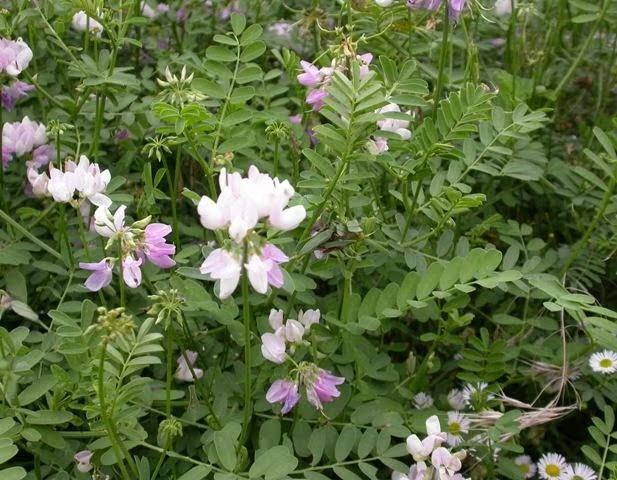
Crown vetch (Securigera varia) is a perennial, non-woody legume that reproduces by seeds and spreads vegetatively. It can form large clumps from creeping stems, which can be up to 6 feet long. Rhizomes can be up to 10 feet long, enabling the plant to spread rapidly. The compound leaves have 15–25 pairs of oblong leaflets. Blooms May through August. Flowers are pinkish to white and in circular clusters, like a crown on long stalks. Each individual flower is shaped like typical a pea flower. The fruits are narrow, flattened pods.
Native vetch species have vining tendrils at the ends of the stems, but crown vetch does not have any tendrils.
Mowing before seed set may not completely control crown vetch, but helps slow its spread. For more information, including herbicide treatment control methods, visit this Missouri Department of Conservation web page.
| | |
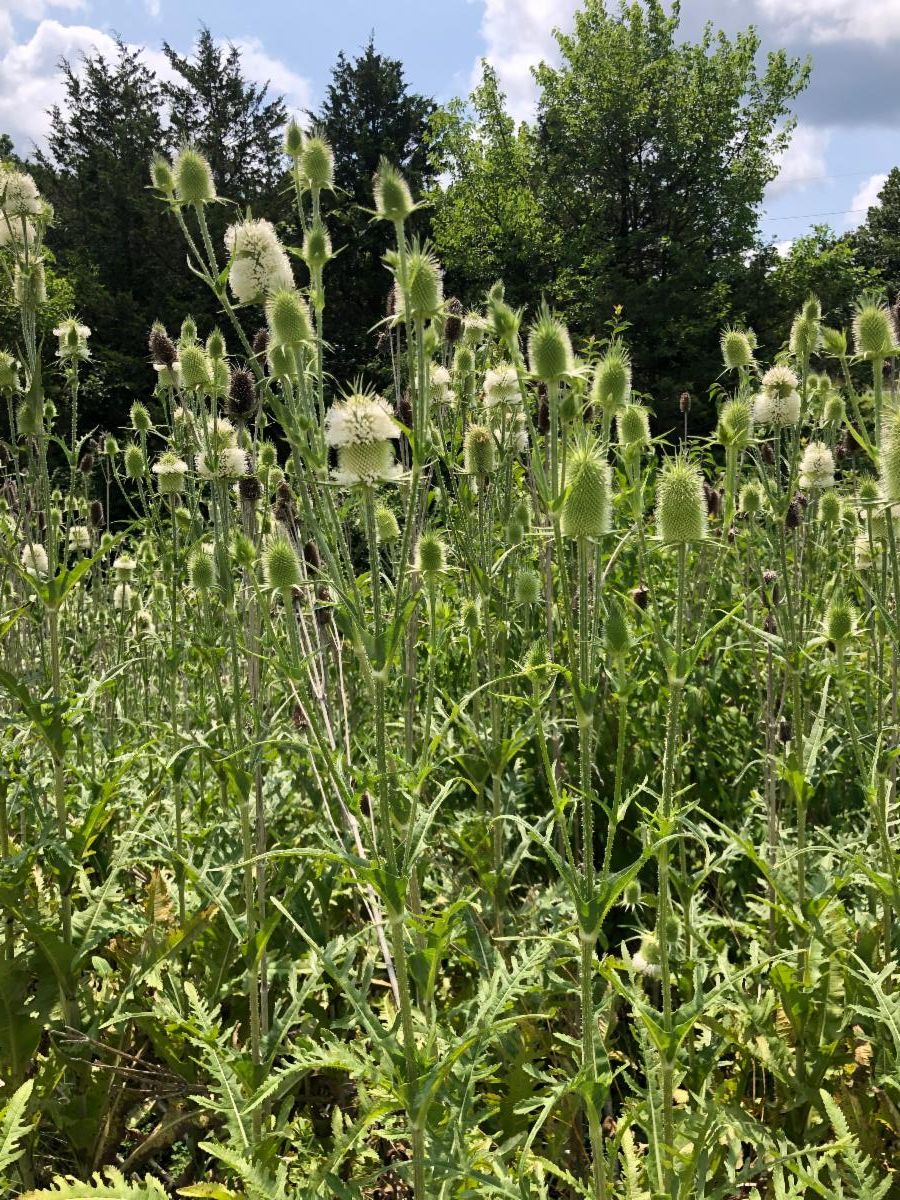
Common teasel (Dipsacus follonum) and cut-leaved teasel (D. laciniatus) are closely related, herbaceous biennials or short-lived perennials that were introduced to North America in the 1700s.
Teasels grow in open, sunny habitats in wet to dry conditions. These plants are most commonly found in disturbed areas, including roadsides, railroads, and sandbars in streams.
It is best to control teasel before it is flowering in summer, as shown in the photo at left. For the first year of its life, teasel growth is confined to a rosette, which is a ring of leaves around a central point, growing flush with the ground. The following year, individual teasel plants will send up a stalk and die after flowering.
To control small populations, young rosettes can be dug or pulled from moist soil. Plants can also be cut at, or just below, ground level immediately before flowering to prevent later re-sprouting and flowering. Immature seed heads can still produce some viable seed, so all flower heads should be removed and destroyed. Mowing seed heads in fall should be avoided to prevent seed spread.
Recommended herbicide to apply to basal rosettes, stalks, and leaves is aminopyralid (the chemical in the Milestone® brand) at a rate of 0.25%–0.5%.
Teasel rosettes remain green into the fall and early winter, allowing for dormant-season application of glyphosate.
| | |
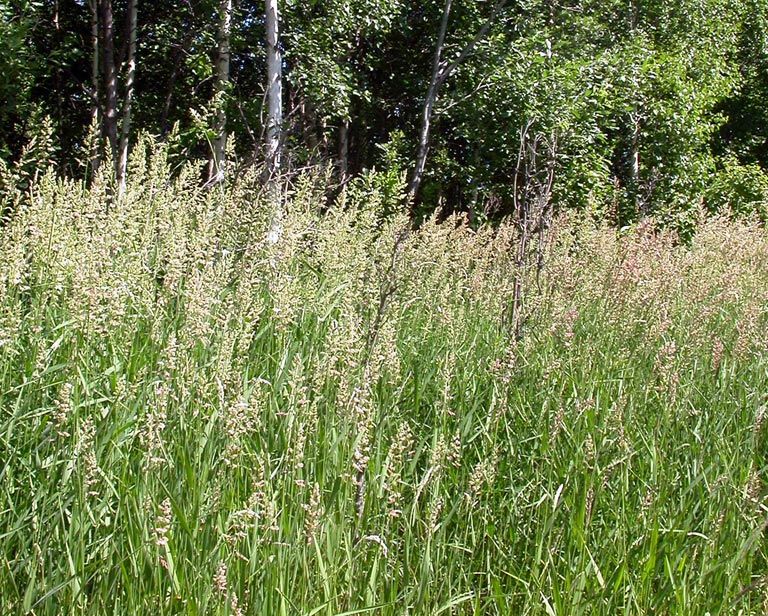
Reed canary grass (Phalaris arundinacea) is a cool-season perennial wetland grass that spreads via a dense rhizome system into clumps or colonies. It is native to Europe, Asia, and North America.
Stems are hairless, with gradually tapering leaf blades 3½ to 10 inches long and ¼ to ¾ inch in width. Leaf blades are flat and are rough on both sides. A large transparent membrane (the ligule) is visible if you pull the blade slightly away from the stem. Flowering clusters are dense, compact, branched, and spike-like, erect to slightly spreading. Seeds are shiny brown.
Similar plants: The native ecotype of reed canary grass in Missouri is not easily distinguished from the invasive Eurasian ecotype, but it typically does not form dense stands, and it coexists with other native vegetation in marshes, wet prairies, wet meadows, fens, stream banks, and swales. Reed canary grass may also resemble the native bluejoint grass (Calamagrostis canadensis) and nonnative orchard grass (Dactylis glomerata).
Reed canary grass is one of the first to sprout in spring, and it forms a thick rhizome system that dominates the subsurface soil. It is a major threat to marshes and natural wetlands because of its hardiness, aggressive nature, and rapid growth. When it invades an area, it crowds out and gradually replaces native wetland and wet prairie species.
Fire can help control its spread and keep it out of native wetlands. Repeated late autumn or late spring burning for several years can control it. Annual burning may be needed for 5 to 6 years before good control is apparent. Burning is most effective where other species are present or in the seed bank, since fire allows native, fire-adapted species to compete successfully. Fire is not very effective in dense monocultures of this grass where seeds or plants of native species are absent.
Certain herbicides are effective where there is no real concern for damage to surrounding native species. According to label recommendations, Rodeo, a formulation of glyphosate designed for use in wetlands, will kill reed canary grass, especially young plants, when applied to foliage. Rodeo® should be applied in early spring when reed canary grass is green, and most native wetland species are still dormant. The area should be checked after spraying, and any surviving reed canary grass should be sprayed the following spring. Learn more here.
Photos above, from top to bottom, by Chris Evans, Bugwood.org; MDC; Carol Davit; and JamieNielsen, Bugwood.org
| | |
State of Invasives aims to:
• Provide useful information to you/the leaders of your organization, agency, or business to help you recognize and control invasive plants and reduce their negative impacts, introduce you to our work, explain the challenges of invasive plants, and make the case for bold action and how this will benefit Missouri and Missourians.
• Share talking points that you can use when communicating about invasive plant detection and control within your agency, business, or organization, and to your customers or stakeholders.
• Empower you and your audiences to recognize invasive plants and take action—around your office building, behind your parking lot, on your back 40, right of way, back yard, around your crop field, or on any other land you or your group owns or manages. Our MoIP Video: A Landowner Tour is one of MoIP's many useful resources at moinvasives.org.
We hope the information in this enewsletter is helpful, and we’d like to hear from you. What questions or ideas do you have? Would you like to share with us the invasive plant action you or your organization or business are taking? If so, contact us at info@moinvasives.org.
| | |
In 2015, Grow Native!, the native plant education and marketing program of the Missouri Prairie Foundation, spearheaded the formation of MoIP—a multi-agency, multi-industry networking and advocacy group to bolster statewide efforts to identify and control the invasive plant species that severely impact several sectors of the Missouri economy and native biodiversity. The purpose of MoIP—working as a united, supportive front—is to review, discuss, and recommend educational and regulatory action related to managing known and potential non-native invasive plants. Representatives from the fields of conservation, agriculture, botanical science, ecological restoration, transportation, horticulture, landscape services and design, and forestry make up the council membership, volunteering their time at quarterly meetings and small work groups. MoIP associates help disseminate MoIP information to various groups. Emily Render works on contract to coordinate MoIP activities.
In 2022, MoIP completed a framework for our work for the next five years—the MoIP Strategic Plan for 2022-2026 guides MoIP's current work.
Learn more about MoIP and find many invasive plant ID and control resources at moinvasives.org.
| | | |
Newsletter content ownership: Missouri Prairie Foundation.
You are receiving this message because you a subscriber to this enewsletter, which provides news and information about invasives in Missouri and the actions the Missouri Invasive Plant Council and our partners around the state are taking to control and reduce the impact of invasive plants. You can play an important role in statewide efforts to control invasive plants by reading, learning, and sharing the information within this enewsletter with others who deal with vegetation management.
E-mail us at info@moinvasives.org, call us at 1-888-843-6739, or visit us at www.moinvasives.org. If you do not wish to receive these periodic messages, please unsubscribe below.
Carol Davit
MoIP Chair & Missouri Prairie Foundation Executive Director
| | | |
Missouri Prairie Foundation
PO Box 200
Columbia, MO 65205
(888) 843-6739
| |
| | | |