|
How French Chef Julia Child Helped Develop a Shark Repellent
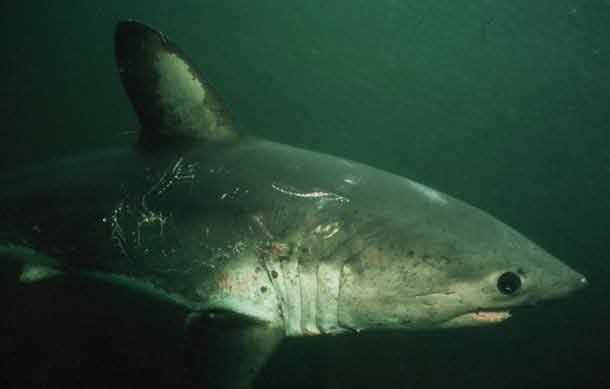
Renowned for introducing French cuisine to American kitchens, the legendary chef Julia Child also helped protect sailors from sharks.
During the final two years of the World War II, Julia Child (née McWilliams) was stationed in Asia, working in the Office Strategic Services with top security clearance, an organization which would eventually become the Central Intelligence Agency (CIA). She moved steadily up the ranks, from department to department, gaining more responsibilities along the way. In July 1942, the OSS Emergency Sea Rescue Equipment Section began the search for a shark repellent that could give protection to downed airmen. Two men headed the research: Captain Harold J. Coolidge from the Harvard Museum of Comparative Zoology, and Dr. Henry Field, curator of the Field Museum of Natural History in Chicago. Throughout 1943, Child was Coolidge’s executive assistant, working closely with him as they designed rescue kits and other agent paraphernalia. Over the course of a year, researchers tested more than 100 substances. The final recipe was a mixture of copper acetate and black dye that become known as Shark Chaser. "The shark repellent we developed... wasn’t perfect but it was better than nothing, and kept sharks away for six to seven hours," Child later wrote.
When the war ended, she left the OSS, became fluent in French and married Paul Cushing Child, who subsequently introduced her to French cuisine. She, in turn, revolutionized American cuisine through her cooking school, award-winning cookbooks, and world-renowned television programs.
| |
|
Mexico's New Whale Shark Regulations
The Annual aggregation of whale sharks off Mexico is known as the Afuera. The sharks aggregate annually off Holbox, Cancun and Isla Mujeres to feed on plankton and small fish. Under the Mexican Caribbean’s ecotourism standards the Whale Shark Reserve is now managed under the region’s Natural Protected Areas (ANP). Their new guidelines for the Afuera include:
- Buddy-system swimming (maximum two people in the water at one time)
- No touching of whale sharks
- Snorklers must keep a minimum of six-feet from a whale shark
- No flash photography
- No more than 10 people allowed per boat.
To prevent disturbing the sharks only 80,000 visitors may dive (snorkel) with the sharks each season. Visitors will be restricted to two dives per person instead of the average six.
| |
|
Bycatch Remains a Grave Threat to Sharks
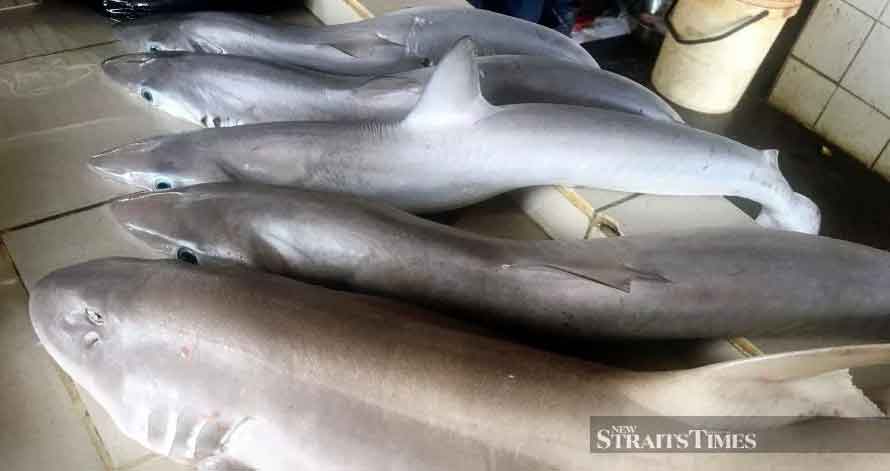
A report published by the International Union for Conservation of Nature (IUCN) warns that accidental catch, known as bycatch, is pushing many shark species towards extinction. Without urgent action, many shark species may be lost forever.
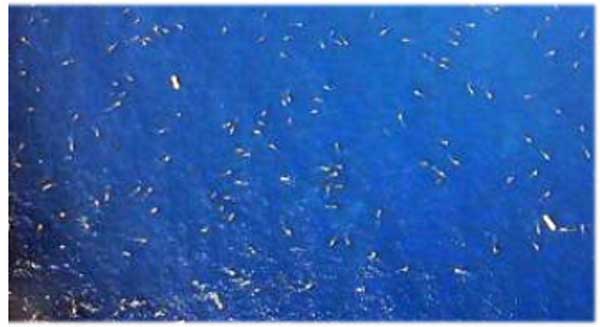
Sharks are often caught by commercial fishing vessels such as trawlers, longlines and purse seiners that are targeting other species. More than 138,000 individual sharks and rays were estimated to be caught by trawl vessels in Sabah, Malaysia, in a single year. The Marine Research Foundation based in Sabah is calling for greater regulation and enforcement of bycatch reduction measures to protect sharks and other vulnerable marine species.
Read more
| |
|
Coast Guard Catches Illegal Shark Fishers off Texas
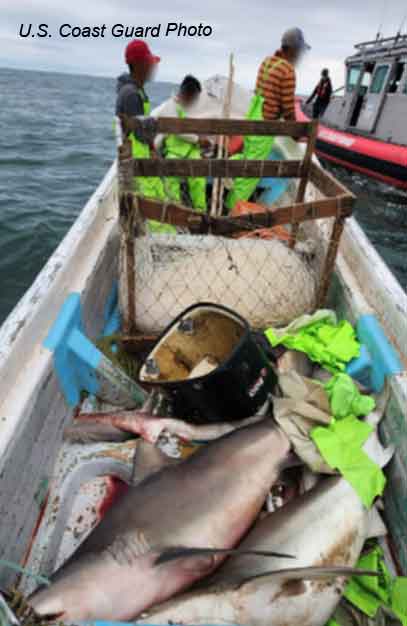
On Easter Sunday, the U.S. Coast Guard Cutter Edgar Culbertson caught four Mexican fishermen with 1,000 pounds of sharks caught in federal waters off Corpus Christi, Texas. The carcasses of 40 sharks the fishermen had on board their lancha included tiger, sandbar and white sharks.
The Coast Guard confiscated the illegal fishing equipment, then turned the fishermen over to U.S. border enforcement agents. Investigators did not report details of charges the men may face
Lanchas are 20- to 30-foot fishing boats frequently used “to transport illegal narcotics to the U.S. and illegally fish in the Gulf of Mexico near the U.S./Mexico border within the United States’ Exclusive Economic Zone. They’re slender boats with one outboard motor, and travel at about 30 mph.
Read more
| |
|
Warming Arctic Draws Marine Predators Northwards
Marine predators have expanded their ranges into the Arctic waters during the last 20 years, driven by warming waters and loss of sea ice due to climate change and related increases in productivity.
An international team of researchers led by Dr. Irene D. Alabia at the Arctic Research Center at Hokkaido University examined Arctic-wide and regional changes in species richness, composition, and potential species associations. They found the northward migration of hales, sharks and seabirds across eight large marine areas has increased over the study period, while fish and crabs (confined to the shallow continental shelf seas of the Pacific and Atlantic) exhibited a relatively limited degree of northward migration. "This information is relevant for strengthening conservation and management efforts for the sustainable use of resources under the expanding footprints of climate change in the Arctic," writes Dr. Alabia.
Read more
| |
|
5,000-mile Seaweed Belt is Washing onto Florida Beaches
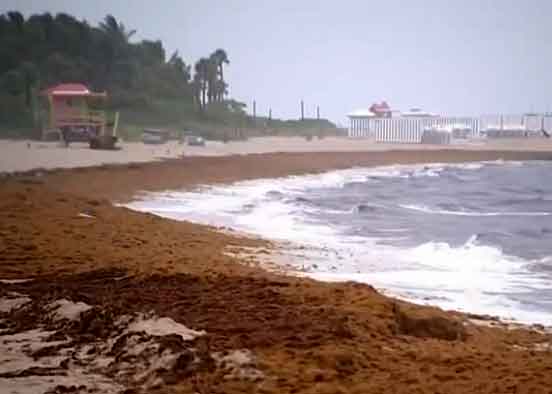
The Great Atlantic Sargassum Belt stretches from West Africa to the Gulf of Mexico. It is a 5,000-mile mass of seaweed and it has already begun to wash up on Florida beaches. Sargassum originates in a stretch of the Atlantic Ocean called the Sargasso Sea which has no land boundaries. Instead, it is bounded by four prevailing currents that form an ocean gyre. The Sea is bounded on the west by the Gulf Stream, on the north by the North Atlantic Current, on the east by the Canary Current, and on the south by the North Atlantic Equatorial Current. Together they form a clockwise-circulating system of ocean currents termed the North Atlantic Gyre. The sargassum provides breeding grounds, food and habitat for fish, sea turtles and marine birds.
Since 2011, when researchers first observed abnormally large accumulations of Sargassum in the tropical Atlantic Ocean, Caribbean and Gulf of Mexico, the blooms have gotten larger. According to the National Oceanic and Atmospheric Administration. Researchers from the University of South Florida recently estimated this year's seaweed bloom weighs 13 million tons and is growing. The European Space Agency says the bloom was visible from space and is likely the largest seaweed bloom ever recorded.
Some sargassum has already reached beaches in Key West, but most of it will arrive in the summer. As the algae decomposes under the hot sun, it releases ammonia and hydrogen sulfide (the rotten-egg stench). Brief exposure isn't enough to make people sick, but prolonged exposure may be hazardous for those with respiratory issues. Left to rot on the beach, sargassum can harm coastal marine ecosystems and supports the growth of bacteria.
| |
|
Red Tides
Harmful blooms of Karenia brevis algae, known red tides, result in massive fish die-offs along some of Florida’s most famous beaches, negatively impacting tourism. The algae creates toxins that kill fish, dolphins, manatees and birds, and cause respiratory irritation in humans.
Red tide was detected in Tampa last week, but thus far is not affecting Florida's Atlantic coast beaches or beaches in the Florida Panhandle.
To date there is no verified method to eradicate and prevent the red tide algae blooms, but a project at Florida Atlantic University has developed a laser-based platform to detect blooms of the algae: AUTOHOLO. This autonomous, submersible, 3D holographic microscope and imaging system, is designed to study marine particles and plankton in their natural environment. In trials, it took field measurements in the coastal Gulf of Mexico during an active K. brevis bloom over the 2020-2021 winter season. Results across diverse datasets with red tide concentrations at varying levels showed that it delivered 90% accuracy in its analysis and confirmed its ability to characterize particle abundance over large areas during bloom events. "In the future, the AUTOHOLO could be integrated into existing HAB monitoring networks to enhance the capability of detecting red tide in aquatic environments around the world", said Malcolm McFarland from the FAU's Florida Center for Coastal and Human Health.
| |
|
Stan Waterman
April 5th was a special day for Stan Waterman!
SRI, the Women Divers Hall of Fame and thousands of Stan's friends around the world celebrated his 100th Birthday. Stan has spent a lifetime working to protect sharks and the ocean.
We are extending the celebration and delivering your cards, photographs and messages to Stan. Please keep them and your warm wishes coming; they mean more to him than you may realize. Cards can be sent to him at:
Stan Waterman
c/o Shark Research Institute
70 Heather Lane
Princeton, NJ 08540
USA
| |
|
Tenth Anniversary Photo Competition for UN World Oceans Day
The annual Photo Competition for the World Oceans Day is hosted by the United Nations. It is curated by Ellen Cuylaerts and a jury composed of world-renowned individuals. This free competition is open to the public and has six thematic categories open for submissions. The categories are purposely broad to encourage photographers interpretations and artistic visions.
● No Time To Waste: Both human and naturally inflicted stressors on the ocean. Submissions for this category require a set of three images. For the other categories, you may enter up to three images.
● Putting the Ocean First: Exploration, discoveries, and initiatives prioritizing the health of the ocean for now and for the future, including innovation and sustainable solutions.
● The Wonderful World of Tides: Images that explore how nature adapts to changing environments,
● Ocean Is Life: This category captures the known, the unknown, and the overlooked.
● Big and Small Underwater Faces: Portraits of marine life underwater that feature faces big and/or small to help personalize the world beneath the waves.
● Underwater Seascapes: Awe-inspiring underwater seascapes of the ocean’s splendors.
All entries must be submitted electronically in accordance with the contest guidelines and subject to the contest rules by April 23, 2023 at 12 midnight Eastern Standard Time (EST). https://www.divephotoguide.com/wodphoto
Winning images will be recognized at the United Nations on June 8, 2023 during the United Nations' event marking World Oceans Day 2023. Recognition and diffusion of the winning images and finalists will be widely exposed throughout the contest websites, the media and the informational materials related to subsequent competitions. Winning photos have been printed for exhibitions around the world.
https://unworldoceansday.org/photo-competition/
| |
|
Notes
Free to Library or School: National Geographic Magazines. We have Hundreds of issues of NGM from the 1920’s to present, including many bound volumes. Must pick up at SRI Headquarters.
Amazon.com is offering an opportunity to generate donations to the Shark Research Institute at no extra cost to you. Simply start your shopping at smile.amazon.com/ch/22-3110087, confirm "Shark Research Institute, Inc." as your charity of choice, and Amazon will make a donation to our organization.
Consider a tax-deductible year-end gift to the Shark Research Institute. Just mail a check to SRI at 70 Heather Lane, Princeton, NJ 08540, USA, or go to the link on our website.
You may join or renew your membership in the Shark Research Institute, or make a donation of any size at https://www.sharks.org/donate
Note: All donations are tax-deductible from U.S. federal income taxes as
charitable donations and help fund our field research, advocacy and education programs.
| |
Please share this free weekly newsletter with your friends and family to help grow our audience. All they need to do to receive the newsletter is simply sign up on our website’s home page (https:www.sharks.org)
We all have a lot of work ahead to protect sharks and the ocean,
and combat climate change while there is still time.
| | | | |