|
IDEAS, NEWS AND RESOURCES | April 2016
We hope you enjoy receiving our newsletter which includes constructionist ideas and practices as well as news and resources from the Taos Institute.
|
|
Brief Encounters
with The Taos Institute
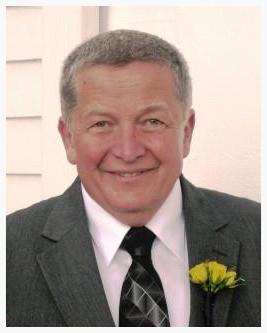
This month we welcome Samuel Mahaffy as he shares reflections on Global Peace Making...
Social Constructionists as Provocateurs for Peace -- Creating Inclusive Dialogues for Local and Global Peace Making
How might we, who seek to live-into relational practices, be provocateurs for peace?" The lyrics of the great spiritual
Down by the Riverside
proclaim: "I ain't gonna study war no more." How might we make a difference in a world that is entranced and captivated with the notion of war and violent response to acts of terrorism and violence?
The social and linguistic co-construction of "The Enemy" as the projected antagonistic other, plays a central role in violent conflicts engulfing our world. It also dominates the collective response to these events. This predominant narrative grows from and enhances a division of our world into absolute oppositional categories of friends vs. enemies, good vs. evil, and us vs. them. The bifurcation of our world through the friend/enemy distinction in many ways defines the spirit of the times (zeitgeist) in which we live. World leaders and the major media coalesce around the dominant narrative of the enemy that is currently identified as ISIS. Our response to violent conflict keeps us trapped in cause and effect relationships and preempts our ability to find pathways out of cycles of perpetual violence and violent responses to violence. Alternative discourses about recent acts of violence are marginalized because any critique of the dominant discourse are frequently interpreted as a disruption to the global response to terrorism. But, even the discourse about peacemaking starts with the a-priori presumption of this ontological and epistemological duality of the friend/enemy.
If the co-construction of the dominant narrative about the enemy is dooming us to a perpetual state of violent conflict, where might we discover alternative and life-giving narratives? Is it precisely
in disrupting the predominant narrative of the enemy that we open the possibility to escape from a cycle of perpetual violence?
I suggest that, as social constructionists and relational practitioners, we have a vital perspective to bring forward in a world that perpetually stumbles in its journey to seek peace and peaceful resolution of violent conflicts. We are in a unique place to be agents for peacemaking by both deconstructing the predominant discourse about war and retribution, while at the same time supporting the co-construction of new metaphors, new ways of speaking, new rituals and discourses of peace-making.
I find compelling the notion of relational presence as a researched and lived approach to an alternative and inclusive discourse. The construct of relational presence allows us to move beyond cause and effect to a multi-voiced transformative dialogue. At the core of this approach, which grows from social constructionist ideas, decision-making science and linguistic analysis, is the notion that we must begin with the relationship instead of with the agenda, if we are to move beyond cycles of perpetual violence. We can be relational leaders in re-configuring the inquiry about conflict transformation and peacemaking. But how do we make peacemaking a lived practice in our homes, communities and globally rather than an abstract construct? It is the emerging frontier of my journey with the Taos Institute community to seek ways to integrate research, reflective practices and rituals that promote peace.
The African proverb --When We Eat from a Common Dish, We Have No Enemies --becomes a salient metaphor for not only promoting dialogue but also just sharing of the world's resources. This is the wisdom that the world is never clearly black or white. There may be the friend ontologically nestled and residing within our construct of the enemy. In the presence of the enemy is the potential for the friend with whom we can break bread. The notion of hosting or breaking bread together has historically served to disrupt the construct of the enemy. The one we share a meal with cannot remain faceless.
In eating from the common dish of shared ideas and co-discovered meanings, we might yet find together new and life-giving ways of responding purposefully and positively to the violence erupting in our world. His Holiness, The Dalai Lama writes: "The planet does not need more successful people. The planet desperately needs more peacemakers, healers, restorers, storytellers and lovers of all kinds." As relational constructionists, might we be these peacemakers, healers, restorers, storytellers and lovers of all kinds?
**************************
Samuel Mahaffy is an Associate of the Taos Institute. Born and raised in Eritrea, East Africa, he facilitates conflict transformation in deeply-divided organizations and is active in supporting peacemaking around the world. He earned his MA from the University of Michigan in Linguistics and his PhD from Tilburg University in the Netherlands through The Taos Institute. The topic of his research was Relational Presence: Decision Making Beyond Consensus.
Researchers as Provocateurs for Peace.
Presentation at the 5th International Qualitative Research in Management and Organization Conference.
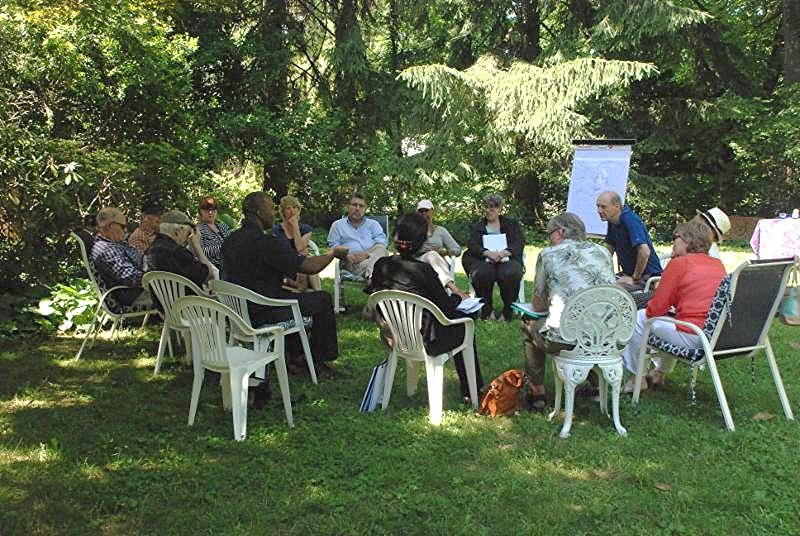
Dialogue, Disruption and Inclusion
Albuquerque, New Mexico, USA
***************************************
|
|

Taos Institute Events and Gatherings - The Many Ways to Get Involved.....
November 10-12, 2016
Pre-conference workshops - Nov. 9-10, 2016
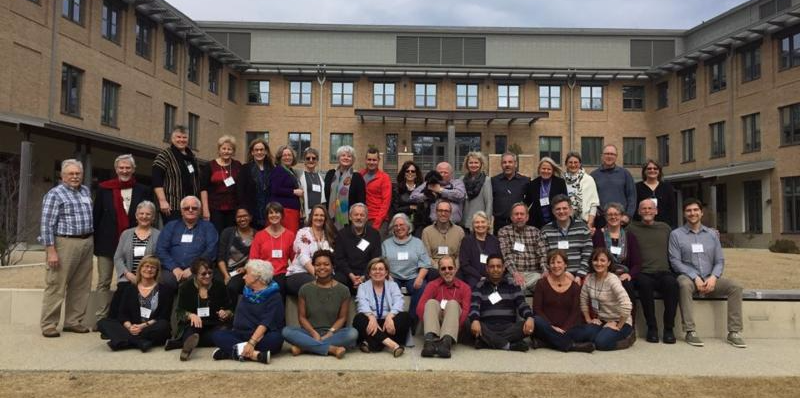
This conference will bring together scholars and practitioners to explore, share and develop ideas and practices around health and effective healthcare through relational, appreciative, and collaborative initiatives. We will explore how this fundamentally depends on a vast matrix of relationships. Relationships between and among patients, families, physicians, nurses, administrators, educators, insurance adjustors, attorneys, social workers, mental health practitioners, and clergy, are all included.
Conference themes will include Innovations in Relational, Collaborative, and Appreciative Practices in:
- Patient, Family, and Professional Relationships
- Healthcare Organizations, Policies, Practices and Whole System Change
- Healthcare Education
- Connecting Community and Healthcare
Who should attend:
- Healthcare providers and practitioners - All those involved with care giving at all levels of care
- Healthcare and medical educators
- Consultants to healthcare organizations
- Students from all healthcare professions
- Healthcare Executives, Senior Managers and Other Leaders
- Insurance companies, lawyers and policy makers
- Patients and community members
****************************************************************************************
June 29 - July 1, 2016 in Copenhagen, Denmark
Once again Taos Institute will partner AttractorCourses in creating a very special atmosphere were dialogue, learning, relationships and new knowledge are the main purposes of the conference.
We invite you into the dialogues about both well-known and emerging ideas, facilitated by renowned international practitioners and researchers through an open and participative atmosphere. Join us for three days filled with stimulation and inspirational ideas originating from all over the world.
http://www.attractor.dk/english/summer-institute
***************************************************************************************
Workshops
Taos Institute Workshops
- Social Construction, Relational Theory and Change Practices | June 3-5, with Ken and Mary Gergen, Wallingford, PA
- ISI - Collaborative-Dialogic Practice across Culture and Context | June 19-23, with Harlene Anderson, et.al, Cancun, MX
- Collaborative Inquiry: A Methodological Exploration | Sept. 29-30, with Celiane Camargo-Borges, and Jasmina Sermijn, Belgium
- Social Construction: Relational Theory and Transformative Practices | October 27-29, with Harlene Anderson and Sheila McNamee, Durham, NH
- Social Construction: Premises and Practices | Oct. 31 - Dec. 12, An Online Workshop, with Celiane Camargo-Borges and Dawn Dole
**************************************************************************
- Discover Development: Study and Train at the Eastside Institute | May 20 - 22, with Lois Holzman and staff
- Appreciative Inquiry - Northeast US Gathering, and the AI in Education Meeting: Share, Teach and Learn| June 2-3, at the David L. Cooperrider Center for Appreciative Inqiry, Champlain, VT
- Dialogue and the Arts of Transformative Change Work | June 14 - 17, England, UK, with Dian Marie Hosking and Maggie Shelton
- Performing the World | Sept. 23 - 25, NY, with the Eastside Institute
- International Class: Study and Train at Eastside Institute | 10-month class begins Sept 23
- Discover Development NYC | Sept 26-27, with the Eastside Institute
|
Join the next gathering of AI Practitioners!
|
We are thrilled to bring you all the WorldShare Books and we hope you will take a few minutes to download your free copies today.
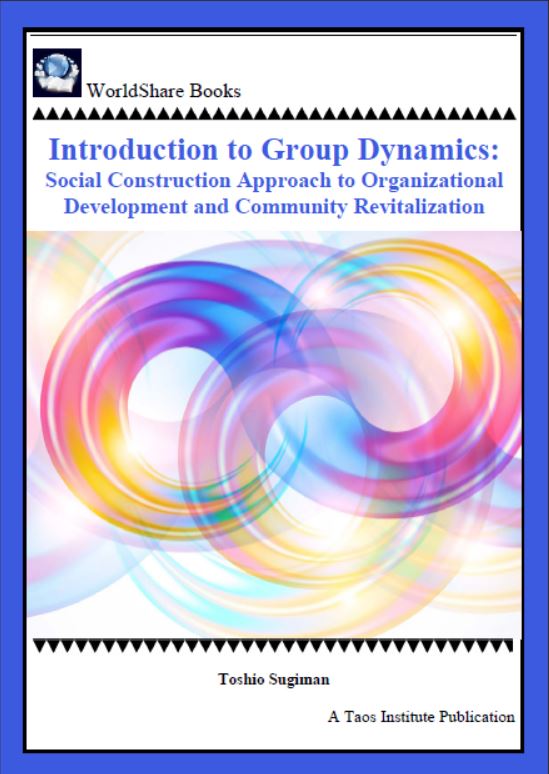
INTRODUCTION TO
GROUP DYNAMICS:
Social Construction
Approach to
Organizational
Development and
Community
Revitalization
by Toshio Sugiman -
New books in Spanish:
DIÁLOGOS PARA LA TRANSFORMACIÓN: experiencias en terapia y otras intervenciones psicosociales en Iberoamérica - Volumen 1Dora Fried Schnitman, editora
DIÁLOGOS PARA LA TRANSFORMACIÓN: experiencias en terapia y otras intervenciones psicosociales en Iberoamérica - Volumen 2, Dora Fried Schnitman, editora
RECURSOS PSICO-SOCIALES PARA EL, POST-CONFLICTO, Ángela María Estrada, Mesa y Catalina, Buitrago Murcia, Editoras
CONSTRUCCIONISMO SOCIAL Y DISCUSION DE PARADIGMAS EN PSICOLOGIA: Indeterminacion, Holismo y Juegos de Lenguaje vs. La Teoria Pictorica del Lenguaje by Roberto Aristegui
See all the WorldShare Books >
|
|
NEW Positive Aging Website
Positive Aging in Action
Website host: Samuel Mahaffy
Contributors: Ken and Mary Gergen
Come join us online at this interactive website. Share resources, stories and questions around Positive Aging in Action.
See more at:
www.positiveaginginaction.org
|
|
|
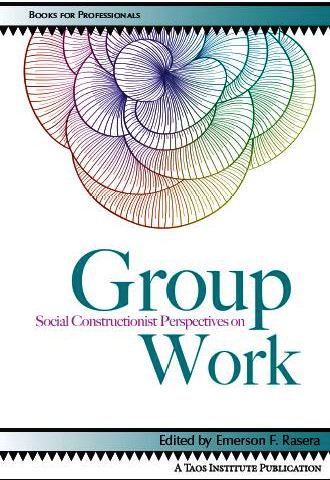
SOCIAL CONSTRUCTIONIST PERSPECTIVES ON GROUP WORK
|
by Emerson F. Rasera
Taos Institute Publications, 2015
|
|
|
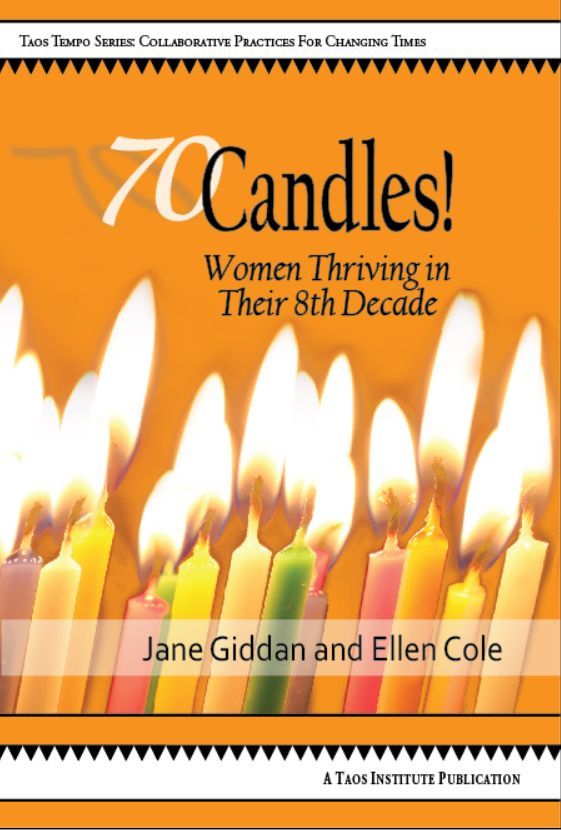
70Candles! Women Thriving in their 8th Decade
|
by Jane Giddan and Ellen Cole
Taos Institute Publications, 2015
ISBN: 978-1-938552-35-9
|
|
|
|
|
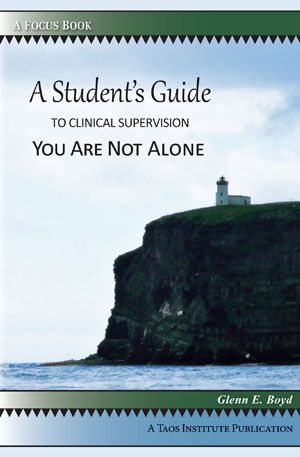
A STUDENT'S GUIDE TO CLINICAL SUPERVISION: You Are Not Alone
|
|
|
|
POSITIVE AGING NEWSLETTER
|
Sign up for this free newsletter in the following languages:
- English
- Spanish
- Danish
- German
- French
- Chinese
- Portuguese
By focusing on the positive aspects of aging, and the availability of resources, skills, and resiliencies, research not only brings useful insights into the realm of practice but creates hope and empowers action among older people. By moving beyond practices of repair and prevention, to emphasize growth-enhancing activities, practitioners also contribute more effectively to the societal reconstruction of aging.
|
|
|
Online Dialogues
at the
Taos Institute Online Community Space
|
Join the Taos Institute NING Online Community website
Participate in online conversations, share resources, ask questions, connect with others doing similar work. Also, we feature special events on this community website.
Join in many different forums, groups and conversations:
1. Taos Institute Europe
2. Collaborative Governance
3. Relational Learning
4. Relational Research
5. Taos Latin America
6. Intergenerativity and Innovation
and many more at:
http://taoslearning.ning.com/
|
|
|
|
|
INTERNATIONAL JOURNAL OF COLLABORATIVE PRACTICES
|
Welcome (Bienvenidos) to the International Journal of Collaborative Practices. The Journal brings together members of a growing international community of practitioners, scholars, educators, researchers, and consultants interested in postmodern collaborative practices.
Sponsored by Taos Institute and Houston Galveston Institute
Issue 5 - Available Now in English and Spanish -
|
|
|
International Certificate in Collaborative Practices
The International Certificate Collaborative-Dialogic Practices (ICCP) is an interdisciplinary program that provides an intensive, in-depth study of postmodern-social construction-relational theory and the possibilities for personal, organizational, and social transformation that flow from this orientation. The program focuses on the theoretical and philosophical assumptions of collaborative-dialogic practices as transformational and the application within and across disciplines, contexts, and cultures. Practice examples include working with personal and social issues, in educational contexts, organizations, research, community work, healthcare, and more.
There are more than 15 certificate programs around the world. Find one in your location.
See more at:
http://collaborativepractices.ning.com/
|
|
|
 |
|
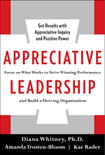
Reflections on Appreciative Leadership
April 4 - 8 - It was an inspiring week!
We had a lively and engaging week in dialogue with Diana and Amanda on their book and the ideas, theories and practices of Appreciative Leadership. You can still visit the dialogue to see what everyone was exploring that week. Also, the recording to the webinar is available for free on this webpage. Click here.
Appreciative Inquiry has become one of the most popular new management tools in business today. Its premise is simple yet profound: Instead of focusing on what's wrong in the workplace, learn about and build upon what works. Dr. Diana Whitney--a leader in the field of Appreciative Inquiry--and colleagues Amanda Trosten-Bloom and Kae Rader, in their book, bring the next generation of these ideas forward, with practical and proven tools for leadership. A refreshingly different approach to managing organizations, Appreciative Leadership turns conventional management thinking on its head, demonstrating how to get results with "positive power." All you need are the five "I's":
- INQUIRY: Leading with positively powerful questions.
- ILLUMINATION: Bringing out the best in people and situations.
- INCLUSION: Engaging with others to co-create the future.
- INSPIRATION: Awakening the creative spirit.
- INTEGRITY: Making choices for the good of the whole.
This revolutionary approach brings people together, drives companies forward--and takes your leadership skills to a whole new level.
|
|
The Taos Institute's mission is to bring together scholars and practitioners concerned with the social processes essential for the construction of reason, knowledge, and human value.
We are committed to exploring, developing and disseminating ideas and practices that promote creative, appreciative and collaborative processes in families, communities and organizations around the world through a social constructionist lens.
We look forward to your participation in the dialogue.
Keep up with our updates!
Dawn Dole, Executive Director
The Taos Institute
|
|
|
|
|
|