The Lower Blackwood Land Conservation District Committee acknowledges the Traditional Owners of the Land on which we live & work. We acknowledge the Wadandi / Pibulmun people of the Bibbulmun nation and pay our respects to Elders past, present & future.
| |
Stories, News & Events from the District | |
Breaking News & Opportunities | |
1st Tranche of Aboriginal Cultural Heritage Regulations Released | |
|
In our March edition of LCDC eNews we published an article about the new Aboriginal Cultural Heritage Act 2021 (ACHA) – the recent Act which requires land users to negotiate agreements with Traditional Owners for any activities considered medium to high ground disturbance and may harm Aboriginal cultural heritage sites. The implementation of the Act is supported by regulations to provide guidance and clarity to the processes set out in the Act, and the first tranche of these Guidelines have just been released publicly.
The Guidelines are the result of extensive consultation and feedback from Traditional Owners, Aboriginal people, landowners and industry representatives. They will be published in two tranches. The first, published now, is available here: Aboriginal cultural heritage guidelines.
The guidelines are designed to help navigate the new framework, with land use activities falling into four categories. These categories determine if the activity is exempt, doesn't need a formal approval or may require a permit or a more comprehensive cultural heritage management plan. Details of undertaking a Due Diligence Assessment (to initially determine the category of the activity) are explained in the ACH Management Code. Here’s a link to the tiered assessment process.
The Lower Blackwood LCDC will endeavour to keep you updated as further Guidelines are released, but we strongly recommend that you with familiarise yourself with the Act and Guidelines and consider how they might impact your land management decisions.
| |
This Webinar from the Department of Planning, Lands and Heritage outlines the details of the Act (from 2020) | |
|
Put a Coat on Your Seeds!
Dressing seeds is a very cost-effective way to directly apply materials that stimulate germination and/or support the healthy establishment of plants – this is particularly true in soils that are not balanced nutritionally.
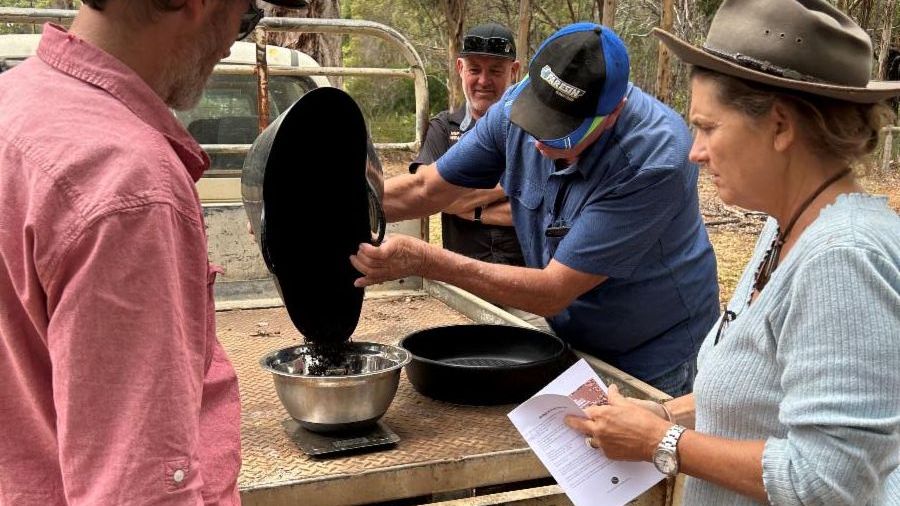
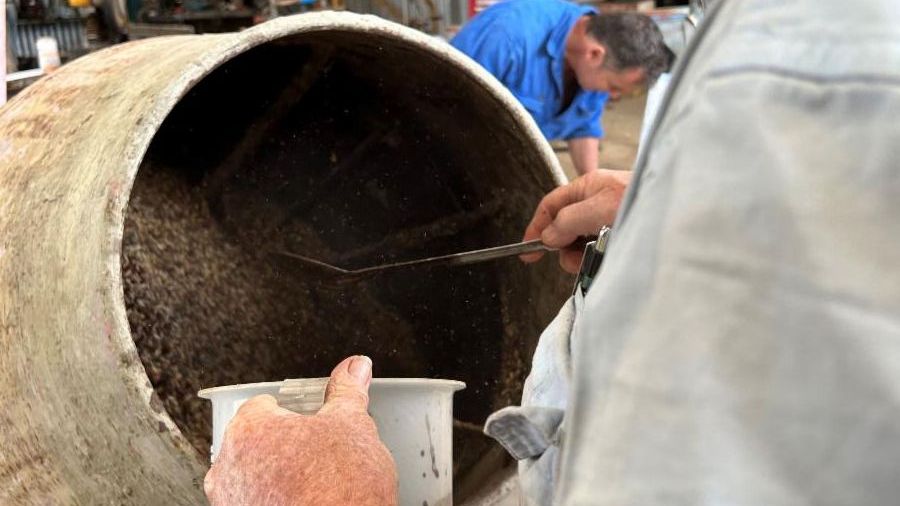
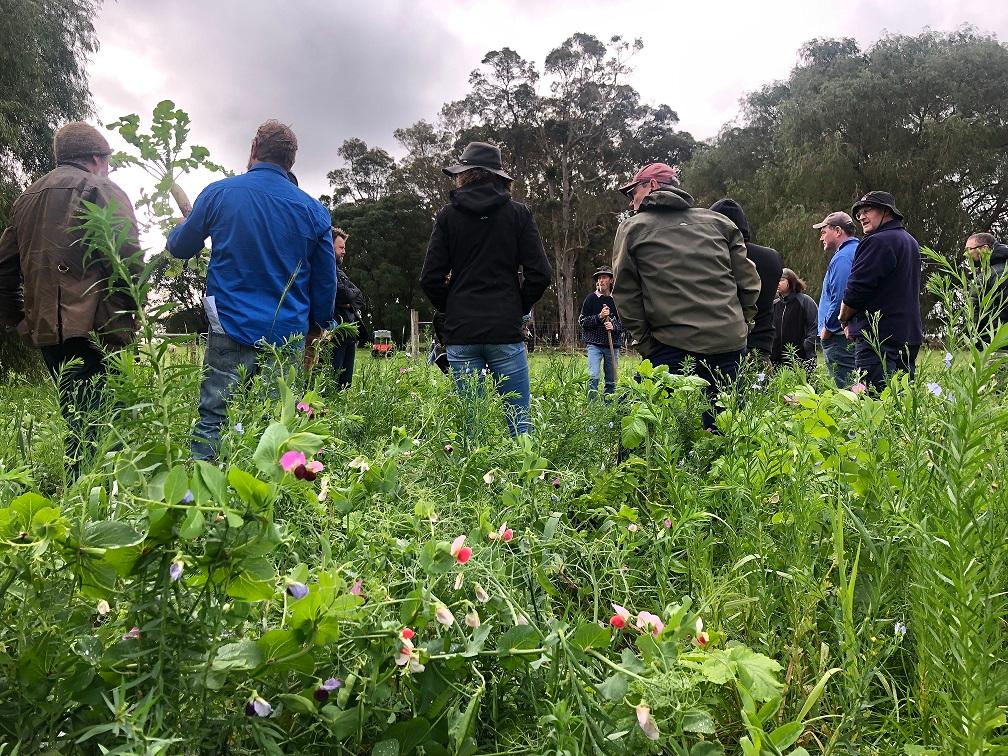
We got hands-on at the end of last month for our latest Regenerative Agriculture in Practice Program (RAPP) Peer Group session with project consultant Mark Tupman from Productive Ecology giving participants a practical demonstration on making a biological seed coating and to coat seed in preparation for seeding…just in time for the break!
Mark is very happy to share his recipes with all of our subscribers so here they are: Soil & Seed Priming for Multi Species Pasture Seeding.
| |
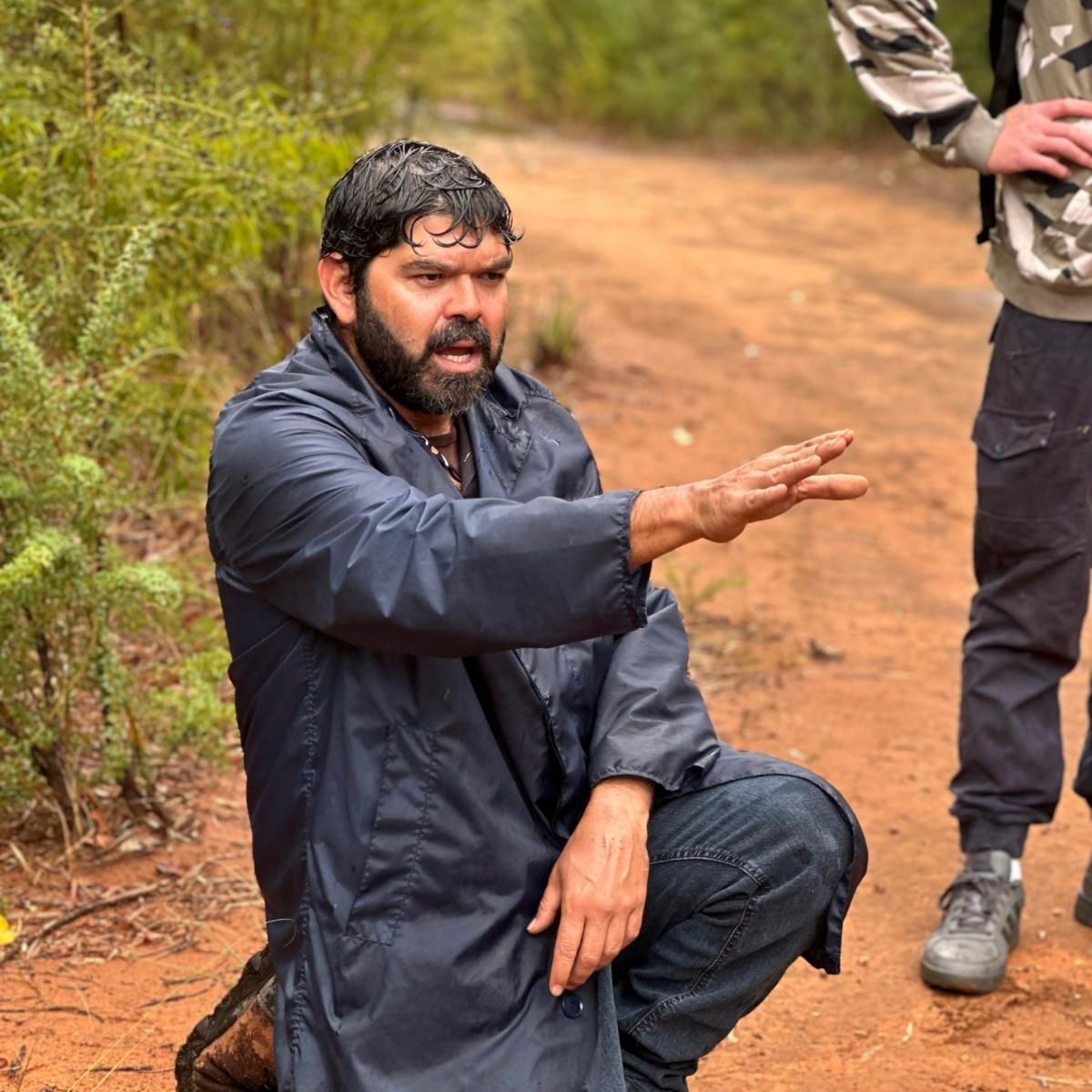
Mark Tupman discusses the seed coating ingredients and why they are in the mix. | |
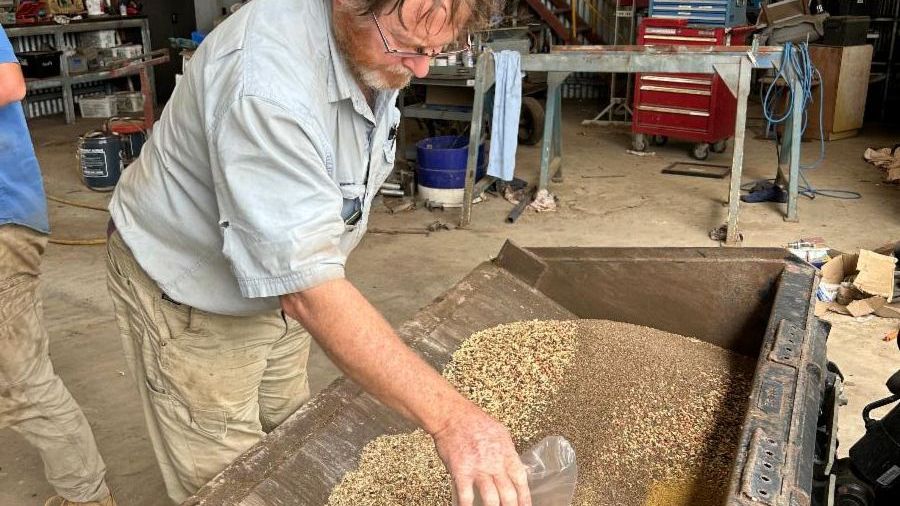
RAPP Alumni member Brett Haselden coating seed in preparation for autumn seeding 2023 | |
RAPP participants Neville Haddon & Veronique Plazy mixing seed coating ingredients | |
Dairy Farmer Tim Crimp mixing seed | |
|
This event forms part of our Regenerative Agriculture in Practice Program (RAPP) 2023 and is delivered in partnership with the Lower South West Growers Group and supported by the Augusta Margaret River Shire Environmental Management Fund. | |
|
|
|
Beyond Sustainable!
Meet the local farmers looking to regenerate their land for a healthier, happier future
| |
|
As part of our Regenerative Agriculture in Practice 2022 project we catalogued the motivations, challenges & experiences of a number of local farmers who are incorporating regenerative farming principles into the way the run their daily operations.
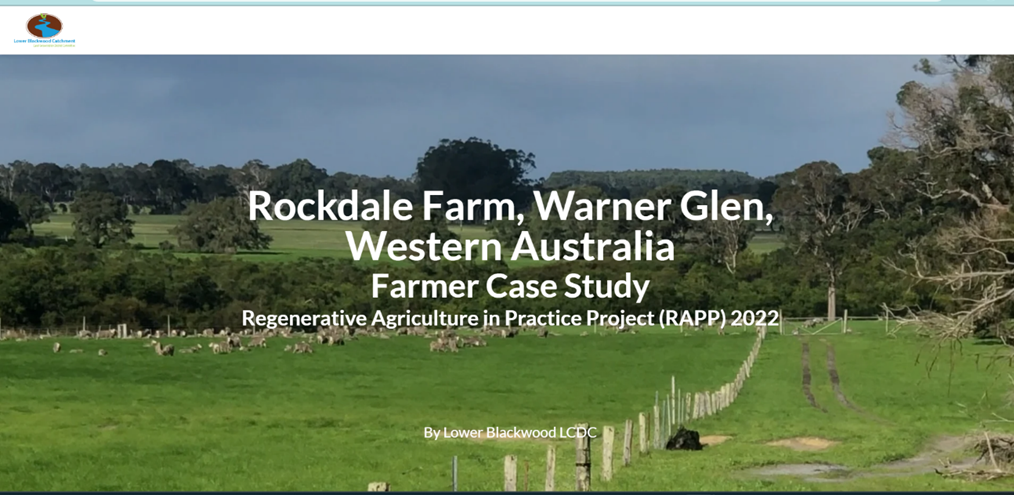
Over the next few months, we'll be sharing some of their stories with you - some are just at the beginning, others are some ways down the track but regardless of where they are at, we are sure that you will find them just as interesting and inspiring as we have. Click the image below to read about Gemma and Justin's experience of the RAPP 2022 project.
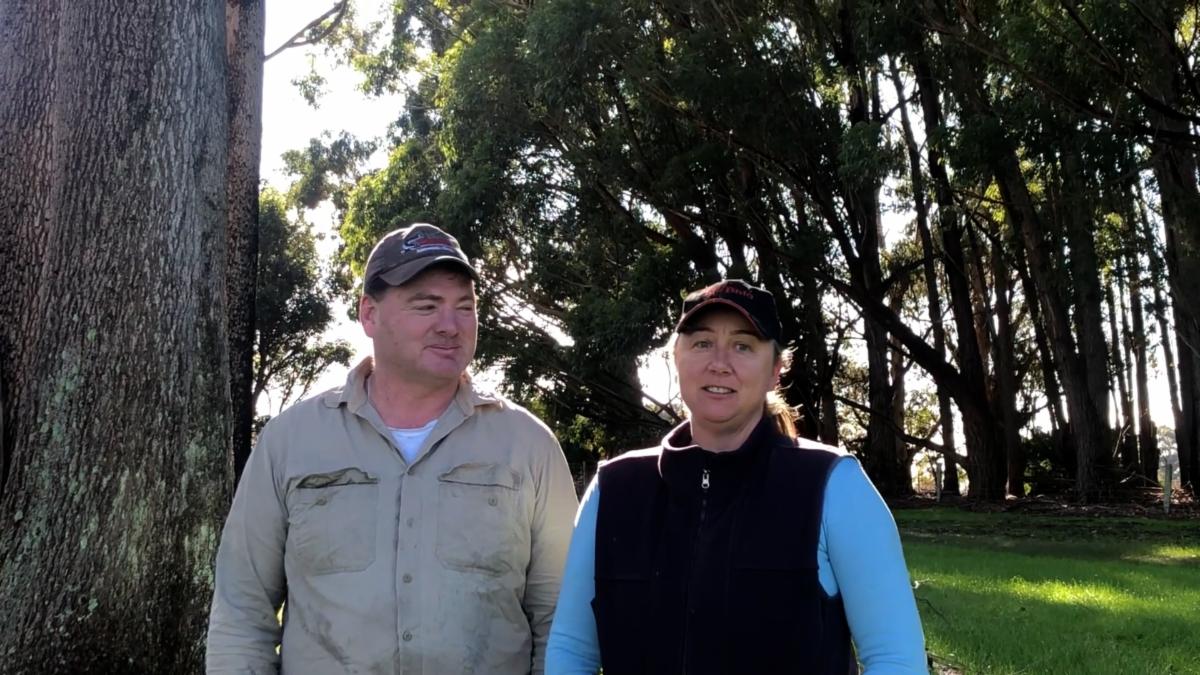
Justin and Gemma Todd, Rockdale Farm, Warner Glen
‘Rockdale’ is the Todd family’s sheep farm, covering 270 acres on Warner Glen Road.
| |
An on-farm grazing consultation with Dr Judi Earl (RAPP 2022) | |
This case study formed part of our Regenerative Agriculture in Practice Program (RAPP) 2022 and is delivered in partnership with the Lower South West Growers Group and supported by the Augusta Margaret River Shire Environmental Management Fund. | |
|
|
Pigs Plundering Pastures... | |
Watch out – the pigs are about! Sadly, these aren’t just three little piggies, but it seems that the recent germination has brought out the big boys in search of the fresh shoots. This is a great time to spot feral pig damage as their hoof prints should be quite visible in the soft ground, but they are also causing significant damage to emerging plants as they forage for fresh greens.
The Scott River rains have fallen hard over the last week or so, and as well as boosting pastures it’s also having an impact on our trapping efforts. The top photo shows some trapped pigs – but the photo below shows the same trap two weeks later – totally submerged.
Local landholders are extremely helpful and vital to the success of the project. We rely on your ongoing information and support as you help us to ensure that pig sightings and damage are recorded to identify hot-spot areas where the field officers can focus their work. This approach has been enormously successful with the trapping numbers escalating already.
| |
Pigs caught in a Scott River trap | Same trap two weeks later! | |
This Feral Pig Focus - Protecting the Scott Coastal Plain 2022 -2025 project is supported through funding from the State Natural Resource Management Program, the Shire of Nannup, and Ents Forestry, and is delivered through a continuing partnership with the Lower Blackwood LCDC, and the Lower Blackwood Vertebrate Pest Management Group. | |
Thinking of a Revegetation Project? | |
|
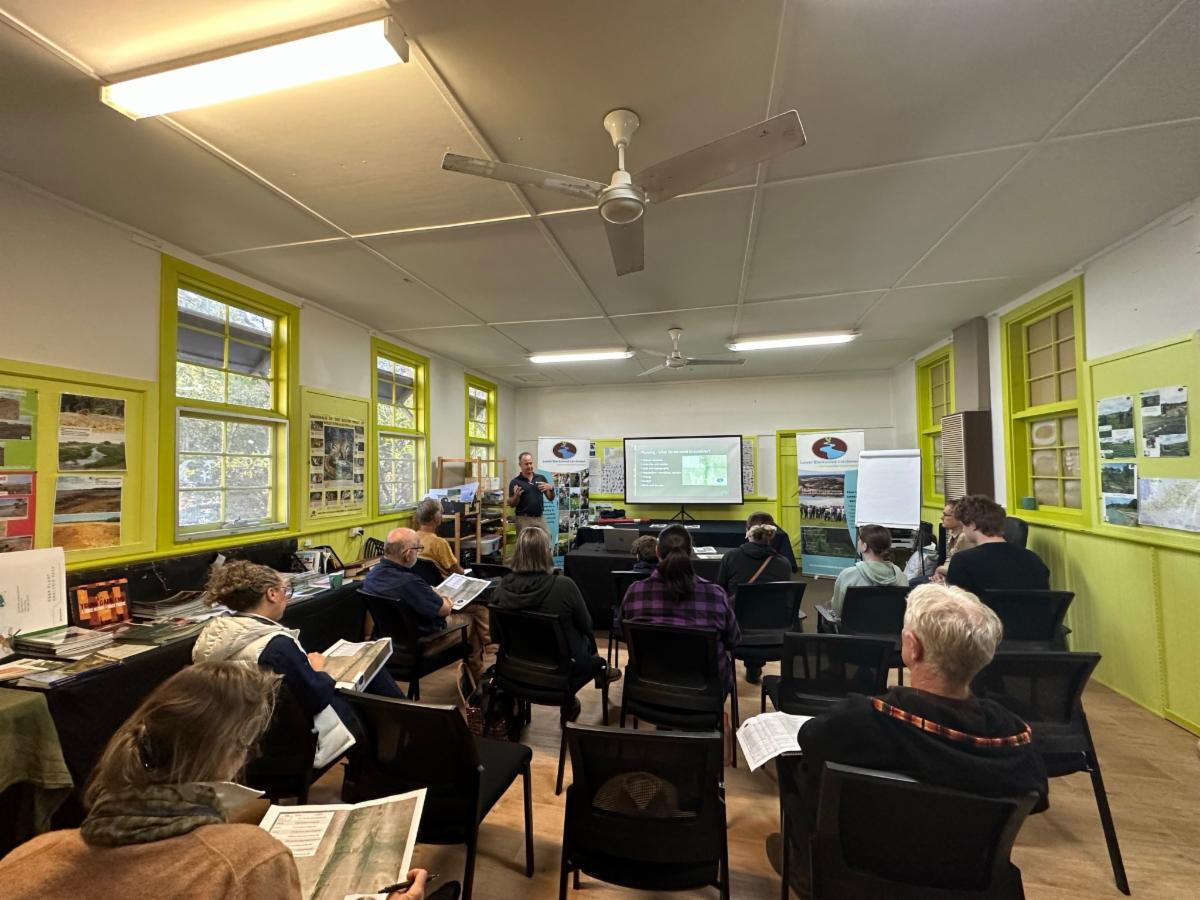
Jarrod Sherborne, from Tranen Revegetation Systems and Lower Blackwood’s Revegetation Officer Andrew Hemsley presented to an enthusiastic audience of landowners about managing successful reveg projects. Jarrod reminded us that planning the project was key to success – and a major factor in that plan should be identifying why you’re doing the project. Identifying your end goal will directly impact everything from plant selection and seedling density to management schedules and maintenance.
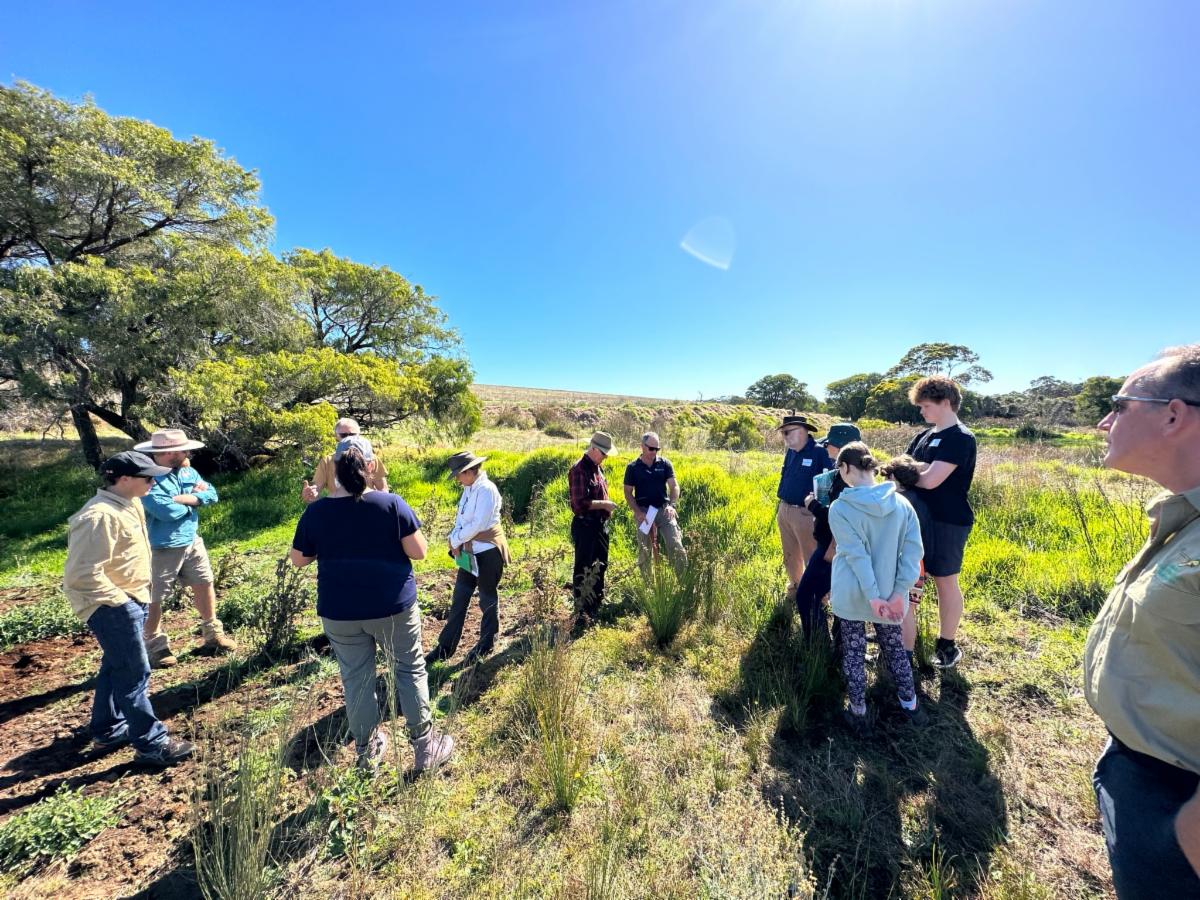
The presentation was followed by a field walk to a recent reveg project at Jamie Pattons’ farm in McDonald Road, Karridale, where the crew discussed the site’s challenges and successes, as well as specific plant selections.
Didn't make it to the workshop? Check out our ‘Riparian Revegetation Project Pack’ and the presentations from the day. Creekline Revegetation for Land Managers & Native Plants for Riparian Revegetation Lower Blackwood Catchment
If you have a revegetation or fencing project site in mind, now’s the time to start planning. Register your interest here or email Andrew Hemsley our Revegetation Officer (tel. 0498 005 905.)
| |
|
|
Pasture Biodiversity - It's a Wrap!
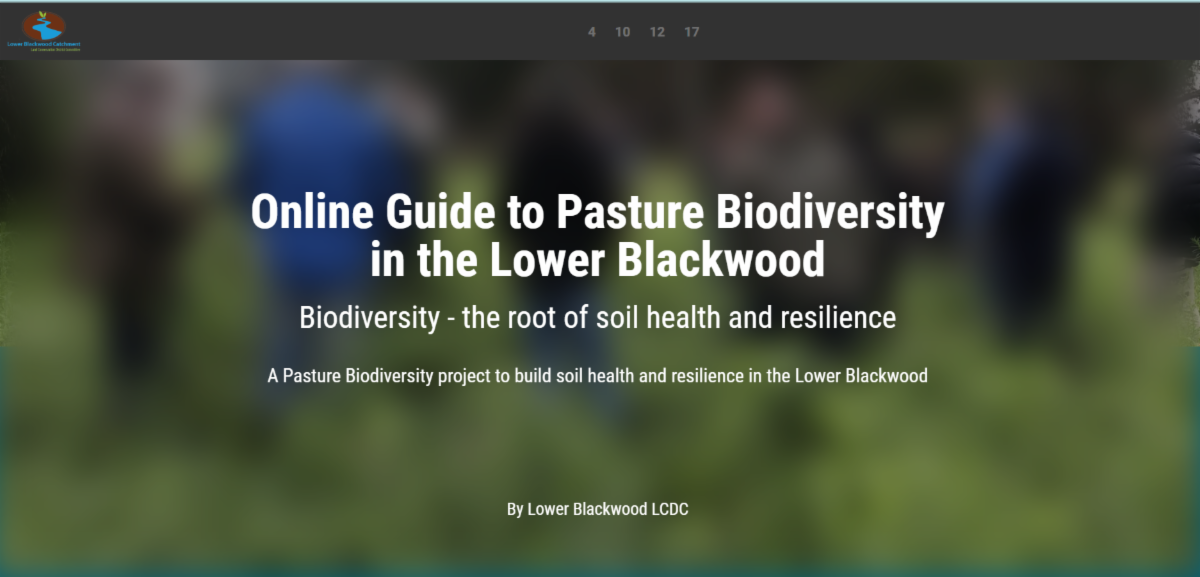
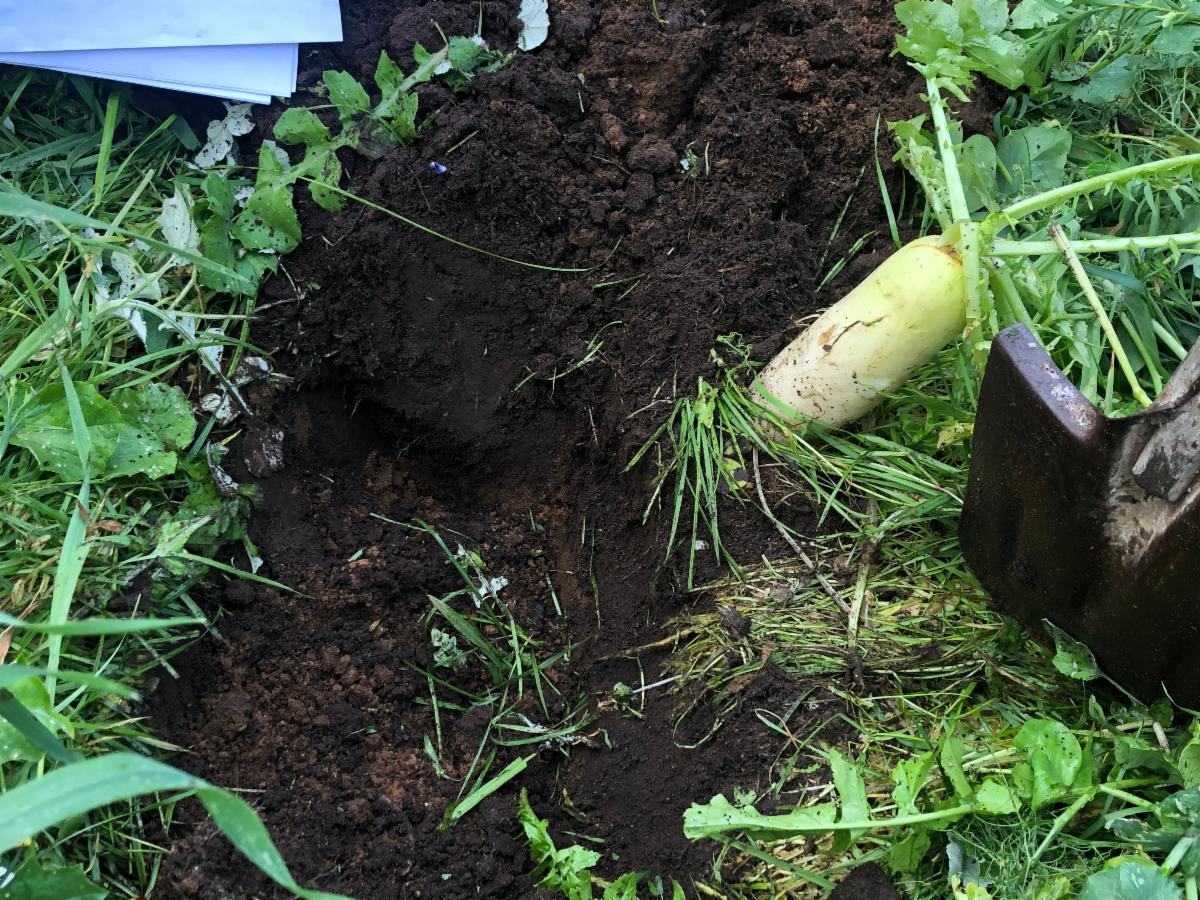
It’s a wrap! After 18 months of workshops, field walks, demonstration sites, webinars, podcasts and practical seeding projects we’ve come to the end of our ‘Pasture Biodiversity to Build Soil Health & Resilience in the Lower Blackwood’ project.
The goal of the project was to demonstrate the efficacy of multi species cover crops and perennial pasture plants as a means to improve farm drought resilience in the Lower Blackwood catchment
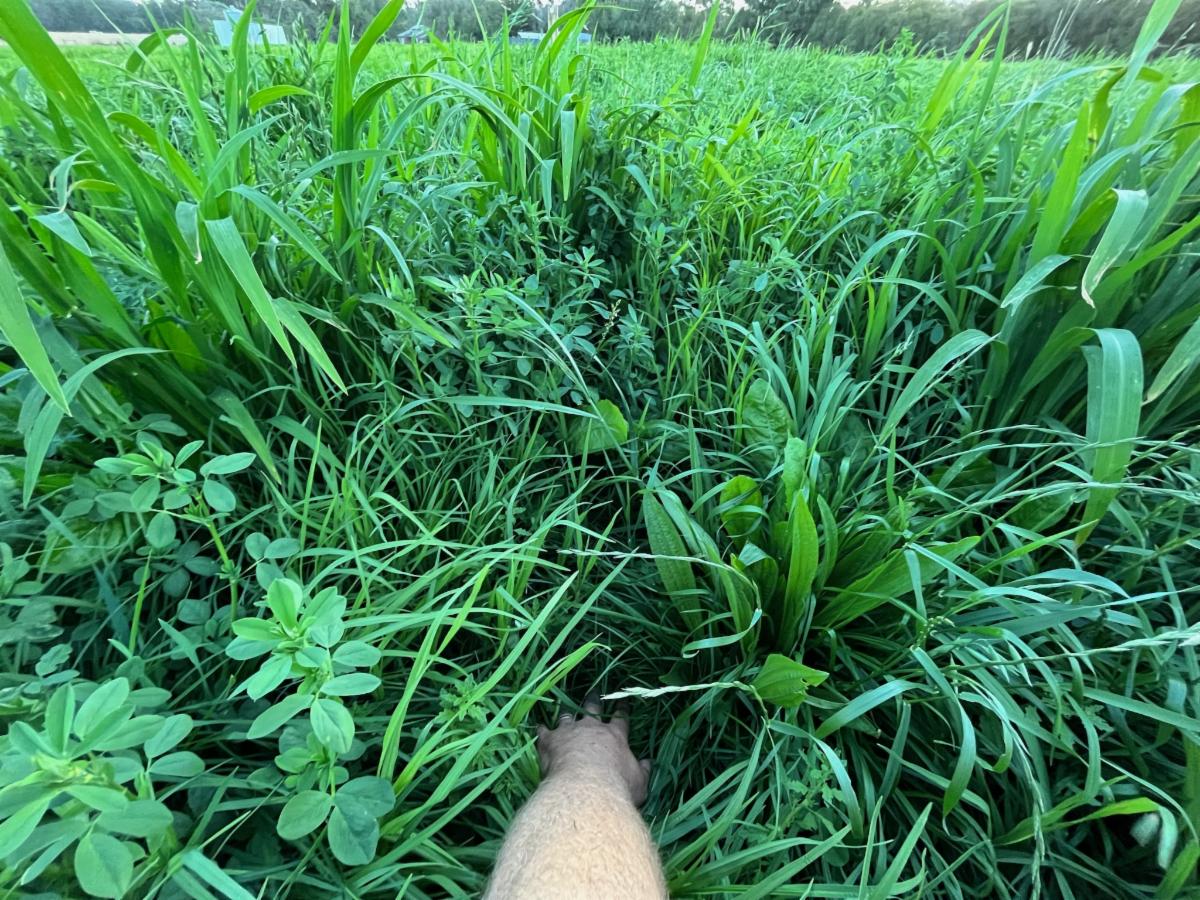
Project consultant Mark Tupman worked with the LCDC to develop a comprehensive online guide which outlines all the learnings from the project, including details of tailored multi species mixes, customised blends, soil priming and sowing a cover crop.
|
|
| |
This project received funding from the Australian Government’s Future Drought Fund. | |
|
|
Congratulations to Margaret River Region Eco Growers!
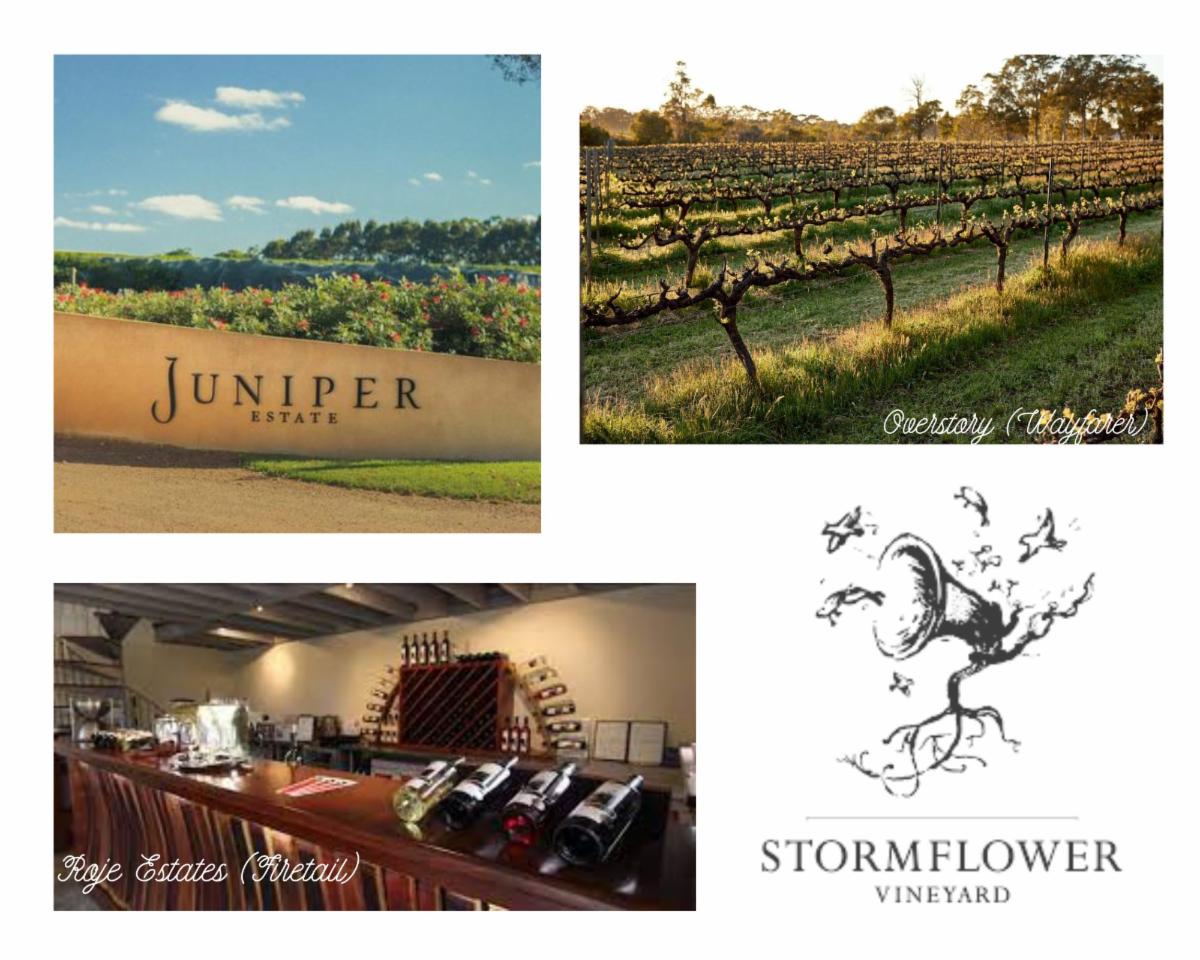
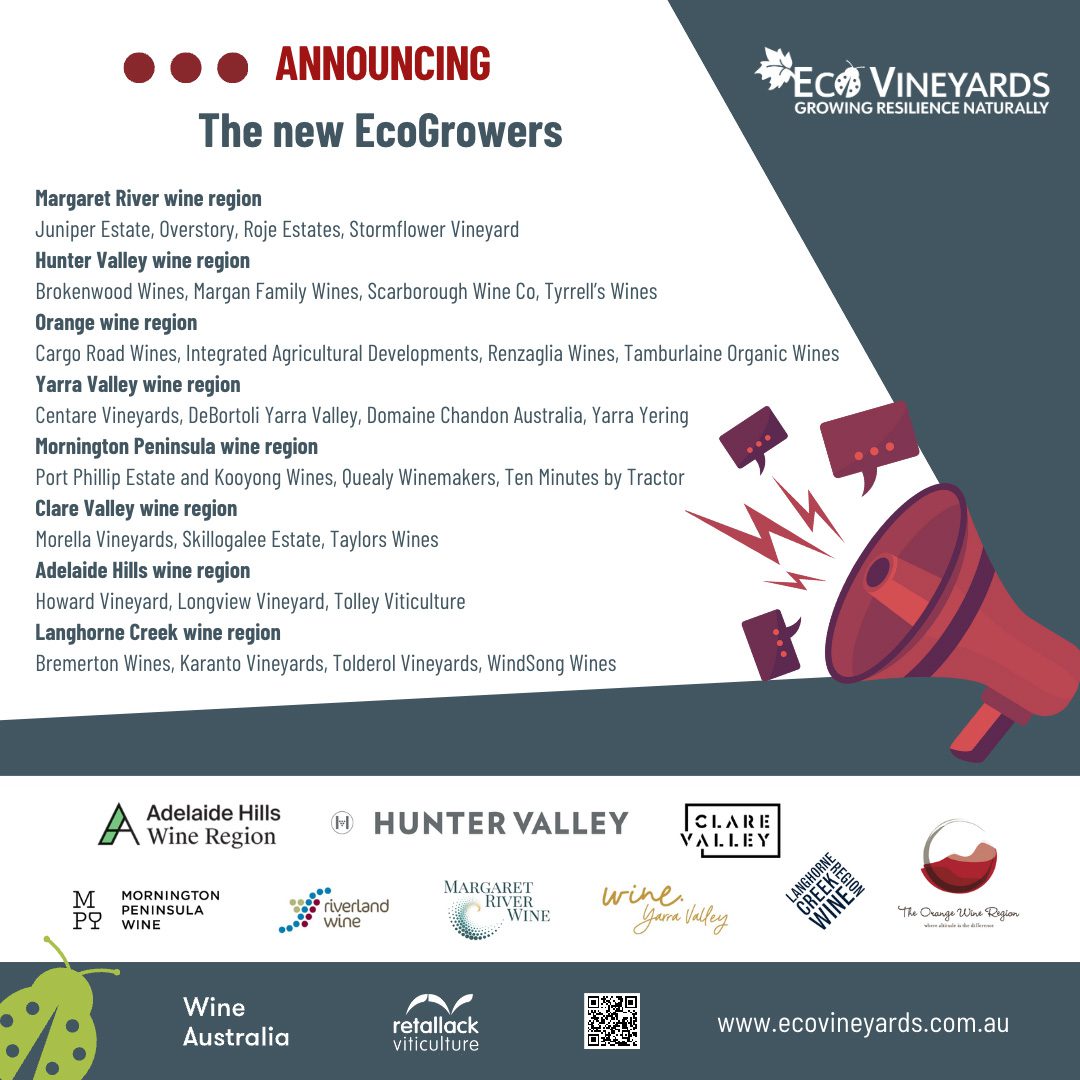
EcoVineyards is a three-year program designed to support winegrape growers to plant cover crops, enhance soil health and increase functional biodiversity in vineyards around the country to help build the resilience of vineyards naturally. Lower Blackwood LCDC is one of the Regional On-ground Coordinators (ROCs) for the program, and we’re proud to say that after the national ‘open call’ earlier this year, four more of the region’s leading vineyards have joined the program. Juniper Estate, Overstory, Roje Estates and Stormflower Vineyard are the newest members of the EcoVineyards project.
Our role as the ROC is to provide assistance with the development of their biodiversity action plan and demonstration site plan. All participating vineyards receive financial support from EcoVineyards for their demo site and their soil health benchmarking, plus access to new region-specific resources, events and some grower discounts on supplies as well as receiving some additional extra bonuses along the way.
SAVE THE DATE! For a EcoVineyards Composting Workshop on Wednesday 31 May. More info here.
| |
|
Talkin' Establishing Multispecies & Perennial Pastures | |
|
In our Mediterranean context we look to build not only more diversity in our grazing systems, but also to include cool & warm season perennials. This is great in theory, but how do we do it?
Presented by multispecies seeding specialist agronomist Jade Killoran from Healthy Farm Systems, our latest Talkin’ After Hours webinar explored the steps & secrets to establishing a multispecies and perennial pasture in our challenging environment.
| |
|
This webinar is delivered in partnership with the Lower South West Growers Group and is supported though funding from the Australian Government’s Future Drought Fund, the Augusta Margaret River Shire Environmental Management Fund, and Soil Wise. Soil Wise is funded by the National Landcare Program Smart Farms Small Grants – an Australian Government initiative. It is supported by Healthy Estuaries WA – a State Government program. | |
Talkin' Soil Secrets with Dr. Christine Jones | |
|
Dr Christine Jones is an internationally renowned and highly respected groundcover and soils ecologist. She visited Lower Blackwood in February as part of her WA tour, when she spent a couple of days with us sharing her knowledge on ‘Soil Secrets’. The events were a detailed dive into the life of soils, how we should consider them a ‘living system’. In this podcast she reminds us of the importance of building our soil biology, and also explains the ‘liquid carbon pathway’ – what it is, why we need it, how to help it and how to avoid hindering it.
Christine has a talent for explaining complex science in laymen’s terms, so if you’re interested in soil biology, carbon building or the importance of biodiversity in building our soil, animal and human health, have a listen to our previous pods with her here:
| |
Listen to a snippet of our conversation OR | |
This podcast is supported by the Department of Primary Industries and Regional Development as part of a collaboration bringing Dr Christine Jones to Western Australia in February 2023. | |
|
When is a Weed not a Weed?
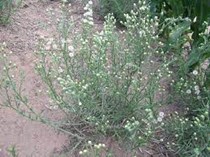
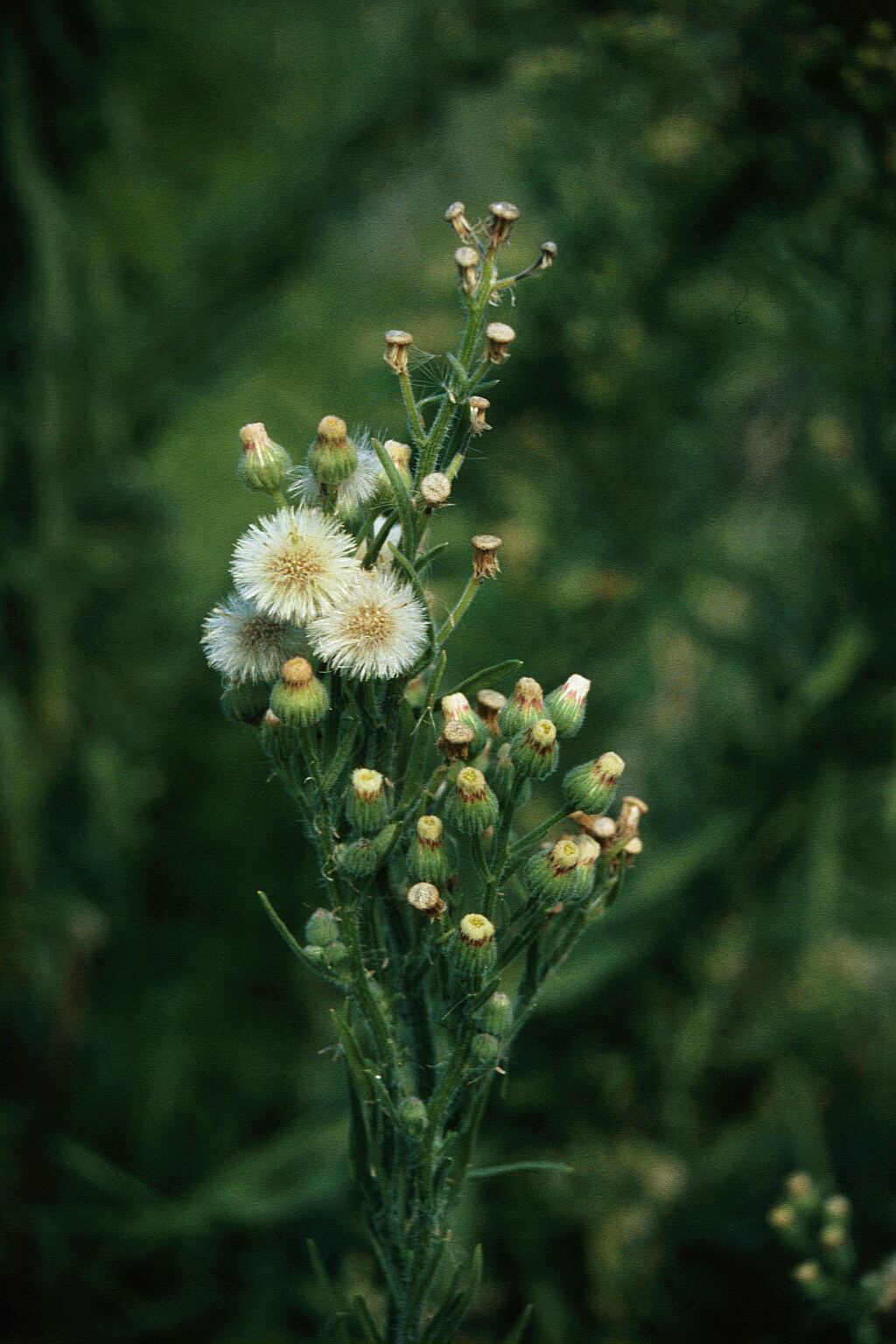
The humble fleabane (Conyza bonariensis – flaxleaf fleabane or Conyza albida – tall fleabane) is often considered a pest. An opportunistic weed in bushland areas, it germinates in spring and can become a major weed in summer.
Historically, fleabane was a roadside weed in WA, thriving where glyphosate sprays left bare earth, allowing it to flourish. However, the mature plant can produce an average of 110 000 seeds each, of which up to 80% can be viable. These seeds don’t possess dormancy, so they can germinate whenever temperature and moisture requirements are met.
The main reason fleabane is considered a weed is its ability to compete for water. As it germinates in early spring and summer (prior to harvest) it has no competition once the crop is removed and its root systems can become extensive, sucking up excessive moisture and making it difficult to remove.
However, despite its bad reputation, it could also be considered one of the good guys.
Sheep love fleabane. If grazed down before it goes to seed (which it often is due to its nutrient density and general yum-factor), this ‘weed’ can become an important part of a diverse pasture mix.
That said, the plant is mildly toxic to dogs and cats, so should be considered carefully if you have a furry friend at home.
To find out more about fleabane, click here.
| |
|
Bugging out in the Autumn Rain | |
|
We're well into the season break, and the bugs are coming out to play! Some to watch out for are:
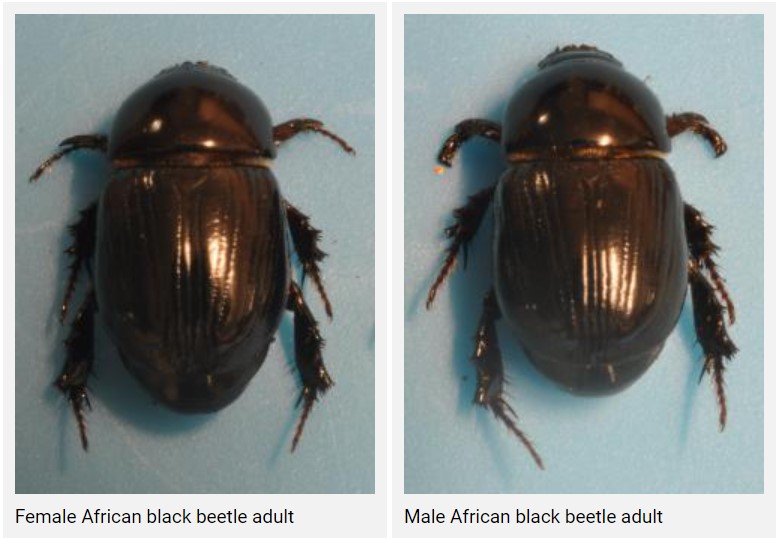
African Black Beetle (Heteronychus arator)
These glossy black bugs grow to between 12 and 14mm long and attack a wide range of plants around April and May. They are strong fliers, but are considered 'pseudo soil insects' as they feed near or just under the soil surface on plant stems and roots.
Keep an eye on your pasture as well as barley, triticale, wheat, veggies (particularly potatoes), grapevines, and olives. Full list of victims here.
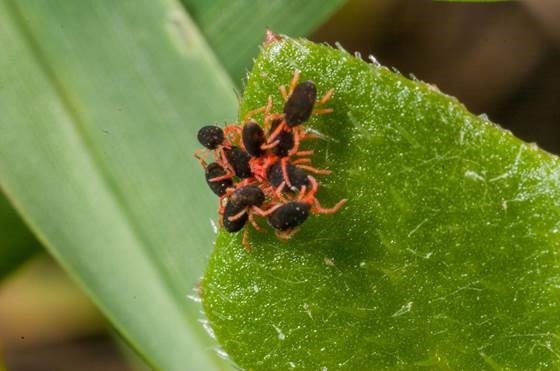
Red Legged Earth Mite - RLEM (Halotydeus destructor)
These tiny mites are just 1mm long and 0.6mm wide (the size of a pin head) with eight red-orange legs and a completely black velvety body. They feed in large groups of up to 30 mites. RLEM are most damaging to newly establishing pastures and emerging crops, and can greatly reduce seedling survival and development.
Watch out for canola, wheat, barley, oats, lupins, sunflower, faba beans, field peas, poppies, lucerne and vetch, as well as pasture legumes and grasses. They are less of a concern in cereal crops and some pulses.
| |
Female (left) and male (right) African Black Beetle adult | Find out more about RLEM here. | |
|
Unique & Special to the South West:
Scott River Jugflower
| |
|
|
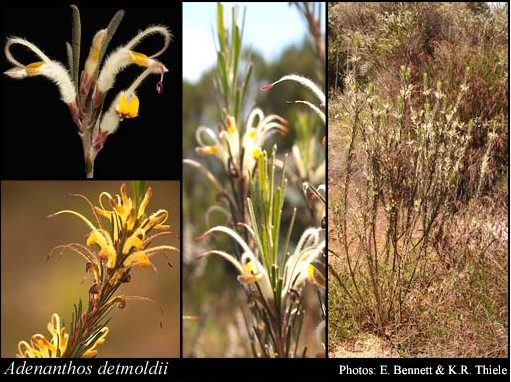
This shrub is so unique to our area that it has been named after the Scott River.
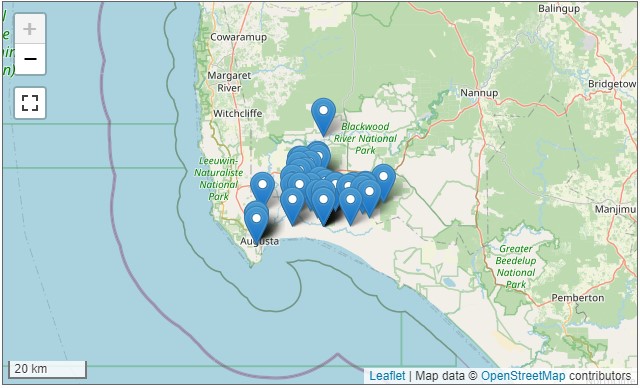
Adenanthos detmoldii (Scott River Jugflower) is native to our catchment, and is most prolific around the National Park and the Scott River Nature Reserve. It's a species of shrub in the family Proteaceae and grows to around 4m, with hairy branches and long, narrow leaves up to 80mm in length and about 5mm wide.
It isn't flowering at the moment (the flowers appear between August and November), but when they do they have a yellow perianth with an orange throat that turns brown after pollination.
It seems that the Jugflower was first collected near the Blackwood River in 1870, and is still restricted to the Scott and Blackwood Rivers.
Although it isn't an endangered species, it is listed as a Priority 4 plant, which means it's threatened and considered rare.
More info on the Scott River Jugflower here.
| |
Location map for the Scott River Jugflower | |
Connection to Country: Wadandi - Salt Water People | |
Connection To Culture - A Presentation & Walk On Country with the Undalup Association | |
|
Even the pouring rain couldn’t dampen the enthusiasm for the cultural stories that Zac Webb, cultural custodian from the Noongar nation and Chairperson of the Undalup Association and the Undalup Association Rangers shared with us on Thursday 13th April.
The day started with a fascinating presentation that covered everything from the Wadandi people’s cultural history, family structures and language to songlines, stories and totems. There were interesting reflections on Aboriginal lore and its relationship with the natural environment, the dreaming stories and cultural learning.
After morning tea we headed out into the (very wet and rainy) local bushland around Alexandra Bridge where Zac and the Undalup Association Rangers regaled us with their knowledge of the native flora and fauna, their stories and the local lore. Participants were bursting with questions about indigenous culture, and Zac and the Rangers willingly shared their knowledge of country and history.
| |
|
This event formed part of the LCDC’s Scott River Action plan Implementation Strategy project, and is supported through funding from the Western Australian Government’s State NRM Program. | |
|
|
An Apple a Day Keeps the Doctor Away
High blood pressure? Fancy losing a few kgs? The humble apple may be just the medicine you need. The latest blog from Graeme Sait of Nutrition Matters, Apples - The Forgotten Superfood, claims that apples are bursting with antioxidants, flavonoids and even cancer cell killing vitamin B17.
The only downside is that the core of these health boosting properties are in the core of the apple – not necessarily the tastiest part of this fabulous fruit…
| |
|
|
Food Security in the South West
Food Security relates to a region’s capacity to produce (or access) sufficient nutritious produce to feed its population. Here in the South West we have a growing population and with a changing climate and growing population it’s time to plan for the future.
There are three key factors that impact food insecurity: a lack of resource (including financial resources and other resources such as transport), lack of access to nutritious food (either at affordable prices or due to geographical isolation) and lack of motivation or knowledge about a nutritious diet.
Perth NRM received funding via a Commonwealth Government grant to develop the WA Food Security Plan - a project to explore the challenges that impact – both positively and negatively – on our sustainable agricultural supply chains in WA.
With the expectation that the WA population will grow by 44% by 2050, this has become a pressing issue. We don’t currently have a food security plan, or a reasonable understanding of how our farmers will feed twice as many West Australians over the next three to four decades, so
Perth NRM is working to develop a three stage plan for WA:
Stage 1 - a Situation Report (already completed)
Stage 2 - a proactive program of engagement with community, government and industry to develop the plan
Stage 3 - to prioritise actions for strategic investment and support implementation of the plan
FIND OUT MORE! We’ll be getting up close and personal about this important topic at our Autumn Sundowner event with the Lower Blackwood LCDC.
| |
Webinar on the WA Food Security Plan | |
Upcoming Events with the Lower Blackwood LCDC | |
COVID-19: If you are feeling unwell on the day of any event you are planning to go to, please do not attend. | |
|
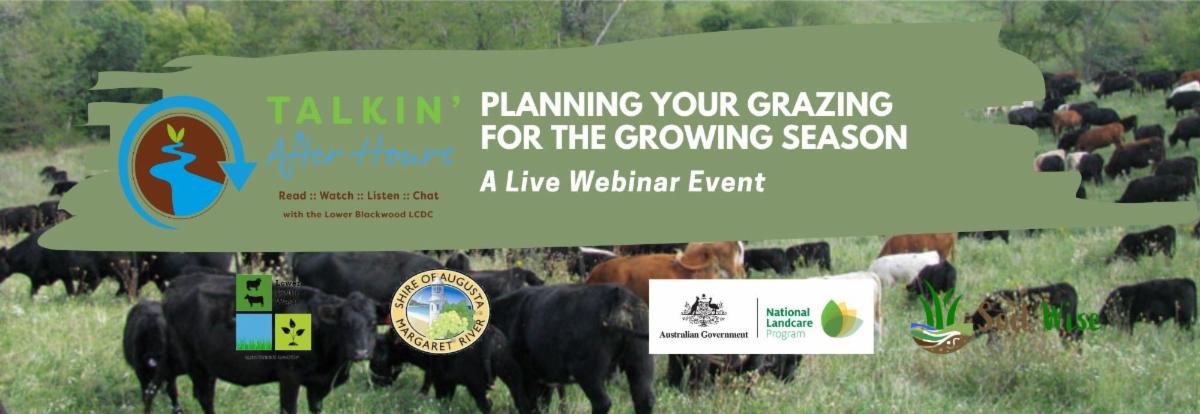
Pasture and grazing management continues to be one of the most important issues for land managers and livestock producers everywhere. How grass grows and how it can best be utilised is a critical component of any successful grazing operation.
Join us for this live webinar with pasture ecologist and regenerative grazier Dr Judi Earl to drill down into the skill of planning grazing for the growing season.
| |
|
Event Logistics:
When? Thursday May 4th, 4.00pm to 5.30pm
Where? Online - From the comfort of home!
How? Once you register you’ll receive a confirmation with a link to the webinar. As this is a LIVE, ONLINE webinar you’ll be able to ask questions during and after the presentation
| |
|
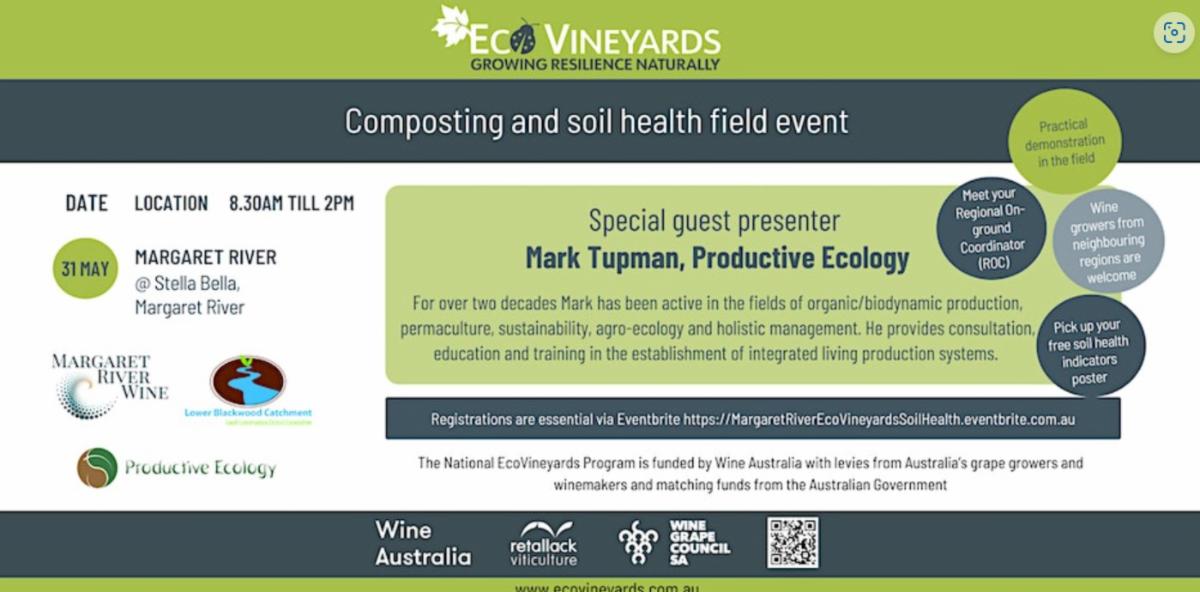
Join agroecologist/viticulturist Dr Mary Retallack, Retallack Viticulture Pty Ltd and Regional On-ground Coordinator, Kate Tarrant, Lower Blackwood LCDC, who will host a National EcoVineyards Program practical soil health field event with special guest presenter Mark Tupman, Productive Ecology, to discuss composting and soil health indicators.
This is a full day event and includes morning tea and lunch.
| |
|
Event Logistics:
When? Wednesday 31 May, 8.30am
Where? Stella Bella, Luminosa Vineyard, 191 Gnarawary Rod, Margaret River
Cost? This is a FREE event but places are limited!
| |
|
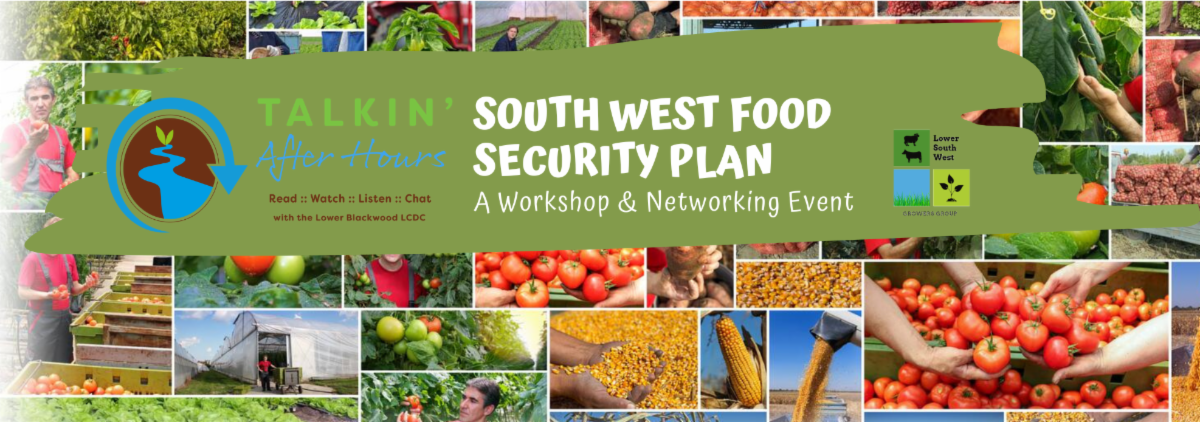
Perth NRM’s Peter Batt will join us to talk us through the findings of their recently released Food Security Plan for the State of Western Australia.
It will be a great opportunity for you to give Peter your feedback on the constraints you are currently facing to feed into the plan. Don’t miss this great opportunity to provide input into our future food security.
Come join us for this important information event, PLUS at the end of the updates we'll relax & enjoy a drink with and a small bite to eat. It will be a great chance to keep talking, network with our presenters & local landholders who have experiences to share.
| |  |
|
Event Logistics:
Where? Lower Blackwood LCDC Office, 403 Kudardup Road, Kudardup.
When? Thursday May 25th, 4.30pm to 6.30pm
Cost? This is a FREE event
| This Talkin’ After Hours event is hosted jointly with the Lower South West Growers Group. | |
Other Events You Might Want to Attend | |
|
VOLUNTEER FOR MARGARET RIVER REVEG PLANTING
When? Thursday May 4th from 10am-12 noon
Where? Ashton Street, Margaret River
What? Reveg planting for Western Ringtail Possum habitat
What else? Morning tea will be provided
How? RSVP to Lauren Scanlon
Join this community volunteer morning to help prepare the site for the winter storms.
For more information click here
| | |
|
REGENERATIVE AGRICULTURE CONFERENCE 2023
When? September 6th – September 8th 2023
Where? Margaret River HEART, 47 Wallcliffe Road Margaret River, WA 6285
What? More details to come soon.
For more information: contact amrshire@amrshire.wa.gov.au
| | | |
|
We know there is such a wealth of knowledge & experience out there amongst all of you..so..
If you have a great story, just read a great book, tried a brilliant a piece of new technology, or any other piece of news that you think the rest of the Lower Blackwood Catchment community will want to know about then please share!
| |
Contact Kate on 040 920 3056 or email kate.tarrant@lowerblackwood.com.au
| | |
|
If you haven't already then like us on Facebook and share our page with friends. It's the very best way to keep up to date with what's going on at the Lower Blackwood LCDC! | |
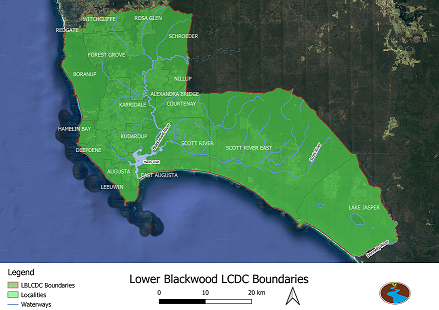
Are you in the catchment?
| |
| |
|
|
Lower Blackwood LCDC
E: info@lowerblackwood.com.au
T: 9758 4021
W: lowerblackwood.com.au
| | | | |