https://files.constantcontact.com/fd73091e001/d6a85882-4d9f-43ce-b4d3-c07bf1da1ccb.png?rdr=truea=1134830823678
"To protect the Oregon coast by working with coastal residents for sustainable communities; protection and restoration of coastal and marine natural resources; providing education and advocacy on land use development; and adaptation to climate change."

Oregon Coast Alliance is the coastal affiliate of 1000 Friends of Oregon

Oregon Coast Alliance Newsletter

 Housing in Unincorporated Communities and Other News

Gearhart Decision on the 13th Street Public Access Closure


DLCD Undertakes a New Directive on Housing in Unincorporated Communities


Cannon Beach Dunes Initiative

Gearhart Decision on the 13th Street Public Access Closure

New fence barring public access at 13th Street. November 2025

Gearhart City Council was supposed to discuss, and perhaps render a decision, on the fence Kevin Kidd built across the public access path at 13th Street in Gearhart, then further seeking to obliterate it with bulldozing and seeding with grasses. However, the City Attorney is still reviewing documents related to the questions of private versus public ownership, and the matter did not come up at the May 6th Council meeting.


ORCA sent a letter to all members of City Council and Chad Sweet, the City Manager, pointing out that regardless of ownership questions, the fence lies inside the area covered by Gearhart’s Beaches and Dunes overlay zone. This zone explicitly lists permitted activities, and also explicitly states that activities not listed are not permitted. Building a fence to block public access is not listed as a permitted activity. ORCA reminded the Council that the Beaches and Dune zone must be applied, and the fence removed, as it is not a permitted activity. When Council next discusses the subject of the Kidd fence, ORCA and local residents will reiterate the provisions of the Beaches and Dunes ordinance, to which all landowners having property covered by that zone are subject.

DLCD Undertakes a New Directive on Housing in Unincorporated Communities

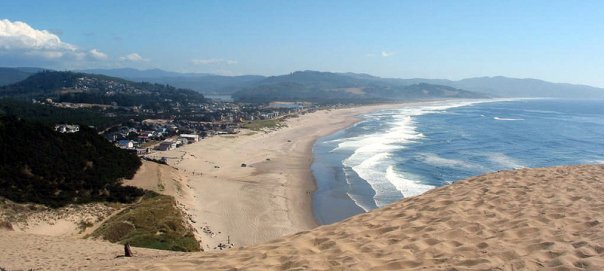
A View of Pacific City – Courtesy Mathew Dodson Wiki Commons

The Department of Land Conservation and Development (DLCD) is, at the request of Governor Kotek, launching a new initiative to increase housing in unincorporated communities. Unincorporated communities — those not incorporated as cities, and thus not having their own government — exist across the state. There are several kinds of these: resort communities; rural communities, which are primarily residential; rural service centers, which are principally commercial or industrial; and urban communities, which are somewhat urbanized, with both residential and commercial uses.


The coast, not including Curry County, has more than forty unincorporated communities. These range from urban communities like Pacific City to tiny rural places like Eddyville. The DLCD staff report makes it clear that the housing thrust for these communities is not going to be restricted to the more urbanized ones, but will focus on expanding housing “opportunities” across the spectrum, by expanding counties’ abilities to increase housing, allowing them to expand the community boundaries for housing purposes, removing “unnecessary” legal barriers to increasing housing density “or allow more intense urban uses in these areas,” according to the LCDC staff report. 


ORCA, along with many other organizations and local residents, has serious concerns about this initiative. It ignores the longstanding philosophy of the land use laws to concentrate urban densities in urban areas, ignores the very real infrastructure restraints in small rural communities, disregards community livability concerns and proposes to increase housing whether or not there is any identified need.


DLCD is in the process of forming a Rules Advisory Committee to begin implementing the Governor’s directive. We will report more on this as the project gets underway, and there are opportunities to bring forward the many public concerns.

Cannon Beach Dunes Initiative

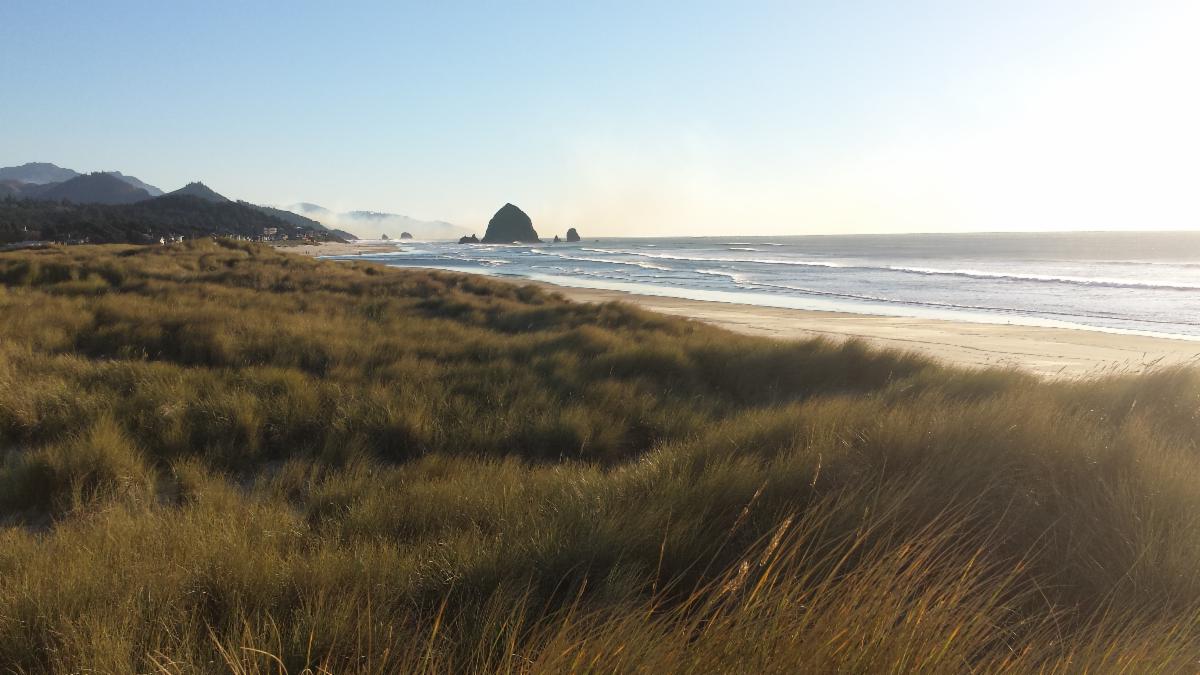
Cannon Beach Dunes with European Beach Grass. Courtesy ORCA.

A group of Cannon Beach residents have formed a new group called the Cannon Beach Sustainable Dunes Coalition. They have launched a “Foredune Management Initiative,” for which they plan to gather signatures, with the aim of placing it on the ballot for a vote. This initiative strikes at a longstanding controversy in Cannon Beach: dune-grading for views. View-grading, as it is called, is allowed under state law if a community has a Foredune Management Plan. Under these provisions, Cannon Beach allowed view-grading by oceanfront owners for some twenty years, to enhance ocean views. But the practice was always controversial, because the replantings were unsightly, the threats to dune habitats multiplying and the need for such grading not equally agreed upon by all residents. Cannon Beach voted to end view-grading in 2020. This was not appreciated by oceanfront homeowners.


The new coalition seeks to restore view-grading by a roundabout method: passing an initiative focusing on dune height, non-native dune grasses and beach access safety. Cannon Beach, like other coastal communities, long ago planted European Beachgrass (EBG) to stabilize its dunes in order to protect infrastructure and the built environment. This non-native grass excels at holding sand in its roots, and is a major factor in allowing coastal towns to grow so close to the ocean shore. Research, however, shows that it is responsible for only a minor percent of dune growth in our region. The natural movement of sand through the littoral cell plays a larger role.


Beach access is another problem. Cannon Beach has over forty beach access points, but city maintenance of them has sometimes been uneven. It is clear that an initiative forcing the city to inventory all its dunes for presence of EBG, and conduct aggressive foredune grading and invasive species (that is, EBG) removal to minimize “identified hazards or impediments,” will cost the city a great deal of money, and directly damage the protection of dune habitats.


The coalition proposal sounds innocuous, and even urgent. But the initiative would saddle Cannon Beach with major costs to “manage” dunes in a way that would leave the many houses, businesses and streets fronting the dunes vulnerable to blowing sand, and place buried infrastructure at risk of exposure. Native grass replantings sound like an excellent idea, but on dunes fronting a town they are impractical, as they do not hold sand in place as EBG demonstrably does. If there are beach access maintenance problems, these should be dealt with directly by the city, not clumsily through a proposal like this one. ORCA urges opposition to the Sustainable Dunes Coalition initiative, which is a transparent effort to return view-grading to Cannon Beach.

 
Quick Links...

Here's where you can make a difference for the Oregon coast.
Go to the ORCA website to make a donation or become a sustaining member. 

Contact Information
Contact Executive Director Cameron La Follette
by email or phone: 503-391-0210
You are receiving ORCA email communications as a donor or as a person who subscribed to this email newsletter. Please click Unsubscribe below if you wish to no longer receive the Oregon Coast Alliance Newsletter.
Facebook