April 2026
NBGA Newsletter Vol. 5, #4
| | |
Greetings, and welcome to NBGA's April 2026 newsletter!
It may be hard to believe, but spring is already officially here. As planting season begins, we wish everyone a safe and productive season.
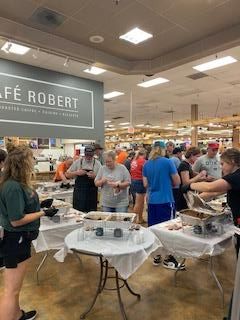
If you are in the area, we would like to invite you to join us for our second annual People’s Choice Bean Competition with Scheels ND BBQ. Come vote for your favorite bean dish, submitted by world class BBQ competitors! Check the Northarvest in the News & on the Move section of this newsletter for more details.
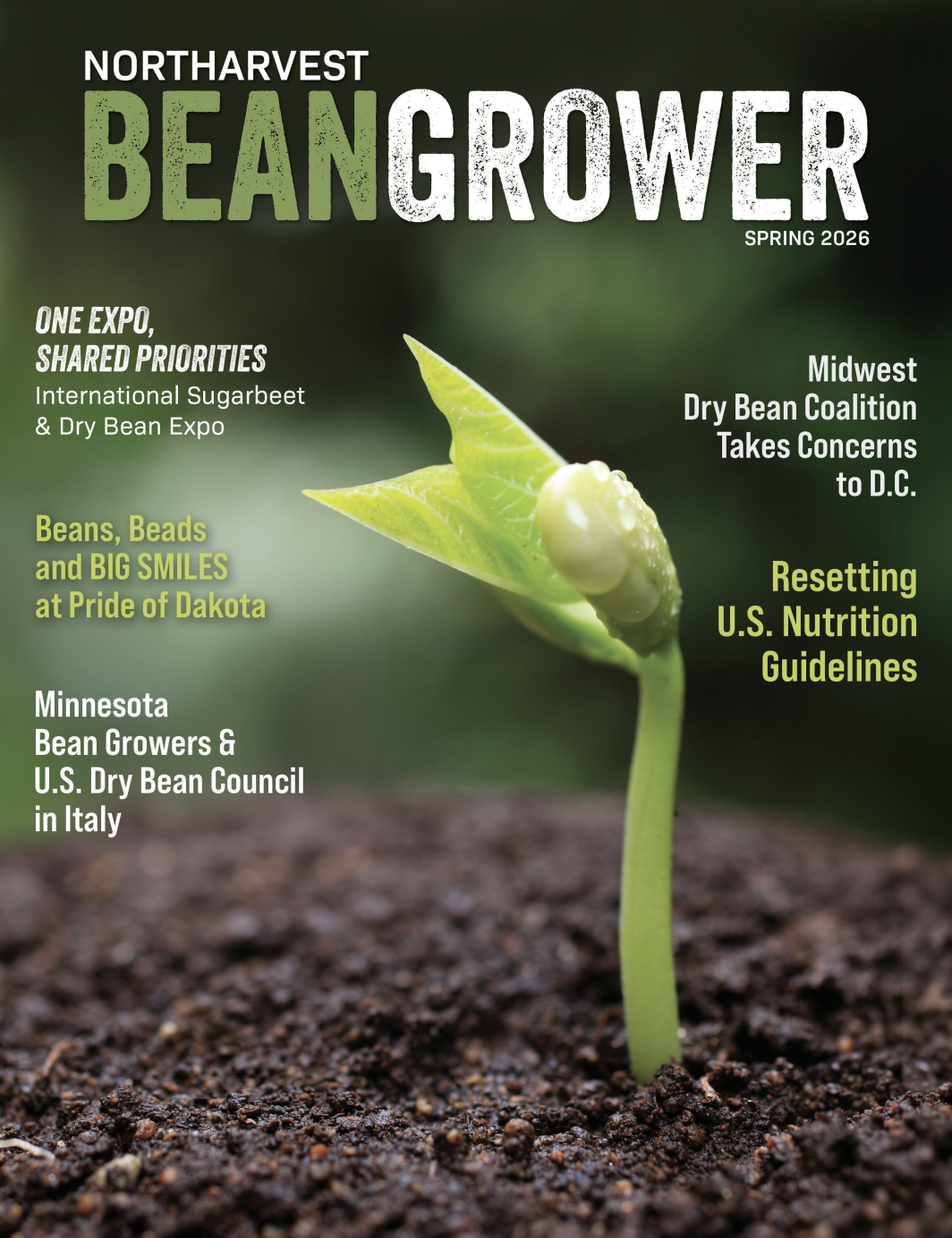
In this newsletter, you'll also find a link to the PDF of the new Spring 2026 BeanGrower publication, NDSU recommendations for optimizing fungicide application timing for white mold in pinto beans, recipe ideas that include the classic beans + rice pairing, and much more. Please note that the announcements have been moved to the last section of the newsletter, so be sure to read until the end for important announcements.
If you can, please consider sharing this newsletter with someone else to help us spread the word. Anyone can subscribe to our monthly e-newsletter here.
Happy reading!
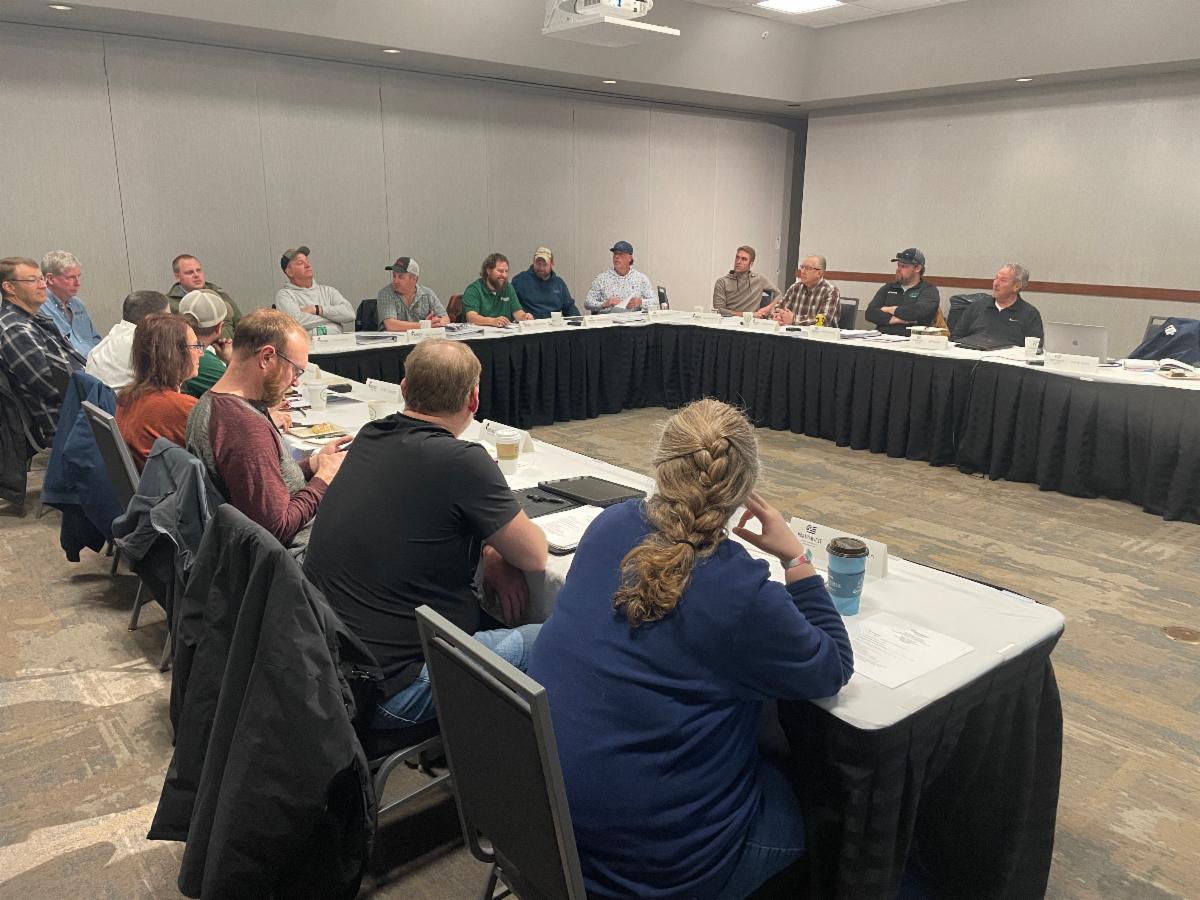
| | Photo from NBGA Spring Board Meeting | | |
April 2026 Newsletter Table of Contents:
- USDA Weekly Dry Bean Market Review
- NDSU Recommendations & Research Findings
- Spring 2026 BeanGrower
- Bean Institute: Beans & Rice
- Bean Nutrition Corner: Beans Offer Wins for the Planet & People
- Northarvest in the News and on the Move
- The Dry Bean Scene
- Announcements
| | |
Below, you can find links to the most recent USDA Weekly Dry Bean Market Reviews. Click on the date to see the report.
-
The next USDA Weekly Dry Bean Market report will be released soon. You will be able to find that report here.
-
April 13, 2026: "Compared to last week: Trade remained light. According to the NASS Prospective Plantings report March 31, 2026, dry edible beans 1,236,00 vs 1,366,00 for 2025 acres, dry edible peas 1,174,000 vs 1,173,000 for 2025 acres, lentils 832,00 vs 1,072,000 for 2025 acres, and chickpeas 499,000 vs 536,000 for 2025 acres."
-
March 9, 2026: "Compared to last week: Trade remained very light."
| | |
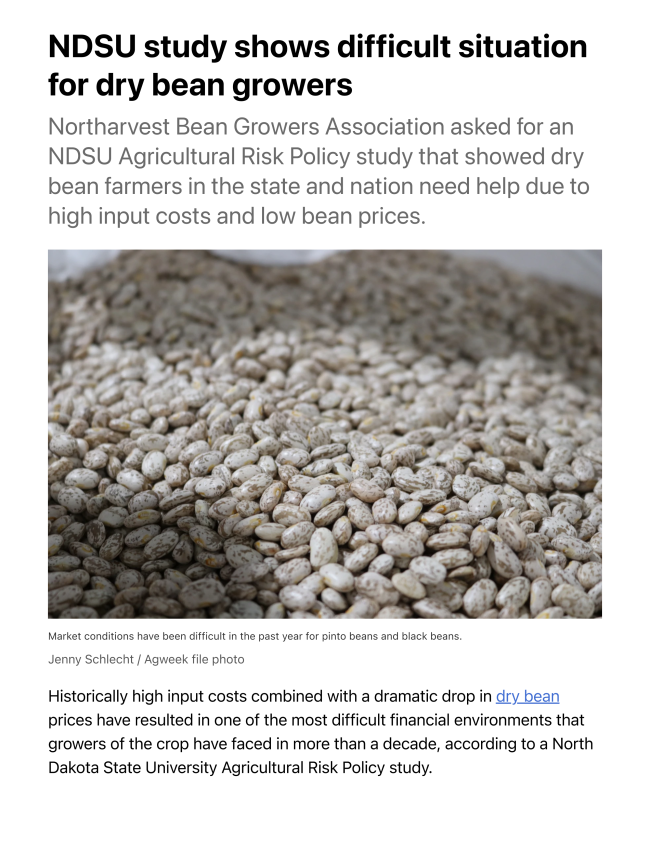
NDSU Plant Pathology Website Updated with Key White Mold Recommendations & 2025 Research Findings
The dry bean white mold section of the NDSU Carrington plant pathology website has been updated and now includes an updated fungicide timing, frequency and interval recommendations for pinto and kidney beans with results from the 2025 field season.
If you scroll down, you will find the following sections under the heading of Optimizing the management of white mold in dry beans with fungicides:
- Comparative fungicide efficacy
- Optimizing fungicide droplet size
- Optimizing fungicide application timing when conditions favor white mold as dry beans enter bloom
- Optimizing fungicide application interval (days between applications) and frequency (number of applications)
- Optimizing fungicide spray volume
| | |
|
Updated Recommendations for Optimizing Fungicide Application Timing for White Mold in Pinto Beans
Center Points, a weekly newsletter from the NSDU Carrington Research Extension Center, recently shared an article: Updated recommendations for optimizing fungicide application timing for white mold in pinto beans. The article was written by NDSU Research Plant Pathologist Michael Wunsch.
Several of the recommendations are highlighted in the excerpts below, and you can find the full article with many more details here.
| |
Recent findings from large tractor-applied field studies testing fungicide application timing, interval and frequency for white mold management in pinto and kidney beans have provided new insights on improving white mold management in dry beans.
-
When conditions favor white mold as dry beans enter bloom, the optimal application timing of fungicides targeting white mold changes with the number of applications being made.
-
The optimal application interval (number of days between applications) changes with the number of applications being made, severity of white mold pressure, and maturity length of the dry bean variety.
-
White mold management (disease control, yield) improves as the number of fungicide applications increases.
- Rotating fungicide chemistries in two-and three-application fungicide programs improves white mold management.
Fungicide applications only protect the canopy that is present at the time of the application.
| |
The Spring 2026 BeanGrower
The latest BeanGrower publication is now live on our website! You will find lots of great information, including:
- Updates on trips and advocacy work NBGA Directors and staff have been conducting on behalf of the dry bean industry
- Highlights from the inaugural International Sugarbeet & Dry Bean Expo that took place this January
- An article on the latest Dietary Guidelines for Americans
- And much more!
| | | | |
Beans and rice is a classic, delicious, satisfying pairing! Check out these recipes to expand your beans and rice recipe repertoire.
All recipes and photos below are courtesy of the Bean Institute.
|
| |
Did you know you can follow the Bean Institute on Facebook, Instagram, Pinterest, TikTok, and YouTube?
Click the icons below to follow on your favorite platform!
| | |
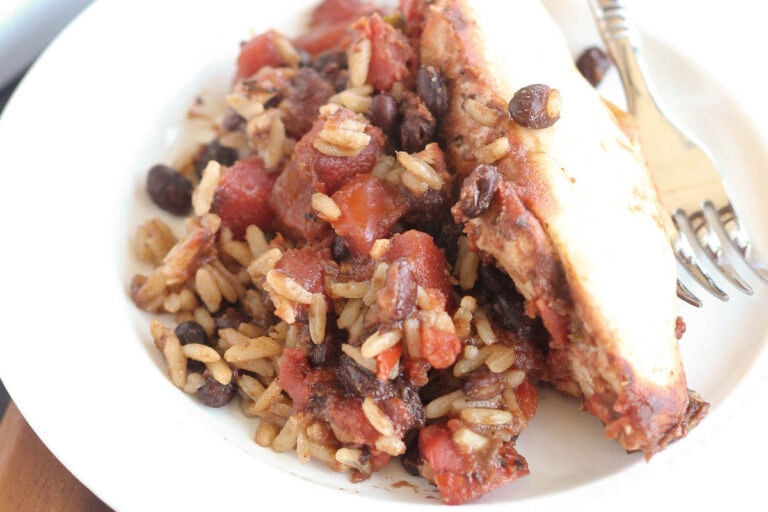
Black Bean & Mixed Rice Casserole
This filling, tasty beans + rice recipe also includes ingredients like chicken, corn, and mushrooms. The melted cheese on top makes it even more comforting and delicious!
➡️ Find the recipe here.
| | |
Mexican Skillet Rice
Pinto beans star in this bean and rice skillet. The recipe works well with either ground beef or turkey. For a vegetarian option, try adding an extra can of beans instead of meat.
➡️ Find the recipe here.
| | |
New Orleans Beans & Rice
This simple recipe only requires a few ingredients and can be made in either the oven or the slow cooker.
➡️ Find the recipe here.
| |
|
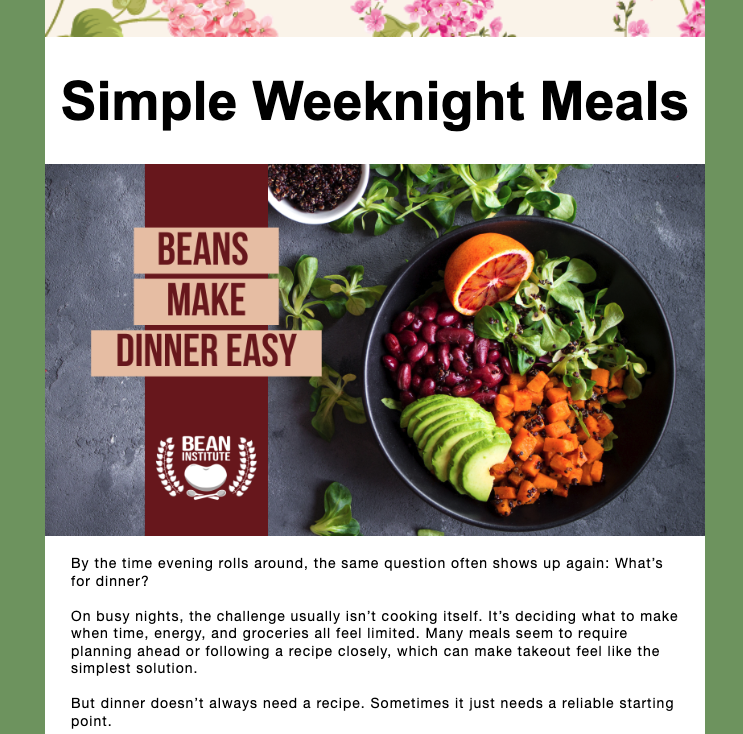
In their March 2026 newsletter, the Bean Institute highlighted how beans can be the hero of simple weeknight dinners. They share four tips to turn beans into a satisfying and tasty meal, such as a "bowl formula" and a bean-y "pasta upgrade".
Like the Bean Institute says, "dinner doesn’t always need a recipe. Sometimes it just needs a reliable starting point. Beans make that possible. Because they’re already cooked and ready to use, a single can can become the foundation for a satisfying meal in about 20 minutes using ingredients already in the kitchen."
➡️ Read the full post - Beans Make Dinner Easy - here.
| | | |
More from the Bean Institute
Are you looking for more helpful and fun bean information and some bean recipe inspiration to kick o? Subscribe to the Bean Institute's newsletter: The Bean Bulletin.
➡️ Sign up by clicking here!
| | | Beans Offer Wins for the Planet & People | | |
April 22, 2026 is Earth Day. In honor of Earth Day, we are highlighting some of the many benefits of beans for the environment. The benefits do not stop at wins for our planet though, because beans are significant for human health as well.
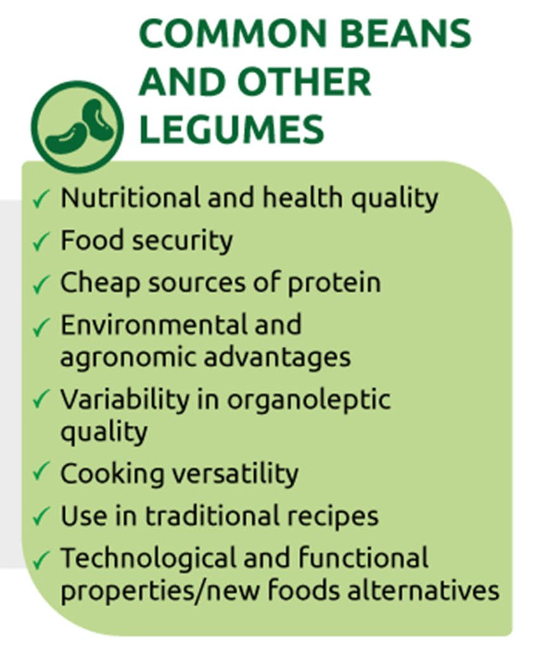
In a recent article - titled Legumes and common beans in sustainable diets: nutritional quality, environmental benefits, spread and use in food preparations - Lisciani and colleagues delve into what makes dry beans such a powerful food and crop.
| | |
Benefits of Beans for the Planet
Beans are an environmentally-friendly crop. Some of the many benefits of beans include:
-
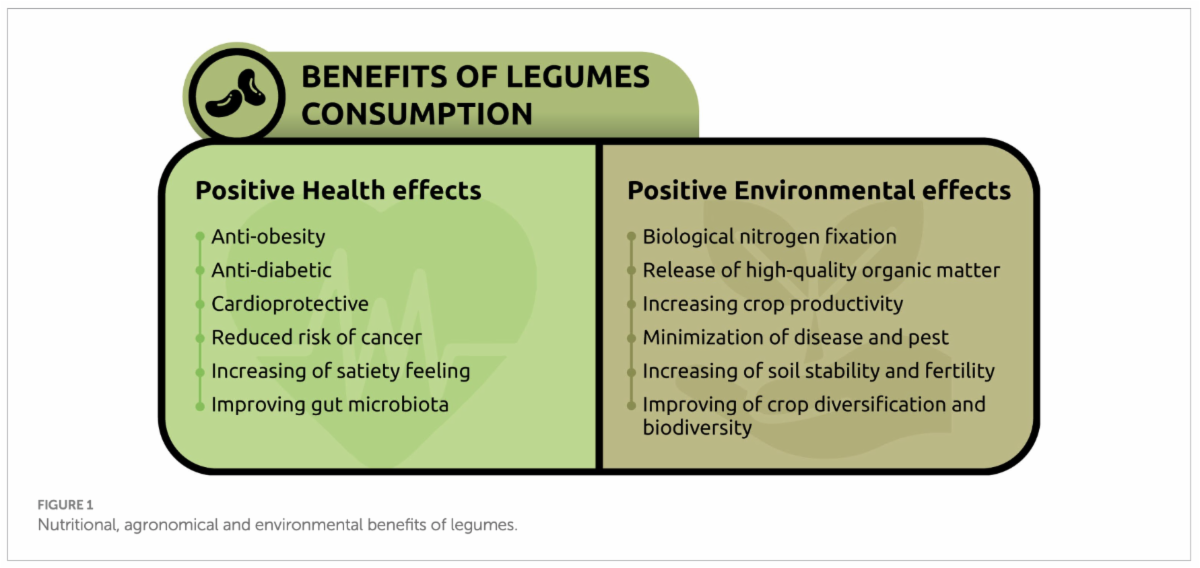
Boost crop productivity. Thanks to their ability to fix nitrogen - through a symbiotic relationship with rhizobia - and to help build organic matter in the soil, including beans in crop rotation can help increase the productivity of subsequent crops. The authors share that, "Grains grown in rotation after pulses yield on average 1.5 tons more per hectare than those grown without pulses, equivalent to the effect of 100 kilograms of nitrogen fertilizer."
-
Help reduce greenhouse gas emissions. The production and application of synthetic fertilizers contributes to greenhouse gas emissions. By integrating beans into the cropping system - and therefore enabling nitrogen fixation and boosting the organic carbon status of the soil - fertilizer uses can be minimized. This reduces greenhouse gas emissions and input costs for farmers.
-
Minimize disease and pest pressure. Including beans in a crop rotation with grains or other non-legume crops can help break pest and disease cycles.
-
Promote biodiversity. Including beans in crop rotation with other crops is important for crop diversity. In addition to the environmental benefits of biodiversity, crop diversification can help enhance farm resilience and stabilize farm income.
| | |
Benefits of Beans for Human Health
Beans are a nutrient-dense food, providing an array of important macronutrients, micronutrients, and phytonutrients. For example, beans are high in both protein and dietary fiber. Beans are very low in fat, and they contain a mix of healthy, complex carbohydrates. Some of these carbohydrates are non-digestible, meaning they pass through our digestive system until they reach the colon. There, they serve as prebiotics, feeding the beneficial bacteria that reside in our gut.
Thanks to their nutritional composition (e.g., high protein, high fiber, and slowly digesting carbohydrates), beans promote satiety, thereby supporting healthy weight management. Bean intake is also associated with numerous positive health effects, as shown in the figure below. These health benefits include promoting heart health and helping protect against cancer.
| | |
Reference
-
Lisciani, S., Marconi, S., Le Donne, C., Camilli, E., Aguzzi, A., Gabrielli, P., ... & Ferrari, M. (2024). Legumes and common beans in sustainable diets: nutritional quality, environmental benefits, spread and use in food preparations. Frontiers in Nutrition, 11, 1385232.
| | People's Choice Bean Competition | |
The Northarvest Bean Growers Association wants to invite you to join us for our 2nd annual People’s Choice Bean Competition with Scheels ND BBQ!
NBGA is the proud sponsor of the Best Bean Competition, which takes place:
-
Date & Time: Friday, May 1, 5 - 7 pm
-
Location: Scheel’s Home & Hardware in Fargo (3202 13th Ave S., Fargo, ND 58103)
Come vote for your favorite bean dish, submitted by world class BBQ competitors!
| Sampling delicious beans at last year's BBQ | | |
Northarvest on North Dakota Today | |
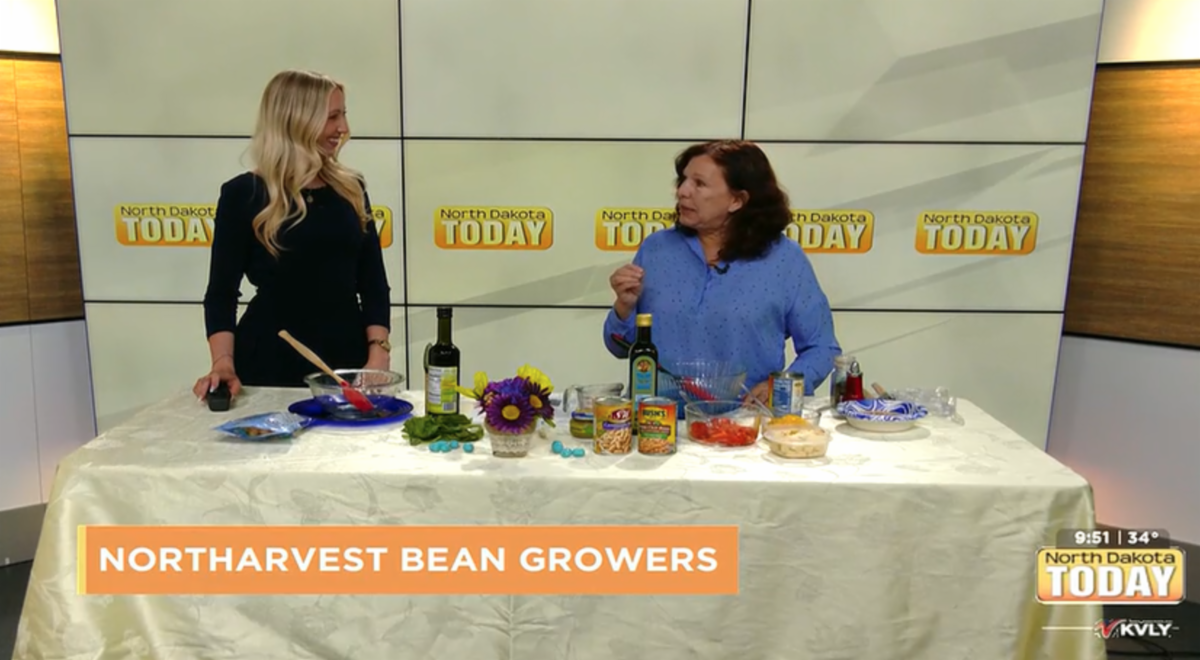
Noreen Thomas, a Chef and Organic Producer at Doubting Thomas Farms, joined North Dakota Today to showcase a bean salad recipe. Host Tatum Miller joined her, and they both prepared a delicious, colorful bean salad and ended with a taste test.
Here is the recipe, courtesy of Noreen Thomas:
- 1/4 cup olive oil
- 2 tablespoons balsamic vinegar
- 1 large garlic clove, grated
- 1 red pepper, fire roasted
- 2 cans of white beans, drained
- 8 ounces of mozzarella balls
- Basil, fresh
Thank you to Noreen and North Dakota Today for sharing about beans and the Northarvest Bean Growers Association!
|
Northarvest Sponsors Battle of the Beans Cook-off | |
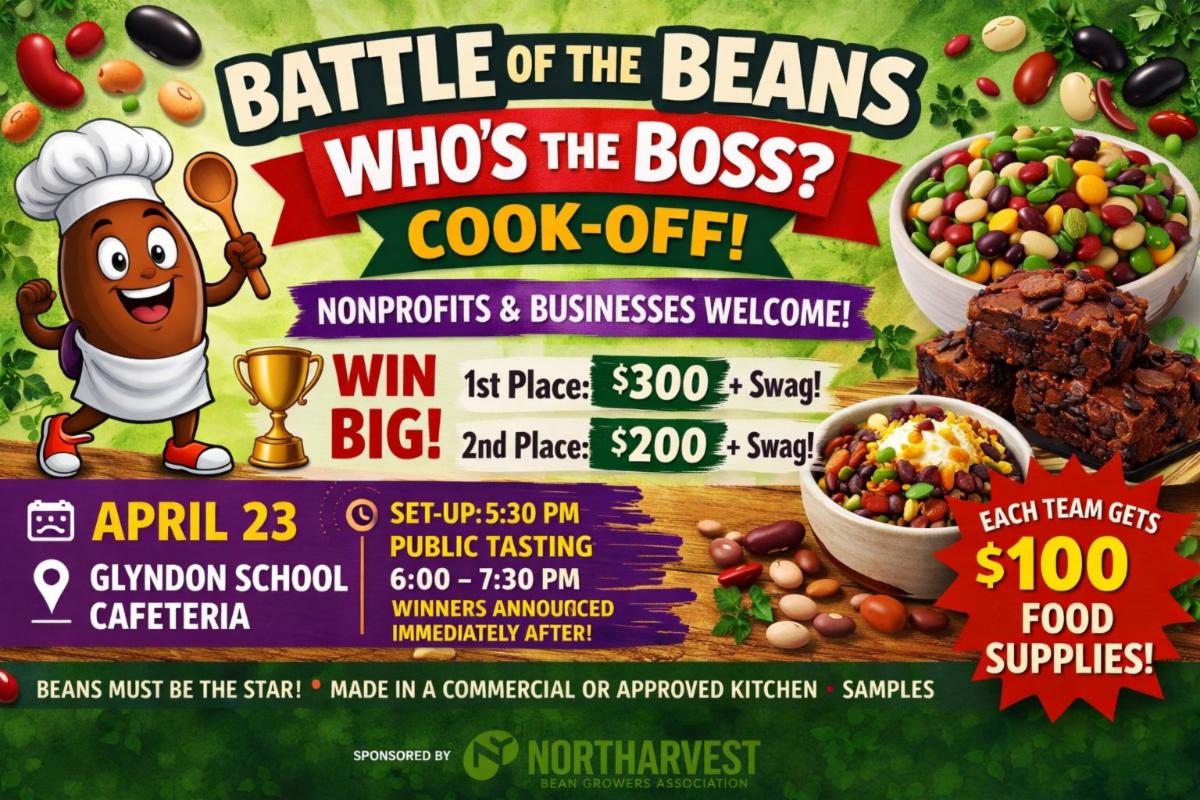
In the news segment, Thomas mentions the Battle of the Beans Cook-off happening on April 23rd. NBGA is the proud sponsor of this event.
There are two ways to be part of the bean cook-off:
- Be a team, just go to Facebook "Who's the Boss" Cook-off;
-
Be part of the public! Register on Eventbrite for free.
|
|
Northarvest's Spring 2026 Board Meeting
The spring meeting for Northarvest Bean Growers Association took place on March 31st & April 1st of 2026. The quarterly meetings consist of Northarvest Board of Directors, North Dakota Dry Bean Council Members, and the Minnesota Dry Bean Research & Promotion Council Members.
Spring is typically a particularly heavy lift for the members of the NBGA Research Committee, who spend ample time going through the many lengthy research proposals submitted for potential project funding. Research is a significant portion of the overall NBGA budget, and the committee considers the needs of producers when choosing which projects to fund. NBGA would like to thank the Research Committee, as well as the Sponsorship & Education Committee, Marketing & Communication Committee, and the Executive Leadership Committee for volunteering their time & expertise at the two-day spring meeting.
Thank you to every member of each committee for their time and dedication in reviewing proposals, setting priorities, discussing programming, and guiding NBGA staff to serve their fellow bean growers best.
| | | |
The Dry Bean Scene is sponsored, in part, by NBGA. Click on the links below to listen to the most recent episodes.
-
➡️ April 13, 2026: Northarvest Bean Growers Association Executive Director Mitch Coulter says the dry bean market has been under pressure from geopolitical pressures. Domestic markets have also been influenced by changes to government food aid programs.
-
➡️ April 3, 2026: North Dakota Senator John Hoeven and North Dakota Representative Julie Fedorchak participated in the ribbon-cutting for the new Columbia Grain International pulse processing plant in Valley City. They highlight the importance of value-added processing.
-
➡️ March 29, 2026: NDSU Extension Plant Pathologist Sam Markell offers ideas and tips for your dry beans as we enter the season.
-
➡️ March 21, 2026: NDSU Extension Plant Pathologist Michael Wunsch talks about new fungicide research for white mold.
-
➡️ March 14, 2026: NDSU Plant Pathologist Sam Markell said timing is very important for the spread of rust. Soil sampling is recommended.
|
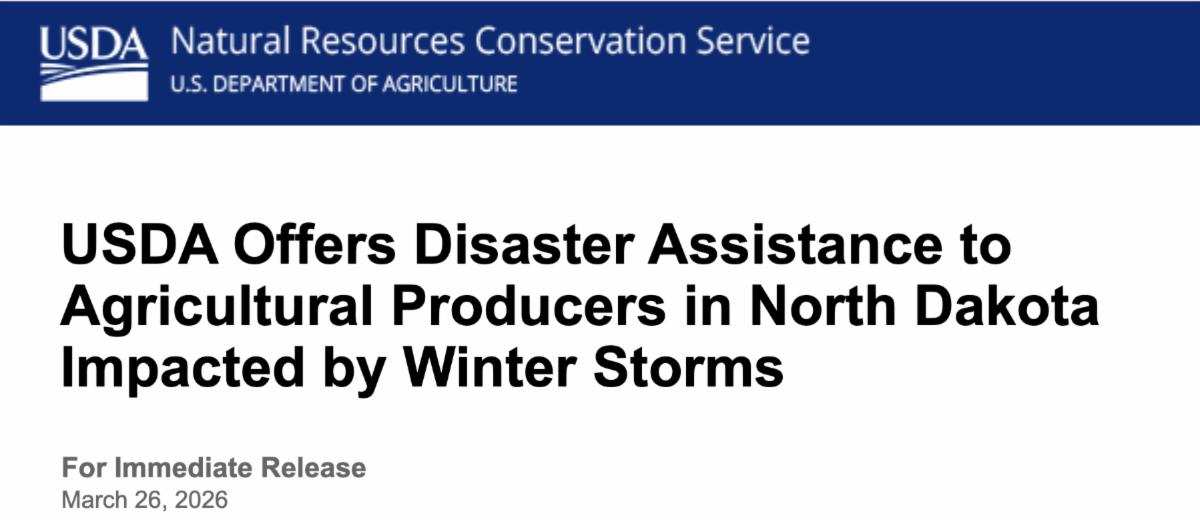
| Below are excerpts from a recent USDA press release. You can read the full press release by clicking here or on the button at the end of the excerpt. | |
Fargo, N.D., March 26, 2026 – Agricultural operations in North Dakota have been significantly impacted by recent winter storms. The U.S. Department of Agriculture (USDA) has technical and financial assistance available to help farmers and livestock producers recover from these adverse weather events.
“USDA has a suite of programs to support farmers and ranchers as they recover from disasters,” said Farm Production and Conservation Under Secretary Richard Fordyce. “I encourage impacted producers to contact their local USDA Service Center to report losses and learn more about program options available to assist in their recovery from crop, land, infrastructure, and livestock losses and damages.”
“Once you are able to evaluate the impact on your operation, be sure to contact your local FSA county office to timely report all crop, livestock and farm infrastructure damages and losses,” said Brad Thykeson, State Executive Director for FSA in North Dakota. “To expedite FSA disaster assistance, you may need to provide documents, such as farm records, herd inventory, receipts and pictures of damages or losses.”
FSA also offers a variety of direct and guaranteed farm loans, including operating and emergency farm loans, to producers unable to secure commercial financing. Producers in counties with a primary or contiguous disaster designation may be eligible for low interest emergency loans to help them recover from production and physical losses. Loans can help producers replace essential property, purchase inputs like livestock, equipment, feed and seed, cover family living expenses or refinance farm-related debts and other needs.
|
|
RMA Reminds Producers of Upcoming Crop Insurance Deadlines
Below are excerpts from an April 2 news release from the USDA Risk Management Agency (RMA). Click the button below to read the full news release.
| |
(ST. PAUL, Minn., April 2, 2026) – The U.S. Department of Agriculture (USDA) reminds agricultural producers that the final date to apply for or make changes to their existing crop insurance coverage is quickly approaching. Sales closing dates vary by crop and location, but the next major sales closing dates are May 1, May 15, July 15 and July 31.
Producers are encouraged to visit their crop insurance agent soon to learn specific details for the 2027 crop year. Crop insurance coverage decisions must be made on or before the applicable sales closing date.
The USDA’s Risk Management Agency lists sales closing dates in the Actuarial Information Browser, under the “Dates” tab.
Producers can also access the RMA Map Viewer tool to visualize the insurance program date choices for acreage reporting, cancellation, contract change, earliest planting, end of insurance, end of late planting period, final planting, premium billing, production reporting, sales closing, and termination dates, when applicable, per commodity, insurance plan, type and practice. Additionally, producers can access the RMA Information Reporting System tool to specifically identify applicable dates for their operation, using the “Insurance Offer Reports” application.
| | | Below are excerpts from a March 31 news release from the USDA Farm Service Agency (FSA), announcing that USDA has reopened the acreage reporting period for specialty crop farmers impacted by unfair market disruptions. | |
Specialty Crops Acreage Reporting Deadline for 2025 is Now April 24
Washington, D.C., March 31, 2026 – The USDA Farm Service Agency (FSA) today announced the agency is reopening the 2025 crop acreage reporting period required for specialty crop producers who want to apply for the Assistance for Specialty Crop Farmers (ASCF) program. Announced by U.S. Secretary of Agriculture Brooke L. Rollins on Feb. 13, the ASCF program is designed to help address market disruptions, elevated input costs, persistent inflation, and market losses from foreign competitors engaging in unfair trade practices that impede exports. Specialty crop producers now have until April 24, 2026, to report 2025 acres to FSA.
“After full consideration of requests from specialty crop producers, industry leaders and members of Congress, Secretary Rollins made a responsive, Farmers First decision to reopen the acreage reporting period for the Assistance for Specialty Crop Farmers program,” said FSA Administrator Bill Beam. “We’re committed to doing what it takes to keep specialty crop producers economically viable and gathering accurate acreage reporting data is critical to making sound FSA program policy decisions. Reopening the reporting period ensures that every eligible producer has a fair opportunity to participate and that we deliver assistance where it’s needed most.”
| | |
April 15th Webinar on New Dicamba Rules and Pesticide Labeling
NDSU wishes to extend an invitation to producers who may be interested in learning about the new dicamba regulations and the future of pesticide labeling. On Wednesday, April 15 at 10:00 a.m. Central Time, Dr. Ikley and Dr. Smith of NDSU will be presenting this webinar.
2026 Basic Training – Crop Production
-
Topic: New Dicamba Rules and the Future of Pesticide Labeling
-
Speakers: Dr. Joseph Ikley and Dr. Madeleine Smith
-
Date & Time: Wednesday, April 15 at 10:00 - 11 am CT
-
Join Zoom Meeting: https://ndsu.zoom.us/j/93239909951
| |
|
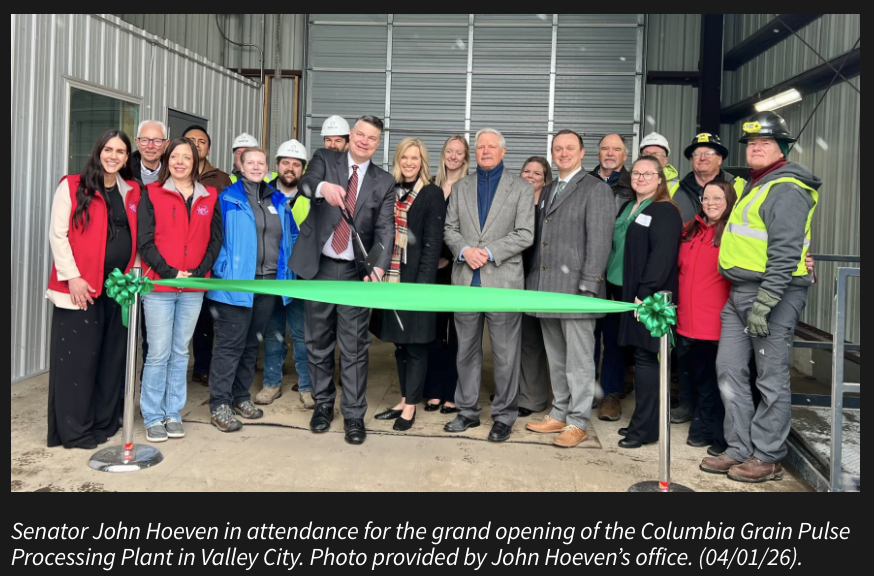
New Pulse Processing Plant in Valley City, ND
Valley City, North Dakota just saw the grand opening of a new pulse processing plant by Columbia Grain International. Senator John Hoeven attended the ribbon cutting.
An April 1, 2026 KX News article about the grand opening shared:
The Columbia Grain Pulse Processing Plant in Valley City, which has the capacity to process 40,000 tons of pulse crops, was opened today to strengthen the state as a leader in agriculture.
“This pulse processing plant is an exciting opportunity for North Dakota farmers, giving them a convenient, local market for the high-quality crops they produce,” Sen. Hoeven said. “By expanding domestic demand for U.S.-produced ag commodities, we can make the farm economy more resilient against challenging international market conditions, like our farmers are facing right now.”
| |
Northarvest Will Be at the Plant Protein Innovation Center Annual Research Spotlight Meeting
Next month, on May 20-21st, the Plant Protein Innovation Center (PPIC) at the University of Minnesota will host its Annual Research Spotlight Meeting.
Day 1 will feature innovative research in the plant protein space, including highlights of projects that address PPIC’s current research platforms (Agriculture, Ingredient Development, and Application) delivered by prominent scientists in the field. As always, Day 1 will include interactive poster sessions, offering opportunities to speak directly with researchers and students.
Unique to this year’s event are the activities on Day 2. For the first time, PPIC is hosting an engaging workshop in collaboration with the Plant Based Foods Institute (PBFI) focused on building connections between research breakthroughs and the commercial kitchen. The theme of Day 2 is Field to Foodservice: Plant Protein Innovation that Performs at Scale. This new dynamic workshop brings together farmers, researchers, ingredient innovators, food manufacturers, and foodservice leaders. Dr. Chelsea Didinger will represent NBGA and speak on the From Research to Cafeterias: The Plant-Protein Value Chain in Action panel.
➡️ Find more details about the Annual Research Spotlight Meeting here.
➡️ You can also learn about a PPIC event happening earlier that week - their Solution-Driven Innovation Workshop - at this link.
|
|
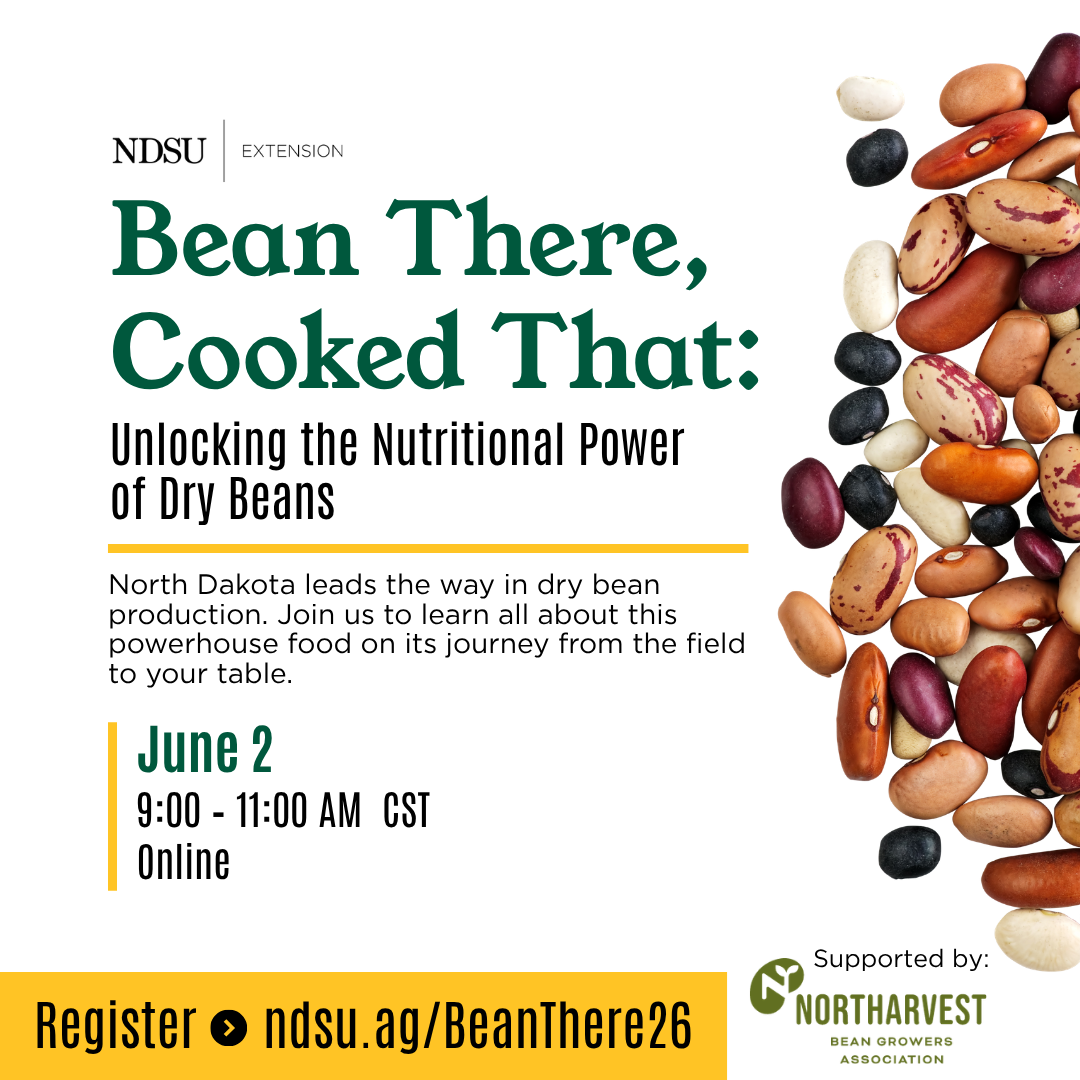
The 2026 Bean There, Cooked That: Unpacking the Nutritional Power of Dry Beans webinar will take place on June 2, from 9 - 11 am, CT. The NBGA is a proud sponsor of this webinar.
Five 20-minute presentations from different speakers will cover an array of topics, ranging from tips to cook with beans, the latest advances in popping beans, information on protein characterization in dry beans, trends and innovation, how agronomy shapes nutritional quality, product development, and more.
|
|
US Dry Bean Convention 2026 in Arizona
The 2026 US Dry Bean Convention will take place in Tucson, Arizona on July 18 - 21. Head over to the conference website for more details.
| | | |
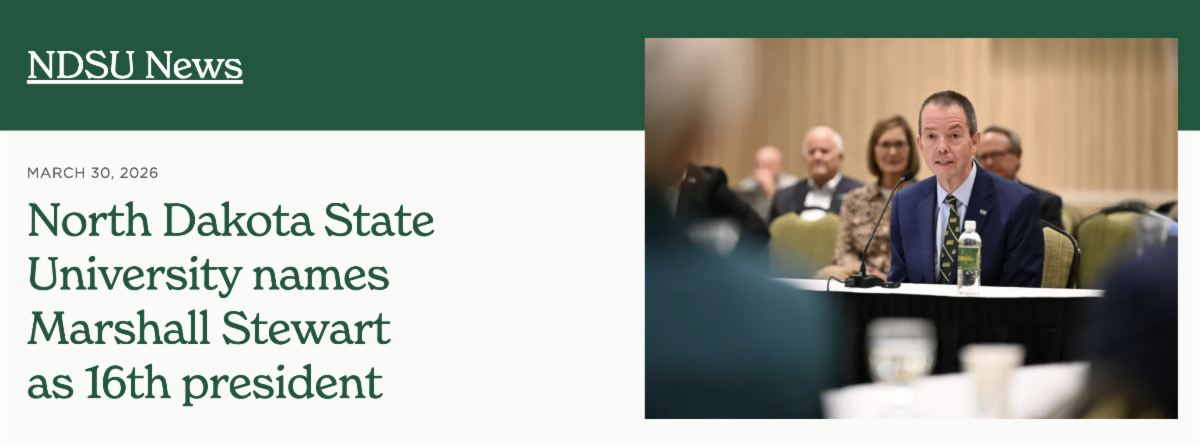
North Dakota State University announced its 16th president in a recent press release. Below you can see an excerpt from the press release, followed by a link to read the full article. Northarvest Bean Growers Association would like to welcome President Stewart to his new role, and we continue to look forward to our frequent collaborations with NDSU.
North Dakota State University has named Marshall Stewart as its 16th president, following selection by the North Dakota State Board of Higher Education. Stewart will assume the role the last week of May, succeeding Interim President Rick Berg.
Stewart currently serves as executive vice president for external engagement and chief of staff at Kansas State University, where he leads statewide engagement, government relations, economic development partnerships, fundraising strategy and service to constituents across Kansas. His career reflects a consistent focus on student-centered leadership, land-grant mission delivery and building trust-based partnerships across campus and community.
Prior to his current role, Stewart held leadership positions in agriculture education and extension, including roles focused on academic administration, workforce development and public engagement.
| | |
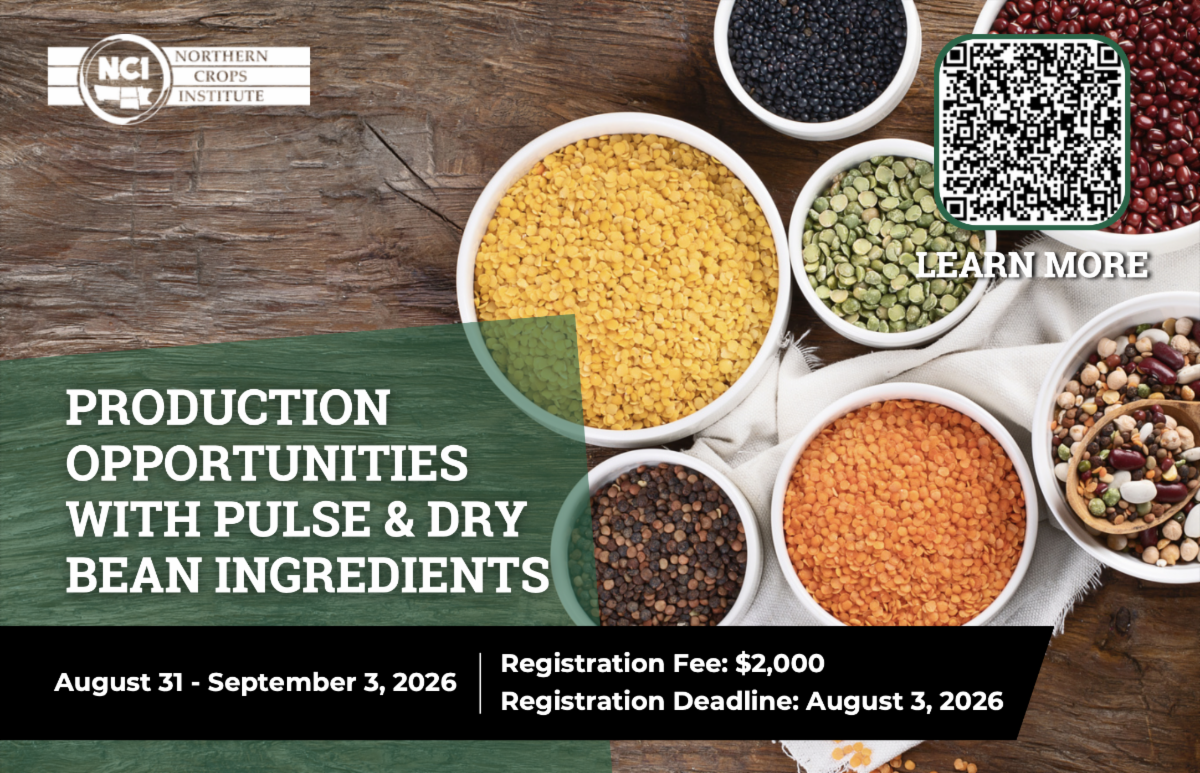
New Course by the Northern Crops Institute on Opportunities for Dry Bean Ingredients
This year, the Northern Crops Institute (NCI) is offering an exciting new course. This course - Production Opportunities with Pulse & Dry Bean Ingredients - will take place on August 31 - September 3, 2026.
NCI Program Manager Krista Jansen shares why she is looking forward to the course: “This hands-on course offers a unique opportunity to explore the full value chain of pulse and dry bean ingredients. From milling and functionality to product development and market applications through expert-led sessions and live demonstrations. Participants will leave with practical insights, real-world experience, and new ideas for creating innovative, high-value food products in rapidly growing plant-based markets.”
For more information, click here or on the image below.
| |
Do you know someone who would enjoy Northarvest News? Forward to a fellow bean grower, family, and friends so they can sign up and be in the NBGA know, too! | | |
Thank you for reading. NBGA wishes you a good rest of April, and we look forward to sharing more news and updates in May! | | |
|
4844 Rocking Horse Circle S, Suite 2
Fargo, ND 58104 • info@northarvestbean.org
www.northarvestbean.org
| | | | | |