|
Welcome!
Medfield History Weekend is almost upon us. Starting Friday evening, April 26th and continuing until Sunday afternoon on the 28th, all of Medfield’s historic assets will be on display.
In addition to hourly tours on Saturday and Sunday from 10:00 am until 4:00 pm, The Dwight-Derby House will be offering a special tour at 2:00 pm each day that includes the second floor which is usually closed to the public. Visitors on the special tour will see a typical colonial chamber parlor, a 330-year-old brick with the fingerprint of the maker, and exposed beams which are a testament to the many renovations the house has undergone since 1651.
Tickets to all of the tours that are being offered—both at the Dwight-Derby House and other historical sites—can be obtained by clicking on the button below.
| |
Special Demonstrations During History Weekend
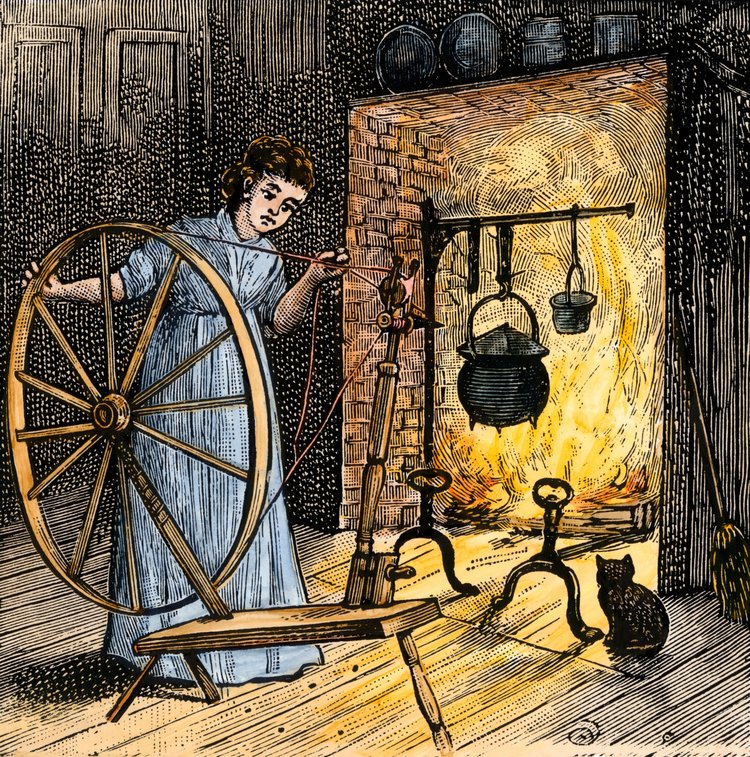
Spinning wheels are frequently displayed in colonial museums, and we have several but one that bears the special attention of visitors during History Weekend.
Spinning Demonstration
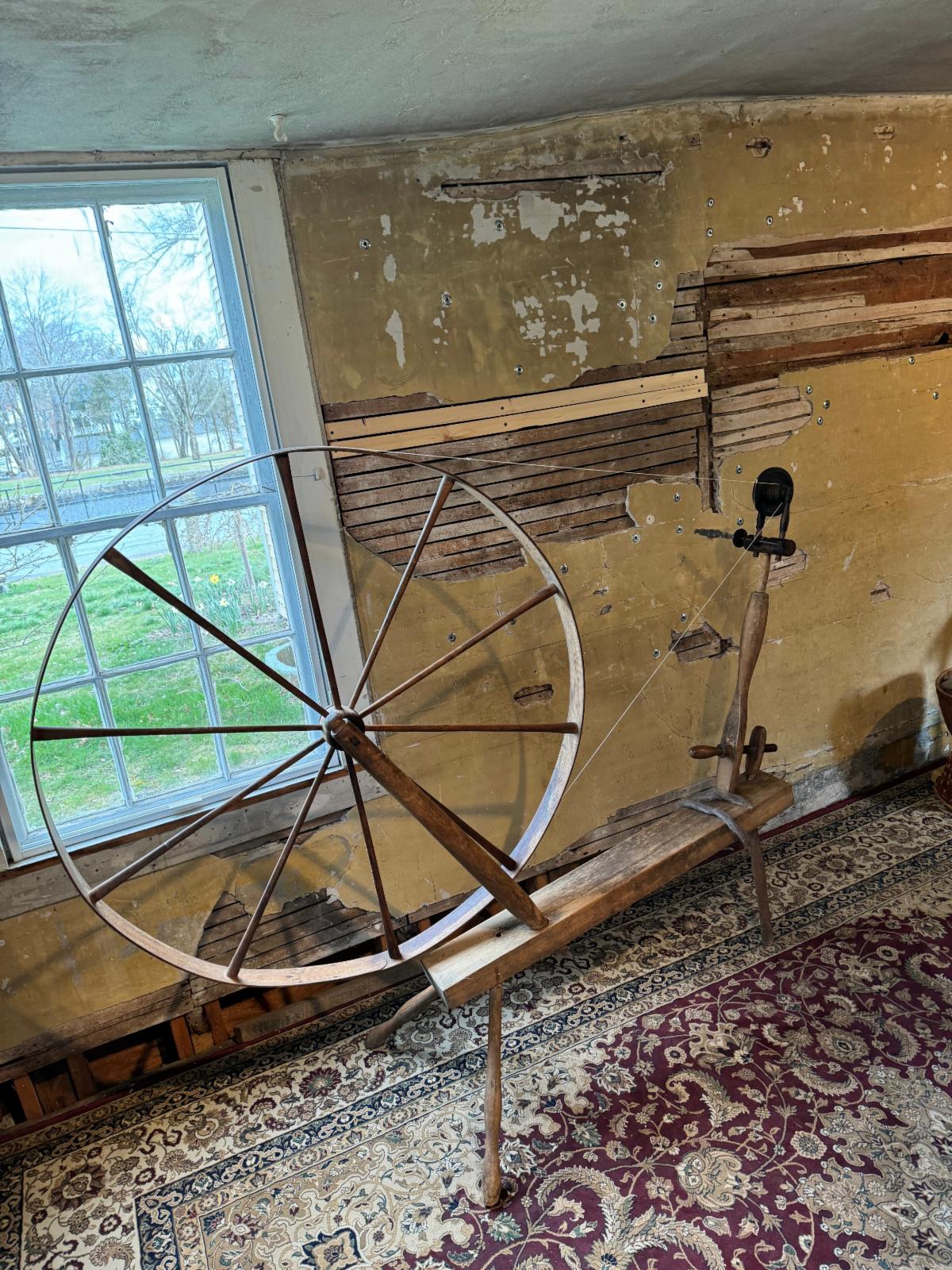
Yumi Jones, a board member of the Medfield Historical Society and spinner, will be giving spinning demonstrations on a great wheel that was donated to Dwight-Derby House by Barbara Leighton.
| Spinning wheel donated by Barbara Leighton. | |
Barbara passed away at the age of 100 in July of 2019 after having dedicated decades of her life in service to preserving Medfield’s history. For those of you who were not fortunate to know Barbara, she had been the curator of the Medfield Historical Society, the caretaker of the Peak House, an original member of the Grist Mill Committee, and donated seven acres of land for conservation. We are grateful for Barbara and honored to display her gift to us.
Weaving Demonstration
Another key piece of the process of turning sheep’s wool or flax into a finished garment is weaving. We are excited that the Weaver’s Guild of Boston, WGB, is providing volunteers and a table loom to the Dwight-Derby house to demonstrate and explain the process of weaving. We are sure you will enjoy seeing a piece of fabric take shape before your own eyes!
| President, Friends of the Dwight-Derby House |
|
|
This is a sample of Lt. Derby’s humor from Phoenixiana, first printed in 1856. Fleas were a perpetual problem for early Californians who were pestered by them all along the coast of the state.
THE following recipe, from the writings of Miss Hannah More, may be found useful to your readers:
In a climate where the attacks of fleas are a constant source of annoyance, any method which will alleviate them becomes a desideratum. It is, therefore, with pleasure I make known the following recipe, which I am assured has been tried with efficacy:
| |
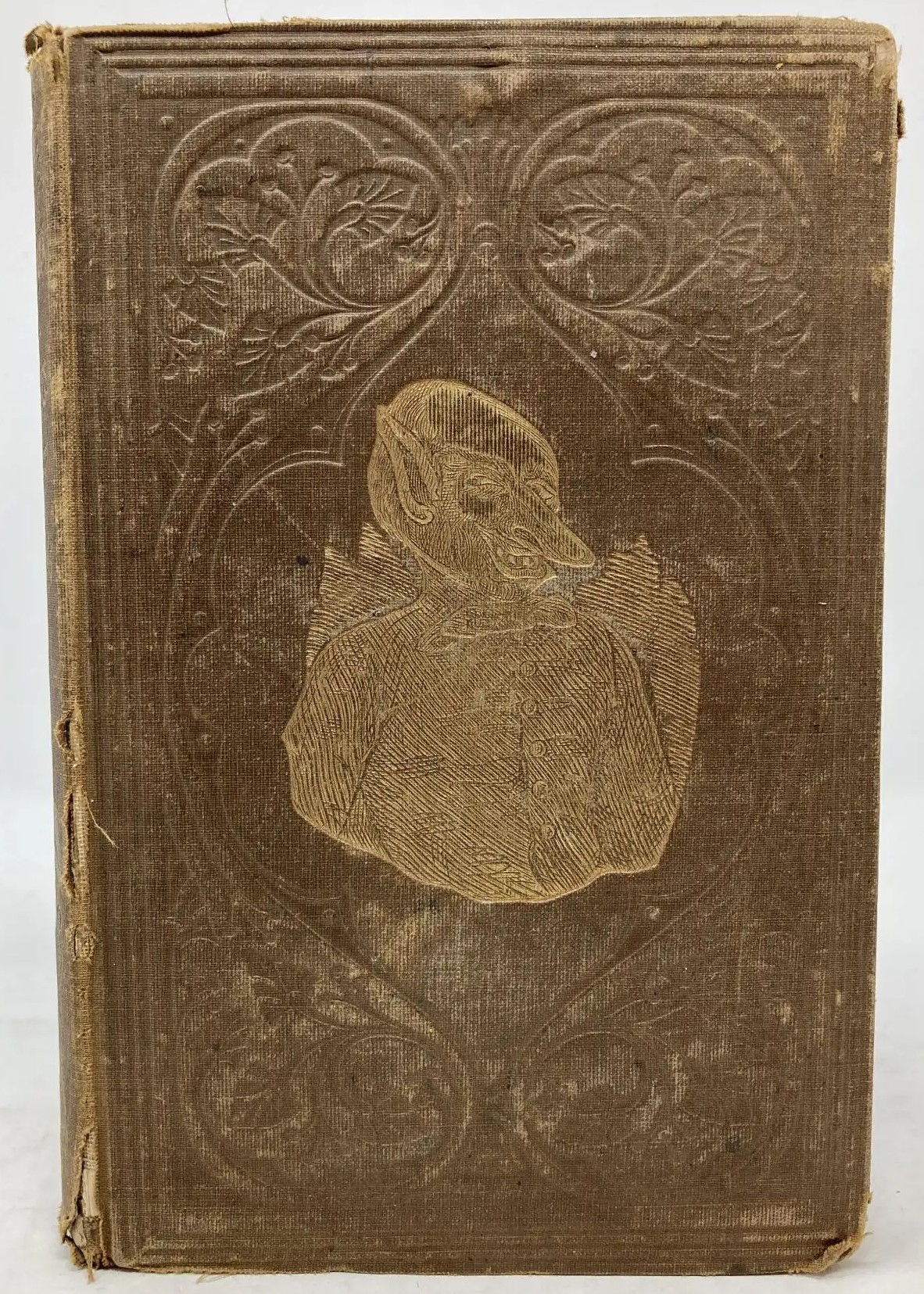
Cover of Phoenixiana: a collection of the burlesques & sketches of John Phoenix, alias John P. Squibob, who was, in fact Lieutenant George H. Derby. | |
|
Boil a quart of tar until it becomes quite thin. Remove the clothing, and before the tar becomes perfectly cool, with a broad flat brush, apply a thin, smooth coating to the entire surface of the body and limbs. While the tar remains soft the flea becomes entangled in its tenacious folds, and is rendered perfectly harmless; but it will soon form a hard, smooth coating, entirely impervious to his bite. Should the coating crack at the knee or elbow joints, it is merely necessary to retouch it slightly at those places. The whole coat should be removed every three or four weeks. This remedy is sure, and, having the advantage of simplicity and economy, should be generally known.
So much for Miss More. A still simpler method of preventing the attacks of these little pests is one which I have lately discovered myself; —in theory only—I have not yet put it into practice. On feeling the bite of a flea, thrust the part bitten immediately into boiling water. The heat of the water destroys the insect and instantly removes the pain of the bite.
You have probably heard of old Parry Dox. I met him here a few days since, in a sadly seedy condition. He told me that he was still extravagantly fond of whisky, though he was constantly “running it down.” I inquired after his wife. “She is dead, poor creature,” said he, “and is probably far better off than ever she was here. She was a seamstress, and her greatest enjoyment of happiness in this world was only so, so.”
| |
On the Subject of Spinning... | |
|
The Revolutionary War has been the subject of an almost endless number of books, films, and documentaries which cover both the events as well as the famous figures of the period. If you were asked to mention a famous person associated with the revolution you might think of Sam Adams, George Washington, or even the Marquis de Lafayette.
Women, unfortunately, have enjoyed much less notoriety. How many people can explain who Molly Pitcher or Deborah Sampson were and what they actually did? Did you know that Martha Washington spent nearly half of the revolution at the front lines with George?
We think, rightly so, of The Boston Tea Party, as a defining moment as colonists expressed their displeasure with oppressive taxation and regulation by the Crown. Leading up to the tea party, it was unpatriotic to drink British tea and each town appointed men to go door-to-door to confirm that it wasn’t being consumed by you and your neighbors.
So, what were the womenfolk doing leading up to the revolution? Spinning. It was the ultimate form of unified retaliation among women to make yarn and ultimately fabric on our shores and not to purchase fabric from England. Men had their powder horns and muskets, and women had their spinning wheels. This was no small sacrifice as women were entirely responsible for the operation and management of the household and raising children. Keep in mind that it takes about 8 hours of spinning to make enough yarn for an hour’s weaving.
The role of the spinning wheel was so important that a spinning wheel is the symbol of the Daughters of the American Revolution (DAR). Spinning led to two words that are commonly used today. An unmarried woman who devoted most of her time to spinning was referred to as a “spinster.” And fabric created from yarn spun at home is called “homespun.”
| 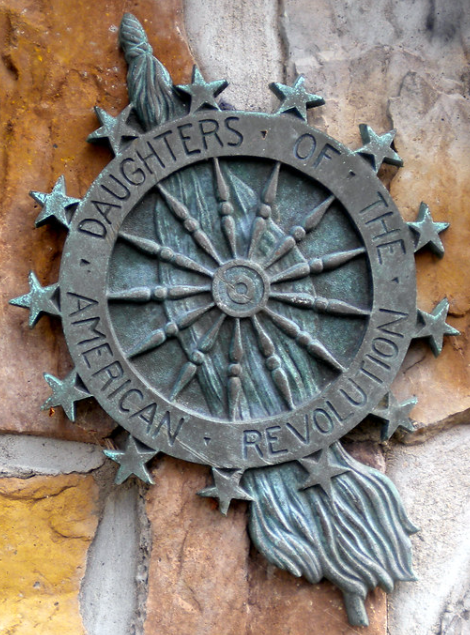 | Daughters of the American Revolution Emblem: The wheel represents a spinning wheel, the staff represents flax, the rim carries the name of the society, and the stars represent the original 13 colonies. | |
The Dwight-Derby House is excited to announce the launch of our new Facebook page! Stay updated on all the latest news and events by simply liking our page. Join our online community by clicking on the Facebook icon below and then clicking onthe "like" button. Thank you for your support! | |
In the next edition of the Squibob Herald, we plan to introduce you to our newest volunteer, a young lady who is a seventh-grade student in Medfield and training to becoming a docent with us. We will also provide an update on the ongoing research related to the East Parlor project. Stay tuned! | | | | |