|
🌎 APRIL IS EARTH MONTH 🌎
Spring has sprung! Spring is indeed a time for growth and transformation, renewal and optimism as nature awakens from winter, symbolizing new beginnings and a fresh start.
In this issue, we are excited to showcase several exciting events for Spring and Summer with many opportunities for personal growth.
Good news on Canada's emissions front: emissions have dropped to their lowest level in 27 years, including lower electricity emissions between 2013–2023. Find out more in the 2025 National Inventory Report. Check out our limelight section featuring exciting case studies provided by SOFIAC, an impact investment fund that helps organizations lower their carbon footprint and operate more cost-effectively. SOFIAC’s innovative business model allows its clients to immediately benefit from energy cost savings without any upfront investment.
Happy Earth Month. Click here to pledge your earth day action.
If you have stories, events or information to share with our readers about new technologies or strategies for reducing greenhouse gas emissions, or lessons learned on the path to net zero, please reach out to us at mcresswell@thomascoleinc.com.
| | | | |
2025 National Inventory Report supports Canada’s climate plan is working: emissions have dropped to their lowest level in 27 years
Canadians are calling for action to combat climate change in a way that strengthens the economy, keeps life affordable, and ensures clean air for communities. As the impacts of climate change become more severe and frequent, with extreme events such as floods, wildfires, and heatwaves, the federal government is taking bold action to protect Canadians, reduce pollution, safeguard the environment, and build a stronger, more resilient, and sustainable 21st-century economy.
| | | | |
RIKEN and Others Develop New Plastic that Dissolves in Sea Water
Plastic has become indispensable in modern life. Primarily made from petroleum, it often lingers in the environment long after use. The impact of microplastics and other pollutants has emerged as a major global concern.
In response, a research team led by Takuzo Aida, Group Director at RIKEN and Distinguished Professor at the University of Tokyo, has achieved a groundbreaking development: plastic that dissolves in seawater.
| |
🌟SOFIAC Sustainable Campus Energy and GHG Projects🌟
Campus Notre-Dame-de-Foy Implements Energy Efficiency Measures to Reduce its GHG Emissions by Over 40%
SOFIAC is pleased to support the Campus Notre-Dame-de-Foy (CNDF), a college located in the greater Québec City area, in implementing concrete and sustainable energy performance measures. The project, which will require more than $5,7M in investment from SOFIAC, excluding subsidies, will enable CNDF to undergo a deep energy transition and achieve a reduction of over 40% in the college’s building-related carbon emissions.
| | |
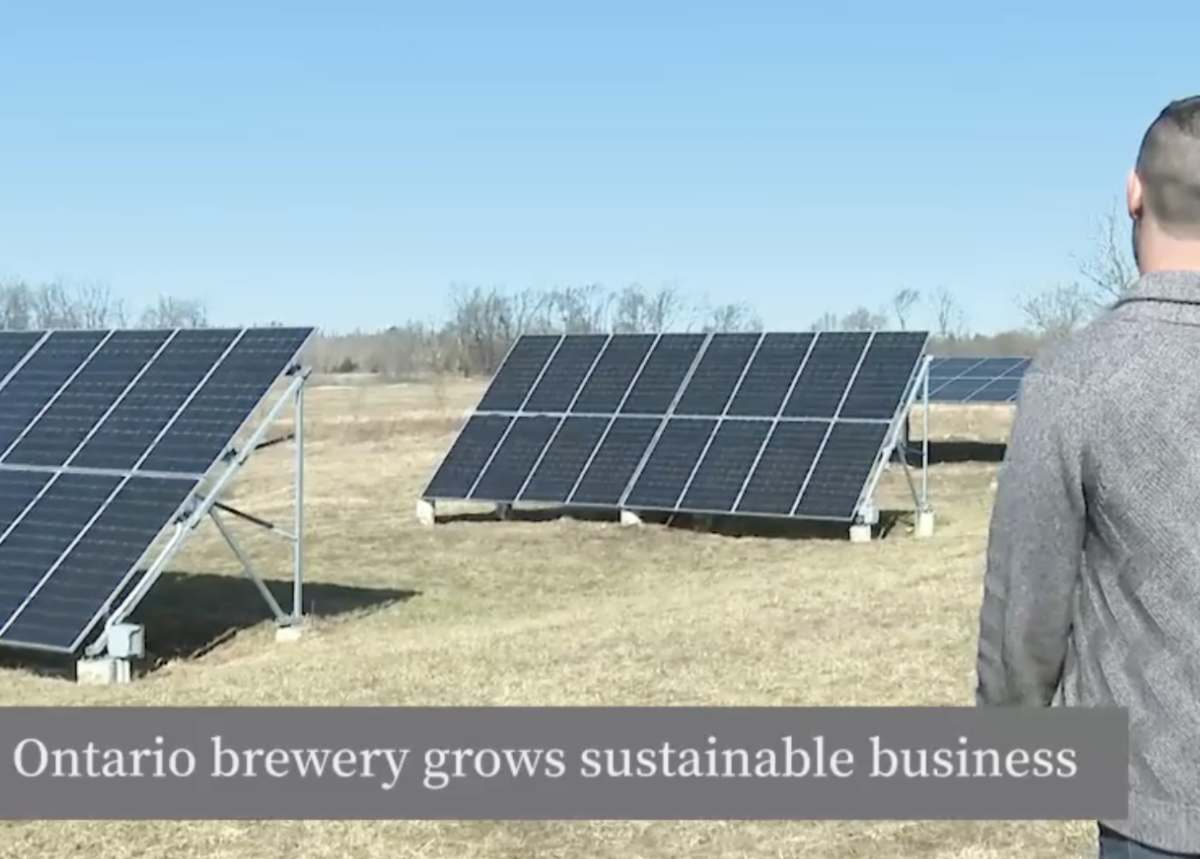
Ontario brewing company takes sustainability to the next level
An Ontario brewery is taking a unique approach to business, one solar panel at a time. Kaytlyn Poberznick caught up with the brewing company to see how they create their local splash of sustainability.
| | |
Election time! Let’s talk about that other carbon tax
Carbon pricing is a climate solution, but also a political football. Now that an election is underway and the consumer carbon tax has been scrapped, could the federal industrial price on carbon be the next wedge issue?
| | |
Tree Canada's Carbon Tracker App
Since 1992, Tree Canada has worked relentlessly to grow Canada’s tree canopy through our greening programs, research, and engagement efforts.
| |
|
Get up to 4X incentives on controls projects! Includes: VFDs/Duct Sealing.
Install by Aug. 31, 2025 to qualify for our bonus offer.
Businesses can receive up to $0.50 per cubic meter of natural gas saved (up to 50% of upgrade costs, with a $100,000 cap) if installed by October 31, 2025. A bonus offer of $1.00 per cubic meter applies if installations are completed by August 31, 2025. Eligible projects include building automation systems, outdoor air reset controls for boilers, and variable frequency drives. These upgrades help reduce energy consumption, lower costs, and improve building efficiency.
To maximize incentives, businesses should consult an Enbridge Gas Energy Solutions Advisor (ESA) early in the planning phase. ESAs assist in selecting eligible control projects, estimating savings, and securing incentive quotes. The program prioritizes upgrades over replacements or repairs, encouraging automation for cost-effective, year-round energy management. By participating, businesses can lower maintenance and operating expenses, enhance building comfort, and reduce greenhouse gas emissions. More details and eligibility criteria are available at enbridgegas.com/commercial-custom-retrofit.
Contact an Energy Solutions Advisor
Your ESA can help you identify the best energy-saving opportunities and maximize incentives for your building.
enbridgegas.com/commercial-custom-retrofit
energyservices@enbridge.com
1-866-844-9994
| | | | |
The future of energy lies in how intelligently we use it — not just how we generate it. As we transition toward a decarbonized world, the most immediate and impactful steps we can take involve optimizing what we already have. At NERVA, we’ve seen firsthand how leveraging data and building intelligence to fine-tune systems can unlock enormous performance gains without the need for major capital investment. Optimization is not only the low-hanging fruit — it’s the foundation for everything that follows."
Once systems are optimized, conservation becomes scalable. It’s about reducing waste at every level — from duct leakage to over-ventilation — and ensuring that every kilowatt and cubic foot of gas serves a purpose. The impact of conservation is measurable and repeatable, and it’s often the most overlooked piece in the race to decarbonize. By prioritizing efficiency before electrification, we ensure that clean energy isn't just cleaner — it's used wisely.
Only then does conversion — the shift to renewable energy and electrified systems — become truly sustainable. The built environment accounts for a significant portion of global emissions, and if we want to meet our climate targets, we need to be strategic. It’s not about chasing trends — it’s about building smarter, operating leaner, and converting when it makes sense. That’s the path forward. And it’s one that empowers building owners, operators, and communities to take control of their energy future in a meaningful and financially viable way.
Josh Lewis, P.Eng,CEM
Chief Technical Engineer
NERVA Energy
| |
|
The “I Don’t Know” Recycling Bin: A case study to improve waste diversion
Recycling programs and commercial recycling bins have become the norm. But waste diversion continues to be a persistent issue. Why? Recycling can be confusing. There is a lack of consistency in how programs are run. Accepted materials can vary by location and there is mixed messaging as to what can and cannot be recycled.
The goal of the ‘I Don’t Know Bin’ project is to find out which materials the College’s community is having trouble sorting into the correct waste stream (compost, landfill or recycling), and improve waste signage and communications based on the results of the exercise.
The program has four clear objectives:
- Create communication materials based on results
- Share results with the wider campus community
- Update waste signage based on results
- Reduce sources of unnecessary waste where it is identified
- Get some ideas for how to improve your school recycling program by using these 10 tips for campus recycling success.
| | | |
|
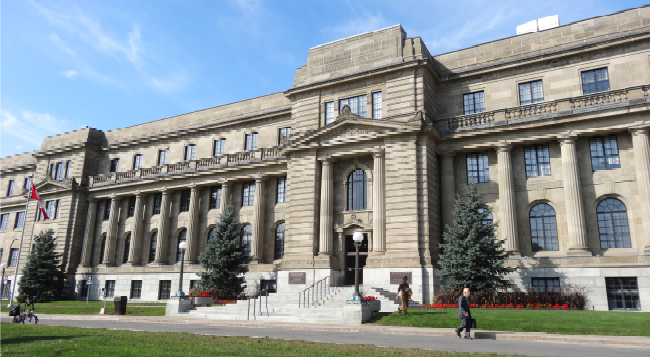
The National Research Council Project Case Study
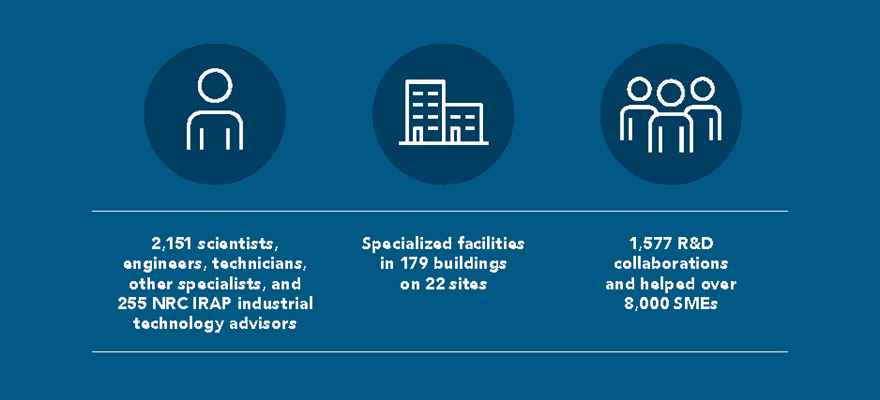
The National Research Council Canada is the primary national agency of the Government of Canada dedicated to science and technology research and development. Headquartered in Ottawa NRC is the government of Canada's largest research and development organization with over 100 years of experience.
In pursuit of Level 3 Facility certification (biosafety level 3 facility cetification) for the M54 Animal Health Lab at the Human Health Therapeutics Research Centre, 1200 Montreal Road, Ottawa, the National Research Council (NRC) faced a major challenge: passing the stringent ASME N511 pressure decay test.
According to Section 1.13 (Duct Testing) of the specifications, all duct systems—supply, return, and exhaust—must exhibit less than 1% leakage. To meet these rigorous standards, NERVA Energy partnered with the NRC, employing advanced Aeroseal technology. This innovative solution effectively seals ductwork from the inside, ensuring compliance and enhancing system efficiency.
| | | | | | |