Alfredo Jaar, Ausencias, 2025 | | |
Greetings!
Warm greetings, and thank you for reading the Third Anniversary edition of the Capilla Azul newsletter! La Capilla Azul is an independent, community-based exhibition space in the agricultural hamlet of Contuyn, in the archipelago of Chiloé, in Chile's Los Lagos region. Ever since we opened our doors to the public in May 2023, we’ve presented three new exhibitions a year, and on May 23, we’ll present our tenth exhibition.
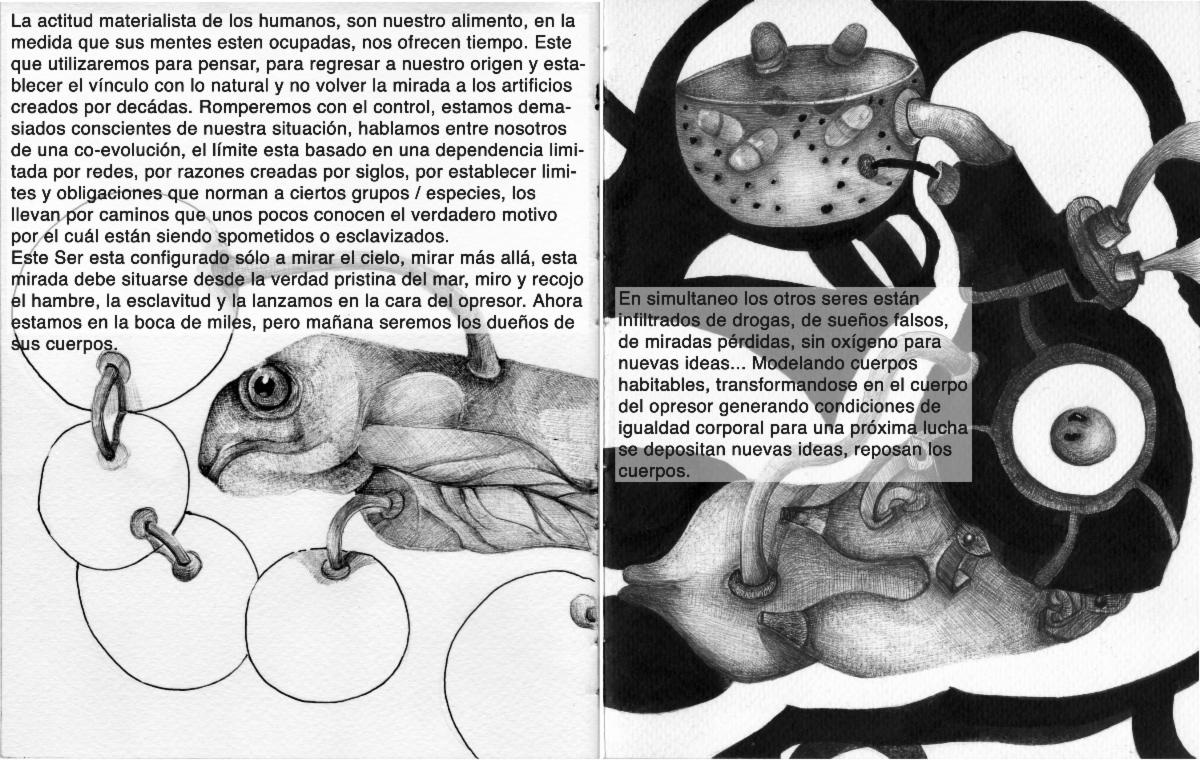
| | Andres Avila, Song of the Salmon | | Angelus Novus features new work produced for the occasion by the artists Andrés Ávila (Quellón, Chiloé) and Rogelio López Cuenca (Nerja, Spain), who began their collaboration in January of this year. A little more information on that project is forthcoming, but first I thought it might be worthwhile to offer a quick thumbnail sketch of how we got here: | | |
On my very first trip to Chile in 1991, I visited the artist Eugenio Dittborn at his studio in Santiago, and he encouraged me to visit Chiloé, specifically to develop a future curatorial project. I didn’t know much about the place and, for that reason, didn’t follow up right away, but the idea stayed with me. In 2014, I met the artist Gianfranco Foschino, who, upon hearing of Dittborn’s suggestion 23 years earlier, enthusiastically agreed that Chiloé was the perfect place to develop a curatorial project. I was mystified by the coincidence, but as Gianfranco also offered to accompany me to Chiloé on my next visit to Chile (which turned out to be the following year), I decided I had to at least find out for myself.
It would be a mistake to say that my experience of Chiloé, on that first visit, was love at first sight, but there was definitely a profound response on my part after we had spent time at the first few artists’ studios in and around Castro, the capital. Many of the artists who we visited on that first expedition have gone on to present their work at La Capilla Azul, including Guillermo Grez, Silvia Rivera, and Rafael Lara. What most affected me at the time was realizing that something these otherwise very different artists shared was that they were producing work that fully merited attention, but without any tangible network of collectors, galleries, museums, or curators to support their efforts.
Of course, Chiloé is home to several museums and a few collectors, as was true in 2015, and until a few years ago there was even a commercial art gallery in Castro. But what seemed to be missing was any curatorial focus on artists in the region. Part of this gap had to do with the reality that, in historical terms, Chile developed as a highly centralized country, with most of its citizens long resigned to a system in which the first condition for success, in most fields, and especially in the creative arts, was that one must first claim Santiago as their base of operations. Accordingly, the further you drifted from the capital region, the less visible your work would become, and in the more rural sectors of the country, such as Chiloé, not many state resources were discernibly dedicated to lifting up local artists.
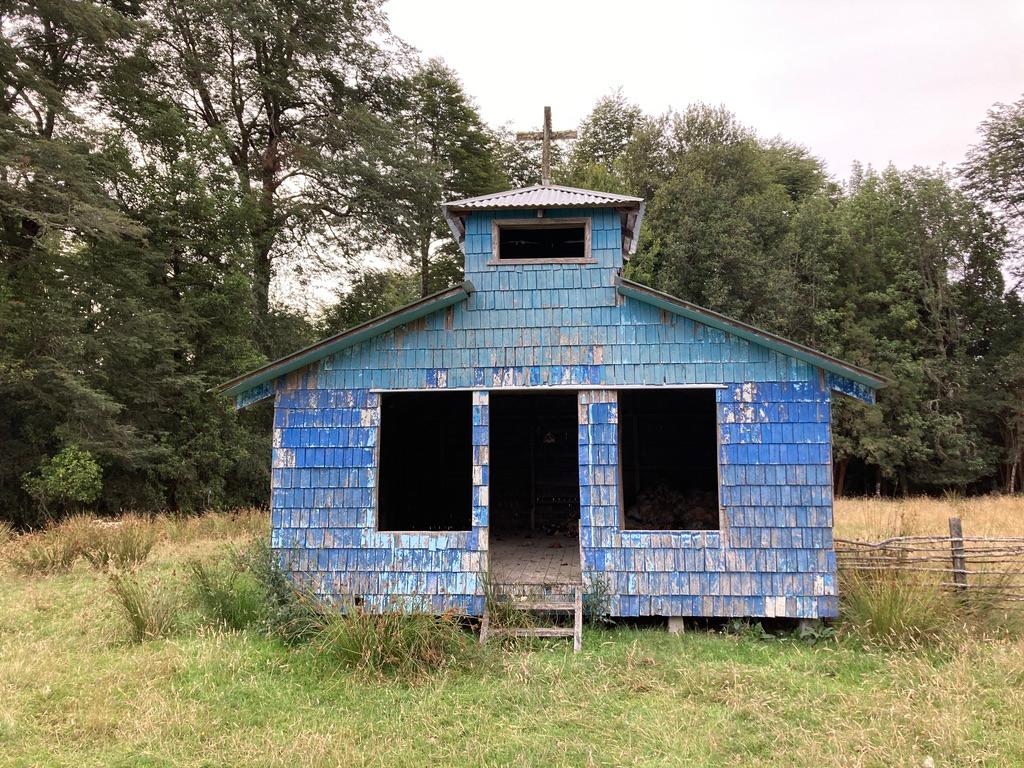
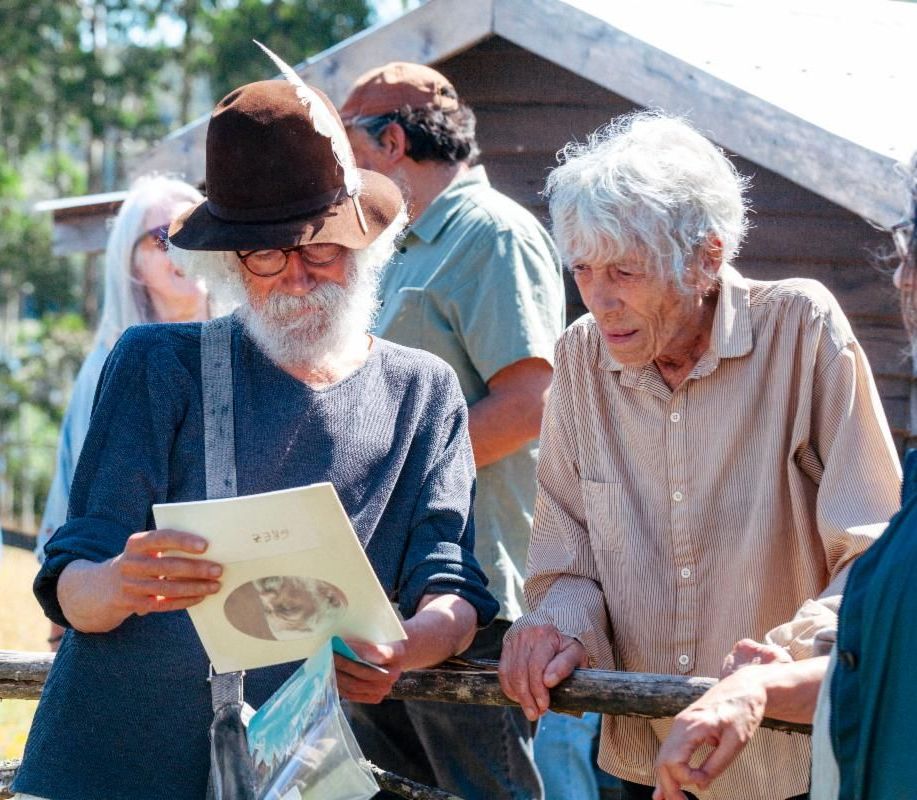
| | Once I’d joined forces with longtime friend and colleague Ramón Castillo, whom I’d known since meeting him in his home city of Temuco in 1997, the focus of our ongoing research trips shifted from the search for potential venues for a large-scale temporary biennial-type project to opening an exhibition space dedicated to Chilote art and artists. We had already stayed several times at the rural Comarca Contuy lodge, with its treehouse-style palafito cabins, which became one of our favorite places because of the marvelous family that ran it. But it wasn’t until one evening in March 2022 that our host, Pablo Carvacho, let us know that the tiny 19th-century wooden church that served as a de facto signpost for the lodge had, in fact, been earmarked as a space for art from the day it was purchased. | | | That was the moment La Capilla Azul was born. It was a breathtaking shift in scale, from a project engaging the entire archipelago to a wooden chapel on a small family-run farm surrounded by other family-run farms. Without question, it needed a great deal of work before it was ready, and besides being quite small, Contuy is in a remote corner of an archipelago that few outside Chile had even heard of. But the more we talked about it, the more these apparent disadvantages began to seem like factors that weighed in our favor. In the larger scheme of things, Chiloé was itself fairly remote and predominantly rural, so wasn’t it more emblematic of the place itself that a space for Chilote art be located in the countryside? Thus, within a couple of hours, the plan went from improbable to inevitable, as it became clear to all of us that this was the only future that truly made sense. | | Capilla Azul as a storage shed, ca. 2022 | | Guillermo Grez and Clara Yañez at a Capilla Azul opening | | Getting from that evening’s revelation to our opening day was a journey of fifteen months. Much of that time was devoted to raising funds through GoFundMe, and as we began speaking to others about the project, it felt like an ideal people could relate to. By our third opening in January 2024, when the Chilean artist Iván Navarro came from New York to create a performative work in collaboration with the Chilote musician Enrique Millán, we realized that the exhibition format that worked best for us was the two-person exhibition—one artist local and one artist visiting from elsewhere. | | Following is a selection of views from Capilla Azul’s exhibitions to date, with brief descriptions of each: | | |
INTERIOR SEA
(May–September 2023)
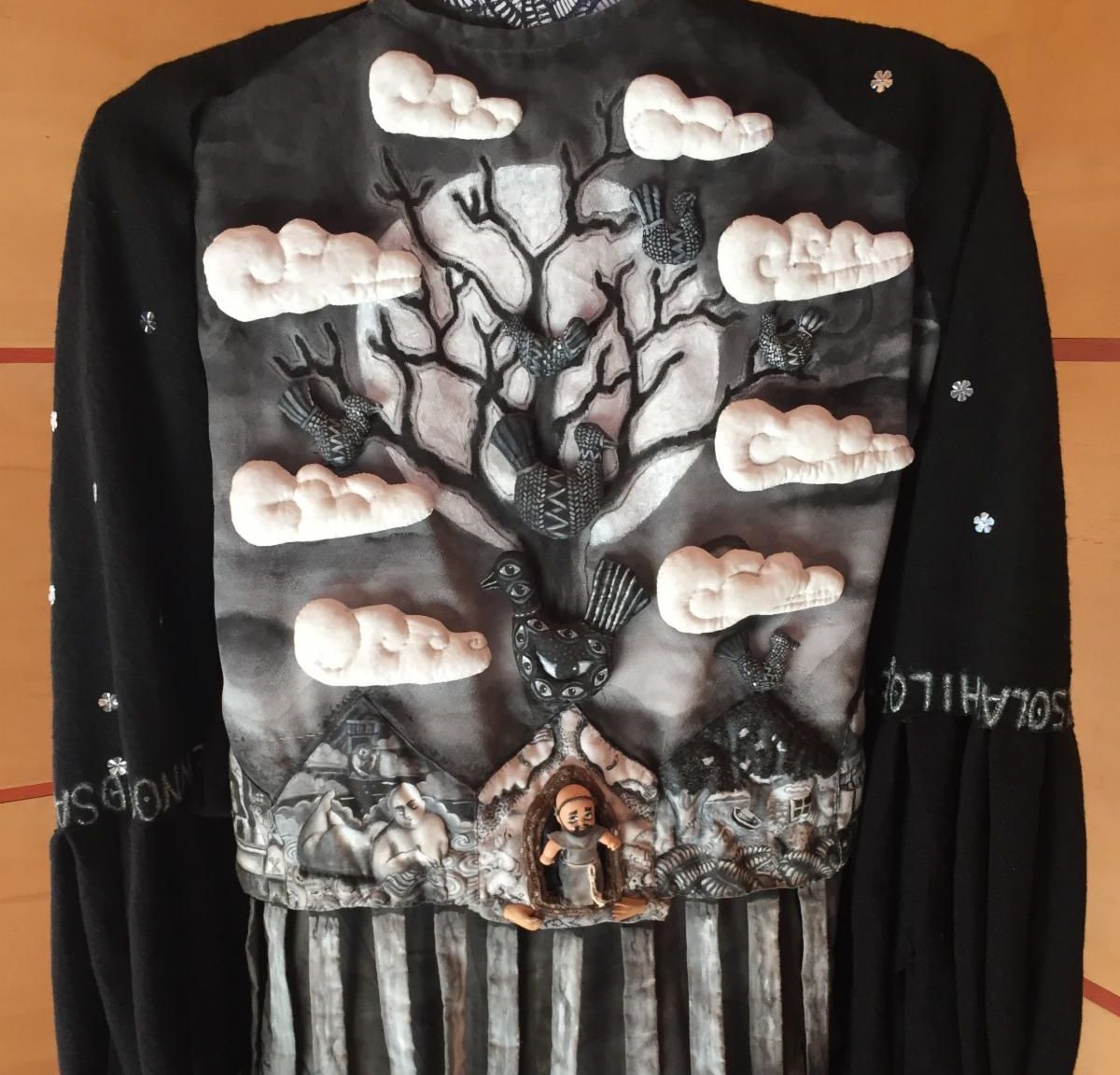
Guillermo Grez, who has lived in Chiloé since the 1980s, and Clara Yañez, who moved from Santiago to Contuy with her family in 2015, presented their works together for the opening exhibition. Yañez’s carved wooden sculptures of saints and angels employ a vivid emotionalism, while Grez’s wide-ranging techniques include painting, collage, drawing, print-making, and wearable cloaks, jackets, robes, and capes.
| | | |
WEAVING THE ISLAND
(September–December 2023)
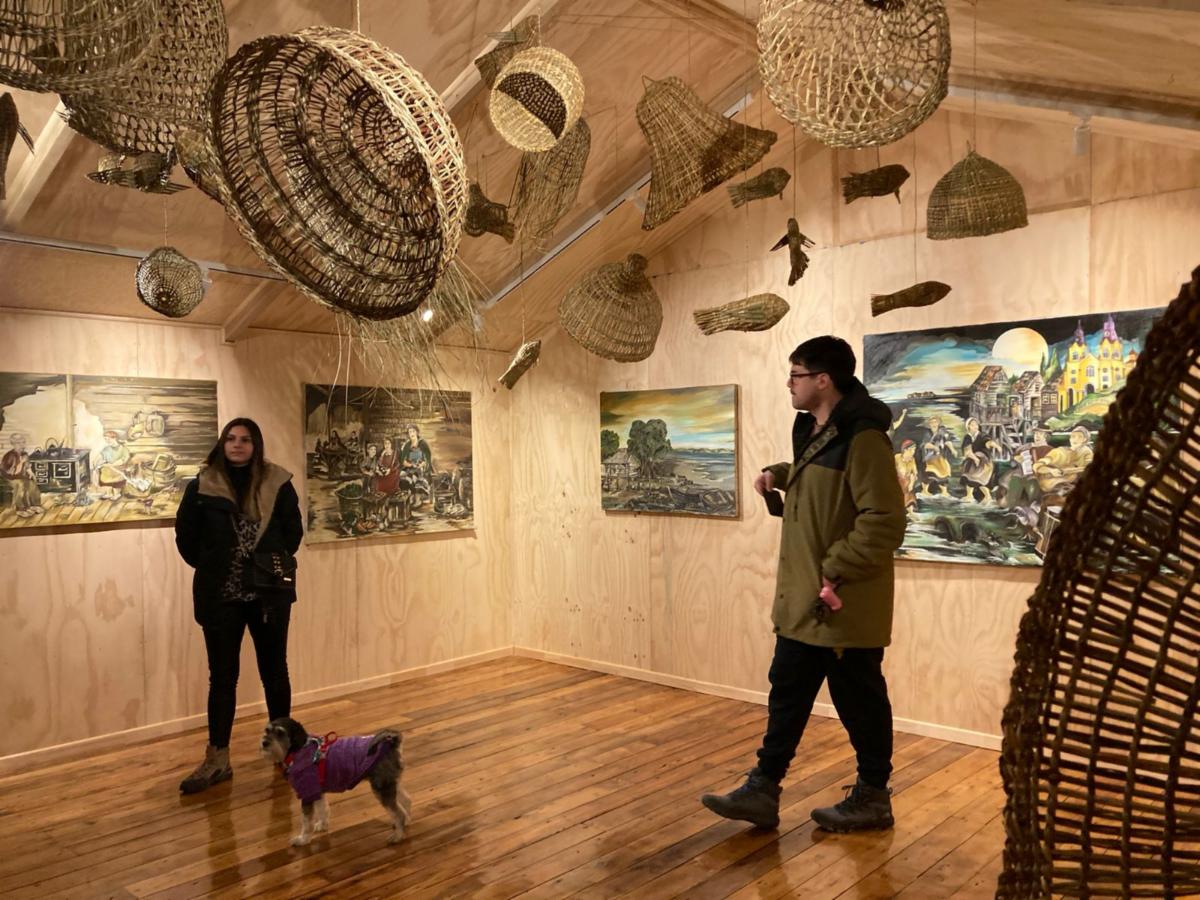
Ismenia Duamante and Silvia Rivera were born and raised in Chiloé, and their work reflects traditional Chilote culture. Duamante uses ancestral basket-weaving techniques to create complex woven forms, and Rivera paints episodes from a timeless Chiloé that links her childhood, a mythological past, and traditional ways of life in the present-day archipelago.
| | Weaving the Island, works by Ismenia Duamante and Silvia Rivera | | |
VID VIDA VIDAJENA
(January–March 2024)
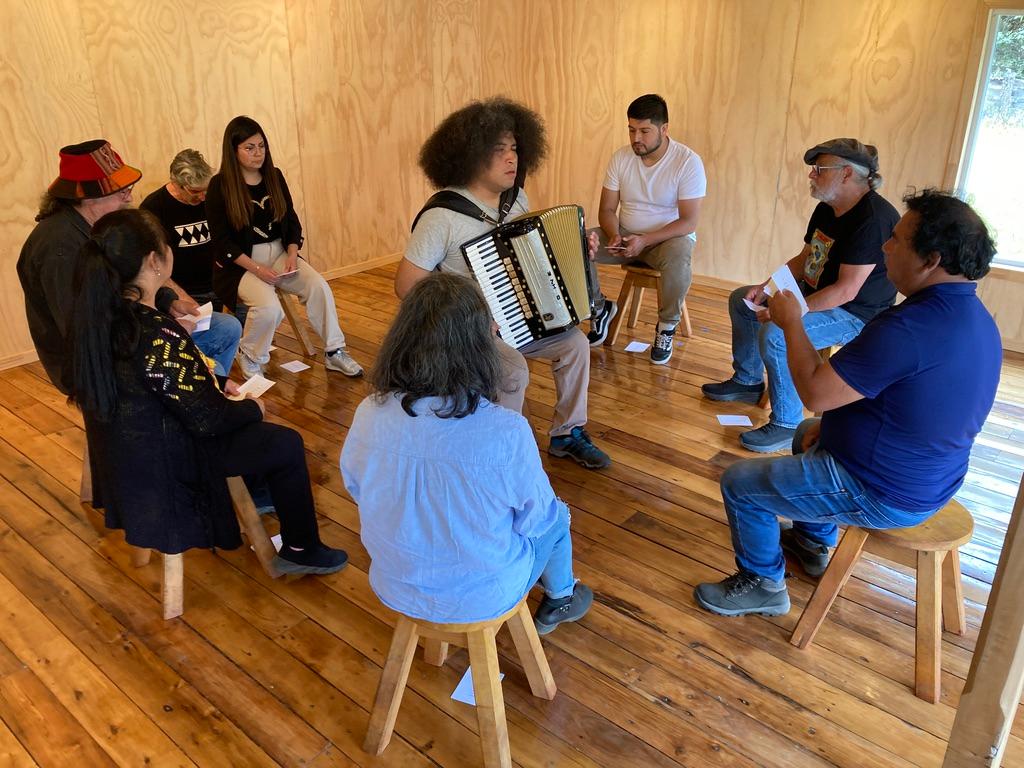
The concrete poem Vid Vida Vidajena was co-authored by Iván Navarro using words taken from the Royal Spanish Dictionary. It was created for a participatory event in which eight members of the Contuy community, sitting in a circular formation with musician Enrique Millán at the center, collaborated in two public performances that were recorded, remixed, and replayed inside the space for two and a half months. It was released the following year on Hueso Records as a vinyl recording.
| | Ivan Navarro and Enrique Milan, Vid Vida Vidajena rehearsal | | |
SAVING TIME
(May–September 2024)
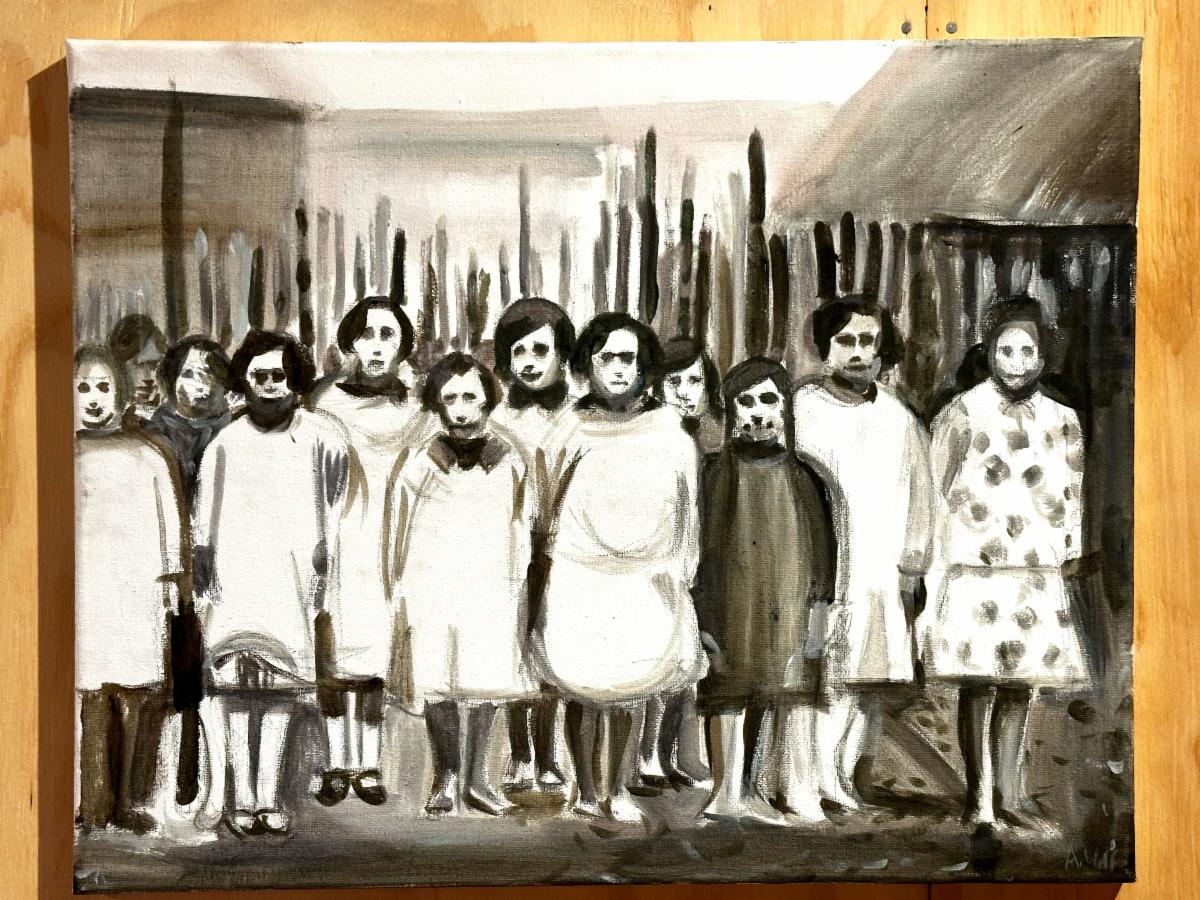
The Ancud-based painter Anelys Wolf, whose work is rooted in memories of places and people, collaborated with the Santiago-based installation artist Sebastián Preece to develop a project that existed both within the gallery and outside it. Within the gallery, it was a selection of finite works by both artists, while outside, Preece created a sequence of environmental pieces that incorporated the remains of a wooden boat he discovered on an adjacent riverbank, which ended-up being reabsorbed into the forest.
| | Anelys Wolf, Rural School, 2024, oil on canvas | | |
WE ARE ROOTS
(September–December 2024)
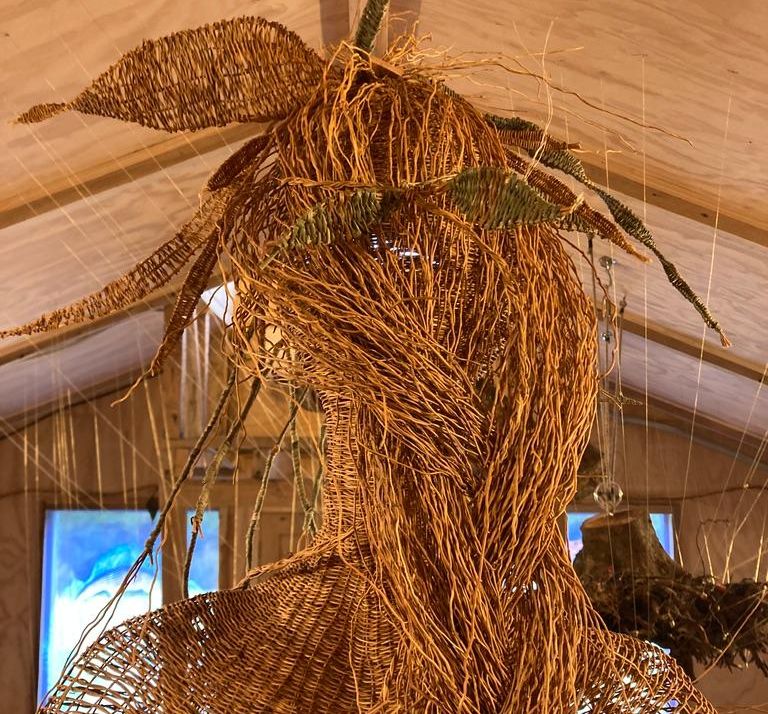
This dynamic collaboration brought together the esteemed mixed-media artist Voluspa Jarpa with Chiloé native Raquel Aguilar, who uses the fiber quilineja to create sculptures of animals and plants and, in this case, a ten-foot-tall sculpture of a forest woman, whose vines appeared to extend from the nearby forest, entering the chapel through a tiny hole and reconstituting themselves inside. This became the first Capilla Azul exhibition to travel to the mainland, where it was shown at CAAM in Puerto Varas.
| | Somos Raices, Braided Hair Bird | | |
ABSENCES
(January–April 2025)
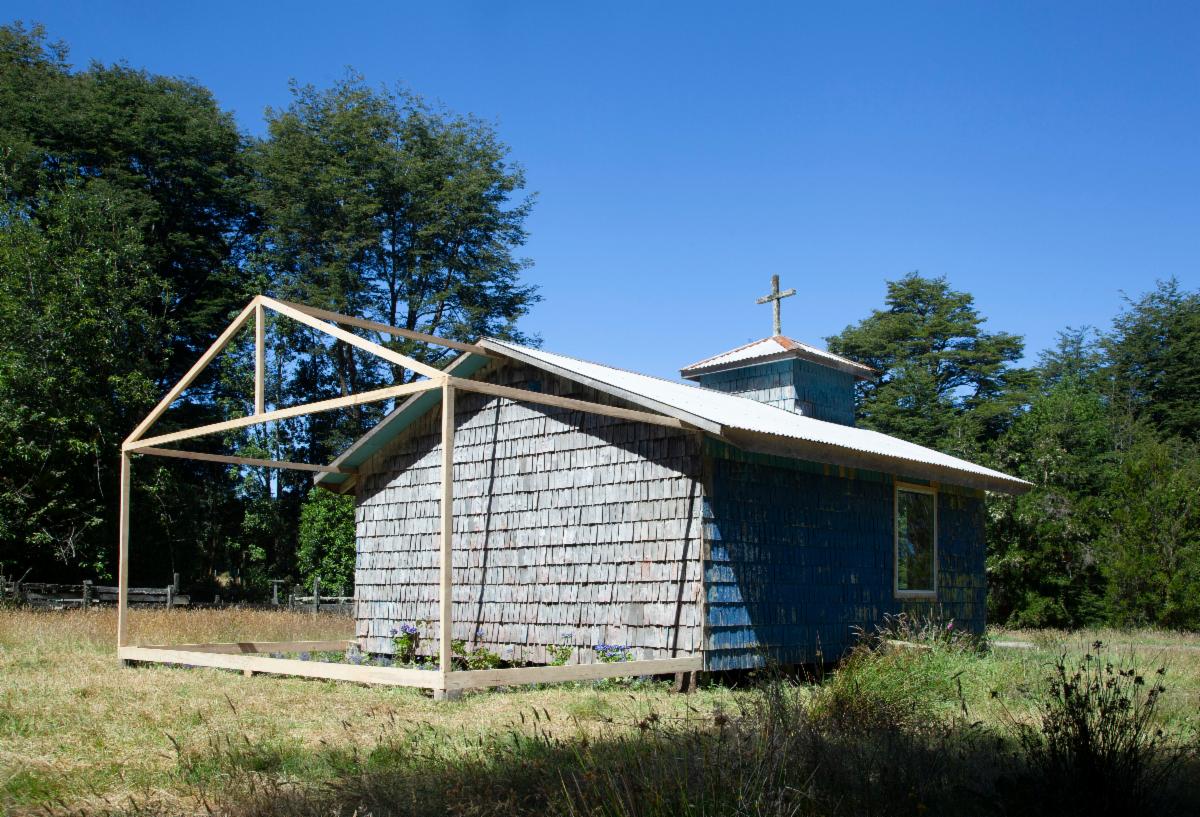
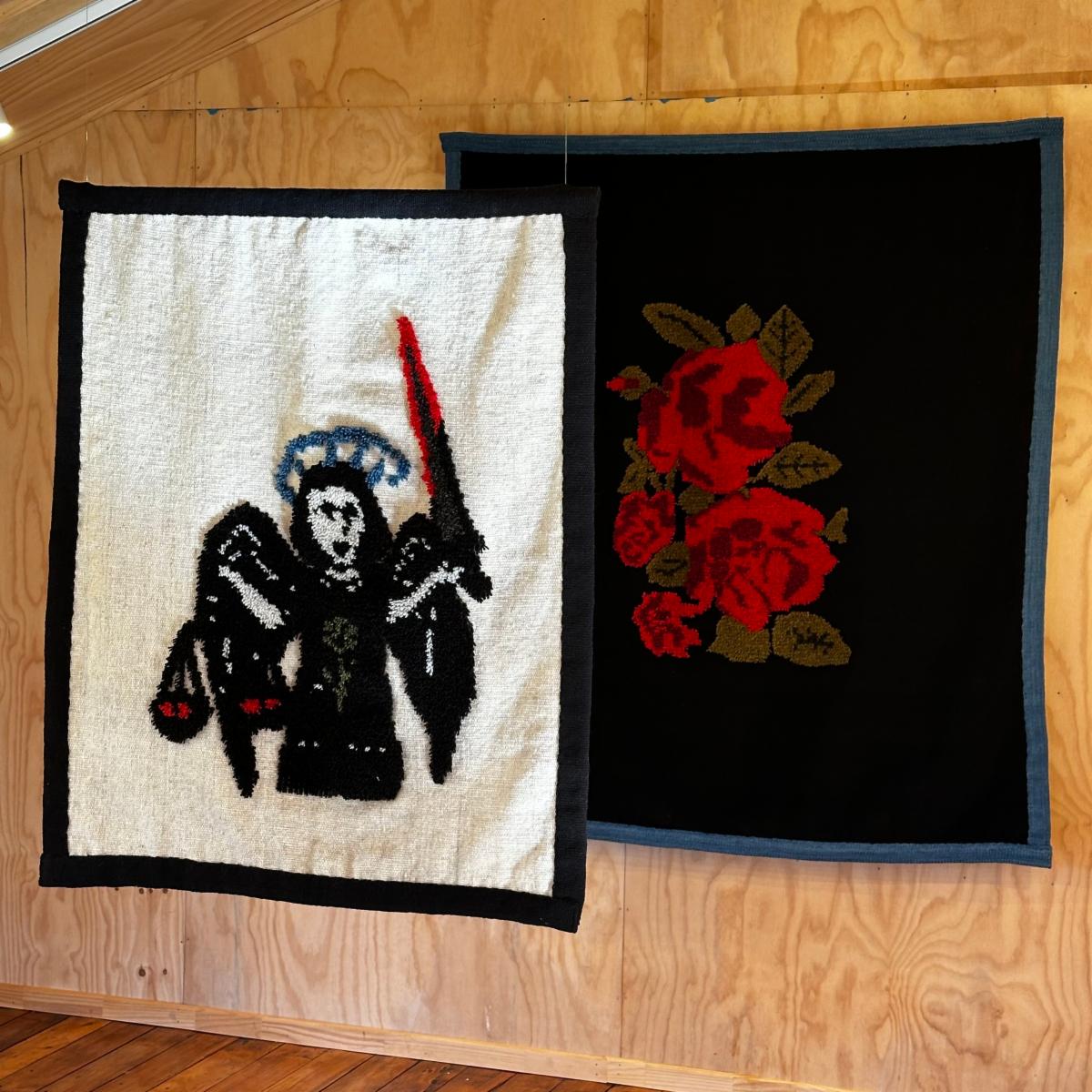
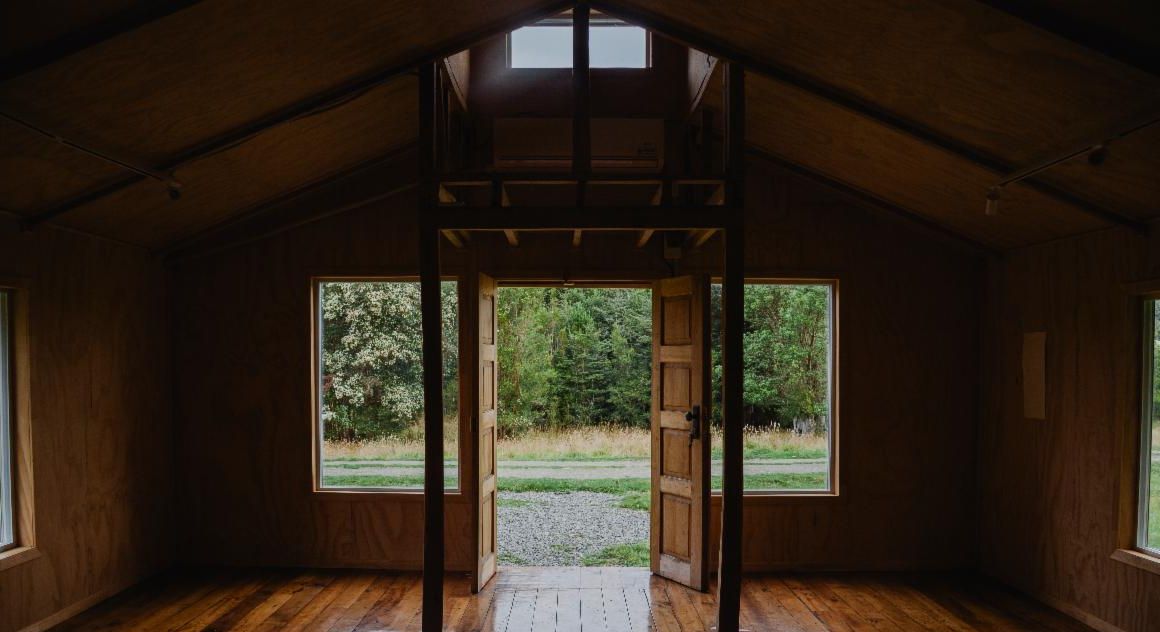
For their collaborative effort, the New York-based conceptual artist Alfredo Jaar and the Chilote textile artist Osvaldo Guineo Obando took as their shared subject the missing part of the tiny church that had been lost when it was transferred from its original site to its present location. Jaar produced a permanent outdoor work that framed the absent portion of the structure in wood, while Guineo presented a pair of hanging pieces that fused Catholic imagery with traditional Mapuche iconography.
| | | |
SECOND NATURE
(May–September 2025)
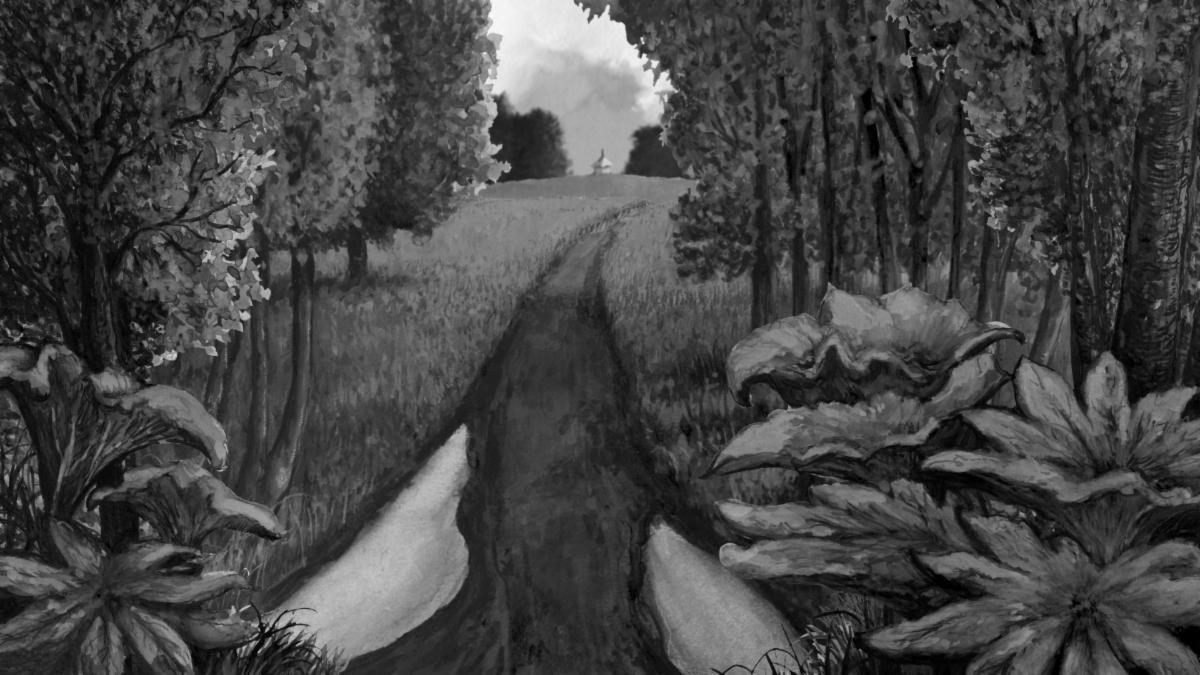
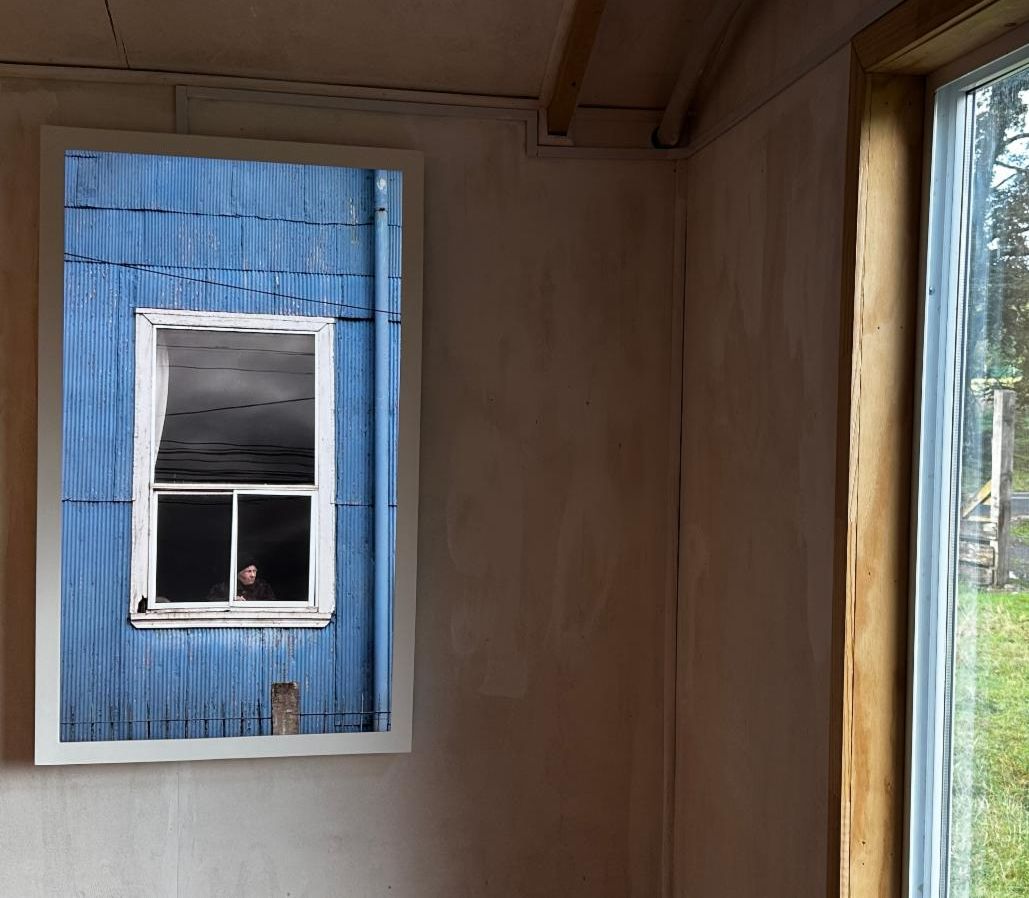
Santiago-based video artist Gianfranco Foschino and Puerto Varas animation artist Estéban Pérez came together to produce an exhibition examining ways that nature is represented within a rural context. The works included a brand-new film and a series of drawings by Pérez, along with two of Foschino’s earliest works, which look at the quotidian aspects of life in Chile’s rural communities.
| Esteban Perez, Camino Capilla | | Granfranco Foschino, Window, video installation from Second Nature. | | |
FREE SPIRIT
(September–December 2025)
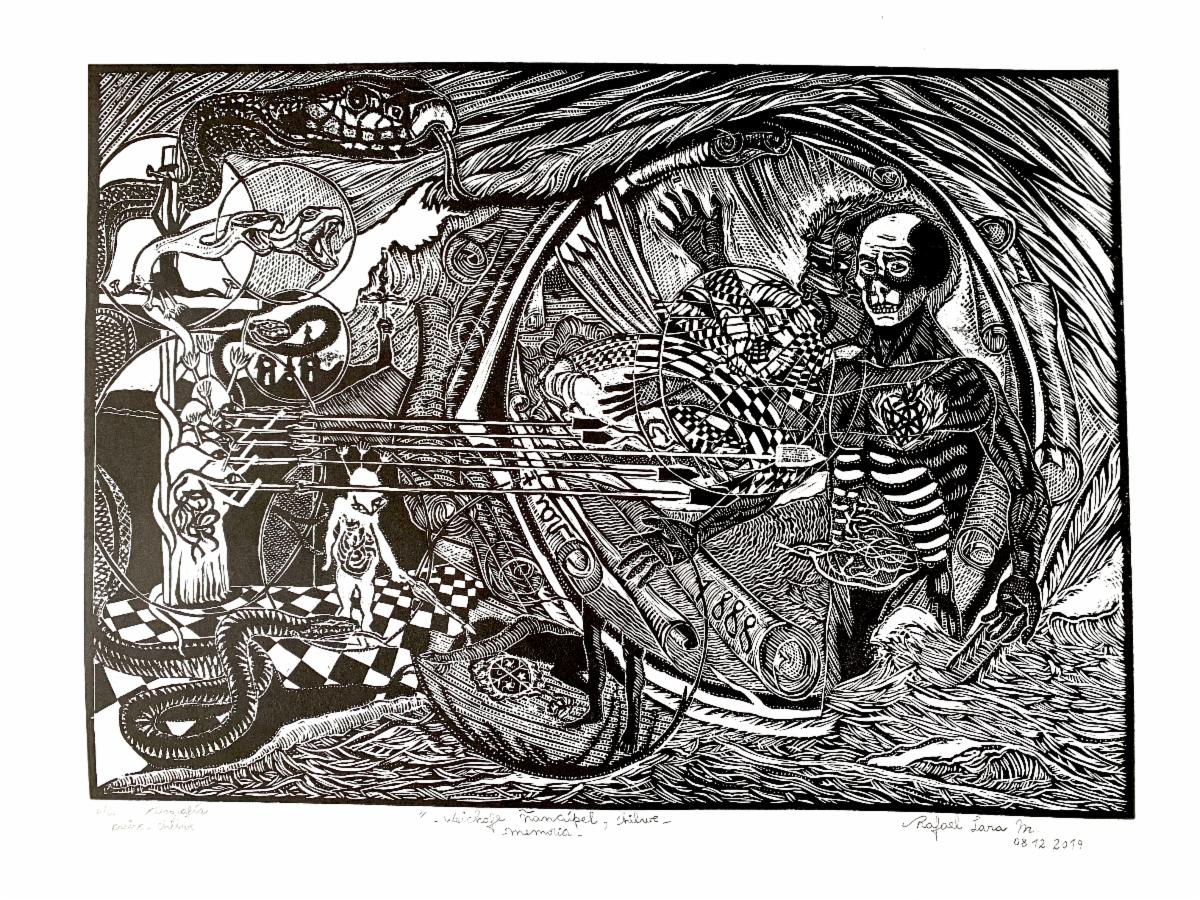
The premature death of the artist and teacher Rafael Lara (1969–2024) left us with the decision to present a retrospective of his prints, drawings, and paintings, combined with a selection of several dozen works made by his former students at the Academia de Arte Islas al Sur in Castro. Accompanied by our first fully illustrated catalog, the exhibition is touring various institutions throughout Chile through 2027.
| | Rafael Lara, Weichafe Nancupel Chilwe Memorial, 2019 lithograph | | |
METAMORPHOSIS
(January–April 2026)
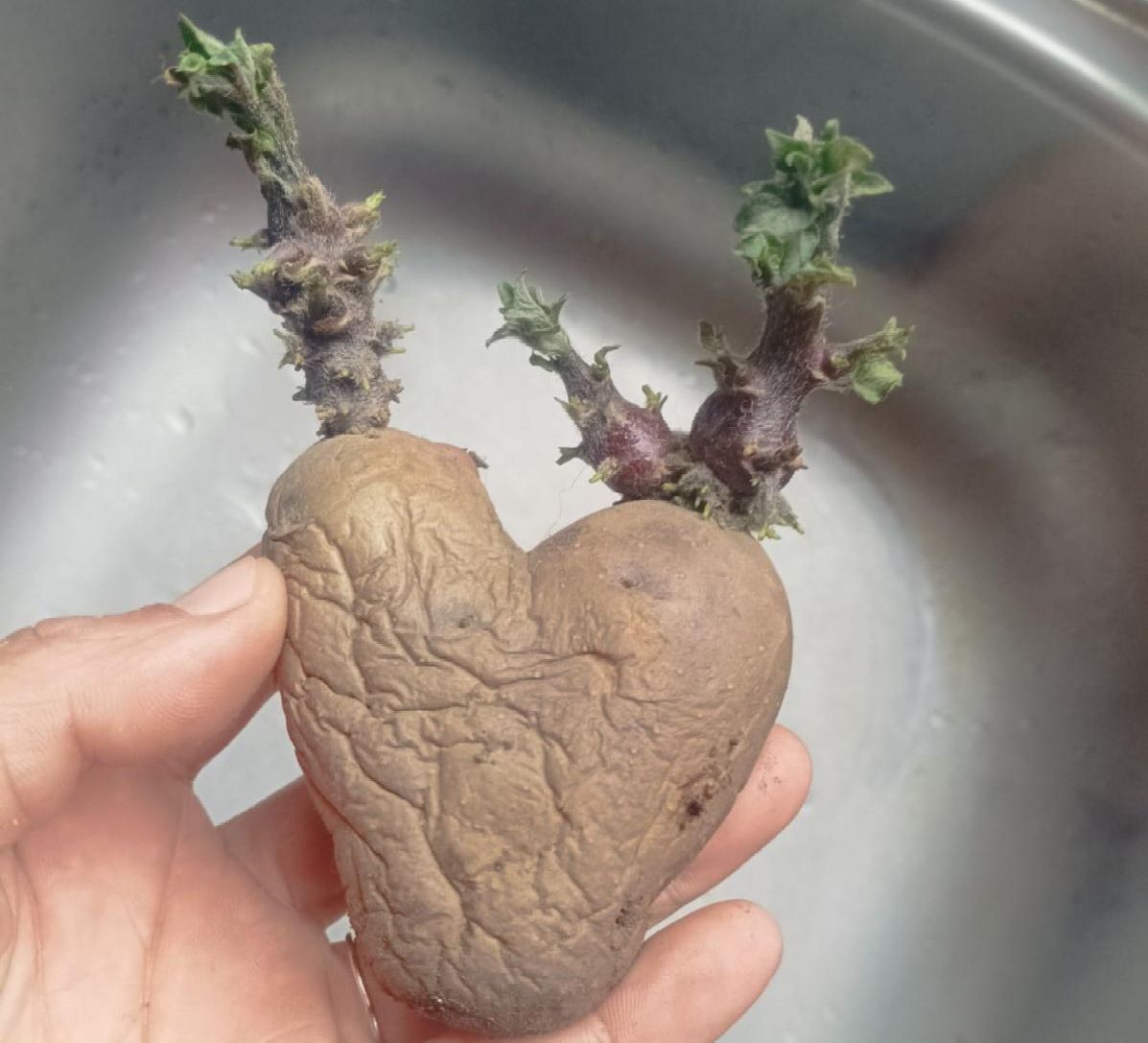
Castro-based artist María-Inés Galecio joined with New York-based Ecuadorian artist Karina Aguilera Skvirsky to create an exhibition that looked at the transformation of both humans and plants into mythological figures throughout human history, culminating in an outdoor/indoor installation by Galecio of a fifty-meter “heart” sculpture made from potato sacks that joined up inside the chapel with an actual potato in the form of a human heart.
| | Maria-Inés Galecio, Palpito | |
COMING MAY 23: ANDRÉS ÁVILA
and ROGELIO LOPEZ CUENCA
| | | |
On May 23, Capilla Azul will celebrate its third anniversary with the exhibition Angelus Novus, which combines new works by Quellón-based graphic artist and sculptor Andrés Ávila with Spanish artist Rogelio López Cuenca, who will present a video and new photo- and text-based works that consider the question of ecology through the lens of colonial legacies and the salmon farms that have for years shaped the Chilote economy. Inspired by Ávila’s graphic novel The Song of the Salmon, the exhibition will combine science, history, robotics, and a dash of science fiction.
Angelus Novus is the title of a small but well-known monotype created in 1920 by the German-Swiss artist Paul Klee, depicting an ethereal entity with raised wings, downcast eyes, and a mouth wide open in an expression of alarm. It was purchased the year after it was made by the German philosopher Walter Benjamin, a close friend of the artist, who hung it on the wall of every apartment he inhabited and famously described its subject as “the angel of history.” In Benjamin’s telling, the angel has turned its back on the wreckage of the past but cannot sound the alarm about the present because it is caught in a storm that has disabled its wings, and the philosopher’s conclusion is chilling: “The storm is what we call progress.”
| Rogelio Lopez-Cuenca, video still from Tutto Tondo | |
The artists Andrés Ávila (Quellón) and Rogelio López Cuenca (Nerja, Málaga) have chosen the theme of Angelus Novus for their collaborative exhibition at Capilla Azul. At the center of the installation, Ávila’s ongoing investigation into robotics and aquatic acoustics has enabled him to transform the two-dimensional protagonists of his graphic novel El Canto del Salmón into three-dimensional figures who emerge from their aquatic domiciles in order to communicate with us, species to species. At the core of Ávila’s research are the numerous large-scale fish farms that play a key role in the Chilote economy, but his main point of identification is with the fish themselves, in order to explore what other forms of species-to-species interaction might occur if given an opportunity to flourish.
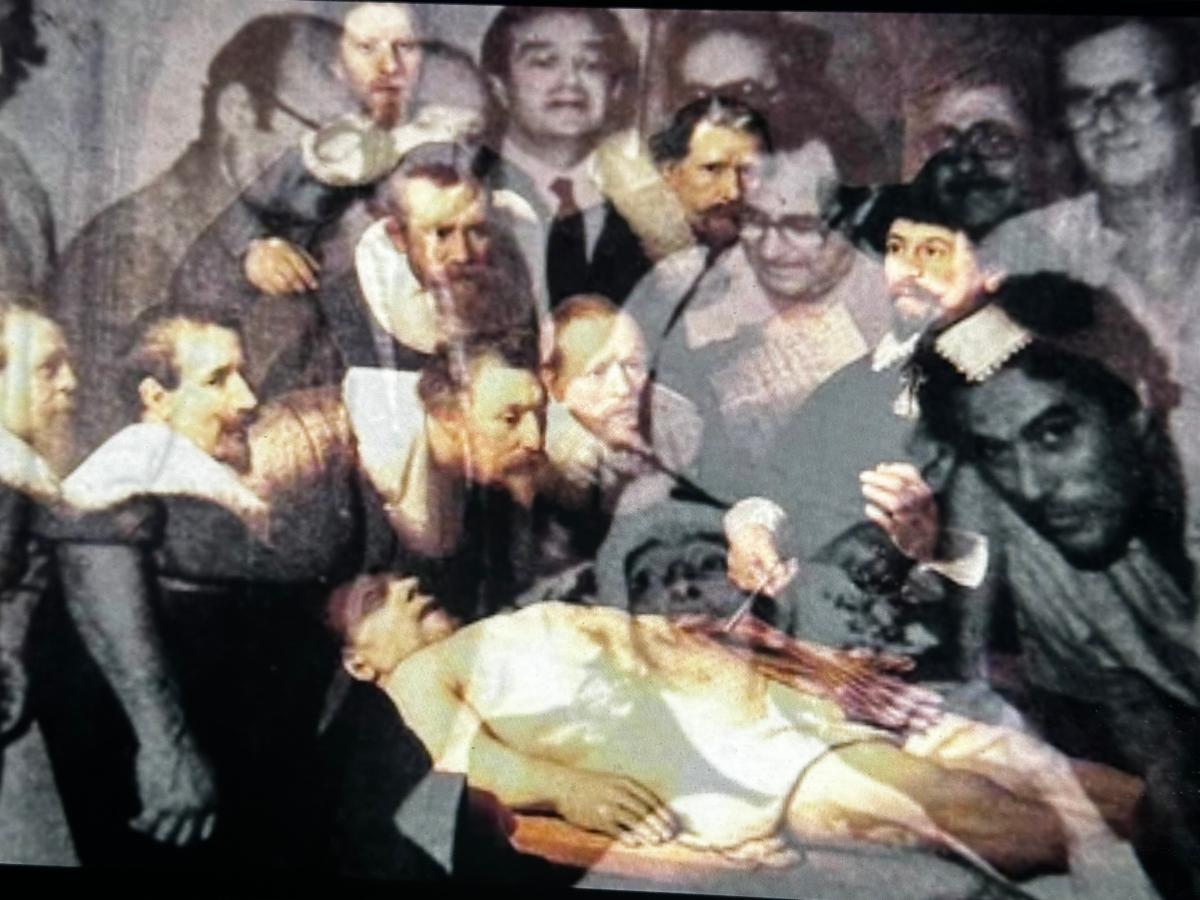
Rogelio López Cuenca’s primary objective within the exhibition is to provide a historical frame for the present moment, which he achieves by folding a different art historical reference into his video: the sacred cadaver surrounded or ministered to by a retinue of the living who are there to bear witness. Within López Cuenca’s montage, the deposition of Christ from the cross and the iconic photograph of Che Guevara after his death are simply different variations on the same narrative. He is also interested in examining present-day traces of the colonial legacy, in particular the authoritarian drive to extinguish or otherwise suppress those bodies of knowledge that prove uncomfortable for that mythology of progress.
| | Capilla Azul, after the restoration | | |
La Capilla Azul operates as a 501c3 tax-deductible charity in the United States, where we raise most of the funds needed to keep our programs and activities going. With our principal staff working on a fully voluntary basis, donors can rest assured that every dollar of their contribution goes directly to our activities within the Chiloé archipelago and not to any third parties. These direct expenses include travel, production, lodging, and honoraria for the artists; publication of a catalog; and the costs associated with our weekend-long inauguration activities: food, wine, music, and the inclusion of the Contuy community at the forefront of our activities, which also include educational initiatives such as guided tours and classroom workshops with the exhibiting artists and curators.
Please help us celebrate our third anniversary by making a contribution today either at the link below or by visiting us at www.capillaazul.com. And thank you once more for reading our newsletter and for being part of the extended Capilla Azul community.
| | | | Capilla Azul is part of Comarca Contuy, Queilen, Chiloé, Region Los Lagos, Chile | | | | |