|
Bringing Beacon Hill to You
| | |
From the Office of
State Senator John F. Keenan
Representing the Norfolk & Plymouth District:
Abington, Braintree, Hanover, Holbrook, Quincy, and Rockland
| | |
Committee work is heating up, bills we filed are advancing through the legislative process, other bills are being considered for co-sponsorship, and preparations for the Senate budget debate are underway.
April is a busy time of year at the State House. Have a look at some of the things we've been working on.
| |
Legislative Spotlight:
Continuity of Care for Mental Health
| | |
Treating and recovering from illness is incredibly difficult, which is why we have a responsibility to make everything else about healthcare as easy as possible, especially how we interact with insurance providers. S.769, An Act providing continuity of care for mental health treatment, addresses this by seeking to prevent a change to a person’s insurance coverage from ending or interfering with access to mental health treatment.
| | |
We’ve all changed insurance plans for one reason or another. Maybe we changed jobs or were recently laid off. We got married or maybe divorced. Or maybe our insurance provider changed their formulary, rearranging who and what they cover. Any of these scenarios poses the risk of losing access to care people are already receiving. A new policy may not cover an existing care provider or medication, forcing people to pay out of pocket or loose access to treatment as they search for a new alternative that is covered.
For individuals receiving mental health treatment, this change can be very dangerous. In the past year, my staff and I have heard numerous firsthand accounts of people whose loss of insurance coverage put their lives in danger. Losing access to treatment and medication only aggravates mental health conditions and can often lead to increased thoughts of suicide, self-harm, and other destructive forms of behavior.
This bill requires that when a person switches insurance, the new insurer must cover the treatment or medication that the person had been receiving under the previous insurance plan. This continued coverage requirement applies to the broad array of mental health conditions.
This bill has been assigned to the Joint Committee on Financial Services. We’ll make sure to notify everyone when a hearing has been scheduled, as well as share information on how to watch and provide testimony.
| | |
The Joint Committee on Election Laws held its first hearing this past month. As Senate Chair, I feel that we have a very good group of legislators to work with and a fascinating slate of bills to consider.
| | |
Of all the pending bills covered in our first hearing, the most engaging discussion focused on the issue of voting rights for incarcerated individuals. A Proposal for a legislative amendment to the Constitution relative to voting rights, filed by Sen. Liz Miranda in the Senate and Rep. Erika Uyterhoeven in the House, would return the right to vote to people incarcerated in Massachusetts due to a felony conviction. Incarcerated individuals in Massachusetts had this right until 2000.
There are two immediate points of view to consider here. Being convicted of a felony means losing access to rights. As a result of their crimes, many of which are particularly upsetting and offensive, these individuals lose the right to be a part of society, and that includes engaging in the democratic process. But we also run our prisons as a department of corrections, meaning the goal is to ultimately have prisoners take responsibility for their actions, become reformed, and prepare to reenter society. Many current and former incarcerated individuals and corrections experts point to voting as an important component of successfully reintegrating into society.
The testimony the Committee received on the issue was fascinating. During the hearing, we heard live video testimony from currently incarcerated individuals who shared their experiences of going through the justice system. Hearing firsthand what it’s like to reform and improve one’s life was truly enlightening. You can view the full hearing here.
Last session the Committee voted in favor of the bill so that it could continue through the constitutional process, likely ending up on the ballot for voters to decide.
| | Overdose Prevention Center Visit | | |
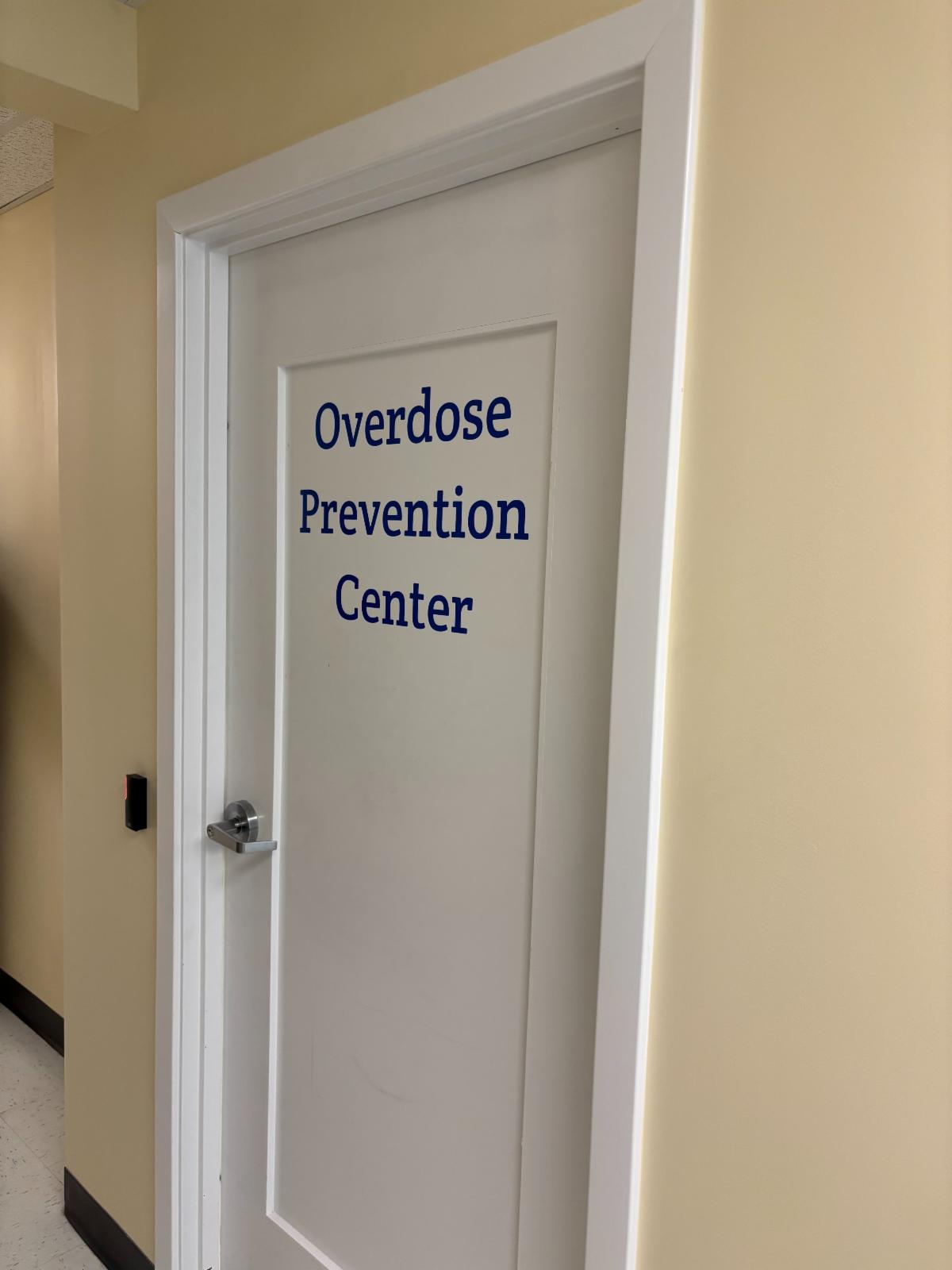
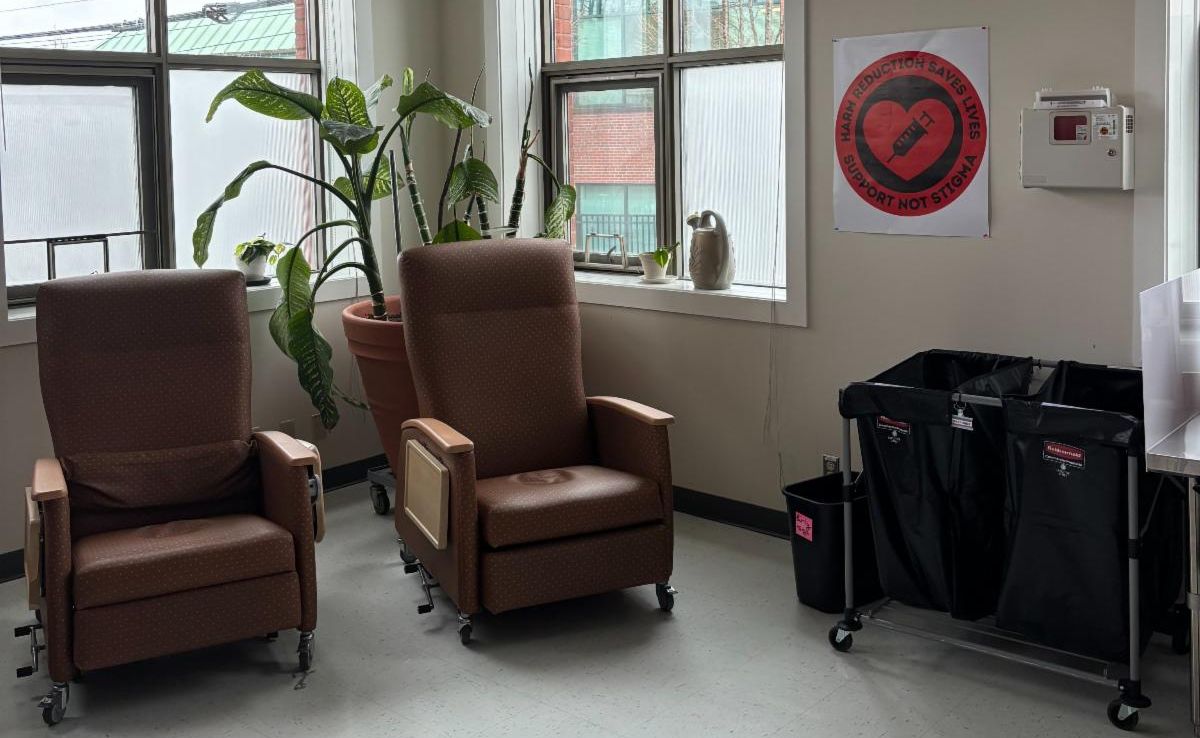
Following up on an issue I became increasingly involved with last session, my staff and I recently traveled to Rhode Island to visit an overdose prevention center that was just opened in Providence. For those unfamiliar, these are facilities staffed by healthcare and social services workers where individuals living with substance use disorder can use narcotic substances. Staff are on hand to assist individuals, generally with oxygen, in the event of an overdose and to help anyone interested in seeking addiction treatment.
| | |
The concern I most commonly hear when OPCs are discussed is that we could be enabling addiction. After all, we are providing people the space and some of the materials to use drugs. However, I can tell you the exact opposite is true.
I’ve visited a lot of these facilities across North America in the last few years. The first important thing I learned is not a single fatal overdose has taken place at any of them, thanks to having trained staff on hand who are able to reverse overdoses. They save lives. Second, they are effective in stopping the spread of deadly and expensive to treat infectious diseases like HIV and hepatitis. Third, they save taxpayer money by reducing the number of overdose calls to which police, fire, and EMT/Paramedics must respond, and by reducing emergency department admissions. Fourth, they have been proven to reduce instances of public injection and the related presence of used, discarded needles. Finally, the programs and educational materials made available at these locations have a documented positive impact in helping people enter and remain in addiction treatment. These centers act as informal yet judgement-free places where people struggling with addiction can find life saving and life changing help.
| | |
I’ve also seen how these facilities blend in well with their surroundings. Often, they are established in areas where addiction and public use of narcotics is common. Whenever they were facilities located in more traditional neighborhoods, I was surprised to see just how few people seemed to even know they were there.
OPCs are subject to the classic “not in my backyard” debate. I do not believe we should require them in any community however I strongly believe that we should not stand in the way if a community wants to host one. Currently, this is not allowed under state law, but I support pending legislation that would allow a municipality to host an OPC if they choose to.
| | |
April was a busy month at the State House, as the legislative session moved forward. I spent the month meeting with several constituents and advocacy groups on such topics as access to programming for students with disabilities, the role of physician assistants, housing, youth tobacco use, mental health, suicide prevention, home health care, insurance coverage for cancer related dental procedures and treatments, and community-based veterans services.
The work of the legislative committees on which I serve picked up, as I participated in hearings on bills before the Revenue, Public Health, Cannabis, and Public Service committees. I also serve on the Special Commission on Emerging Firearm Technology and heard interesting testimony on how new technologies can make gun ownership safer.
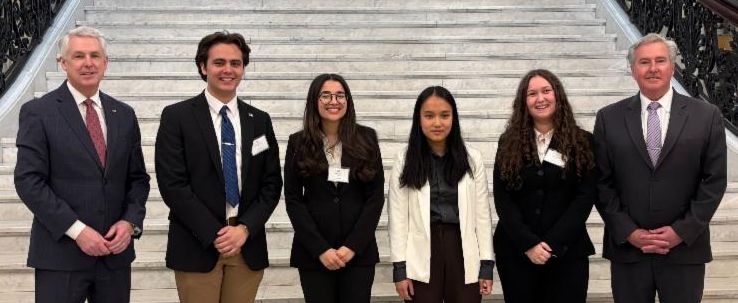
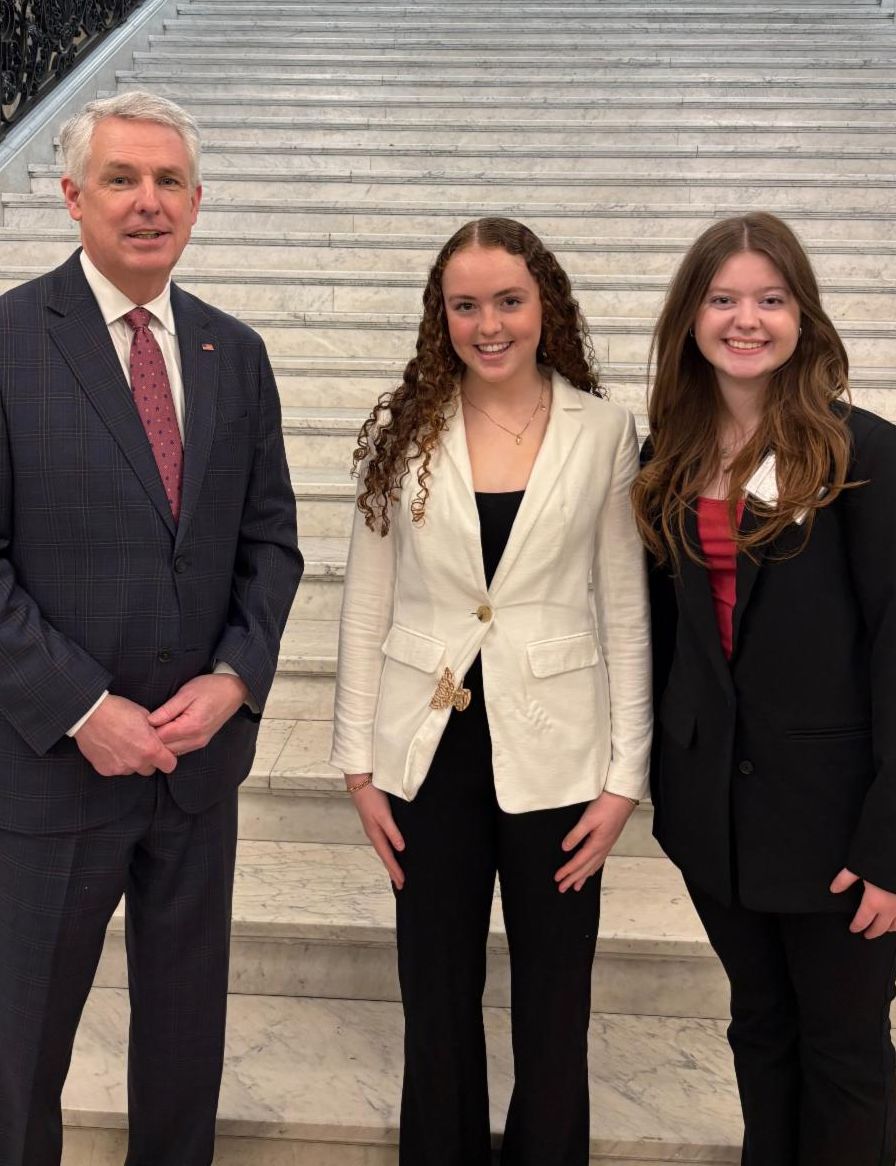
| | April also included one of my favorite days at the State House – Student Government Day. | | | Over 340 students from across the Commonwealth came to Beacon Hill to learn about state government. I was thrilled to welcome and spend time with Finley Nadeau and Alana Cole from Hanover High School, Lillian Carey and Amy Tan from North Quincy High, Layla Belfaid and Robert Mbrice from Quincy High School. It brought me back to when I represented North Quincy High School on Student Government Day just a few years (I wish) ago. | | A running theme through the past month was consistent conversations on federal issues having a local impact. I heard from local business leaders and Mayor Erin Joyce at the Braintree Chamber of Commerce Mayor’s Breakfast, and local residents at a recent meeting of the East Braintree Community Action Coalition, where we discussed possible consequences in cuts to federal funding. | |
Hanover’s State of the Town Breakfast provided a good update for ongoing priorities in the town, and Abington's town meeting gave me another opportunity to further explore local impacts of federal budget cuts, as well as a proposed new fund to support local trash removal.
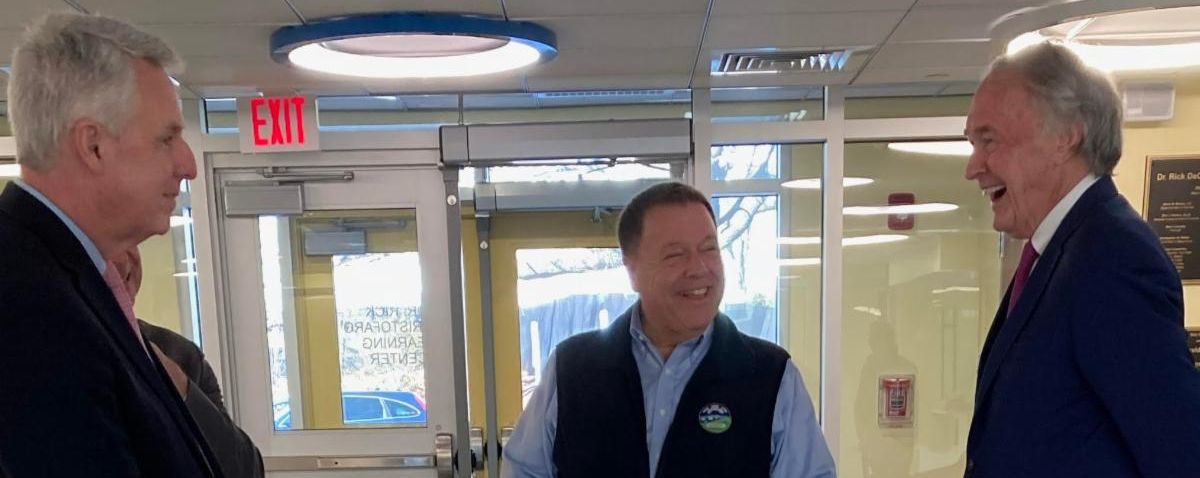
I also joined US Senator Ed Markey and Quincy Mayor Tom Koch for a tour of the newly opened Dr. Rick Decristofaro Learning Center, which has already become such a great resource for hundreds of students with special needs, including autism. In Quincy I joined Congressman Stephen Lynch and Mayor Thomas Koch at the Community Development Block Grant 50th anniversary celebration to recognize the contributions CDBG funds have to improving neighborhoods and providing services throughout the City.
| | |
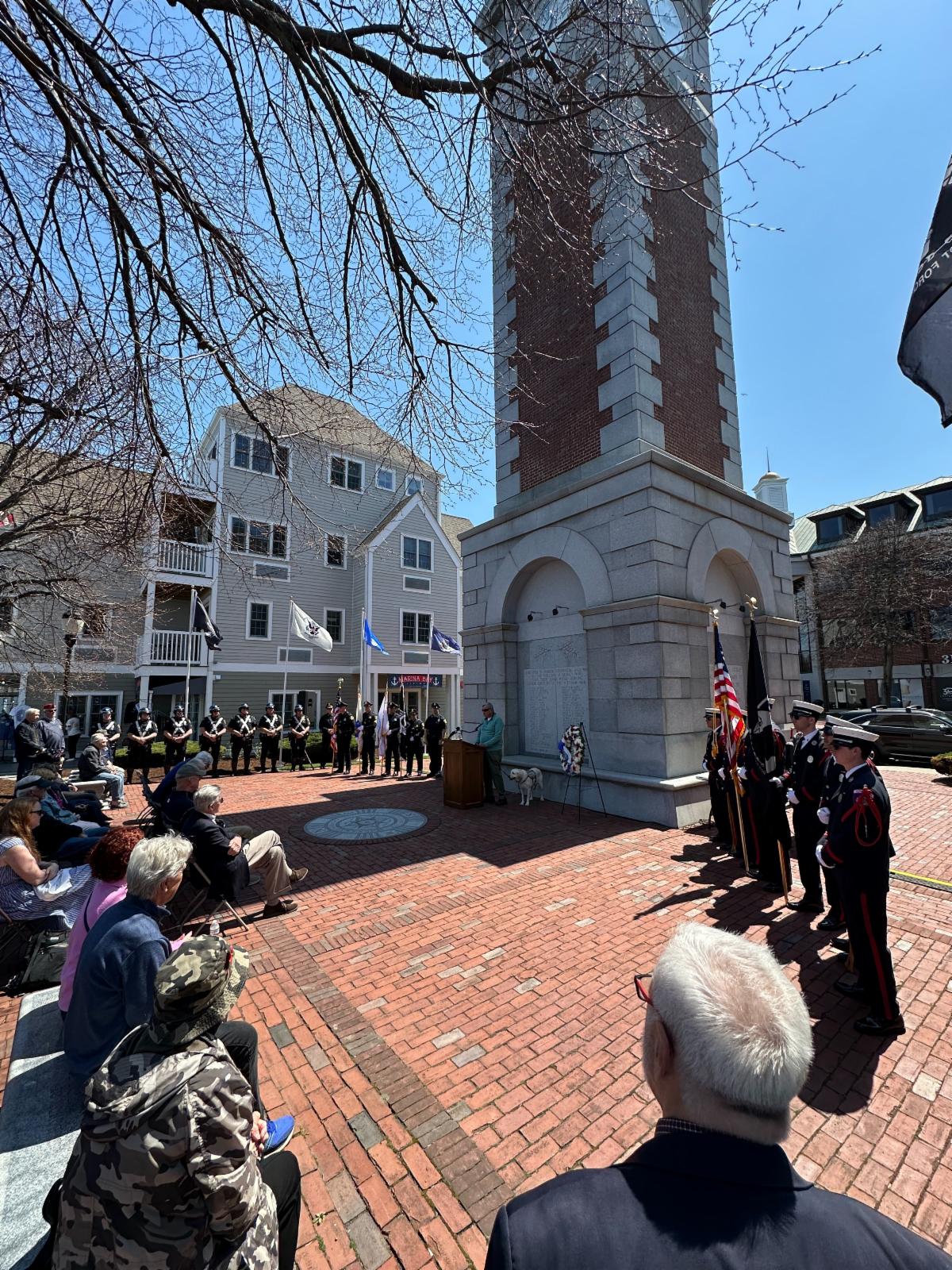
This month also marked Vietnam Veterans Day in Quincy, where we honored those who served during the Vietnam Ward and those who made the ultimate sacrifice. We heard the compelling and moving words of strength, character, and courage from Fred Purrington, a Navy veteran who spent six years as a prisoner of war in Hanoi. I also attended the Quincy Police Mutual Aid Association Retirement Ball to recognize the dedicated service of several retiring Quincy Police officers.
| | | | |
It truly is an honor to serve you. Please know that working for those in my district and for much-needed policy change remain top priorities for me, every day.
Thank you for your continued civic engagement. Together, we will keep Massachusetts moving forward!
| | | |
Office of State Senator John F. Keenan | Website
| |
| | | |