|
Monthly newsletter from the City of Chula Vista
Sustainability Division - Earth Month Edition
| | |
South Bay Earth Day Returns to Bayfront Park for Ninth Annual FREE Event April 12 from Noon to 4:00 PM
The celebration will feature a host of family-friendly activities, workshops, exhibits, vendors, art, food and drink, nonprofits, how-to, and all-day entertainment. In addition to celebrating our precious, fragile planet and its bounty, South Bay Earth Day will engage and motivate visitors to choose environmentally friendly products and lifestyle choices, learn, and practice sustainable and mindful habits.
Highlights of the zero-waste, day-long activation will include:
- Fix-it-Clinic: Repair extends the life and reduces the environmental footprint of devices, furnishings, and objects. Have something that needs fixing from lighting and gadgets to small electronics and mechanical devices? Bring them in! Mend your favorite outfit. Repair road and mountain bikes. One of our experts will help you evaluate, diagnose, and fix it if they can.
- Workshops: Upcycle your plain (light-colored) garments and fabrics into original, colorful creations at the Tie-Dye Workshop. Mend garments, as well.
-
Live Entertainment: All-day performances include the Bob Marley tribute band One Drop Redemption, DJ/host DJ A-One, with more entertainment to come.
- Dozens of Green Vendors: Everything sustainable and eco-conscious, from home furnishings to jewelry and apparel to garden gadgets, as well as exhibits and booths from local nonprofits.
- Artist Alley: Enjoy the sight of beautiful art creations with environmentally safe art exhibits at the Artist Alley. There will be at least three live painters on-site, and many artists will be present to talk about their works. Some items will be available for purchase.
- Kid Zone: Visit live animals and learn about conservation in the Living Coast Discovery Center. Interactive sorting games! Coloring! Conservation corn hole!
- Food Trucks: The San Diego area’s most diverse array of food truck options.
- Compost Giveaway. Learn about the benefits of compost and take a small sample home.
- Free Bike Valet: Don’t forget to make your way to Bayfront Park Earth-Day style! Opt for your human-powered vehicle (your bike!) and check it at our designated bike-only valet!
- Refresh Zone: Sponsored by San Diego Community Power next to the bike valet where guests can charge e-bikes and phones in a comfortable area.
South Bay Earth Day has been led by the City of Chula Vista since 2018 and is presented by the Port of San Diego Experiences.
Chula Vista Mayor John McCann says, “South Bay Earth Day is a vital reminder of the collective responsibility we all share in protecting our planet. I'm proud to see so many local organizations and residents in Chula Vista leading the charge in environmental stewardship right here in Chula Vista.”
Visit www.southbayearthday.com for more information. Questions? Please email the Environmental Services Division with any questions at environmentalservices@chulavistaca.gov.
| | |
Tie Dye at South Bay Earth Day - Bring Your Own Shirt
Bring an old shirt to tie dye for free at the South Bay Earth Day on Saturday, April 12 and give it some extra color. The Tie Dye Workshop will have a variety of dye colors and volunteers to help tie dye any prewashed, white, 100% cotton shirt or other items that you want to bring. Tie dye is a great activity for all ages and an excellent way to extend the life of an older or stained shirt.
| | |
Calling All Building Owners and Property Managers
Attention Chula Vista Building Owners! To comply with the City of Chula Vista Building Energy Saving Ordinance, owners of multi-family, commercial and industrial buildings 20,000 square feet and larger must report their energy use, otherwise known as energy benchmarking, annually on the free Energy Star Portfolio Manager platform. Over time, low-performing buildings will need to perform energy audits and address cost-effective building upgrades.
The deadline to report energy use data is May 20. Visit www.chulavistaca.gov/benchmark for the reporting link and helpful resources.
For additional questions, please email benchmark@chulavistaca.gov or call (619) 691-5134.
| | |
SANDAG Youth Opportunity Pass – Program Extended until June 30, 2026
After more than a decade of advocacy by social justice community organizations, SANDAG launched the Transit Equity program in spring 2022. This led to the creation of the Youth Opportunity Pass pilot program, which grants free transit access to young people ages 18 and under, resulting in over 20 million rides taken since its launch. In partnership with community organizations, including the City of Chula Vista, the program also educates youth and families about local public transit options and assesses its overall impact.
Through June 30, 2026, all riders 18 and under will be able to ride MTS and North County Transit District (NCTD) for FREE. To be eligible for the Youth Opportunity Pass, riders 18 and under must have a Youth PRONTO app account, or a PRONTO Youth card. (Kids 5 and under ride MTS and NCTD free at all times, and don’t need a card or proof of eligibility.)
To learn more about the program and how to qualify, visit the SANDAG website: www.sandag.org/projects-and-programs/regional-initiatives/transit-equity-pilot/youth-opportunity-pass
| | |
Save Energy and Money this Spring
Happy spring! The first day of spring in the Northern Hemisphere was March 20. Here are some strategies to help you save energy and keep costs low during the spring and summer as the weather warms up:
- Install window coverings to prevent heat gain through your windows during the day. These could include shades, window quilts, blinds, curtains or window films
- Avoid setting your thermostat at a colder setting than normal when you first turn on your AC as it does not cool your home faster and could result in an unnecessary expense
- Turn off ceiling fans when you leave the room. Fans cool people, not rooms, by creating a wind chill effect
- Schedule regular maintenance for your cooling equipment to ensure maximum energy affordability
- Vacuum your air intake vents regularly to remove dust buildup.
- Make sure no objects block airflow through your vents
- Wash full loads of dishes and laundry for better efficiency
- Set your water heater at no more than 120 degrees Fahrenheit to conserve energy
- Use power strips to plug in several pieces of electronics to help reduce phantom loads. Turn off the power strip when it is not in use.
- Turn on your bathroom and kitchen exhaust fans to suck heat out of your living space if the vent goes directly outside
Click here for more tips on energy savings.
| | |
A Greener Easter: Ideas for EcoFriendly DIY Easter Eggs
Are you trying to be more thoughtful in your holiday celebrations this spring? Below are a few sustainable options to help you celebrate Easter with less waste:
-
Wooden eggs: Invest in reusable wooden eggs that can be painted or decorated year after year.
- Fabric eggs: Sew or purchase fabric eggs that can be filled and reused.
- Cardboard or paper eggs: Create your own eggs from recycled cardboard or heavy paper.
-
Rock eggs: Collect some rocks around the neighborhood and paint some fun designs on them.
| | |
Importance of Soil Health
Healthy soil is teeming with life. If you think of your soil as a community of bacteria, fungi, algae, protozoa, nematodes, and other organisms that live in an environment formed by a mixture of minerals and organic matter blended with a system of air and water filled spaces, then you will want to provide the conditions that allows this community to flourish.
Adding compost to your garden will supply the beneficial component to feed the community of organisms, create air pockets, and retain needed moisture, making it one of the best ways to improve the health of your garden soil. Whether you mix it in or use it as a mulch, adding compost is the first step to improve your soil’s health.
And where can you find compost?
| | |
Free Compost Event May 10
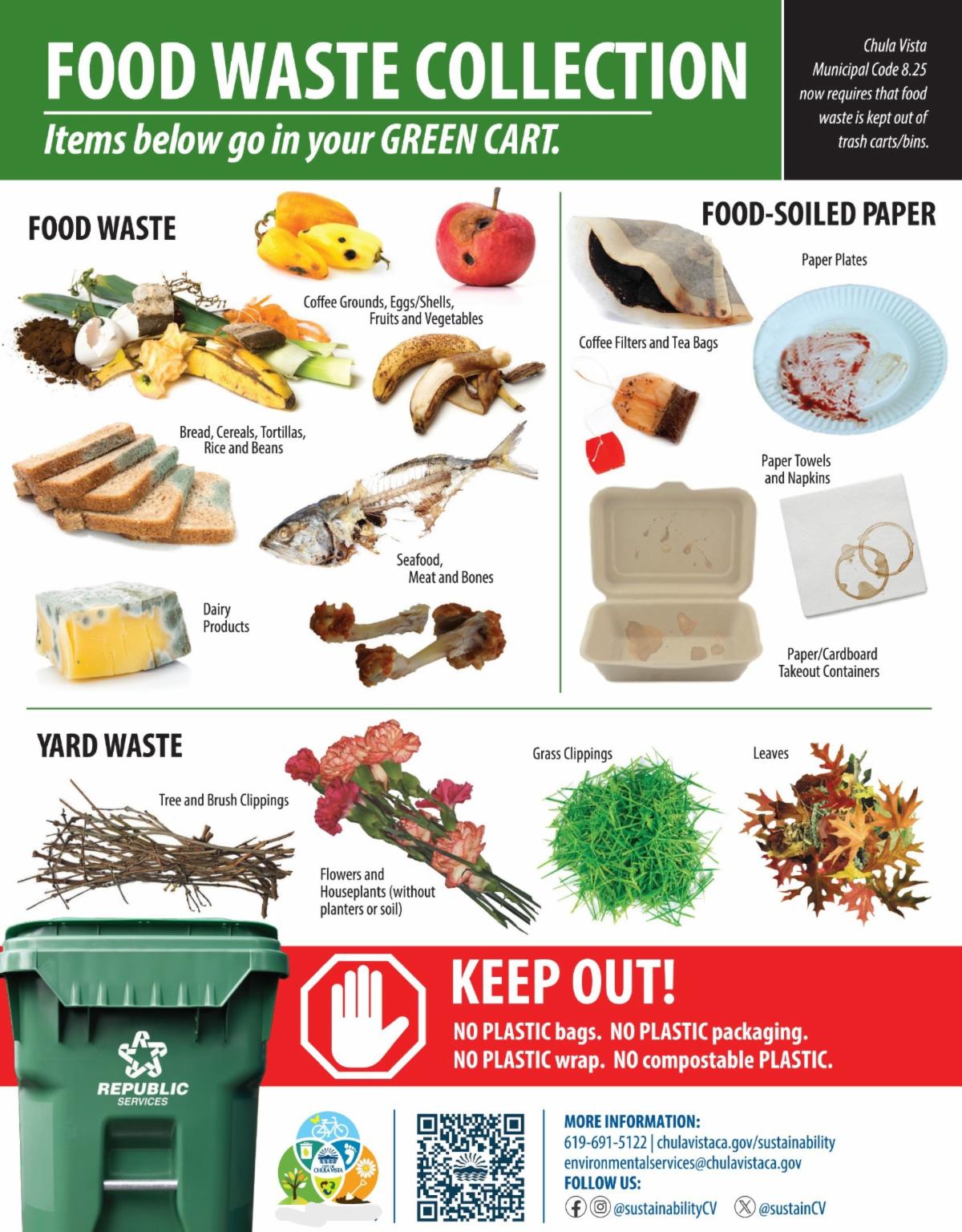
Since 2015, in appreciation of the community’s efforts to recycle its yard waste and now food waste, Republic Services has supplied free compost to Chula Vista residents for each event. This year Republic Services is hosting 6 free compost events, which are at the Otay Landfill, 1700 Maxwell Road, and held on the second Saturday of every odd-numbered month in 2025. The next event is scheduled for Saturday, May 10 from 8:00 - 12:00.
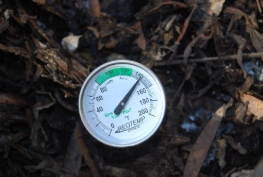
The free compost is the stabilized product of Republic Services award-winning compost operations which is a biological process using bacteria to break down the organic materials collected from residents and businesses in the City’s Food and Yard Waste Collection program.
Remember to keep your food and yard waste free of plastics, metal, ceramics, cigarette butts, and rocks. These items do not break down and therefore contaminate the compost.
Events for 2025 will be posted in December on the City’s calendar (www.chulavistaca.gov) as well as the Sustainability events calendar (www.chulavistaca.gov/departments/clean).
| | |
Compost Workshops
If you would like to learn how to compost or just need a refresher, the City of Chula Vista has Sunday workshops from 11:30-12:30 p.m. at The Living Coast Discovery Center. Chula Vista residents can receive free admission to the Living Coast Discovery Center by attending a workshop Learn how.
| | |
Gleaning in Chula Vista
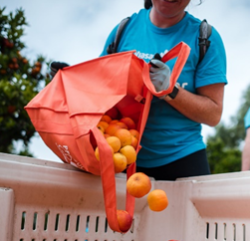
Have you heard of Gleaning? The gathering of surplus food from farms, gardens, backyards, and orchards to help relieve food insecurity.
-
If you have fruit trees, donate your extra backyard fruit! Reduce the nuisance of rotting fruit attracting rodents and insects. Volunteers from ProduceGood can pick the fruit and deliver it to food pantries.
- If you have a vehicle, volunteer as a driver! You can move the picked fruit to recipients.
- If you have time, volunteer as a gleaner! Gleaning organizations welcome volunteers of all ages, including families and groups, for whatever amount of time you can give.
ProduceGood is a food recovery organization that goes to the source of surplus produce (orchards, backyards, farms, farmers markets and grocers). They glean the excess and then transport it to pantries, shelters and other organizations who feed food insecure people in the region.
| | |
Chula Vista Climate Action Challenge Site Updated
Great news - the Chula Vista Climate Action Challenge website has been updated and extended for an additional year! Have you checked it out yet? The Climate Action Challenge is a free, online education and engagement tool that provides information about actions you can take to reduce your carbon footprint. It also allows you to engage with other community members by creating online groups and sharing messages about your actions.
Some of the updates include a reformatting to be more user friendly on cell phones, allowing anyone to view climate action information without needing to create an account and making it easier to find and engage with other user's comments. A short video provides some info on the platform and the updates. Once you create an account you can fill out your household profile to learn about your carbon footprint and then review greenhouse gas reduction actions to find information and additional resources to help you take the action. If you have any questions, please contact Cory Downs at cdowns@chulavistaca.gov. To sign up and learn more please visit: www.cvclimatechallenge.com.
| |
|
Water-Use Efficiency is Everyone’s Responsibility
If you’ve lived in southern California for a few years, you are probably aware that the region often experiences dry conditions with little rain. San Diego County is currently in severe to extreme drought according to the U.S. Drought Monitor, a joint effort of the National Drought Mitigation Center, U.S. Department of Agriculture and the National Oceanic and Atmospheric Administration. 2025 is the 24th driest year to date over the past 131 years in the county and the rainfall is 3.34 inches below the normal rainfall level.
As our region is typically in and out of drought conditions, local water agencies stress the importance of water conservation. For example, Otay Water District strongly encourages customers to continue practicing water-use efficiency as an ongoing habit. Otay Water District, in collaboration with the Metropolitan Water District of Southern California and the San Diego County Water Authority, offers various outreach and education programs, including rebates, classes and resources, to help customers maximize their water savings. These ongoing efforts are crucial in potentially preventing the need for stricter mandatory water restrictions in the future. Check out Otay Water District Conservation Programs at www.otaywater.gov/conservation/.
Sweetwater Authority stresses that water should be used reasonably and productively at all times and has a handy list of Water Use Reduction Measures that are currently in effect for all customers. Sweetwater Authority believes that water efficiency is a way of life and has tips and resources whether you are already a super-saver or you need some guidance on how to make the most of every drop. You can even request a WaterSmart Checkup, a free water use audit for homes and businesses!
To learn more about water regulations in California, follow this link: www.waterboards.ca.gov/water_issues/programs/conservation_portal/regs/emergency_regulation.html
| | |
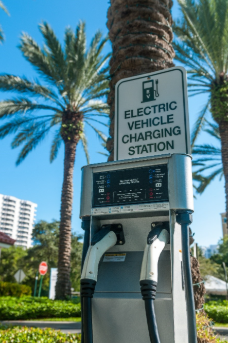
California Has 48% More EV Chargers Than Gasoline Nozzles Statewide
California continues to expand the largest electric vehicle (EV) charging network in the country, reaching over 178,000 EV chargers in 2024. This is more than twice as many publicly accessible chargers compared to 2022 and an increase of 26,193 since the last update in August.
Out of the more than 178,000 EV chargers installed in the state, over 162,000 are Level 2 chargers, and nearly 17,000 are fast chargers. In addition to the public network, the California Energy Commission (CEC) estimates that more than 700,000 Level 2 chargers are installed statewide in single-family homes.
Our state dominates in zero-emission vehicle (ZEV) infrastructure efforts, dedicating billions to support clean transportation goals. With more EVs on the road every day, consumers are responding to the state’s efforts to build a bigger, better and more reliable charging network.
California has doubled down on EV infrastructure across the state, approving a $1.4 billion investment plan to expand the most extensive charging and hydrogen network in the country. The investment plan funds projects like the Fast Charge California Project, which is a part of the California Electric Vehicle Infrastructure Project (CALeVIP), the nation’s largest EV charging incentive initiative. This project will award $55 million to install EV fast-charging stations at businesses and publicly accessible locations across the state.
In addition to the state’s commitment to improving EV infrastructure, thousands of dollars in grants and rebates are available for low-income Californians. Learn more at www.ClimateAction.ca.gov or www.ElectricForAll.org.
| | |
Be an Environmental Sustainability Advocate at Work
Our workplaces are a powerful lever for climate action as environmental sustainability isn’t just better for the planet, it is often better for your employer’s bottom line. Efficient processes to cut waste, save energy and water can boost productivity, increase economic output and develop customer trust. Plus, clients and customers are increasingly loyal to environmentally friendly companies and these sustainable changes can reverberate through entire industries. Whether you are a seasoned veteran or just starting out, you have more influence than you may think, here’s how to get started.
1. Start a conversation about workplace environmental sustainability
Effective climate advocacy requires understanding where your workplace can improve and being able to show it is good for business. But most of all, it requires being willing to start a conversation about sustainability in the workplace. Many have trouble speaking up when we don’t feel like subject matter experts. Productive, inspiring conversations are a catalyst for change. Visit informational websites for guidance, advice and ideas to get you started.
Build a coalition to have people in your corner. If there’s a manager, sustainability officer or co-worker you think would back your suggestions, team up to amplify your efforts. Focus on how specific environmental sustainability actions will benefit productivity, profit margins or your company’s long-term vision. Offering your physical energy will help immensely - action is the most valuable currency. Offer to bring people together under the initiative of their choice or commit your time to a workplace sustainability plan.
2. Be a climate advocate in your current role
At many companies, employees are one of the most powerful groups, sometimes even more powerful than shareholders. Even if your employer isn’t climate-oriented, you can push to make its products, services and processes more sustainable. Identify where you can influence decision-making and advocate for sustainability in the workplace. Products have an environmental impact from the cradle to the grave, so if you’re involved in production or product design, champion sustainability mindsets. Strive for quality products and services that stay in circulation as long as possible. In the case of manufacturing operations, consider end-of-life design in products and seek to make products circular and easy to recycle or reuse.
Aim to use environmentally friendlier materials and follow industry developments to keep tabs on green alternatives. Closing the loop can keep your product out of the landfill with a customer return and recycling initiative and identify ways to repurpose production waste. You can also encourage accountability in your workplace and work on developing a greenhouse gas inventory to quantify operational emissions - this provides a clear view of the pollution produced by your work processes. Celebrating successes is also important to understand and recognize where your organization is using resources wisely and where you could cut back on waste and pollution.
Here's one thing that not many people realize: The internet uses more energy than you think as data centers that host our online activity and have carbon footprints that rival global aviation. Optimizing your website helps - customized fonts, video, animation and heavy coding sap energy and cause lag. There are multiple programs and applications that can help you identify where your website can run faster and more efficiently. Some of these applications can also help you compensate for the emissions your website generates through renewable energy certificates and carbon offsets.
3. Champion workplace sustainability initiatives
Commercial buildings generate 6.6% of energy-related emissions and employees contribute by using resources on the job. Here are a few ways to make your workplace more sustainable. Consider how to be a more efficient energy user, repair copy machines, light fixtures and office appliances. Energy Star-certified products conserve energy and save money when it’s time to update. You can also work on making your building more efficient and work with your facility manager to bring awareness to Energy Star’s building certification and energy benchmarking to save money and use less energy on average. Some local governments, like the City of Chula Vista, require buildings of a certain size to benchmark energy use and report back.
Using clean power is also an option. Talk to management about cutting costs with solar or buying into green energy through your local community choice energy provider, San Diego Community Power. Encourage coworkers to combat idle energy use and power down your computer and other devices to save energy after hours. Ask your computer staff to place power strips in all workstations to make it easy and safe to shut everything off.
Another action is to consume water more efficiently by upgrading appliances and choosing low-flow toilets and sinks when updating. Faucet aerators reduce water use and cut costs, too! Your building could also capture rainwater for landscaping and cooling needs or install rain sensors to stop irrigation systems when Mother Nature is on the job. “Green up” your landscape by including native plants that use less water than turfgrass, control erosion and increase biodiversity.
A company can also create policies to reduce your employer’s waste. From printer paper to Styrofoam cups to food scraps, we generate a lot of waste at work. Offer to help establish a recycling or composting program, ask your office manager to stock the breakroom with reusable dishware or talk to management about digitizing processes to save paper and money.
One of the biggest contributors to greenhouse gasses generation is commuting to work. Ask your workplace to incentivize low-impact commutes like walking, biking and carpooling. Hosting a bike or walk-to-work challenge to boost office sustainability and build comradery within departments is also fun. Create a spreadsheet or signup board to connect employees with carpool buddies.
Another communal and team-building activity is creating spaces for employees to learn and exchange office sustainability ideas. An example is adding climate education to your next company newsletter. Sharing this article is a good place to start! Creating signage together to post around the facility to encourage recycling, unplug equipment or remind staff to pack a plant-based lunch can help. You can also choose to participate in group environmental impact initiatives and encourage as many as possible to get on board.
Good luck in your journey to become an advocate for the planet at your place of work. You’ll find that there are many others that think “green” as much as you and this will likely help you make additional friends and meet new people.
| | | | |