|
Hello Friends and Supporters,
As we move into spring, we’re reminded that even in times of conflict and uncertainty, new growth is always possible. At the Center for Understanding in Conflict, we continue to hold firm in our belief that conflict doesn’t have to divide us—it can also invite us to deepen our understanding of ourselves and one another.
This month, we’re reflecting on what it means to meet conflict not with defensiveness or fear, but with curiosity, compassion, and courage. Whether it’s in our day-to-day lives, our professional work, or the larger social landscape, the choice to engage with conflict differently is one we can make—together.
You’ll find in this month’s newsletter a look back at the roots of our approach, inspired by Gary Friedman and Jack Himmelstein’s groundbreaking model that continues to challenge the old terms of conflict and open doors to connection. We’re also excited to share upcoming programs and resources designed to help you build your skills, nurture your practice, and sustain yourself in this important work.
And we’re thrilled to announce our next Self-Reflection for Conflict Professionals Intensive Retreat in 2026—an opportunity to step away from daily demands and reconnect with yourself and your commitment to this work.
Thank you for being part of our community and for the heart and care you bring to people in conflict every day.
In partnership,
James Dykeman
Executive Director
| | ANNOUNCING THE 2026 SCPI RETREAT | | |
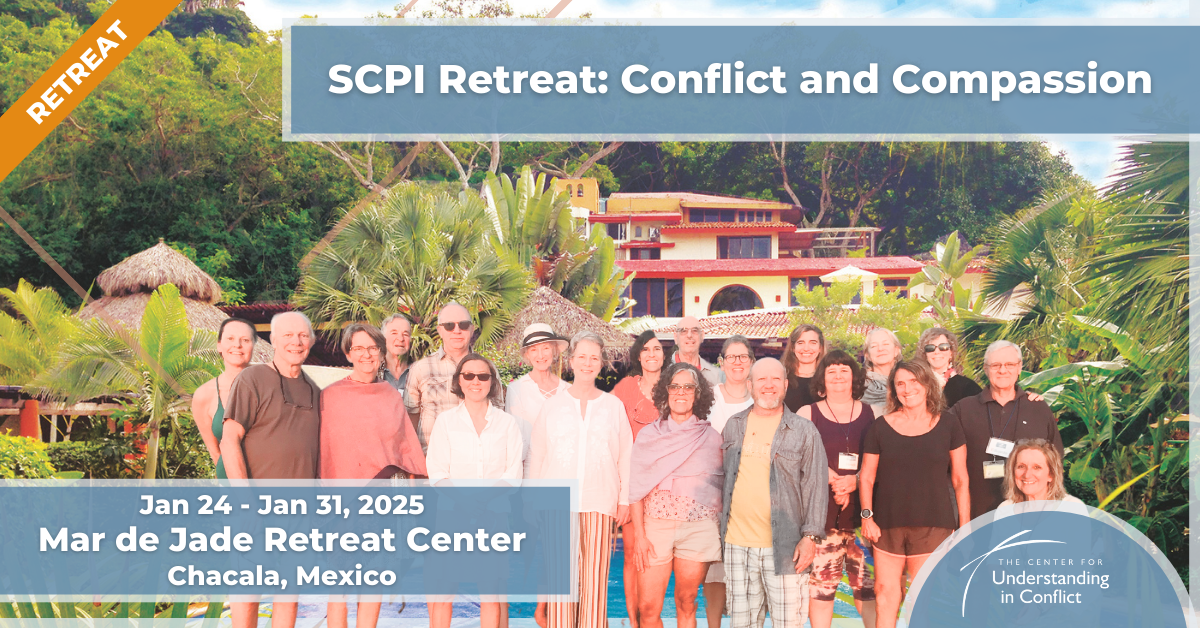
How do we stay connected, compassionate, and courageous in a world filled with conflict, uncertainty, and division? Join us for 2026 SCPI Retreat: Conflict and Compassion, a special retreat designed for conflict professionals and mindfullness practitioners who long to meet life’s challenges without losing themselves in the process.
Offered through the Self-Reflection for Conflict Professionals Intensive (SCPI), this retreat invites you to step away from the demands of daily life and into a setting of deep reflection and learning. Together, we’ll explore how our emotional responses to conflict shape our work and relationships—and how, by turning toward these emotions with curiosity and care, we can cultivate greater clarity, resilience, and compassion.
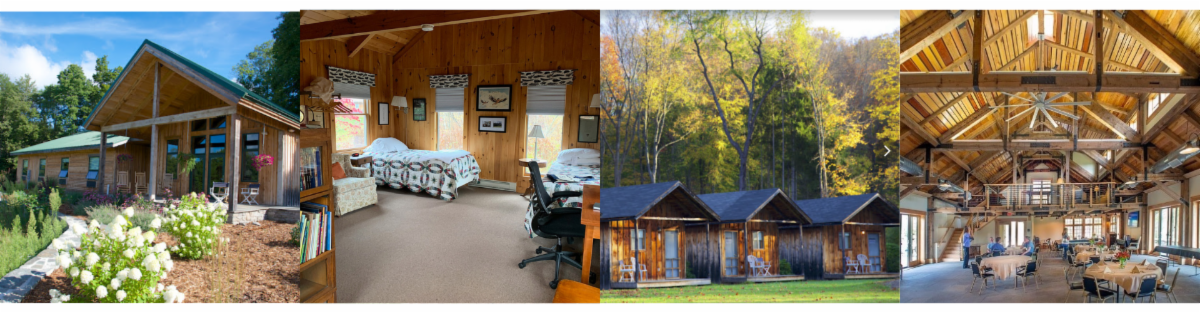
Set in the peaceful, nourishing environment of Mar de Jade Retreat Center in Chacala, Mexico, this program offers not only rich learning but also the opportunity to rest and restore in community.
| | |
The Power of Understanding Can Help Heal Our Divides
There was a time when the very idea of people in conflict sitting down together—not to argue, not to convince, but to truly understand one another—felt almost impossible. When Gary Friedman and Jack Himmelstein introduced what became known as the Understanding-Based Model, it was nothing short of revolutionary for the time. It flipped the script on how conflict was handled, particularly in the legal world, where winning and losing had long been the name of the game.
Their message was simple but powerful: What if, instead of leaving our conflicts in the hands of judges, lawyers, or outside experts, we took responsibility for them ourselves? What if we could find a way, even when emotions are high and relationships strained, to work through our differences by understanding—not defeating—each other?
That idea changed everything. It opened a new path forward, not only in the legal profession but far beyond it. It invited people to step out of the well-worn patterns of blame, righteousness, and division, and into a process of curiosity, connection, and possibility.
| |
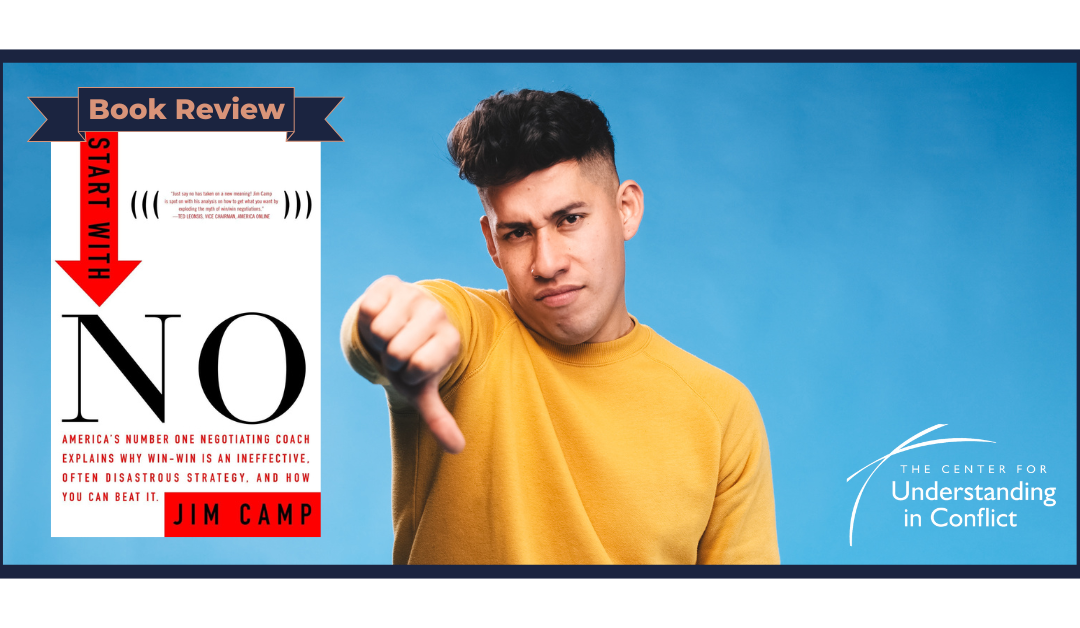
Start with No by Jim Camp
Jim Camp’s Start with No takes a hard-edged, tactical approach to negotiation—one that might work in high-stakes business deals but feels worlds apart from how understanding-based mediators and conflict professionals approach conflict. Camp’s philosophy is built around control, persuasion, and calculated detachment. His title alone—Start with No—sets the tone: negotiation, in his view, is about holding firm, avoiding compromise, and steering the other party toward your desired outcome.
For mediators who believe in the power of understanding, this mindset is not just different—it’s fundamentally at odds with what we know about conflict resolution. Conflict is deeply human. It’s not just a matter of power plays and strategic maneuvering; it’s about emotions, relationships, and the ways people feel seen and heard. Mediation isn’t about “winning” at the other person’s expense. It’s about transformation—about helping people move through their conflict in a way that leaves them with not just a solution, but a deeper understanding of themselves and each other.
| | |
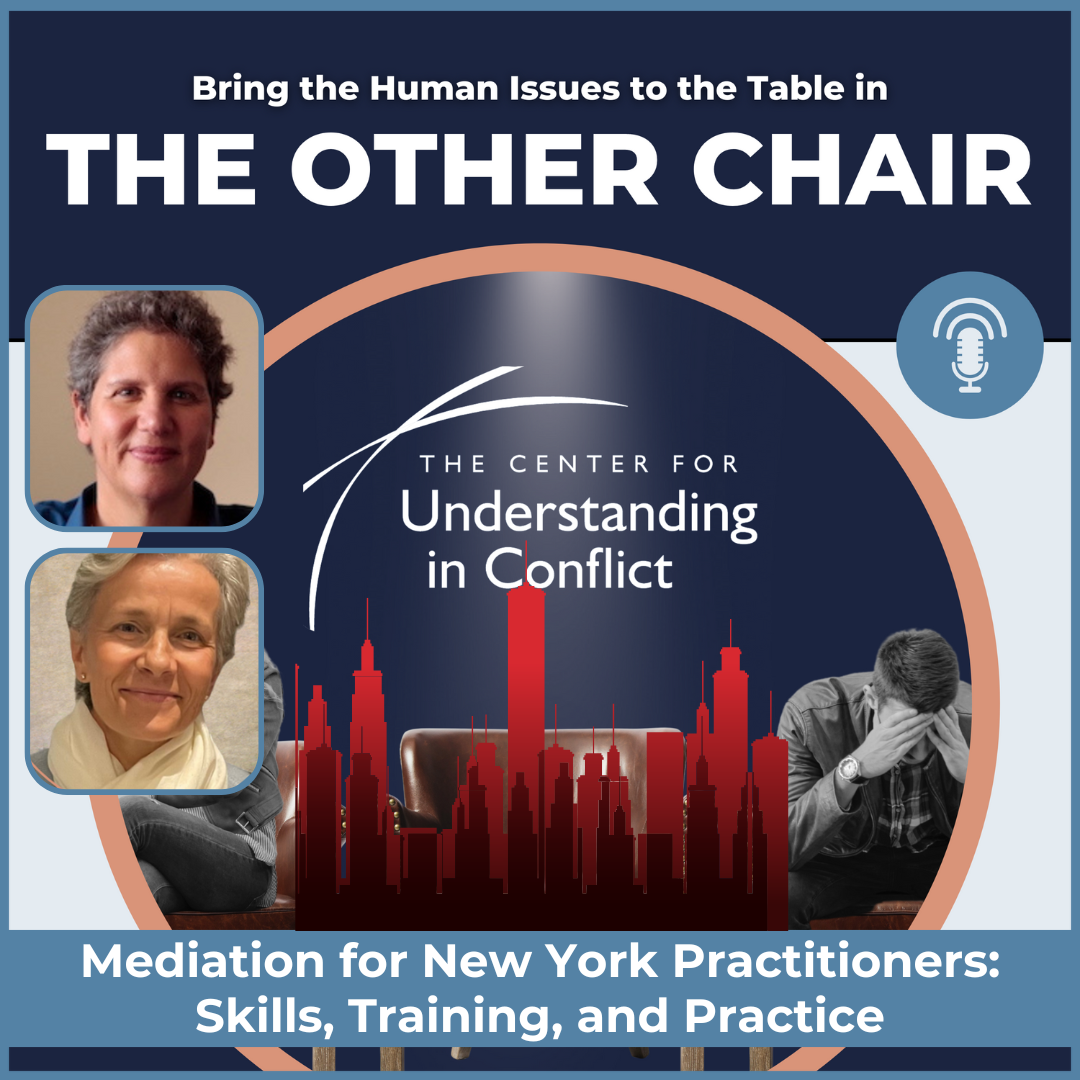
Mediation for New York Practitioners: Skills, Training, and Practice
In this episode of The Other Chair, guests, Antoinette Delruelle and Joy S. Rosenthal explore how legal professionals in New York can integrate mediation into their practice, the path to becoming a mediator in New York, including the required training and next steps for joining court rosters, and how mediation techniques—like looping and understanding the dynamic—can enhance client relationships, improve litigation strategies, and support negotiations with opposing counsel.
| | | |
Our flagship experiential training programs centered in the
Understanding-Based Model
| |
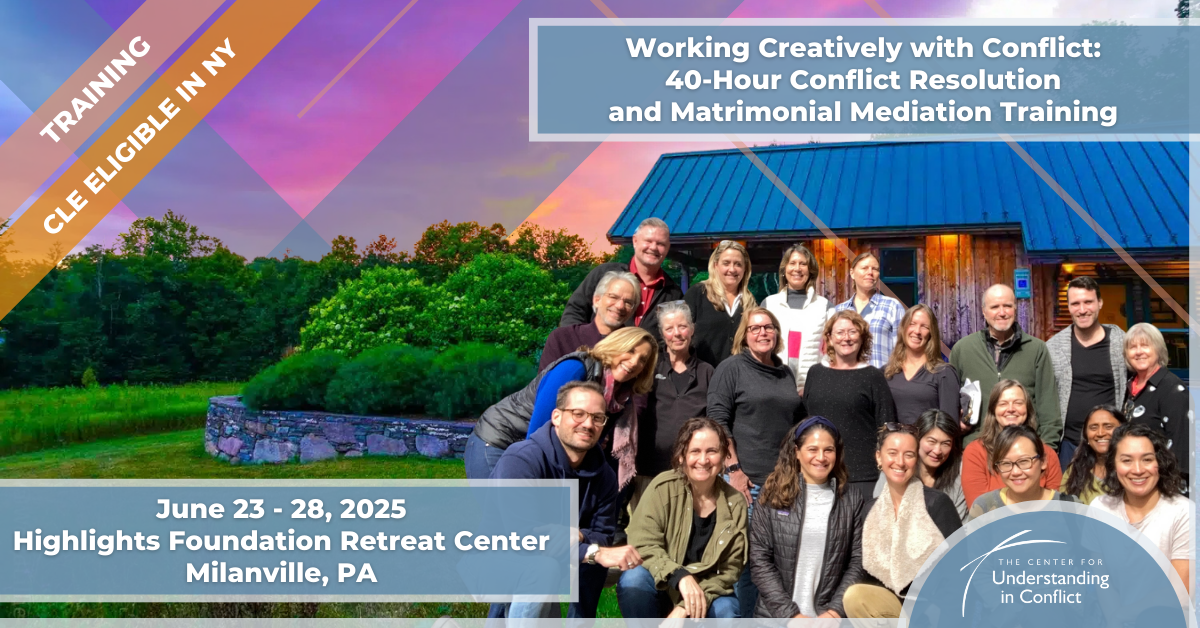
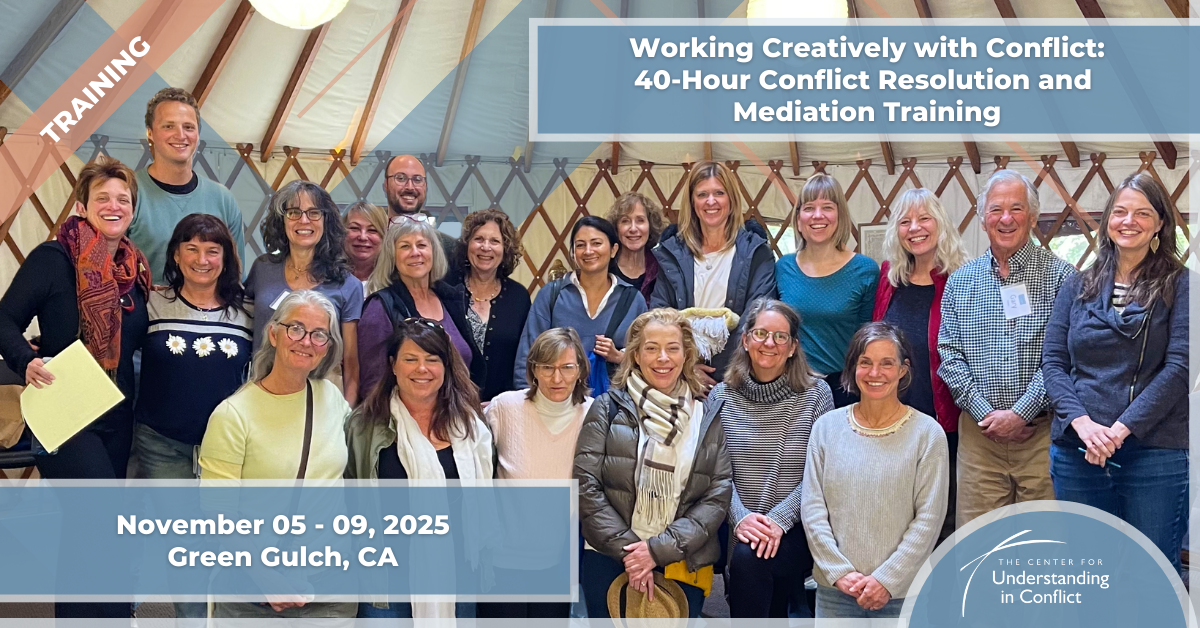
Working Creatively with Conflict: 40-Hour Conflict Resolution and Matrimonial Mediation Training (East Coast)
Participants will learn the core skills of the Understanding Based Approach (24 hours) and Advanced Matrimonial Mediation (16 hour), through lively demonstrations and role-plays, all of which immerse participants in the learning (16 and 24-hour can be taken seperately, or together for a 40-hour program). Realistic simulations, in which participants work through mediations with coaching from our teachers, offer participants the chance to hone their skills and experience the emotional challenges faced by parties in dispute. Participants describe these different modes of learning and their interplay as engaging and rewarding.
Upon completing this 40h Mediation Intensive Training, participants will have completed the requirements for a 24h Basic Mediation Training under Part 146 of the NYS Rules of the Chief Administrator of the Courts (“Part 146”) and the requirements for a 16-hour Advanced Matrimonial Mediation Training under Part 146.
| | |
In this gold standard mediation training, learn how to support parties working through conflict or engaging in other important conversations in a different way. Our Understanding-Based model focuses on guiding parties to make knowing and informed choices together in a respectful manner. Highlights include:
- Positive neutrality –supporting all parties without taking sides
- The Loop of Understanding – enhancing understanding and empathy
- Creative Options — innovating to meet differing needs and interests
- A Foundation for the Future — building the groundwork for the parties to make effective and lasting decisions together now and in the future
| | |
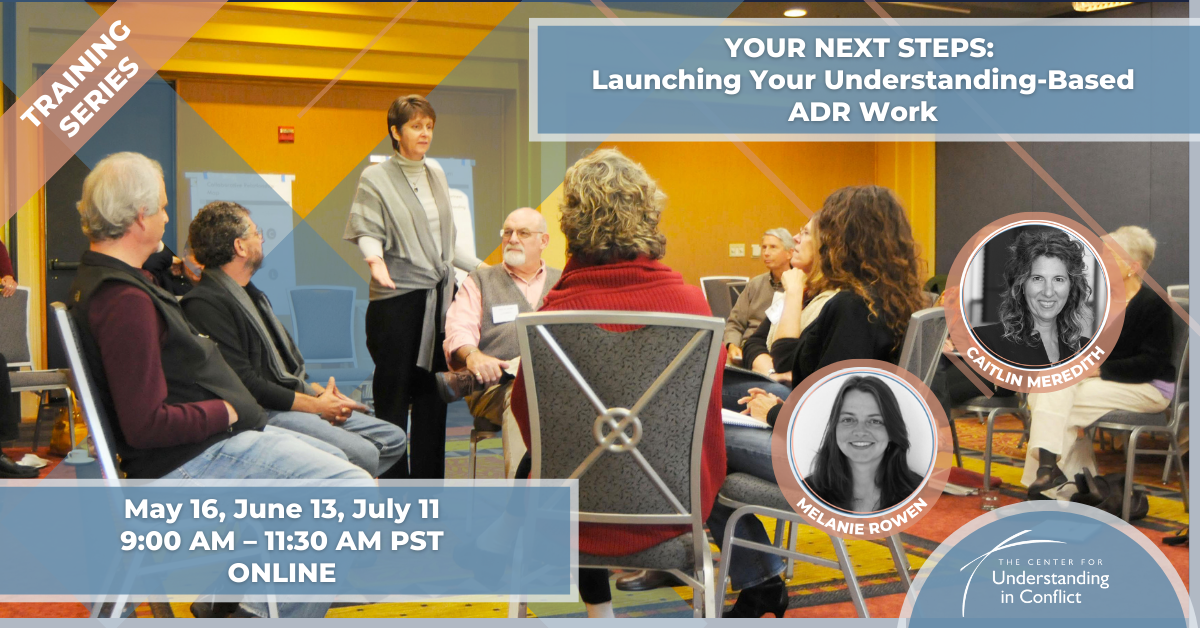
This will be an interactive process with exercises and briefings on practical aspects of starting and/or incorporating ADR into a practice or your work and bringing people in the door. You will leave with a concrete action plan to develop the next phase of your work.
Who should take this series? People who are excited about incorporating the Understanding Based Model into their work but aren’t sure how or are looking for structured support in taking this step.
May 16, June 13, and July 11, 2025
9 – 11:30 AM PT • 12 – 2:30 PM ET • 6 – 8:30 PM CEST
ONLINE
May 16: Assessing Yourself
We will assess where you are now, clarify what you are looking for in the future, determine what needs to change, and identify possible barriers.
June 13: Assessing Your Situation and Creating a Plan
We will delve into the concrete aspects of your current situation, compare it to your desired situation, and explore how to close the gap between the two.
July 11: Implementing the Plan
We will explore how to let the world know about your new approach, share plans and ideas, and leave with concrete next steps.
| | |
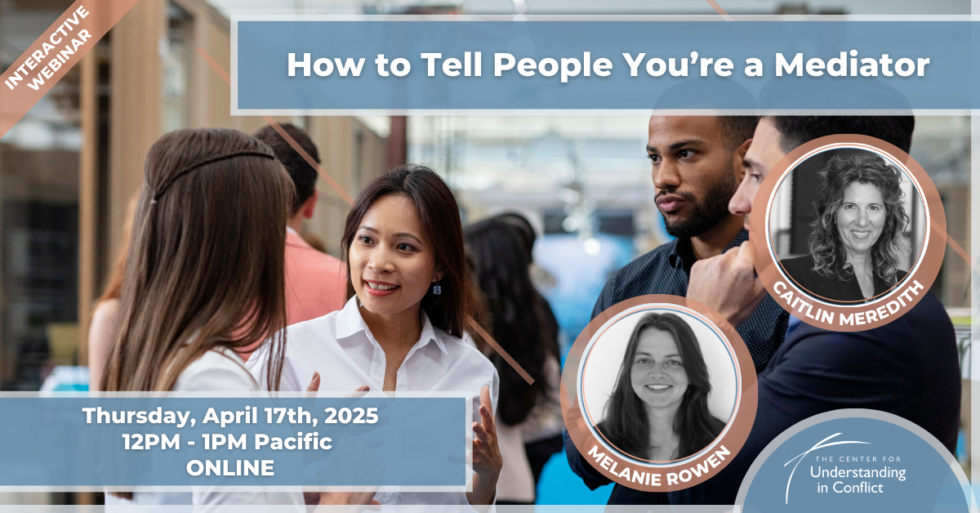
Struggling to explain what you do as a mediator in a way that sparks interest and understanding? Join Melanie Rowen and Caitlin Meredith for How to Tell People You’re a Mediator, where you’ll learn how to use storytelling to educate potential clients – and your broader community – about the value of mediation.
Together, we’ll explore how to craft compelling narratives that illustrate the kinds of conflicts you help resolve, the impact of your work, and why mediation matters to you personally. Whether you’re networking, marketing your services, or simply answering the question, “So, what do you do?”—this session will give you the tools to communicate your role with clarity and confidence.
| | COMMUNITY VIDEO FOR APRIL | | |
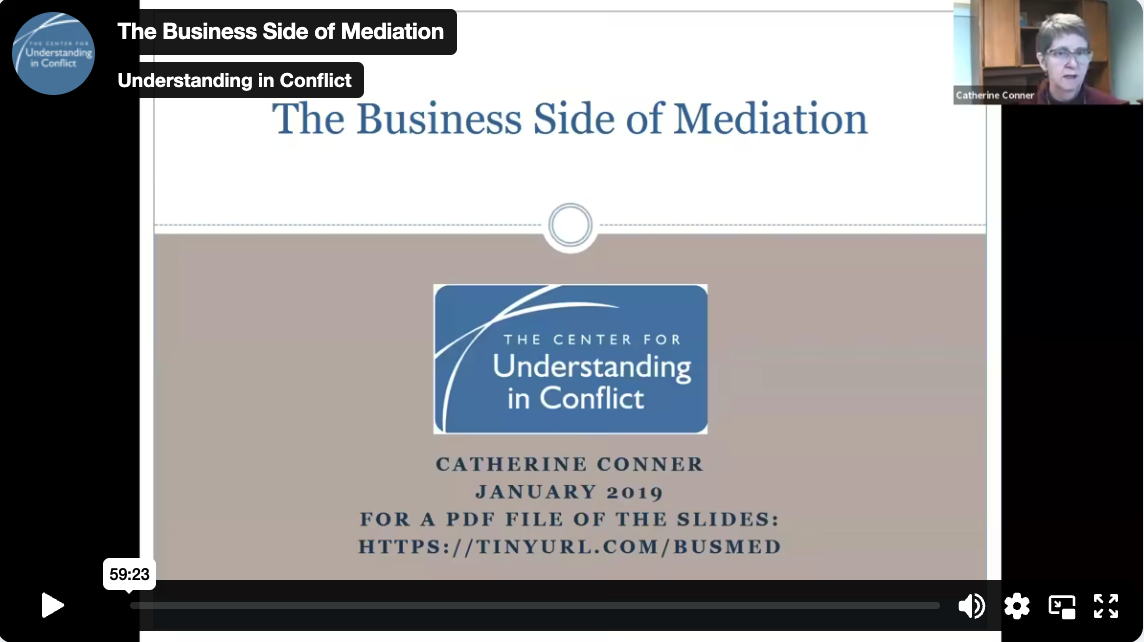
The Business Side of Mediation
In this webinar, Catherine Conner invites mediators to think about what it really takes to build a thriving, sustainable practice—not just the work we do in the room, but everything that surrounds it. She reminds us that the way we welcome clients, how we shape our space, and how we talk about what we do all matter. It’s not about selling ourselves—it’s about connecting, educating, and creating an experience that feels safe, clear, and meaningful.
Catherine encourages mediators to step into the business side of their work with intention and heart. Whether it’s how you set up your office, handle payments, or build a network of supportive colleagues and referrals, every choice can reflect your values and invite people into the process. The message throughout is simple but powerful: building a practice is possible, and you can do it in a way that feels authentic, personal, and purposeful.
| | | | |