|
Director's Note
Dear residents, neighbors, and friends:
In April, we are celebrating many noteworthy measures in our society, including fair housing, language access, minority health and second chances. My note will focus on fair housing, but I encourage you to review a note from our Language Access Director on the ways in which are celebrating Language Access and its 19th anniversary.
55 years ago, President Lyndon B. Johnson signed into law the Fair Housing Act (FHA), which prohibited discrimination concerning the sale, rental, and financing of housing based on race, color, national origin, religion, sex, disability, and familial status. In 2021, President Biden’s Executive Order required HUD to interpret the sex protection to include sexual orientation, gender identity and gender expression.
Though we commemorate this federal landmark legislation, it was not an easy victory nor did it eradicate racial or economic segregation. A 2016 report, The Color of Wealth in the Nation’s Capital, noted that white households in the District had a net worth 81 times greater than Black households. A stark disparity was also observed for average home values between white and Black households. Black households had a typical home value of $250,000, which was two-thirds of the value for white and Latino households. The report suggests that these disparities are not a function of education, but rather the two centuries of barriers Black residents have faced.
It is important to recognize the significance of these disparities because it demonstrates the ever increasing racial wealth gap between white residents and residents of color, both locally and nationally, and reflect access to opportunity, means of support, and resources. This means that people of color do not have the ability to build wealth at the same rate as white Americans. For example, U.S. census data notes that the average Black family has approximately $12,780 in household health compared to $139,300 for white families. As income inequality has grown so has homelessness and people of color’s ability to create generational wealth through home ownership.
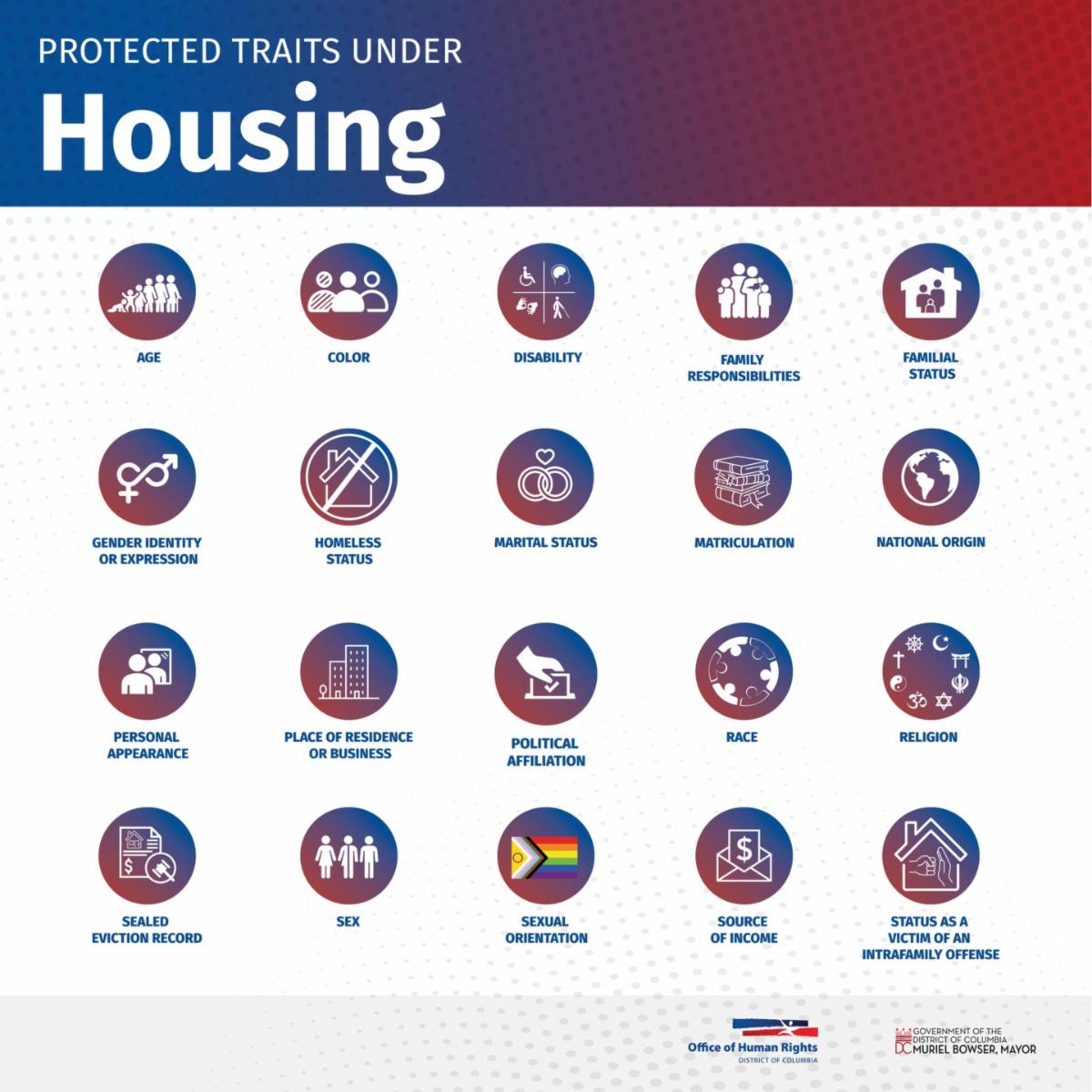
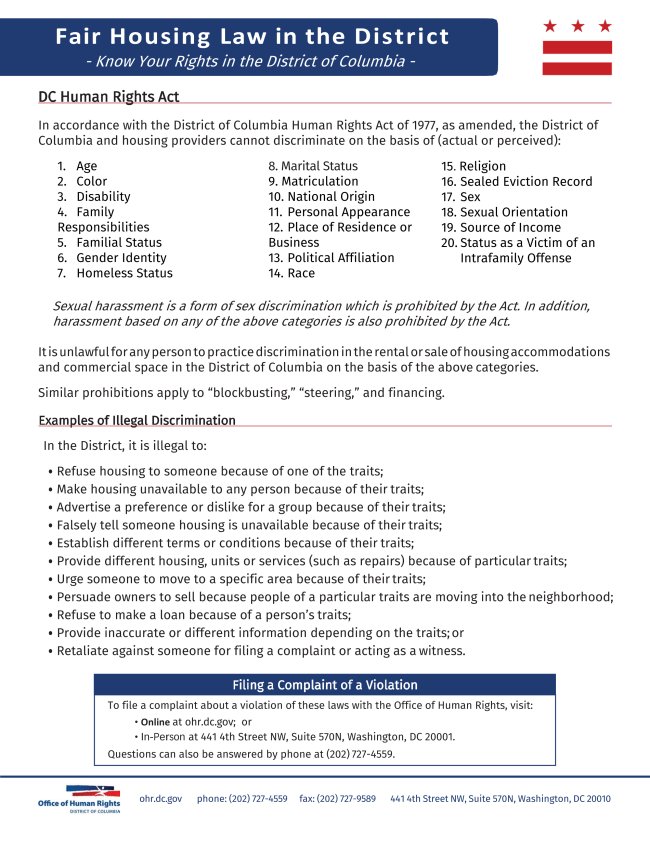
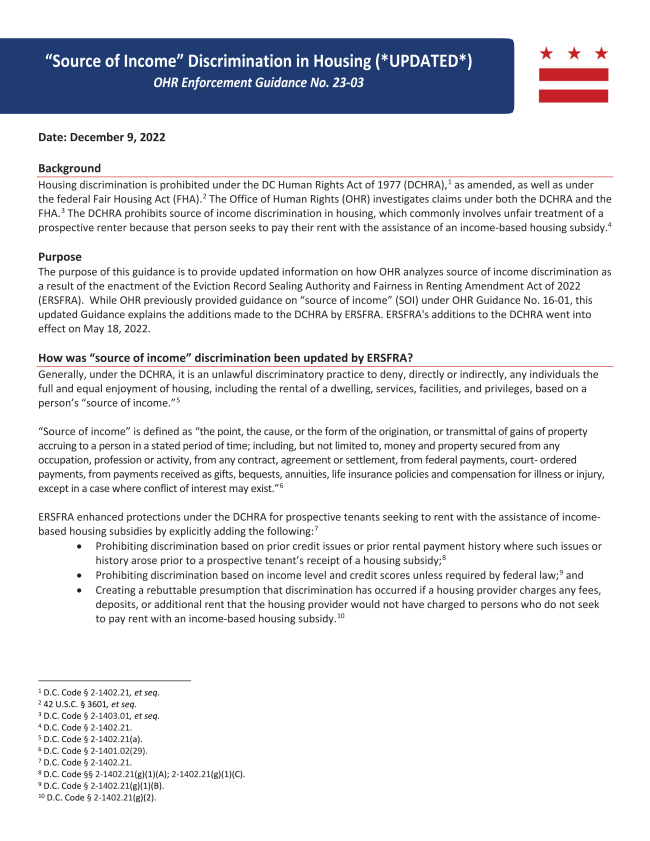
The DC Human Rights Act, enacted in 1977, affords several more protected areas than the Fair Housing Act, including source of income. This protection prohibits housing providers from discriminating against applicants who rely on income-based housing subsidies. In 2022, a new law (known as the Eviction Record Sealing Authority and Fairness in Renting Amendment Act of 2022 (ERSFRA)) became effective and increased protections in housing, well beyond what is covered under the federal FHA. For example, under this new expansion, denials of applications based on prior credit issues or prior rental payment history could be a form of discrimination if these issues arose prior to the individual’s receipt of a housing subsidy. Similarly, for individuals using housing subsidies, denials based on income level and credit scores may also be a form of discrimination unless there is federal law requirement dictating a specific income or credit score. Additionally, the law explicitly adds a rebuttable presumption that discrimination has occurred if housing providers charge any fees, deposits, or additional rent that the housing provider would not have charge to persons who do not use income-based housing subsidies. You can learn more about how source of income discrimination has been updated by ESAFRA by viewing OHR’s Enforcement Guidance No.23-03 here or by attending our Fair Housing Month Listening Lab on April 27th at 6 pm (info below).
OHR is here to help if you have been discriminated against in housing. You can learn more about how to file a complaint here.
Yours in service,
Hnin Khaing
Director
|