| |
|
|
|
|
|
|
|
|
Arctic Reading for the Quarantine:
Newly shared reports this week.
(ICC Alaska) Alaskan Inuit Food Security Conceptual Framework: How to assess the Arctic from an Inuit Perspective, 2015.
Drastic changes are occurring within our world. We are on the forefront of these changes. We have lived here for millennia and have grown and changed with all that is around us. All that is around us physically and spiritually nourishes us, and our culture reflects the Arctic because we are part of this ecosystem. With these rapid changes comes the need for holistic information based on Indigenous Knowledge (IK) and science. With this understanding, we brought our concerns regarding the impact of Arctic changes on our food security to forums throughout the Arctic.
|
|
News From the Frontlines of Arctic Research:
The ship is rumbling. Extremely loudly. The rumbling is punctuated by a sound like two pieces of Styrofoam rubbing together. Then there is scraping...screech! We are in the middle of a ridge that is building and the ice is moving along the side of the ship. We are "pinched". We are not breaking ice; it is breaking around us. We had been sitting in a big lead but now the lead has collapsed, with the two sides crashing together and forming a ridge. It started, driven not by wind but by ocean currents. Today the wind has picked up and it continues. So strange to hear the sound of ice breaking on a stationary ship!
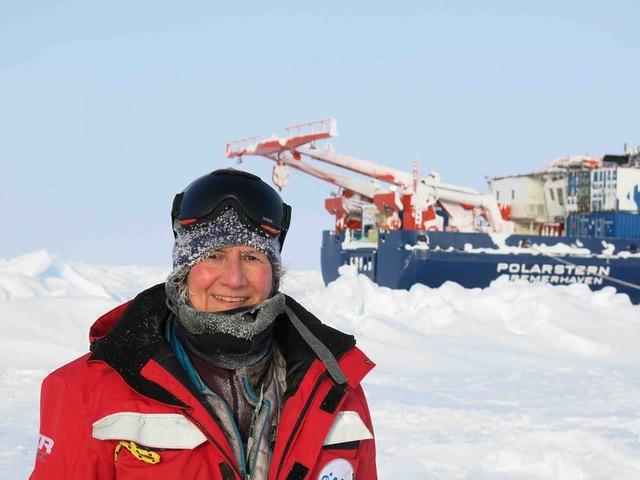
The middle-end of March had some particularly dynamic ice conditions, with a great rearrangement of the puzzle pieces surrounding our central ice floe on which many of the on-ice facilities are based. In recent days, things have settled down around us, although we still see some cracks in the ice floes. Power lines have been re-established to the peripheral "cities" and to the facilities on the central ice floe, including Ocean City where we now do our net tows. No more generators! Not only are they a constant source of work, being very thirsty, but they also provide less electricity than the power lines and thus constant juggling of the instruments and equipment that can be used at any one time. We are all very happy that we have been able to re-connect to reliable "shore" power (for the moment, the ice could change that situation for us at any time).
With the reduced storminess in the last week has come some very beautiful sunny days, with blue skies and sparkling snow. The temperatures remain very "Arctic", often hovering in the low -20s (e.g., -29C) for most of the day Because of the cold, the snow is not melting on the ice but remains intact and is still a clean sparkling white.
Each day seems to go past very quickly. Our schedules are, as usual, punctuated by the meals. Breakfast followed by two hours of work on the ice or on the ship, then lunch at 11:30, then work again from 13:00 until the end of the on-ice work day at 17:30. Evenings are filled with meetings and more lab work. And then after 10 PM, sometimes relaxing in the Red Salon to undwind before bed.
Working at Ocean City, through a hole in the ice, is going well. Serdar and I pack up our stuff on sleds and trudge out across the ice floe, along "roads" marked by flags, to the Ocean City tent. We are using a smaller diameter net because Ocean City is very crowded. We collect the samples and put them in largish jars and then transport them back to the ship in a cooler. Once on board the ship, we make sure the zooplankton are "happy" in their jars and, after cleaning up the nets, we go through the samples hunting for amphipods and other large macrofaunal. I pick a bunch of copepods for different assays such as the carbon and nitrogen content or the digestive enzyme activity. I also select some out for experiments to measure their respiration (amount of oxygen they consume), egg production (how many eggs they produce per day), and grazing (how much and what they eat). I do this work in the "cold room" - a lab container that is maintained near 0 deg. C. I also work under red light, since it is still quite dark under the ice and we don't want to shock the copepods with unnatural light conditions. The copepods are quite beautiful and can be tricky to catch with my pipette, as many of them are rather energetic and frisky.
This past weekend we celebrated Easter on board the ship, with four days of special events and meals. On Friday night, some of us gathered in the Blue Salon to listen to Bach's Matthew's Passion. Saturday night we went out on the ice to enjoy fires that were lit in barrels sunk into the ice. On Sunday, we had a roast lamb lunch and a relaxed day. The weather was gorgeous and clear. Twenty-five of us went on a 5 km hike out across the floe. Sunday night we had a barbecue, with the entire ship's complement gathering in a large lab with table set up. Each person could select their items to barbecue and then go outside, into the -28C weather, to grill over large charcoal grills set up on the deck. After dinner, we had dancing with some people staying up until the wee hours of the morning. The relaxation continued on Monday, with a morning off and a lunch of roast venison. Finally, Monday night dinner saw some special treats on the cold buffet including a whole poached salmon and a leg of cured ham from which each person could take slices. Now, we are back into the regular swing of our work week.
Walking across the ice floe on Sunday was beautiful and interesting. There were three general types of snow/ice underfoot: The deeper snow, which was somewhat soft and hard to walk in, the very hard packed snow on which our footprints barely showed, and the slightly less consolidated snow on which our feet sunk in about an inch, requiring a bit of effort to pull each foot up to take the next step. The snow all sounded different when we walked on it. Some of it crunched but some of it made a ringing sound as we walked across.
I understand it was a bit of a different Easter for you all. I am thinking of you all and the new reality of life back home. It is hard to fathom. I hope you are all doing OK.
|
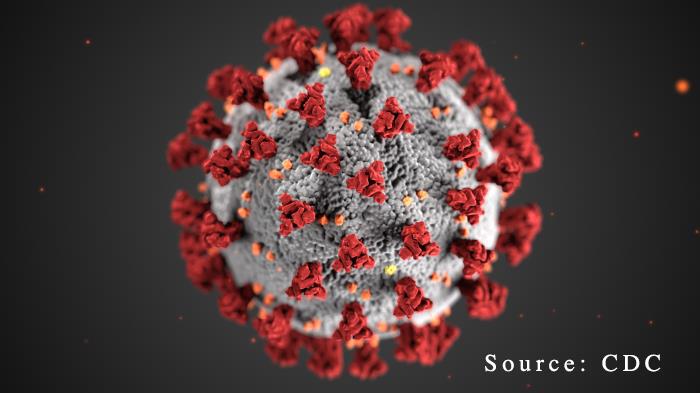 Dear Colleague Letter on the Coronavirus Disease 2019 (COVID-19). In light of the emergence and spread of the coronavirus disease 2019 (COVID-19) in the United States and abroad, the National Science Foundation (NSF) is accepting proposals to conduct non-medical, non-clinical-care research that can be used immediately to explore how to model and understand the spread of COVID-19, to inform and educate about the science of virus transmission and prevention, and to encourage the development of processes and actions to address this global challenge.
National Science Foundation
Marine Robot Finds 'Hidden' Water Between Arctic and Atlantic Oceans. A group of scientists working with an autonomous marine robot glider have discovered what they believe to be previously 'hidden' patches of water that could change our knowledge of how food webs form in the ocean. The patches were formed in the northern part of the Barents Sea, as cooler and fresher water from the Arctic moves south and becomes trapped within the warmer and saltier water from the Atlantic.
DIGIT
How Will Climate Change Affect Arctic Stream Slime? Biofilms are hubs of microbial activity in streams. These complex matrices of algae, fungi, and bacteria-sometimes called "microbial skin" for their critical role in processing nutrients-adhere to streambeds in slippery mats. Despite their importance in biogeochemical processing in streams globally, researchers know very little about how stream biofilms in some parts of the world, such as the Arctic, respond to shifts in nutrient availability, a critical knowledge gap as climate change rapidly reshapes that part of the globe.
EOS
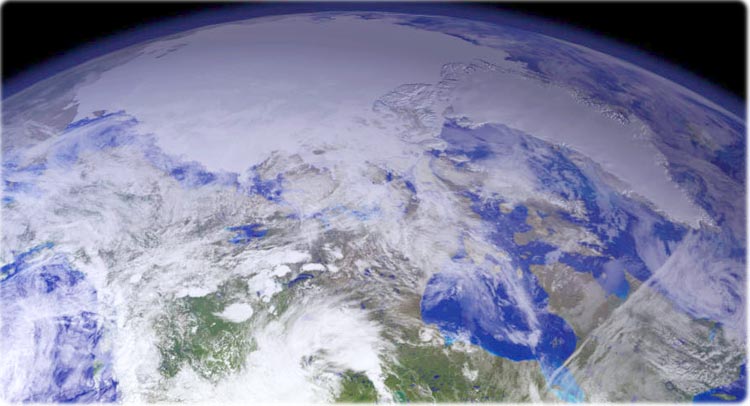 Texas A&M Scientists Find Trace Elements Increasing in Rapidly Changing Arctic Ocean. Significant quantities of carbon and trace elements are flowing across the central Arctic Ocean under the sea ice via freshwater runoff from rivers and continental shelf sediments, according to a new study by an international team of ocean scientists. "This research is critical to understanding the current and future health of the Arctic Ocean, which is warming faster than much of the rest of the planet," said Jessica Fitzsimmons, a co-author of the study and assistant professor in the Department of Oceanography at Texas A&M University.
Texas A&M Today
Join a research coordination network. We invite
traditional knowledge holders, natural and social scientists, engineers,  students, economists, health professionals, cultural heritage workers, and educators to join our new, free network titled "
Migration in Harmony" created by support from the National Science Foundation.
Migration in Harmony: An Interdisciplinary Network on Coastal Species, Settlements, and Cultures on the Move (MiH-RCN) is an international initiative to synthesize current research and build collaborative project teams to support a resilient, just, and sustainable Arctic. We (Georgetown Univ., Univ. Alaska Anchorage, and The Arctic Institute) strive to nurture a sense of community within the network by providing education, training, and exchange opportunities for all members. Network membership includes a monthly newsletter with member news, exclusive publications and research, and travel opportunities to annual meetings. Join
here
.
[Russia] Navy Gets New Vessel for Secret Underwater Operations in Arctic. More than a year after schedule, the Zvezdochka yard in Severodvinsk, northern Russia, has officially handed over the "Akademik Aleksandrov" to the Northern Fleet. The ship is the 3rd in the Navy's new series of special-purpose ships made for transportation of big-dimension military and special equipment, as well as search and rescue operations.
The Barents Observer
|
|
Future Events
NOAA Deep Sea Coral Research and Technology Program Webinar Series, April 16, 2020 (Webinar). Deep-sea coral and sponge communities in the Aleutian Islands are important habitat features for many life stages of commercially important fish targets, including Atka mackerel, Pacific cod, and rockfish. The effects of commercial fishing activities on deep-sea corals and sponges has been difficult to quantify due to a lack of spatially-explicit fishery data, bottom contact by different gear types, undetermined location of corals and sponges, and the susceptibility and recovery dynamics these structure-forming invertebrates (SFI). To address these challenges, a fishing effects model was developed in the North Pacific to integrate spatially explicit VMS data with target-specific gear configurations for over 40,000 bottom trawls since 2003. Fishery observer coverage for Aleutian Island trawl fisheries is nearly 100 percent and records catch species composition. Species distribution models provide presence data for coral, sponge, Primnoidae, and Stylasteridae.
ICESAT-2 Cryospheric Science Hackweek, June 15-19, 2020 (Seattle, Washington USA). ICESat-2 Cryospheric Science Hackweek is a 5-day hackweek to be held at the University of Washington. Participants will learn about technologies used to access and process ICESat-2 data with a focus on the cryosphere. Mornings will consist of interactive lectures, and afternoon sessions will involve facilitated exploration of datasets and hands-on software development.
Arctic Circle Assembly, October 8-11, 2020 (Reykjavik, Iceland). The annual Arctic Circle Assembly is the largest annual international gathering on the Arctic, attended by more than 2000 participants from 60 countries. It is attended by heads of states and governments, ministers, members of parliaments, officials, experts, scientists, entrepreneurs, business leaders, indigenous representatives, environmentalists, students, activists and others from the growing international community of partners and participants interested in the future of the Arctic.
3rd Arctic Science Ministerial, November 21-22, 2020 (Toyko, Japan). Since the last Arctic Science Ministerial in 2018, changes in the Arctic ecosystem and the resulting impacts locally and globally have been severely felt. While the reasons for these changes in climate largely stem from activities outside of the Arctic, the Arctic is warming at a rate of nearly double the global average. Considering the need for climate change mitigation, adaptation, and repair measures, the relevance of an international Arctic Science Ministerial has never been greater. It is necessary to strengthen scientific cooperation and collaboration among both Arctic and non-Arctic States in order to develop our understanding of the rapid changes impacting the Arctic. The First Arctic Science Ministerial (ASM1) was hosted by the United States in 2016, and two years later, the Second Arctic Science Ministerial (ASM2) was co-hosted by Germany, Finland, and the European Commission. The Third Arctic Science Ministerial will be co-hosted by Iceland and Japan.
Arctic Science Summit Week, March 20-26, 2021 (Lisbon, Portugal). The Portuguese Minister of Science, Technology and Higher Education, the Portuguese Foundation for Science and Technology (FCT) and the Local Organizing Committee will host the Arctic Science Summit Week 2021. The Conference is organized by FCT, Ciência Viva, AIR Center, the Portuguese Arctic Community and by IASC and partners. Framed by the overarching theme for the Science Conference "The Arctic: Regional Changes, Global Impacts," Lisbon invites International experts on the Arctic and Indigenous Peoples to discuss the "New Arctic" and also its impacts and interactions to and with the lower latitudes.
|
| 
  
4350 N. Fairfax Drive, Suite 510
Arlington, VA 22203, USA
External links in this publication, and on the USARC's World Wide Web site (
www.arctic.gov) do not constitute endorsement by the US Arctic Research Commission of external Web sites or the information, products or services contained therein. For other than authorized activities, the USARC does not exercise any editorial control over the information you may find at these locations. These links are provided consistent with the stated purpose of this newsletter and the USARC Web site.
|
|
| |
|
|
| |
|
