| |
|
|
|
|
|
|
|
|
Arctic Reading for the Quarantine:
This week's newly shared reports and publicans.
 (Smithsonian Institution, National Museum of Natural History) Arctic Studies Center Newsletter, May 2020.
The Arctic Studies Center conducts research on northern lands, environments, cultures, and people using Smithsonian collections and field studies to learn about the history and contemporary peoples of the circumpolar region. The Center works closely with indigenous groups, universities, organizations and government agencies to promote the welfare of northern people and to educate the public about the history, arts, and languages of the North. The May 2020 newsletter includes collection updates, news, articles summarizing ongoing research, summaries of museum collections, book reviews, and much more.
 Quiz: Which Arctic Council Report Should You Read Based on Your Interests? At any given time, the Council's Working and Expert Groups are engaged in close to 100 projects and initiatives. We put together this simple quiz to help guide you through Arctic Council reports and find science-based answers to your questions about many different Arctic issues. Find out what Arctic Council report you should add to your reading list by taking this quiz.
|
Media
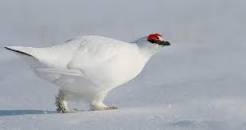 Researchers Discover Arctic Birds Weaken Their Immune System to Survive Polar Nights. Due to the extreme conditions of their habitat and their constant need for hunting food, creatures in the Arctic have probably become masters in the craft of adaption and energy-saving. Researchers have recently discovered a method polar birds use to save their energies during the winter by weakening their immune systems. Researchers from Lund University in Sweden and the University of Tromsø in Norway have examined the polar bird, Svalbard rock ptarmigan, and the integrity of their immune system.
The Science Times
Northernmost Arctic Airfield Now Operational All-year, Says Russian Military. The landing strip on the far northern Alexandra Island is 2,500 long and supposedly capable of handling "any kind of aircraft". It is located next to the new major military base complex erected on the island. The base is the northernmost operated by the Russian Armed Forces. It is located at 80 degrees North in the northern part of the Barents Sea, not far from Norway's Svalbard archipelago.
The Barents Observer
US Says Arctic No Longer Immune From Geopolitics as it Invests $12m in Greenland. In a call with Arctic experts and journalists the U.S. State Department provided a detailed update of the current administration's Arctic strategy. An unnamed senior state department official outlined the US' priorities in the Arctic, especially vis-à-vis Russia and China, and shared details on last week's announcement to provide a $12.1m aid package for Greenland. In a continuation of previous policy documents and speeches on the Arctic under the Trump administration, the official failed to mention the impact and importance of climate change on the region. In fact, during a one-hour call the official did not use the word climate change, or an equivalent term, a single time.
High North News
 S. Korean Icebreaker Returns From Arctic. The South Korean icebreaker and research vessel Araon enters South Korea's southwestern port of Gwangyang on April 29, 2020, after completing a 57,000-kilometer journey for its mission in the Arctic that started in October last year.
Yonhap News
Drones Help Monitor the Birthplace of Polar Bears in Arctic Russia. Staff at the Wrangel Island Nature Reserve are using drones to monitor polar bears for the first time. The new drone monitoring program will allow staff to obtain the most information possible and help the population thrive. The remote Arctic island is one of the most important locations for conservationists as it has the highest density of polar bear dens in the region. The territory is a UNESCO World Heritage Site and is nicknamed the 'maternity home of polar bears'. Due to sea ice shrinkage, the mammals, now listed as a vulnerable species on the IUCN Red List, are spending an increasing amount of time on dry land.
Euronews
|
|
Future Events
ICESAT-2 Cryospheric Science Hackweek, June 15-19, 2020 (Seattle, Washington USA). ICESat-2 Cryospheric Science Hackweek is a 5-day hackweek to be held at the University of Washington. Participants will learn about technologies used to access and process ICESat-2 data with a focus on the cryosphere. Mornings will consist of interactive lectures, and afternoon sessions will involve facilitated exploration of datasets and hands-on software development.
Arctic Circle Assembly, October 8-11, 2020 (Reykjavik, Iceland). The annual Arctic Circle Assembly is the largest annual international gathering on the Arctic, attended by more than 2000 participants from 60 countries. It is attended by heads of states and governments, ministers, members of parliaments, officials, experts, scientists, entrepreneurs, business leaders, indigenous representatives, environmentalists, students, activists and others from the growing international community of partners and participants interested in the future of the Arctic.
3rd Arctic Science Ministerial, November 21-22, 2020 (Toyko, Japan). Since the last Arctic Science Ministerial in 2018, changes in the Arctic ecosystem and the resulting impacts locally and globally have been severely felt. While the reasons for these changes in climate largely stem from activities outside of the Arctic, the Arctic is warming at a rate of nearly double the global average. Considering the need for climate change mitigation, adaptation, and repair measures, the relevance of an international Arctic Science Ministerial has never been greater. It is necessary to strengthen scientific cooperation and collaboration among both Arctic and non-Arctic States in order to develop our understanding of the rapid changes impacting the Arctic. The First Arctic Science Ministerial (ASM1) was hosted by the United States in 2016, and two years later, the Second Arctic Science Ministerial (ASM2) was co-hosted by Germany, Finland, and the European Commission. The Third Arctic Science Ministerial will be co-hosted by Iceland and Japan.
Arctic Science Summit Week, March 20-26, 2021 (Lisbon, Portugal). The Portuguese Minister of Science, Technology and Higher Education, the Portuguese Foundation for Science and Technology (FCT) and the Local Organizing Committee will host the Arctic Science Summit Week 2021. The Conference is organized by FCT, Ciência Viva, AIR Center, the Portuguese Arctic Community and by IASC and partners. Framed by the overarching theme for the Science Conference "The Arctic: Regional Changes, Global Impacts," Lisbon invites International experts on the Arctic and Indigenous Peoples to discuss the "New Arctic" and also its impacts and interactions to and with the lower latitudes.
Save the Date: 2nd Symposium on Polar Microbes and Viruses, May 3-6, 2021 (Hanko, Finland). Organizers announce, that due to the coronavirus outbreak, the 2nd Symposium on Polar Microbes and Viruses has been postponed to 2021. This symposium will bring together molecular microbial ecologists specializing in different organism groups to share our latest results and discuss methodological problems, as well as future prospects in the field, including practical international collaborations. The environmental focus will be on cryospheric environments including sea ice, glaciers, ice sheets, and permafrost, but excellent research in other polar environments is also invited. The methods to be discussed will focus on 'omics' techniques, ranging from single cells to metagenomes, but research using additional methods is encouraged as well.
|
| 
  
4350 N. Fairfax Drive, Suite 510
Arlington, VA 22203, USA
External links in this publication, and on the USARC's World Wide Web site (
www.arctic.gov) do not constitute endorsement by the US Arctic Research Commission of external Web sites or the information, products or services contained therein. For other than authorized activities, the USARC does not exercise any editorial control over the information you may find at these locations. These links are provided consistent with the stated purpose of this newsletter and the USARC Web site.
|
|
| |
|
|
| |
|

 ** New this week **