|
|
|
|
|
|
|
|
No events are scheduled for today.
|
Media
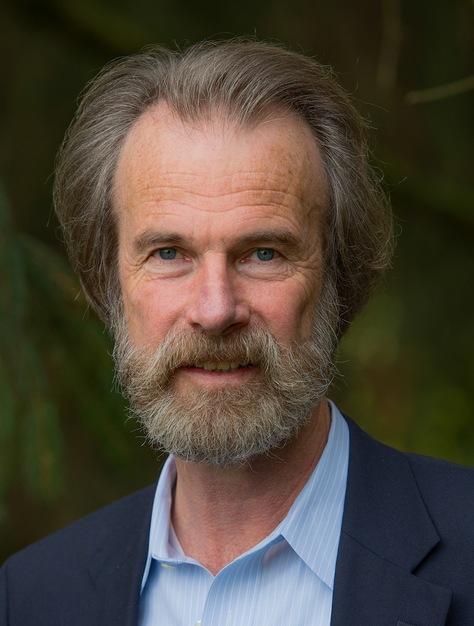 Konrad Steffen dies in Greenland ("Leading Swiss climate research dies in accident"). The 68-year-old was killed in an accident at a weather station, known as Swiss camp, at the weekend, officials said on Monday. Steffen, a dual Swiss/American who headed the FederalOffice for Forest, Snow and Landscape Research since 2012, has regularly conducting research into climate change in the Arctic and Antarctic for more than 40 years. "With Koni's Steffen's death, we have lost a uniquely kind and committed colleague. Everyone in the ETH Domain is greatly saddened by this loss," Michael Hengartner, the chairman of the board of the Federal Institute of Technology in Zurich is quoted as saying in a statement. SwissInfo.ch
The Man Determined to Deliver Trump's Alaskan Oil Promise. Later this 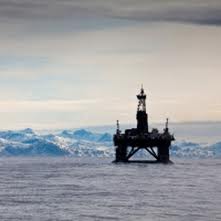 year, the Trump administration is expected to fulfill a decadeslong Republican dream. The Department of the Interior will likely sell the first leases for oil and gas drilling in the Arctic National Wildlife Refuge, opening up to development the last remaining stretch of protected land along the North Slope. For the oil and gas industry in Alaska, which has been especially hard hit by the global pandemic and economic downturn, it will be a bit of welcome good news. For Sen. Lisa Murkowski (R-Alaska), whose father spent much of his Senate career fighting to open the refuge, it will be a legacy-defining moment. Politico  Collapsed Arctic Ice Shelf Add 'Exclamation Point' to Dire Climate Trends, Say Scientists. In 2017, scientist Mark Serreze predicted the St. Patrick's Bay ice caps, located on Ellesmere Island in Nunavut, would vanish within five years. But their "official death" came two years earlier than expected and was set in stone this August, said Serreze. The culprit is climate change. CBC News Pesticides and Industrial Pollutants Found in Snow Atop Arctic Glaciers. Researchers recently found pesticides and industrial compounds deposited in snow atop four high-elevation glacier sites on the Norwegian archipelago Svalbard, often considered a "pristine" environment. The long journey of these compounds-likely originating in the United States and Eurasia-shows the far-reaching impacts of industrial pollution. Phys.org
|
|
Future Events
Building Arctic Empathy through Virtual Reality, 2 pm EDT August 12, 2020 (Virtual). Learn how virtual reality and immersive learning can build empathy, connection, & commitment to conservation in Arctic research. Research shows that immersive media drives empathy, creates connection, and motivates positive social behaviors like no other platform. Join Emmy and Webby award winning immersive technology pioneer Wesley Della Volla as he presents ways you can use shared, synchronized immersive reality to integrate live presentations with a tangible connection with Arctic science research, traditional knowledge, and Arctic landscapes and ecosystems using the devices you already have. Migration In Harmony is an international, cross-disciplinary network of Arctic migration researchers funded by NSF. Learn more and sign up at migrationharmony.org.
Arctic Circle Assembly, October 8-11, 2020 (Reykjavik, Iceland). The annual Arctic Circle Assembly is the largest annual international gathering on the Arctic, attended by more than 2000 participants from 60 countries. It is attended by heads of states and governments, ministers, members of parliaments, officials, experts, scientists, entrepreneurs, business leaders, indigenous representatives, environmentalists, students, activists and others from the growing international community of partners and participants interested in the future of the Arctic.
Arctic Science Summit Week, March 20-26, 2021 (Lisbon, Portugal). The Portuguese Minister of Science, Technology and Higher Education, the Portuguese Foundation for Science and Technology (FCT) and the Local Organizing Committee will host the Arctic Science Summit Week 2021. The Conference is organized by FCT, Ciência Viva, AIR Center, the Portuguese Arctic Community and by IASC and partners. Framed by the overarching theme for the Science Conference "The Arctic: Regional Changes, Global Impacts," Lisbon invites International experts on the Arctic and Indigenous Peoples to discuss the "New Arctic" and also its impacts and interactions to and with the lower latitudes.
Save the Date: 2nd Symposium on Polar Microbes and Viruses, May 3-6, 2021 (Hanko, Finland). Organizers announce, that due to the coronavirus outbreak, the 2nd Symposium on Polar Microbes and Viruses has been postponed to 2021. This symposium will bring together molecular microbial ecologists specializing in different organism groups to share our latest results and discuss methodological problems, as well as future prospects in the field, including practical international collaborations. The environmental focus will be on cryospheric environments including sea ice, glaciers, ice sheets, and permafrost, but excellent research in other polar environments is also invited. The methods to be discussed will focus on 'omics' techniques, ranging from single cells to metagenomes, but research using additional methods is encouraged as well.
3rd Arctic Science Ministerial, May 8-9, 2021 (Toyko, Japan). The Japanese and Icelandic organizers of this ministerial continue to plan for an in-person ministerial, in Tokyo, but have moved the dates from November 21-22, 2020 to May 8-9, 2021 because of Covid-19. Since the last Arctic Science Ministerial in 2018, changes in the Arctic ecosystem and the resulting impacts locally and globally have been severely felt. Considering the need for climate change mitigation, adaptation, and repair measures, the relevance of an international Arctic Science Ministerial has never been greater. It is necessary to strengthen scientific cooperation and collaboration among both Arctic and non-Arctic States in order to develop our understanding of the rapid changes impacting the Arctic. The First Arctic Science Ministerial (ASM1) was hosted by the United States in 2016, and two years later, the Second Arctic Science Ministerial (ASM2) was co-hosted by Germany, Finland, and the European Commission. ASM3 will be co-hosted by Iceland and Japan.
|
|

  
4350 N. Fairfax Drive, Suite 510
Arlington, VA 22203, USA
External links in this publication, and on the USARC's World Wide Web site ( www.arctic.gov) do not constitute endorsement by the US Arctic Research Commission of external Web sites or the information, products or services contained therein. For other than authorized activities, the USARC does not exercise any editorial control over the information you may find at these locations. These links are provided consistent with the stated purpose of this newsletter and the USARC Web site.
|
|
|
|
|
|
|
|
|