|
|
|
|
|
|
|
|
Asian Interests and the Path Forward in the New Arctic, 6:00 pm on February 8, 2021 (virtual). In light of common interests and prospects for cooperation in the Arctic, this international virtual symposium will convene representatives, scholars, and experts from Japan, the People's Republic of China, the Republic of South Korea, and the United States to share their countries' unique Arctic interests and policies. Hosted by the Asia Program, Polar Institute and Kissinger Institute of the Woodrow Wilson International Center for Scholars, with support from the Government of Japan and the Embassy of Japan in the United States.
Documentary: Frozen Obsession, (6pm PST on February 8, 2021; 4pm EST on February 11, 2021; 6:30 pm EST on February 12, 2021; 5pm EST on February 23, 2021; 3pm EST on February 25, 2021; 5pm on March 1, 2021; 5pm EST on March 4, 2021) Climate change is a critical scientific and social issue that confronts today's world. Nowhere are the consequences of a warming climate more pronounced and observable than in the polar regions. The documentary Frozen Obsession, shot in 4K, follows the 18-day, 2,000-mile Northwest Passage Project expedition through the stunningly beautiful and extreme Canadian Arctic aboard the Swedish research icebreaker Oden.
Alaska Forum on the Environment, February 8-11, 2021 (virtual). The Alaska Forum on the Environment will take place remotely. Keynote presentations will occur February 8-11 with additional trainings are available throughout the year. Topics include climate change; energy; science; contaminated sites, cleanup, and remediation; emergency preparedness and response; federal facilities; fish, wildlife, habitat, forests, and invasive species; marine debris; oil spill prevention and response; pollution prevention; resource development; engineering and technology; solid waste and recycling; sustainability; tribal / rural issues; and, youth.
|
Media
Rural Alaska Natives Hope Elon Musk's Starlink Internet Service Can Level Playing Field. SpaceX Starlink, an upcoming satellite-beaming internet service, has begun its testing to offer high-speed internet to remote tribal areas in the U.S. where broadband is notoriously spotty, throttled and expensive. Since 2019, business magnate and Tesla CEO Elon Musk has sought approval from the Federal Communications Commission to launch more than 1,000 satellites into orbit in an effort to achieve global internet connectivity. The satellites, currently in "beta" testing mode, beam high-speed broadband connectivity to remote areas through a users' one-time purchase of Starlink's self-installing equipment, including a dish receiver to fit on a user's roof. Tribal Business News
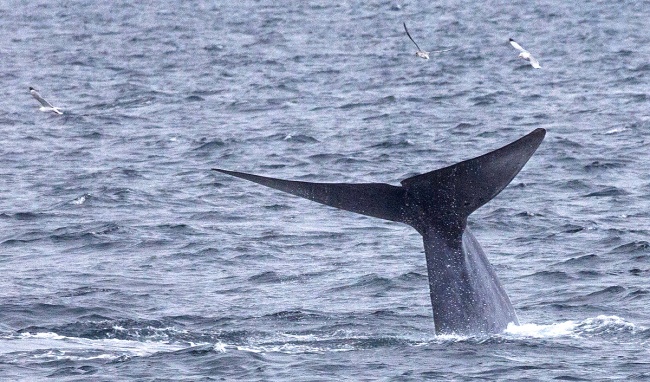 Noise Pollution is Harming Sea Life, Needs to be Prioritized, Scientists Say. Far beneath the ocean surface, a cacophony of industrial noise is disrupting marine animals' ability to mate, feed and even evade predators, scientists warn. With rumbling ships, hammering oil drills and booming seismic survey blasts, humans have drastically altered the underwater soundscape - in some cases deafening or disorienting whales, dolphins and other marine mammals that rely on sound to navigate, researchers report in a metastudy published online Thursday and in the Friday edition of the journal Science that examines more than 500 research papers. Arctic Today
Arctic Stew: Understanding How High-Latitude Lakes Respond To and Affect Climate Change. To arrive at Nunavut, turn left at the Dakotas and head north. You can't miss it-the vast tundra territory covers almost a million square miles of northern Canada. Relatively few people call this lake-scattered landscape home, but the region plays a crucial role in understanding global climate change. New research from Soren Brothers, assistant professor in the Department of Watershed Sciences and Ecology Center, details how lakes in Nunavut could have a big impact on carbon dioxide levels in the atmosphere, and it's not all bad news-at least for now. Brothers examined 23 years of data from lakes near Rankin Inlet. He noted a peculiarity-as the lakes warmed, their carbon dioxide concentrations fell. Most lakes are natural sources of carbon dioxide, but these lakes were now mostly near equilibrium with the atmosphere. Phys.org
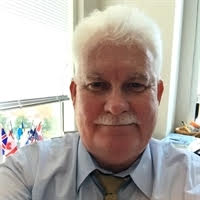 Section Head Position at the Office of Polar Programs Opens. Mr. Simon Stephenson, the Arctic Section Head at the National Science Foundation, will retire this month after a long, successful, and illustrious career advancing Arctic research. Simon, congenial, thoughtful, and well-liked by colleagues in and out of the Foundation, also served a two-year stint in the White House, during the Obama Administration, as the Assistant Director of Polar Science. The USARC wishes him well, and hopes to that he'll remain engaged in Arctic research initiatives after his departure from NSF. Recruitment for a new Arctic Section Head has begun, and the job opportunity is posted here. NSF has various options to fill the position, including as a Career Senior Executive Service (SES), a SES Limited Term Appointment (1-3 years), or via Intergovernmental Personnel Act (IPA) Assignment.
|
|
Future Events
2021 Camden Conference, The Geopolitics of the Arctic: A Region in Peril, February 20-21, 2021 (virtual). The 2021 Camden Conference will explore the Arctic, one of the world's least-known regions. The Arctic already is undergoing dramatic, irreversible changes traceable to global warming, and as these changes impact the pace of climate change, they forewarn of the challenges ahead for human, animal and plant habitats in this and other regions. With the retreating ice mass will come new opportunities to pursue exploration and extraction of vast resources. Will there be unregulated competition, or cooperation among governments and industries? What kinds of security challenges will come with ice-free borders? The territories of eight nations extend into the Arctic, but others -especially China- will assert rights of access and passage. Open waters will make shipping between Pacific and Atlantic ports much cheaper. What could all this mean for Maine with its accessible northern ports, maritime industry, and vulnerable location on a rising ocean? Former USARC commissioner Fran Ulmer will be one of the speakers at this event.
Advancing Collaboration in Canada-US Regional Security II, February 25-26, 2021 (virtual). The Arctic Domain Awareness Center (ADAC) and the North American and Arctic Defense and Security Network (NAADSN) will host this event as a follow up meeting on the Advancing Collaboration in Canada-U.S. Arctic Regional Security (ACCUSARS) conference in September 2020.The purpose of ACCUSARS II is to create a subset Strategic Foresight Assessment (SFA) for the North American Arctic, by specifically focusing on Alaska and Western Canada.
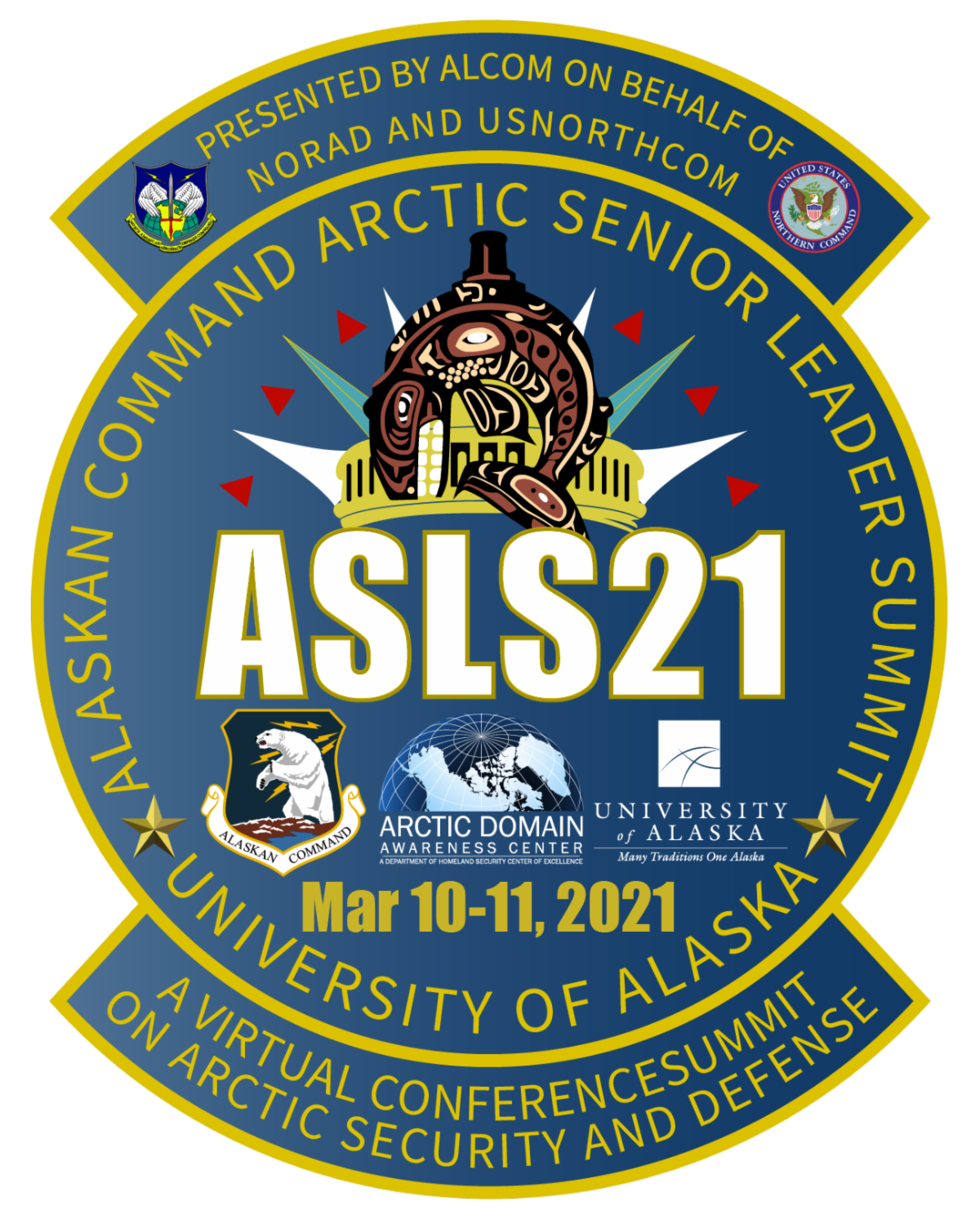 ALCOM's Arctic Senior Leader Summit, 2021, March 10-11, 2021 (virtual) . In support of U.S. Northern Command's Arctic mission, please consider joining Lt General David Krumm, USAF, Commander Alaska Command, Alaska NORAD Region and 11th Air Force and a host of Defense and Security Leaders for Arctic Senior Leader Summit 2021 (ASLS 21) 10-11 March 2021. This event is oriented to addressing senior leader strategic views on the developing range of security and defense matters affecting the Arctic region. Due to the on-going complications of in-person meetings as a result of COVID 19, Arctic Senior Summit 2021 will be conducted via video conference. Day 1 of ASLS 2021 is focused on plenary presentations and follow-on strategic discussions. Day 2 ASLS 2021 is a planned tabletop exercise. Further details and registration to be provided soon via ASLS 21 planning team at the Arctic Domain Awareness Center. Please see: https://arcticdomainawarenesscenter.org/Events for more details or email ADAC center leadership at https://arcticdomainawarenesscenter.org/Team.
Arctic Domain Awareness Center's (ADAC) Arctic Challenges, Innovations, and Commerce Expo (Arctic CICE) Conference, March 16-17, 2020 (virtual). The Arctic Domain Awareness Center's (ADAC) Arctic Challenges, Innovations, and Commerce Expo (Arctic CICE) seeks to explore the networks, resources, and infrastructure needed to enable the commercial entrance of Arctic-related products and technologies into the Arctic domain. This expo will use an interdisciplinary and collaborative approach to foster conversations around Arctic-centered business pressure points, state-of-the-Arctic-focused R&D, gap analysis of investment and innovation, and the future of business in the region. Participants will be exposed to the latest hardware, software, and people-ware emerging to advance domain awareness, risk mitigation, exploration, Arctic operations, and overall, Arctic security.
Arctic Science Summit Week, March 20-26, 2021 (Lisbon, Portugal). The Portuguese Minister of Science, Technology and Higher Education, the  Portuguese Foundation for Science and Technology (FCT) and the Local Organizing Committee will host the Arctic Science Summit Week 2021. The Conference is organized by FCT, Ciência Viva, AIR Center, the Portuguese Arctic Community and by IASC and partners. Framed by the overarching theme for the Science Conference "The Arctic: Regional Changes, Global Impacts," Lisbon invites International experts on the Arctic and Indigenous Peoples to discuss the "New Arctic" and also its impacts and interactions to and with the lower latitudes.
 One Health, One Future, April 6-11, 2021 (virtual). This is expected to be the largest circumpolar One Health conference held in the United States in 2021, with participation anticipated from across the Arctic region. The event is part of the United States contribution to One Arctic, One Health, an Arctic Council project now in its sixth year of operation. The project aims to develop a circumpolar network of One Health experts that can share knowledge, conduct exercises, and spur collaborative investigations of One Health phenomena.
2nd Symposium on Polar Microbes and Viruses, May 3-6, 2021 (Hanko, Finland). Organizers announce, that due to the coronavirus outbreak, the 2nd Symposium on Polar Microbes and Viruses has been postponed to 2021. This symposium will bring together molecular microbial ecologists specializing in different organism groups to share our latest results and discuss methodological problems, as well as future prospects in the field, including practical international collaborations. The environmental focus will be on cryospheric environments including sea ice, glaciers, ice sheets, and permafrost, but excellent research in other polar environments is also invited. The methods to be discussed will focus on 'omics' techniques, ranging from single cells to metagenomes, but research using additional methods is encouraged as well.
3rd Arctic Science Ministerial, May 8-9, 2021 (Toyko, Japan). The  Japanese and Icelandic organizers of this ministerial continue to plan for an in-person ministerial, in Tokyo, but have moved the dates from November 21-22, 2020 to May 8-9, 2021 because of Covid-19. Since the last Arctic Science Ministerial in 2018, changes in the Arctic ecosystem and the resulting impacts locally and globally have been severely felt. Considering the need for climate change mitigation, adaptation, and repair measures, the relevance of an international Arctic Science Ministerial has never been greater. It is necessary to strengthen scientific cooperation and collaboration among both Arctic and non-Arctic States in order to develop our understanding of the rapid changes impacting the Arctic. The First Arctic Science Ministerial (ASM1) was hosted by the United States in 2016, and two years later, the Second Arctic Science Ministerial (ASM2) was co-hosted by Germany, Finland, and the European Commission. ASM3 will be co-hosted by Iceland and Japan.
Department of Homeland Security S&T OUP Centers of Excellence Summit, May 18-21, 2021 (virtual). DHS S&T's Centers of Excellence (COE) Summit is set and focused on Homeland Security Challenges: Evolving Threats & Dynamic Solutions. This event is a special opportunity for COE researchers to connect and network with DHS components, federal, state, and local stakeholders, as well as industry partners to present current and emerging solutions to threats and challenges faced by DHS. Attendees can visit the Innovation Showcase, where COE and vendor partners showcase research breakthroughs, new products and tools to assist operational decision-makers and dynamic solutions to secure our Homeland.
|
|

  
4350 N. Fairfax Drive, Suite 510
Arlington, VA 22203, USA
External links in this publication, and on the USARC's World Wide Web site ( www.arctic.gov) do not constitute endorsement by the US Arctic Research Commission of external Web sites or the information, products or services contained therein. For other than authorized activities, the USARC does not exercise any editorial control over the information you may find at these locations. These links are provided consistent with the stated purpose of this newsletter and the USARC Web site.
|
|
|
|
|
|
|
|
|