No Arctic science event is scheduled for today. | |
‘The Deepest Silences’: What Lies Behind the Arctic’s Indigenous Suicide Crisis | |
Looking back on it now, I have to be careful about reconstructing or selecting memories in the light of all that transpired. In 1970, as part of my work for a research group within the Canadian Department of Indian and Northern Affairs, I moved to the Arctic and began learning the Inuit language, Inuktitut. My girlfriend, Christine, and I ended up living in a settlement named Sanikiluaq, located on the Belcher Islands, some 90 miles from the Hudson Bay coast of Arctic Quebec. | |
US Coast Guard Requests Icebreaker Fleet Additions to Support Arctic Competition | |
If the United States wants to counteract Russian and Chinese movements in the Arctic region, they are going to grow the ice-breaking capabilities of the US Coast Guard. According to a statement made by the service’s commander, last week, polar ice has been in steady decline these past few decades, and this has opened up potentially new trade routes that could unite Asia, Europe, and North America. | |
NPS Researchers Explore the Impact of Sea Ice Change in Bering Sea | |
The Bering Sea is the most productive ground fishery in the world, particularly for salmon, halibut and shellfish. About half of U.S. fish and shellfish come from that area and the fishing industry is the main driver of jobs in and around the Aleutian Islands. The freezing and melting of sea ice in the area heavily impacts the primary productivity, which is the bottom of the marine food chain. | |
Our Garbage is Threatening Polar Bears — But There Are Solutions, New Report Says | |
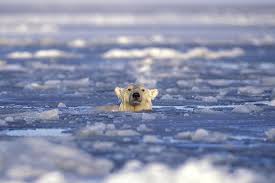
A new research paper suggests food waste from humans is posing an increasing threat to already struggling polar bear populations — but there are solutions to the problem. The report, published Wednesday in Oryx, the International Journal of Conservation, looks at six case studies that illustrate how negative, food-related interactions between humans and polar bears can become either chronic or unpredictable. | |
|
August 1-4, 2022 | Utqiagvik, Alaska USA
75th Anniversary of the Naval Arctic Research Laboratory: Celebrating the Past—Planning for the Future
| |
The events during the week of August 1st, 2022, will include Enhancing Arctic Science and Engineering Workshop along with Regional Development Tours and forums on the Arctic science to plan for the next 25 years of Arctic research. Participants will include scientists and engineers, Indigenous leaders, Arctic community members, policymakers, government organizations and businesses to celebrate past research success, take stock of current challenges and opportunities and plan for the next generation of collaboration and knowledge co-production that will keep Utqiagvik and Indigenous knowledge at the forefront of Arctic science and contribute to a safe and sustainable future for
the Arctic.
| |
|
August 27-29, 2022 | Nuuk, Greenland
2022 Arctic Circle Greenland Forum
| The Forum is organized in cooperation with Naalakkersuisut - The Government of Greenland. The Focus of the 2022 Greenland Forum will be on climate and prosperity; and, geopolitics and progress. | |
|
October 13-16, 2022 | Reykjavík, Iceland
Arctic Circle Assembly
| The Arctic Circle Assembly is an open democratic platform with participation from governments, organizations, corporations, universities, think tanks, environmental associations, indigenous communities, concerned citizens, and others. It is nonprofit and nonpartisan. | |
|
October 25-27, 2022 Fairbanks, Alaska USA
US Arctic Research Commission's 115th Meeting
| More information to follow. | |
|
October 28-30, 2022 Eatonville, Washington USA
Graduate Climate Conference
| The Graduate Climate Conference (GCC) is an interdisciplinary climate conference run by graduate students, for graduate students. Over the last sixteen years, graduate students representing hundreds of academic institutions have come together to present research and share ideas on climate and climate change in an array of disciplines. Organizers welcome abstracts from diverse fields such as atmospheric sciences, biology, environmental management, forestry and fisheries sciences, oceanography, communication, public policy studies, urban planning, public health, and any other climate-related disciplines. | |
|
December 12-16, 2022 Chicago, Illinios USA
AGU Fall Meeting
| AGU Fall Meeting is the most influential event in the world dedicated to the advancement of Earth and space sciences. Every year, AGU Fall Meeting unites the Earth and space science community to share findings, connect like-minded scientists from around the world, and advance our profession and shared passion for the impact of science. | |
|
NEW THIS WEEK | January 30- February 2, 2023 | Tromsø, Norway and virtual
Arctic Frontiers 2023 Moving North
| The key topics of Arctic Frontiers 2023 will reflect transformation, modeling, adaptation, and development in the rapidly changing global landscape. Furthermore, business development in viable industries and Arctic health will feature, due to their relevance with the concept of Moving North. While looking at both the long-term and short-term impacts of the environmental, humanitarian, and economic crises, looking for potential solutions will be a key driver of the Arctic Frontiers 2023: Moving North conference. | |
|
March 6-10, 2023 Tokyo, Japan
Seventh International Symposium on Arctic Research (ISAR-7)
| The International Symposium on Arctic Research (ISAR) has been held every two years since 2008 and aims to present and discuss scientific results with researchers on the Arctic from all-over the world, extracting and sharing issues to solve, and exploring the future of the Arctic. ISAR-7 will consist of General Sessions and Special Sessions. General Sessions will address the following topics: atmosphere; ocean and sea ice; rivers, lakes, permafrost, and snow cover; ice sheets, glaciers, and ice cores; terrestrial ecosystems; marine ecosystems; geospacer; laws, politics, and economy; language, culture, and health; and, engineering for sustainable development. | |
External links in this publication, and on the USARC's World Wide Web site (www.arctic.gov) do not constitute an endorsement by the US Arctic Research Commission of external Web sites or the information, products, or services contained therein. For other than authorized activities, the USARC does not exercise any editorial control over the information you may find at these locations. These links are provided consistent with the stated purpose of this newsletter and the USARC website. | | | | |