 BOEM Scientist Explores Island Near Pole With International Group: The 2018 OUTREACH Expedition. When Dr. Guillermo Auad, a senior scientist in BOEM's Environmental Studies Program, had the chance to travel to a remote island in Arctic waters near the North Pole this past June, he didn't waste any time packing. Even after his graduate studies and research and teaching career at Scripps Institution of Oceanography, followed by eight years working at BOEM, he had not envisioned this experience after 15 years of leading and conducting many research projects in the tropical and subtropical Pacific Ocean.
Bureau of Ocean Energy Management
Warming Alters Predator-Prey Interactions in the Arctic. Wolf spiders are so abundant that they outweigh real wolves in the Alaskan Arctic by several orders of magnitude. Their sheer numbers make them one of the important predators on the tundra. They may also be important in buffering some effects of climate change. Under warming conditions, arctic wolf spiders' tastes in prey might be changing, according to new research from Washington University in St. Louis, initiating a new cascade of food web interactions that could potentially alleviate some impacts of global warming.
Phys.org
 New Dates for Ancient Arctic Fibers. It had been previously believed that the ancient Dorset and Thule peoples of the Arctic learned to spin yarn from the Vikings who arrived in Newfoundland some 1,000 years ago, but according to a Canadian Press report, new radiocarbon dates suggest that pieces of yarn recovered from Baffin Island and the Ungava Peninsula could be much older. Gorill Nilsen of Tromsø University developed a way to cleanse the Arctic fibers of the seal and whale oils that had made them impossible to radiocarbon date in the past. The new tests indicate the pieces of yarn were crafted by Arctic peoples between 500 and 1,000 years before the Norse arrived in the New World.
Archaeology
Arctic Air Expedition Delayed in Canada. The International Round-the-World Ocean Flight air expedition on amphibious aircraft suspended its flight around the Canadian Arctic because an airport was closed for the weekend, according to pilot and cosmonaut Valery Tokarev, a member of the expedition. "We are still in Inuvik (the Northwest Territories of Canada), where we arrived on Saturday night. Today we planned to fly to Cambridge Bay (a region of Nunavut) with two intermediate stops, but airfields do not work on Sunday there, so we were unable to find out whether we would be able to fuel our aircraft there," Tokarev told TASS.
The Arctic
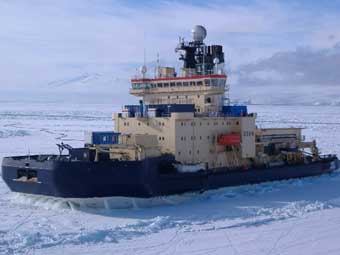 Arctic Research Expedition Sets Sail. 31 July sees the beginning of the Swedish-American Arctic research expedition 'Arctic Ocean 2018' with 40 international researchers to be based and working on board the Swedish icebreaker Oden. The Swedish icebreaker will be moored to a moving ice floe, whilst the Arctic research expedition investigate the formation of the clouds over the Arctic as they play a very important in the Arctic climate.
SciTech Europa
Explaining the Arctic Council Secretariat: Norms and Values (Part 1). Why does an organization undertake a reform, despite having been resistant to change in previous years? And why does it choose a reform that contradicts its original loose structure without implementing further reforms that would make it a more formal, treaty-based organization? These questions arise in the case of the establishment of the Arctic Council Secretariat in 2013. This paper aims at explaining the reasons for this specific and rather surprising reform. The Arctic Council (AC) was created in 1996 as a high-level intergovernmental forum for the coordination of Arctic politics by the "Arctic Eight." Its main aim is the promotion of "cooperation, coordination and interaction among the Arctic states, with the involvement of the Arctic indigenous communities and other Arctic inhabitants on common Arctic issues." While becoming an increasingly important actor in Arctic affairs by facilitating regional cooperation, the Council's status as a high-level forum persists. It does not have the legal status of an international organization and its institutional capacity is limited.
The Arctic Institute
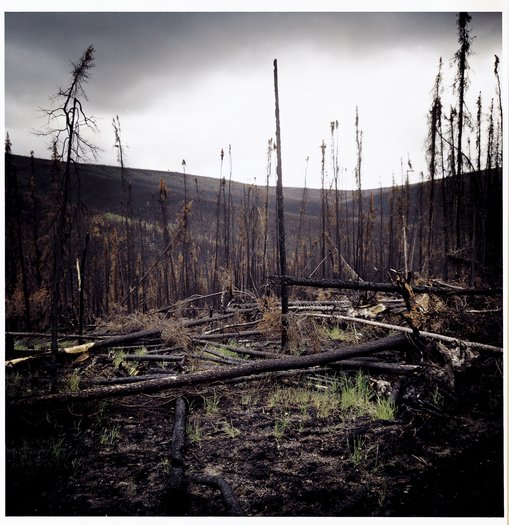 EU Nations Help Sweden as Wildfires Rage Above Arctic Circle. Sweden is fighting its most serious wildfires in decades - including blazes above the Arctic Circle - prompting the government to seek help from the military, hundreds of volunteers and other European nations. As of Friday, more than 50 blazes were torching forests, mostly in central and western Sweden but also in the North, above the Arctic Circle, and on the Baltic Sea island of Gotland.
CBC News
 year in different locations in the circumpolar area and represent the largest scientific meetings worldwide on circumpolar health. The ICCH congresses serve as the primary source of information exchange and scholarly communication in issues relating to circumpolar health.