| |
|
|
|
|
|
|
|
|
 Alaska Federation of Natives. Challenges at the Northernmost Border: 10,000 Years of Adaption Innovation and Action. (January 29-30, 2020) The Alaska Federation of Natives (AFN) under the leadership of Co-Chairs Ana Hoffman, and Will Mayo, in partnership with the Alaska Congressional Delegation and Lt. General Thomas Bussiere representing the Northern Command and NORAD Region, and the Pacific Air Forces, were pleased to welcome leaders and decision-makers to this 2020 Alaska Day conference. The Alaska Day conference was titled: Challenges at the Northernmost Border: 10,000 Years of Adaptation, Innovation, and Action. The focus of this gathering was on solutions with an emphasis on public-private partnerships, communications (both terrestrial and low earth orbit), public safety and security.
 Department of Defense. Report to Congress: Department of Defense Arctic Strategy. (July 2019) The 2019 Department of Defense (DoD) Arctic Strategy updates the previous 2016 DoD Arctic Strategy as requested by Section 1071 of the John S. McCain National Defense Authorization Act for fiscal year (FY) 2019. This update includes a classified annex. Specifically, the 2019 DoD Arctic Strategy updates DoD's strategic objectives for the Arctic region, in light of DoD's renewed assessment of the evolving Arctic security environment and the release of the 2018 National Defense Strategy (NDS). Anchored in NDS goals and priorities, this updated Arctic strategy outlines DoD's strategic approach for protecting U.S. national security interests in the Arctic in an era of strategic competition.
|
Media
[Thawing] Arctic Permafrost Threatens Russian Energy Firms' Bottom Line- Morgan Stanley. Rapidly [thawing] Arctic permafrost poses the greatest threat to major Russian energy producers' infrastructure and financial indicators, according to a new Morgan Stanley report obtained by the Vedomosti business daily. Gazprom, Novatek, Alrosa and Norilsk Nickel - whose fuel tank leaked after sinking into thawing permafrost in May, resulting in a major environmental disaster - stand to lose the most from the phenomenon that releases carbon gases and further fuels global warming.
The Moscow Times
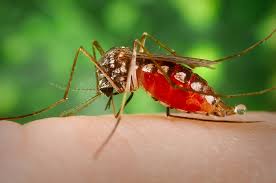 Where are Arctic Mosquitoes Most Abundant in Greenland and Why? Bzz! It's mosquito season in Greenland. June and July marks the period when Arctic mosquitoes (Aedes nigripes) are in peak abundance, buzzing about the tundra. While Arctic mosquitoes serve as an important food source to other animals, they are notorious for their role as pests to humans and wildlife, including caribou, whose populations can be affected by their attacks. Yet, these mosquitoes spend most of their lives in an aquatic environment in shallow, tundra ponds. Their eggs become frozen in the winter and hatch into larvae when the ponds melt in the spring.
Phys.org
Tons of Tire Rubber is Making its Way to the Arctic Each Year, Study Suggests. As the tires and brakes on your car wear, they produce microscopic particles of plastic that wind up on the surface of the road. It has long been known that many of these particles eventually end up in the ocean, brought there either after either being blown into the water as dust or washed into the watershed when it rains. Now, however, studies are showing that just as much road microplastic ends up in the air as the oceans, and that, once aloft, it can be transported by the atmosphere to some of the most remote parts of the world, including the Arctic.
Nunatsiaq Online
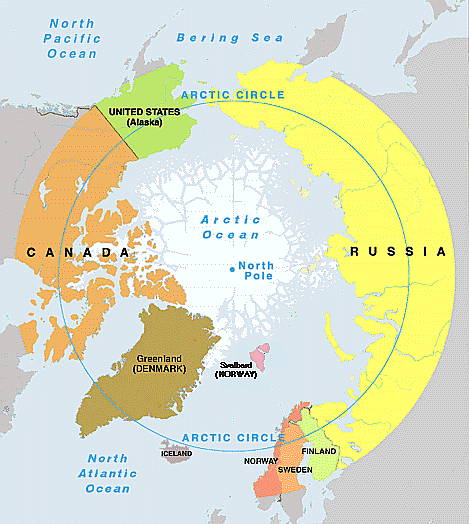 With Geopolitics in Mind, EU Opens Consultation on Future Arctic Strategy. The EU's new Arctic Ambassador, Michael Mann, appointed in April, told EURACTIV earlier this year that it was not yet clear when the bloc "will move forward with the actual policy update, and what form it will take". On Monday (20 July), the European Commission and the EU's diplomatic service (EEAS) jointly launched a public consultation on the EU's Arctic policy, which according to EU officials is meant to lead to a "broad reflection" on the bloc's future strategy for the region, including the EU's ambitions under the Green Deal and security.
EURACTIV
Ocean Plastics Continue to Impact Some Arctic Seabirds More Than Others: Study. Although it's understood that plastics are in the Arctic and that some birds are more at risk of ingesting them, less is known about how this has changed over time. A new study published last month in the journal Marine Pollution Bulletin sought to change that by examining four different species of Arctic seabirds for plastics larger than one millimeter in size and comparing those findings to data from a decade ago.
Nunatsiaq News
Comment by August 2 on Development of the Next Arctic Research Plan.The Interagency Arctic Research Policy Committee (IARPC) is beginning development of the Arctic Research Plan 2022-2026. We are seeking input on the structure, goals, and objectives of the plan. Please share your ideas on the critical issues facing the Arctic and what research needs to be conducted to address those issues. The comment deadline is August 2. Find more information about the plan and how to comment
here.
|
|
Future Events
** New this week **
Expansion of Maritime Activity in the Bering Strait Region: Mitigating Existing and Future Risks, 11- 12:30 pm EDT on July 27, 2020 (Virtual). The Bering Strait region supports some of the most remarkable wildlife in the world, which in turn has supported subsistence cultures for thousands of years. In this webinar, experts will discuss the current situation in the region, future vessel traffic trends, increasing threats, and existing gaps in preparedness and response. The webinar will also consider possible measures that could help ensure safe and environmentally sound shipping, from strong communications to maritime traffic management tools and industry area-specific practices. WWF's new publication,
Safety at the Helm: A Plan for Smart Shipping through the Bering Strait, will be referenced during the event. The webinar is hosted by the Polar Institute
** New this week **
Polar Week: July 2020, July 27-31, 2020 (Virtual). The Wilson Center's Polar Institute will host its second edition of the Polar Week to explore, analyze, discuss, and inform many of these important issues and dynamics. Through several public events, the July 2020 Polar Week will address: maritime activity in the Bering Strait; Canada's Arctic and Northern Policy Framework; the European Union's Arctic strategy; the complex relationship in the Arctic between the United States and Russia; Marine Protected Areas in the Southern Ocean, and; the launch of the inaugural edition of the Wilson Center's Polar Perspectives publication series.
Arctic Science Coalition Building Webinar with Brett Veerhusen, 2-3 PM EDT July 29, 2020 (Virtual)
.
The most impactful Arctic research is driven by a strong, diverse coalition of individuals, businesses and organizations united by a common mission. In this virtual workshop Brett Veerhusen, Ocean Strategies founder, will share how he has built coalitions in fisheries research, management, and policy action in Alaska, and teach you how to move from an idea to an action plan by building a coalition that gets you to your Arctic research or policy goal.
The event is hosted by
Migration in Harmony
: An Interdisciplinary Network in Littoral Species, Settlements, and Cultures on the Move (MiH-RCN), an international, cross-disciplinary network of Arctic migration researchers funded by the National Science Foundation.
Arctic Circle Assembly, October 8-11, 2020 (Reykjavik, Iceland). The annual Arctic Circle Assembly is the largest annual international gathering on the Arctic, attended by more than 2000 participants from 60 countries. It is attended by heads of states and governments, ministers, members of parliaments, officials, experts, scientists, entrepreneurs, business leaders, indigenous representatives, environmentalists, students, activists and others from the growing international community of partners and participants interested in the future of the Arctic.
Arctic Science Summit Week, March 20-26, 2021 (Lisbon, Portugal). The Portuguese Minister of Science, Technology and Higher Education, the Portuguese Foundation for Science and Technology (FCT) and the Local Organizing Committee will host the Arctic Science Summit Week 2021. The Conference is organized by FCT, Ciência Viva, AIR Center, the Portuguese Arctic Community and by IASC and partners. Framed by the overarching theme for the Science Conference "The Arctic: Regional Changes, Global Impacts," Lisbon invites International experts on the Arctic and Indigenous Peoples to discuss the "New Arctic" and also its impacts and interactions to and with the lower latitudes.
Save the Date: 2nd Symposium on Polar Microbes and Viruses, May 3-6, 2021 (Hanko, Finland). Organizers announce, that due to the coronavirus outbreak, the 2nd Symposium on Polar Microbes and Viruses has been postponed to 2021. This symposium will bring together molecular microbial ecologists specializing in different organism groups to share our latest results and discuss methodological problems, as well as future prospects in the field, including practical international collaborations. The environmental focus will be on cryospheric environments including sea ice, glaciers, ice sheets, and permafrost, but excellent research in other polar environments is also invited. The methods to be discussed will focus on 'omics' techniques, ranging from single cells to metagenomes, but research using additional methods is encouraged as well.
3rd Arctic Science Ministerial, May 8-9, 2021 (Toyko, Japan).
The Japanese and Icelandic organizers of this ministerial continue to plan for an in-person ministerial, in Tokyo, but have moved the dates from November 21-22, 2020 to May 8-9, 2021 because of Covid-19. Since the last Arctic Science Ministerial in 2018, changes in the Arctic ecosystem and the resulting impacts locally and globally have been severely felt. Considering the need for climate change mitigation, adaptation, and repair measures, the relevance of an international Arctic Science Ministerial has never been greater. It is necessary to strengthen scientific cooperation and collaboration among both Arctic and non-Arctic States in order to develop our understanding of the rapid changes impacting the Arctic. The First Arctic Science Ministerial (ASM1) was hosted by the United States in 2016, and two years later, the Second Arctic Science Ministerial (ASM2) was co-hosted by Germany, Finland, and the European Commission. ASM3 will be co-hosted by Iceland and Japan.
|
| 
  
4350 N. Fairfax Drive, Suite 510
Arlington, VA 22203, USA
External links in this publication, and on the USARC's World Wide Web site (
www.arctic.gov) do not constitute endorsement by the US Arctic Research Commission of external Web sites or the information, products or services contained therein. For other than authorized activities, the USARC does not exercise any editorial control over the information you may find at these locations. These links are provided consistent with the stated purpose of this newsletter and the USARC Web site.
|
|
| |
|
|
| |
|

 ** New this week **