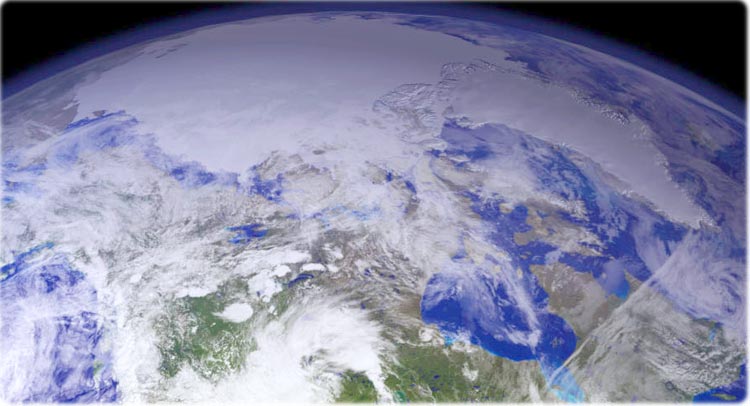
 The Arctic is Melting. Here's Why Cooperation and Diplomacy Get so Complicated. Heatwaves from Greece to Siberia - and fires north of the Arctic Circle - are the latest signs this summer that the Arctic is warming twice as fast as the rest of the world. This once-inhospitable corner of the globe is becoming the next global commons, as the polar ice cap melts. This will have broad implications for Arctic as well as non-Arctic nations, and for local and global ecosystems. But the changing environment, new sea lanes and potential new commercial opportunities also open up global security and diplomacy questions.
The Washington Post
China's Latest Underwater Glider, Sea Fog Detector Make Arctic Debut. China's home-grown underwater glider and sea fog detector will be used for the first time in an arctic expedition, which is expected to enhance China's research in the field and strengthen the country's bargaining position on Arctic issues, expert said. The glider Haiyi, Chinese for "sea wings," was launched in the Bering Sea area on Saturday. Haiyi will be used to measure the ocean's temperature, salinity and depth, said Lin Lina, a member of the expedition team, Beijing Daily reported.
ECNS
 Canadian Coast Guard Opens First Rescue Boat Station in the Arctic. The Canadian Coast Guard has officially opened its first inshore rescue boat station in the Arctic. A celebration was held in Rankin Inlet, Nunavut, on Thursday to mark the event. The station is part of a federally run program to give work experience to post-secondary students. Those who work at the station learn skills such as search and rescue - the Rankin team will work directly with local search and rescue operations.
CBC News
United States, Canada Study Options to Replace Arctic Early Warning Radars. The United States and Canada are beginning to study potential replacements for a jointly operated network of unmanned air defense radars at the top of North America. However, the re-emergence of great power competition could prompt the close allies to develop new missile warning capabilities. The North Warning System consists of a series of 11 long-range AN/FPS-117 radars and 36 short-range AN/FPS-124 systems that together stretch nearly 3,000 miles long and over 14 miles wide from Canada's Newfoundland and Labrador province to Alaska. It was put in place and has been operated and maintained by the North American Aerospace Defense Command since the late 1980s, replacing the Distant Early Warning Line that had been built in the 1950s.
National Defense Magazine
How (and Why) to Teach a Polar Bear to Walk on a Treadmill. You probably won't see this at your local gym. Researchers used furry Fitbit technology to find out how much energy bears use up while walking. Tatqiq seemed unsure about the treadmill. After all, the 580-pound polar bear had never even seen such an apparatus, let alone walked on one. The first time it moved, Tatqiq just stood there and watched herself slide backwards. Nate Wagner, senior zookeeper at the San Diego Zoo, tried enticing her with a dead fish. Tatqiq took a tentative step forward, and then another-she couldn't resist a fish-flavored bribe. Those first few steps marked the start of a five-month training process teaching Tatqiq to walk on a treadmill not for exercise, but for science.
Popular Science
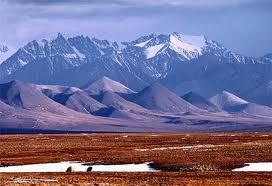 BLM Projects 'Insignificant' Impact from Seismic Work in ANWR. The first sign of oil development in Arctic National Wildlife Refuge is likely to be a 3D seismic survey. A company has applied to do the work, and the government has deemed the application complete. Everything about the proposal to drill in ANWR is controversial. Still, officials from the Bureau of Land Management said this week they see no need to do a full environmental impact statement for the seismic work and expect to approve the request in time for work to begin this winter.
Alaska Public Radio
 The Interagency Arctic Research Policy Committee (IARPC) is seeking comment from the public on the draft newly revised Principles for Conducting Research in the Arctic. The Principles are directed at federally-funded researchers, though they may be useful to academic, state, local, and tribal researchers in the Arctic. Attend our listening session on July 31 at 11 AM Alaska / 3 PM Eastern to learn more and submit your comments:
 year in different locations in the circumpolar area and represent the largest scientific meetings worldwide on circumpolar health. The ICCH congresses serve as the primary source of information exchange and scholarly communication in issues relating to circumpolar health.

 leaders in Washington, D.C. As the largest Earth and space science gathering in the world, the Fall Meeting places you in the center of a global community of scientists drawn from myriad fields of study whose work protects the health and welfare of people worldwide, spurs innovation, and informs decisions that are critical to the sustainability of the Earth.