
Tiny Fine Particles of Global Impact- Radiocarbon Reveals the Origin of Black Carbon. A technical breakthrough was achieved in the source determination of very small carbon samples at the Accelerator Laboratory and the Laboratory of Chronology of the University of Helsinki. The development work is essential in climate research as it facilitates disentangling the origin of black carbon particles. The ratio of modern biomass vs. fossil material present in any carbon containing sample can be determined by radiocarbon dating with a particle accelerator. The amount of the radioactive isotope of carbon (14C, radiocarbon) is halved every 6,000 years, making fossil material entirely free of it.
Phys.org
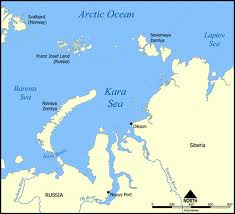 Northern Barents Sea Warms Dramatically. The northern Barents Sea is an Arctic warming hotspot, says Sigrid Lind with the Marine Research Institute in Tromsø, Norway. The changes go from Arctic to Atlantic climate, concludes a study Lind and other scientists have made. The results are published in a recent article in Nature. The ocean researchers have used a compilation of hydrographic observations from 1970 to 2016, investigating the link between changing sea-ice import and the warming hotspot of the northern Barents Sea.
The Barents Observer
Scientists Plan to Rescue the Archaeological Monuments of the Arctic. Scientists representing the Institute of history of material culture Russian Academy of Sciences, intend to save the archaeological sites of the Arctic, suggesting a range of preventive measures. According to the candidate of historical Sciences Vladimir Pitulko, the Institute's specialists had to analyze nearly 50 of the various reports and articles that focus on the process of the disappearance of archaeological sites in the Arctic. Pitulko noted that the cultural heritage of the Arctic region is incredibly informative, however, because of climate change it is currently under threat.
The Silver Telegram
 Coast Guard Moves North for 'Arctic Shield' 2018. The U.S. Coast Guard is on the ground and in the air in northwest Alaska for the summer. On Saturday, the Coast Guard opened its forward operating location in Kotzebue for the 10thyear of Operation Arctic Shield. According to a press release, Arctic Shield is intended "to support Coast Guard missions in response to increased maritime activity in the Arctic." Two MH-60 Jayhawk helicopters and crews are stationed in Kotzebue and will assist with search-and-rescue operations and other maritime emergencies.
Alaska Public Radio




