Archaeologists Race Against Time to Save Sites from Climate Change. An international group of archaeologists-in a race against time to preserve, or at least document, artifacts and sites threatened by coastal erosion, melting glaciers and permafrost thaw-have published the first synthesis of how climate change is affecting Arctic archaeological sites in the journal Antiquity. The group of experts, associated with universities, governments and museums and the US National Park Service from the U.S., Canada, Denmark, Norway, Russia and Scotland, combed through national cultural heritage databases to determine that at least 180,000 archeological sites exist in the Arctic.
Union of Concerned Scientists
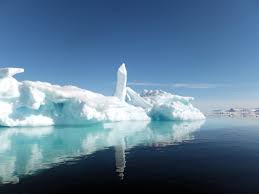 Arctic Ocean Climate Change Due to Fast Warming of Top Ice Layer. After the Atlantic Ocean, it is the turn of Arctic Ocean to experience the warming effect at a faster rate. According to the research study released on Mid-June, scientists warned that the rising sea level in the Antarctic Ocean due to the ice melting in the West Antarctica region and within a decade, more than the expectation, ice melted triple times faster and overall, about 3 trillion tons of Antarctic ice has melted in the past 25 years from 1992. According to a recent study on Arctic Sea, a rapid rise of 1.5 degrees Celsius (2.7 degrees Fahrenheit) has been recorded since 2000 in the northern Barents Sea in Scandinavia. It could be called as the Arctic warming hotspot as commented by a researcher from the Institute of Marine Research in Norway and if it is continued, it would get transformed into an upper part of Atlantic Ocean by the end of the 21st century as indicated by the simulations.
MicroCap Observer
Scientists Study Spring Transition in Bering Strait Waters. The Bering Sea is getting warmer. That's a pretty commonly accepted trend, and in Western Alaska, it looks like a lot less sea ice. But there are lots of details about how this affects marine life that we don't really understand. And scientists are trying to figure some of those out. For the past two summers, University of Alaska Fairbanks oceanographer Seth Danielson has led a team of about 20 scientists aboard the research vessel Sikuliaq, as they study the spring transition in the Bering and Chukchi seas.
Alaska Public Radio
 Artificial Intelligence Used to Track World's Wildlife. Scientists have long struggled with how to measure the effects of climate change on wildlife. This is especially true for birds flying in and out of coastal areas bordering the Arctic Ocean. In the past, researchers depended mainly on information gathered by satellite to follow the movement of birds and animals. But this method can be costly and result in huge amounts of information, which can be difficult to process.
Voice of America