| |
|
|
|
|
|
|
|
|
TOMORROW...online conference
"Covid-19 Impacts in the Arctic"
Zoom webinar begins 5/19/20 at noon Eastern. 10 panels, 20 co-moderators, 46 panelists, including Alaska Governor Dunleavy, and over 800 registrants. Details below.
Can also watch livestream on YouTube (which does not require Zoom), here:
https://www.youtube.com/user/usnavalwarcollege
|
|
Arctic Reading for the Quarantine:
This week's newly shared reports and publicans.
 (Strategic Studies Quarterly). Three-Way Power Dynamics in the Arctic (February 2020).
The Arctic is an emerging region of great significance to US-China-Russia great power competition. This is due to the concentration of natural resources in the Arctic, as well as its future use as a transportation corridor between the Pacific and Atlantic. Russia's dominant position in the Arctic complicates the US-China dyad. While most high-level US security strategies and discourse identify the return of great power competition as the dominant current security paradigm, China and Russia are generally treated in isolation from each other. However, when it comes to the Arctic, China-Russia cooperation is a crucial factor to consider when formulating US strategy. This article places Chinese ambitions in the Arctic in the context of Chinese grand strategy and assesses the basis of, and prospects for, Chinese-Russian Arctic cooperation. It also advances a three-track framework for understanding Chinese-Russian cooperation in the Arctic-economic, military, and political-in which issues of control and trust are contested.
(The Coordination Office for Polar Prediction). Polar Prediction News #14 (April 2020). The 14th issue of the Year of Polar Prediction newsletter provides latest updates on activities within the polar prediction community and features an art-and-science project that evolved from the MOSAiC expedition. But it's not all about MOSAiC. Read the interview with the Norwegian marine ecologist Marit Reigstad, PI of the YOPP-endorsed Nansen Legacy project. Learn about new sea ice and ocean variables in the S2S Forecast Database and find a how-to on publishing YOPP Datasets. Just before traveling has been strongly reduced for much of the remainder of the year, the YOPP Science Workshop and the twelfth PPP Steering Group meeting took place in February. Meeting updates due to the corona pandemic - with two sessions on polar prediction the EGU 2020: Sharing Geoscience Online definitely sticks out as one of the online highlights this year.
|
Unusual Warmth Pours Over North Pole, Potentially Jump-starting Melt Season for Arctic Ice. It was a remarkably cold winter across the High Arctic, at least compared with the abnormally mild winters in many recent years. But the weather pattern has reversed this spring and unusually warm air is surging toward the North Pole, paving the way for the Arctic ice melt season to commence. The sudden pulse of warmth is one of many observed in the Arctic in recent years, which research shows are increasing in frequency due to rapid climate change, accelerating the loss of sea and land ice.
The Washington Post
 The Largest Arctic Science Expedition in History Finds Itself on Increasing Thin Ice. In March 2019, at a crowded happy hour in Boulder, Colorado, I sat listening to Matt Shupe, an atmospheric scientist, describing his decades-long dream that was about to come true. He was sprinting to finish the years of planning and preparations required to freeze an icebreaker into the Arctic Ocean ice as close to the North Pole as it could get. The vessel would drift with the ice for a year as a rotating cast of nearly 600 experts from 20 nations representing dozens of scientific disciplines spread out in research camps around the ship.
Inside Climate News
'Zombie' Fires are Burning the Arctic After Smoldering Under Snow. There is strong evidence that last summer's unprecedented Arctic blazes appear to have smouldered through winter as "zombie fires" and reignited this month. Intense blazes across the frozen north last year led to record carbon emissions that were on a par with those from Belgium, exacerbating the global warming that made the conditions for the fires possible in the first place.
New Scientist
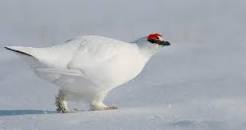 Ptarmigans Trade Off Their Immunity for the Arctic. In the cold season, Arctic inhabitants experience a lack of food, which forces many of them to migrate or sharply reduce their metabolic rate. Nevertheless, some species of birds and mammals not only winter in high latitudes but also remain active. To survive the harsh season, they need to prudently manage their energy, using it primarily for thermoregulation and less for other body functions.
The Arctic
UAF Researchers Use Space-Based Radar to Measure Methane Emissions in Arctic Lakes. One of the many greenhouse gases that is contributing to global warming is methane. Methane is emitted a lot of ways, including from lakes across Alaska. However, studies on how much methane flows up from those lakes into the atmosphere haven't always been very accurate.
KTOO
 New Guideline Launched for Arctic-Specific Risk Assessment in Shipping. A new Arctic-specific risk assessment tool for shipping has been released, something that the international experts behind it hope will become a building block for further knowledge sharing around maritime transportation in the North.The Guideline for Arctic Marine Risk Assessment was put together by the Emergency Prevention, Preparedness and Response (EPPR) Working Group of the Arctic Council, an international forum made up of the world's eight circumpolar nations: Canada, Denmark, Finland, Norway, Sweden, Russia and the United States; and the six Arctic Indigenous groups; the Aleut International Association, the Arctic Athabaskan Council, the Gwich'in Council International, the Inuit Circumpolar Council, the Russian Association of Indigenous Peoples of the North and the Sami Council.
Radio Canada International
CFC Replacements Are a Source of Persistent Organic Pollution in the Arctic. Substances used to replace ozone-depleting chlorofluorocarbons (CFCs) may be just as problematic as their predecessors, a new study shows. In 1987, Canada implemented the Montreal Protocol, a global agreement to protect Earth's ozone layer by ceasing the use of substances like CFCs. Unfortunately, the CFC-replacement substances used to replace them are proving problematic as well, with accumulating levels of their degradation products recently found in the Canadian Arctic.
Science Daily
|
|
Future Events
 COVID-19 Impacts in the Arctic, May 19-20, 2020 (Virtual conference, Zoom). Organized and hosted by the US Naval War College, the Wilson Center's Polar Institute, and the US Arctic Research Commission, this event will be a series of panel conversations on the impacts of the virus in the Arctic. COVID-19 threatens the Arctic region with new challenges to human life, economic prosperity, and the fabric of communities. Ongoing climate and environmental change further compound the challenges facing Arctic communities. In light of these unprecedented, intersecting challenges, the co-hosts will run a virtual conference of panels focusing on Arctic Community health, economic
activities, US Coast Guard Operations, scientific research, international impacts and more. Speakers will include leading voices from Arctic communities, federal and state agencies, academia, international entities, and the private sector.
Registration
is
open
and is
required.
Over 800 confirmed participants.
Confirmed speakers/moderators include (among others)...
Governor Mike Dunleavy, Alaska Governor
AlexAnna Salmon, Village Council President, Village of Igiugig, Alaska
Peter Sköld, Professor, Umea Univ., Sweden
David Balton, Senior Fellow, Polar Institute, Wilson Center
Fran Ulmer, Chair, US Arctic Research Commission
VADM Linda Fagan, Pacific Area Commander, USCG
RADM Todd Sokalzuk, Atlantic Area Deputy Commander, USCG
Mark Myers, former Director, US Geological Survey
John Tichotsky, Alaska Capital
Cara Condit, Exec. Dir. Center for Arctic Study and Policy, USCG Academy
Gail Schubert, President & CEO Bering Straits Native Corp.
Rebecca Pincus, Assoc. Prof. US Naval War College
Gwen Healy, Executive Director, Qaujigiartit Health Research Centre
Tim Gilbert, President/CEO, Maniilaq Assoc.
Robert Onders, Medical Dir. of Comm. and Health Systems Improv., ANTHC
Dalee Sambo Dorough, Int'l Chair, Inuit Circumpolar Council
Tony Penikett, former Premier, Yukon Territory, Canada
Mia Bennett, Assist. Prof., The Univ. of Hong Kong
Anne Budgell, author and radio/TV journalist in Labrador and Newfoundland
Inuuteq Holm Olsen, Minister Penipotentiary & Head of Rep. for Greenland
Friðrik Jónsson
,
Senior Arctic Official (Iceland), Arctic Council
Tim Gallaudet,
Asst. Sec. of Comm. for Oceans & Atm. & Deputy
NOAA Admin.
Simon Stephenson, Head, Arctic Section, National Science Foundation
Bob Foy, Science & Res. Dir., AK Fisheries Sci. Center, NOAA
Thorsten Markus, Cryospheric Science Prog. Manager, NASA
Doug Causey, Professor, Univ. Alaska Anchorage
Sally McFarlane, ARM Climate Research Facility Manager, DOE
Hajo Eicken, Director, Int'l Arctic Research Center, Univ. of Alaska Fairbanks
Brendan Kelly, Executive Director SEARCH, IARC/UAF
Bob Campbell, Research Scientist (was on MOSAiC), GSO, Univ. of RI
Jackie Grebmeier, Professor, CES, Univ. of Maryland
Kaare Erickson, North Slope Science Liaison, Ukpeagvik Inupiat Corp.
Ted Schuur, Professor, Northern Arizona Univ.
Jackie Richter-Menge, UAF and USARC Commissioner
David Kennedy, Global Fellow, Polar Institute, Wilson Center
Sydonia Brett-Harte, Assoc. Sci. Director, Toolik Field Station, UAF
ICESAT-2 Cryospheric Science Hackweek, June 15-19, 2020 (Seattle, Washington USA). ICESat-2 Cryospheric Science Hackweek is a 5-day hackweek to be held at the University of Washington. Participants will learn about technologies used to access and process ICESat-2 data with a focus on the cryosphere. Mornings will consist of interactive lectures, and afternoon sessions will involve facilitated exploration of datasets and hands-on software development.
Arctic Circle Assembly, October 8-11, 2020 (Reykjavik, Iceland). The annual Arctic Circle Assembly is the largest annual international gathering on the Arctic, attended by more than 2000 participants from 60 countries. It is attended by heads of states and governments, ministers, members of parliaments, officials, experts, scientists, entrepreneurs, business leaders, indigenous representatives, environmentalists, students, activists and others from the growing international community of partners and participants interested in the future of the Arctic.
3rd Arctic Science Ministerial, November 21-22, 2020 (Toyko, Japan). Since the last Arctic Science Ministerial in 2018, changes in the Arctic ecosystem and the resulting impacts locally and globally have been severely felt. While the reasons for these changes in climate largely stem from activities outside of the Arctic, the Arctic is warming at a rate of nearly double the global average. Considering the need for climate change mitigation, adaptation, and repair measures, the relevance of an international Arctic Science Ministerial has never been greater. It is necessary to strengthen scientific cooperation and collaboration among both Arctic and non-Arctic States in order to develop our understanding of the rapid changes impacting the Arctic. The First Arctic Science Ministerial (ASM1) was hosted by the United States in 2016, and two years later, the Second Arctic Science Ministerial (ASM2) was co-hosted by Germany, Finland, and the European Commission. The Third Arctic Science Ministerial will be co-hosted by Iceland and Japan.
Arctic Science Summit Week, March 20-26, 2021 (Lisbon, Portugal). The Portuguese Minister of Science, Technology and Higher Education, the Portuguese Foundation for Science and Technology (FCT) and the Local Organizing Committee will host the Arctic Science Summit Week 2021. The Conference is organized by FCT, Ciência Viva, AIR Center, the Portuguese Arctic Community and by IASC and partners. Framed by the overarching theme for the Science Conference "The Arctic: Regional Changes, Global Impacts," Lisbon invites International experts on the Arctic and Indigenous Peoples to discuss the "New Arctic" and also its impacts and interactions to and with the lower latitudes.
Save the Date: 2nd Symposium on Polar Microbes and Viruses, May 3-6, 2021 (Hanko, Finland). Organizers announce, that due to the coronavirus outbreak, the 2nd Symposium on Polar Microbes and Viruses has been postponed to 2021. This symposium will bring together molecular microbial ecologists specializing in different organism groups to share our latest results and discuss methodological problems, as well as future prospects in the field, including practical international collaborations. The environmental focus will be on cryospheric environments including sea ice, glaciers, ice sheets, and permafrost, but excellent research in other polar environments is also invited. The methods to be discussed will focus on 'omics' techniques, ranging from single cells to metagenomes, but research using additional methods is encouraged as well.
|
| 
  
4350 N. Fairfax Drive, Suite 510
Arlington, VA 22203, USA
External links in this publication, and on the USARC's World Wide Web site (
www.arctic.gov) do not constitute endorsement by the US Arctic Research Commission of external Web sites or the information, products or services contained therein. For other than authorized activities, the USARC does not exercise any editorial control over the information you may find at these locations. These links are provided consistent with the stated purpose of this newsletter and the USARC Web site.
|
|
| |
|
|
| |
|