Rapid Changes in the High Arctic. A new study led by an INSTAAR postdoctoral researcher has found dramatic shifts in the ecosystem of a remote archipelago in the Arctic Ocean in response to recent climate change. Published today in the open-access journal Scientific Reports, the study finds explicit links between changes in biological systems and climate change in the Arctic. In line with other studies, it shows that the high Arctic, which is warming faster than any other region on Earth, is already undergoing rapid ecosystem change and will continue to transform in the future.
Phys.org
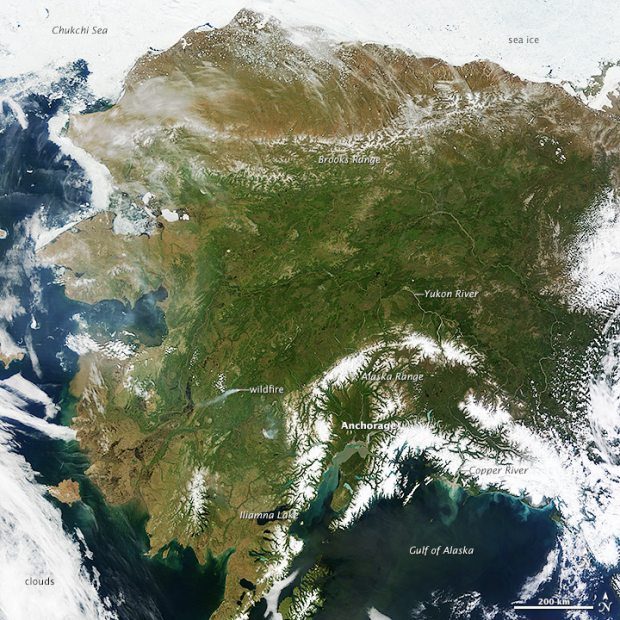 Shock and Thaw-Alaskan Sea Ice Just Took a Steep, Unprecedented Dive. April should be prime walrus hunting season for the native villages that dot Alaska's remote western coast. In years past the winter sea ice where the animals rest would still be abundant, providing prime targets for subsistence hunters. But this year sea-ice coverage as of late April was more like what would be expected for mid-June, well into the melt season. These conditions are the continuation of a winter-long scarcity of sea ice in the Bering Sea-a decline so stark it has stunned researchers who have spent years watching Arctic sea ice dwindle due to climate change.
Scientific American
Phytoplankton Assemblages in Coastal Waters Remain Productive, Despite Variable Environmental Conditions. They form the basis of the Arctic food web -- and are extremely tough: even when the water becomes more acidic and the available light or temperatures change, various phytoplankton assemblages in the Arctic demonstrate undiminished productivity and biodiversity. This was the main finding presented in a study by researchers at the Alfred Wegener Institute, which they jointly release with their Canadian colleagues advanced online in the journal Nature Climate Change.
Science Daily
Investing in Spill Response and Containment. The low oil price has intensified the industry's focus on improving oil recovery and reducing costs, but while these initiatives have been in the spotlight, somewhat in the shadows is a vital body of work that is advancing technology to improve operations by mitigating risk. Over the past eight years, there has been considerable investment in spill response and containment technology development that has brought about significant advances. Out of these initiatives have emerged some noteworthy new products and some very interesting R&D efforts that are aimed at managing unplanned hydrocarbon discharges in new and exciting ways.
Oil and Gas Investor
Snow in the Andes as Clean as Canadian Arctic: Study. Snow covering the Andes mountains is as clean as the Canadian Arctic, scientists said Friday after hundreds of tests to determine the presence of black carbon deposits or other pollutants. Following extensive tests along the vast mountain range, which stretches about 7,000 kilometers (4,300 miles) along the western coast of Latin America, experts said they found less than 14 nanograms of soot per gram of snow.
Phys.org
Arctic Social Science...a new assessment, funded by NSF, of the goals, potentials and needs in the context of a rapidly changing Arctic.
A final report has been released (see
here
) on the Arctic Horizons' process, which was a series of six social science community workshops that took place in 2016-2017 across the U.S. to examine the state of Arctic social science research and to "assemble the diversity, needs, and priorities of the Arctic social sciences and its related disciplines and research approaches." Key recommendations include: promote, support, and enact Indigenous scholarship; promote the information sovereignty of Arctic Indigenous communities in research; pursue international and interdisciplinary research; mentor the next generation of northern scholars and promote equity in research; address rapid loss of cultural heritage, language and prehistory; and invest in data management. Learn more about this inclusive process at the Arctic Horizon website
http://www.arctichorizons.org
.
potentials and needs in the context of a rapidly changing Arctic.
A final report has been released (see
here
) on the Arctic Horizons' process, which was a series of six social science community workshops that took place in 2016-2017 across the U.S. to examine the state of Arctic social science research and to "assemble the diversity, needs, and priorities of the Arctic social sciences and its related disciplines and research approaches." Key recommendations include: promote, support, and enact Indigenous scholarship; promote the information sovereignty of Arctic Indigenous communities in research; pursue international and interdisciplinary research; mentor the next generation of northern scholars and promote equity in research; address rapid loss of cultural heritage, language and prehistory; and invest in data management. Learn more about this inclusive process at the Arctic Horizon website
http://www.arctichorizons.org
.