| |
|
|
|
|
|
|
|
 COVID-19 Impacts in the Arctic, May 19-20, 2020 (Virtual conference, Zoom). Organized and hosted by the US Naval War College, the Wilson Center's Polar Institute, and the US Arctic Research Commission, this event will be a series of panel conversations on the impacts of the virus in the Arctic. COVID-19 threatens the Arctic region with new challenges to human life, economic prosperity, and the fabric of communities. Ongoing climate and environmental change further compound the challenges facing Arctic communities. In light of these unprecedented, intersecting challenges, the co-hosts will run a virtual conference of panels focusing on Arctic Community health, economic
activities, US Coast Guard Operations, scientific research, international impacts and more. Speakers will include leading voices from Arctic communities, federal and state agencies, academia, international entities, and the private sector.
A
1000 confirmed Zoom registrants.
If you didn't register to join by for Zoom, and you just want to watch the conference (today and tomorrow), do so via livestream on YouTube at
this link
Confirmed speakers/moderators include (among others)...
Governor Mike Dunleavy, Alaska Governor
AlexAnna Salmon, Village Council President, Village of Igiugig, Alaska
Peter Sköld, Professor, Umea Univ., Sweden
David Balton, Senior Fellow, Polar Institute, Wilson Center
Fran Ulmer, Chair, US Arctic Research Commission
VADM Linda Fagan, Pacific Area Commander, USCG
RADM Todd Sokalzuk, Atlantic Area Deputy Commander, USCG
Mark Myers, former Director, US Geological Survey
John Tichotsky, Alaska Capital
Cara Condit, Exec. Dir. Center for Arctic Study and Policy, USCG Academy
Gail Schubert, President & CEO Bering Straits Native Corp.
Rebecca Pincus, Assoc. Prof. US Naval War College
Gwen Healy, Executive Director, Qaujigiartit Health Research Centre
Tim Gilbert, President/CEO, Maniilaq Assoc.
Robert Onders, Medical Dir. of Comm. and Health Systems Improv., ANTHC
Dalee Sambo Dorough, Int'l Chair, Inuit Circumpolar Council
Tony Penikett, former Premier, Yukon Territory, Canada
Mia Bennett, Assist. Prof., The Univ. of Hong Kong
Anne Budgell, author and radio/TV journalist in Labrador and Newfoundland
Inuuteq Holm Olsen, Minister Penipotentiary & Head of Rep. for Greenland
Friðrik Jónsson,
Senior Arctic Official (Iceland), Arctic Council
Tim Gallaudet,
Asst. Sec. of Comm. for Oceans & Atm. & Deputy
NOAA Admin.
Simon Stephenson, Head, Arctic Section, National Science Foundation
Bob Foy, Science & Res. Dir., AK Fisheries Sci. Center, NOAA
Thorsten Markus, Cryospheric Science Prog. Manager, NASA
Doug Causey, Professor, Univ. Alaska Anchorage
Sally McFarlane, ARM Climate Research Facility Manager, DOE
Hajo Eicken, Director, Int'l Arctic Research Center, Univ. of Alaska Fairbanks
Brendan Kelly, Executive Director SEARCH, IARC/UAF
Bob Campbell, Research Scientist (was on MOSAiC), GSO, Univ. of RI
Jackie Grebmeier, Professor, CES, Univ. of Maryland
Kaare Erickson, North Slope Science Liaison, Ukpeagvik Inupiat Corp.
Ted Schuur, Professor, Northern Arizona Univ.
Jackie Richter-Menge, UAF and USARC Commissioner
David Kennedy, Global Fellow, Polar Institute, Wilson Center
Sydonia Brett-Harte, Assoc. Sci. Director, Toolik Field Station, UAF
Nagruk Harcharek, General Manager, UIC Science
|
|
Arctic Reading for the Quarantine:
This week's newly shared reports and publicans.
 (Strategic Studies Quarterly). Three-Way Power Dynamics in the Arctic (February 2020).
The Arctic is an emerging region of great significance to US-China-Russia great power competition. This is due to the concentration of natural resources in the Arctic, as well as its future use as a transportation corridor between the Pacific and Atlantic. Russia's dominant position in the Arctic complicates the US-China dyad. While most high-level US security strategies and discourse identify the return of great power competition as the dominant current security paradigm, China and Russia are generally treated in isolation from each other. However, when it comes to the Arctic, China-Russia cooperation is a crucial factor to consider when formulating US strategy. This article places Chinese ambitions in the Arctic in the context of Chinese grand strategy and assesses the basis of, and prospects for, Chinese-Russian Arctic cooperation. It also advances a three-track framework for understanding Chinese-Russian cooperation in the Arctic-economic, military, and political-in which issues of control and trust are contested.
(The Coordination Office for Polar Prediction). Polar Prediction News #14 (April 2020). The 14th issue of the Year of Polar Prediction newsletter provides latest updates on activities within the polar prediction community and features an art-and-science project that evolved from the MOSAiC expedition. But it's not all about MOSAiC. Read the interview with the Norwegian marine ecologist Marit Reigstad, PI of the YOPP-endorsed Nansen Legacy project. Learn about new sea ice and ocean variables in the S2S Forecast Database and find a how-to on publishing YOPP Datasets. Just before traveling has been strongly reduced for much of the remainder of the year, the YOPP Science Workshop and the twelfth PPP Steering Group meeting took place in February. Meeting updates due to the corona pandemic - with two sessions on polar prediction the EGU 2020: Sharing Geoscience Online definitely sticks out as one of the online highlights this year.
|
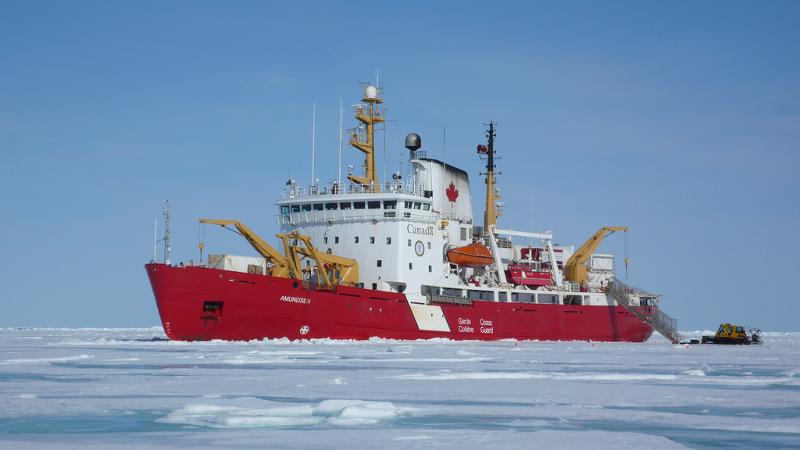 The Coronavirus Pandemic Has Shortened CCGS Amundsen's Arctic Research Season. The CCGS Amundsen, Canada's preeminent research icebreaker, will be plying Arctic waters again this coming summer, but its season will be shorter and will look very different from previous years due to the ongoing pandemic. Originally scheduled to depart from its berth in Quebec City on July 3 for a 114-day voyage, the vessel will now set sail two weeks later. "We were doing the whole Canadian Arctic archipelago, the Beaufort Sea, Labrador Sea, Baffin Bay, so it was a huge expedition," said Camille Wilhelmy, logistics and administrative coordinator for Amundsen Science.
Arctic Today
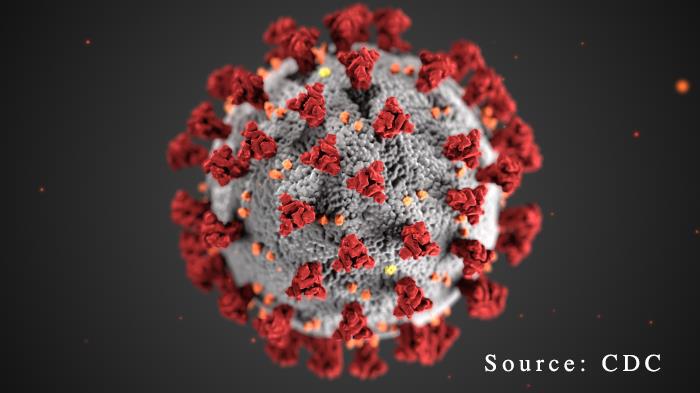 Kotzebue Sees First Positive Case of COVID-19. An individual has tested positive for COVID-19 in Kotzebue. This is the first test-positive case to be confirmed in the Arctic. "The individual was tested on May 19 upon arrival into Kotzebue and immediately self-isolated," noted Maniilaq Association in a written statement the same day. "Maniilaq is in contact with the state of Alaska Section of Epidemiology to ensure precautions are taken to protect anyone who may have been in close contact with the individual."
The Arctic Sounder
 COVID-19 Could Delay Kingdom of Denmark's Arctic Strategy. The Kingdom of Denmark, made up of Denmark and the two autonomous territories of Greenland and the Faroe Islands, released their current strategy in 2011. The document outlined the Kingdom's main goal as development of the Arctic for Arctic residents, peaceful cooperation and avoiding militarization in the Arctic.
Radio Canada International
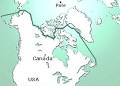 Once Again Into the Northwest Passage. After two unsuccessful tries, a hardy band of undergraduate students conducted a successful Arctic research and outreach expedition through the Northwest Passage. Over the past 3 years, researchers and undergraduate students at the University of Illinois at Chicago (UIC) have prepared and joined the Northwest Passage Project, a research and cultural expedition to the Northwest Passage funded by the National Science Foundation and the Heising-Simons Foundation. Participants in the project are seeking to understand how this region is changing as a result of climate change, with the aim of further spreading awareness about the severity and global effects of these changes.
EOS
|
|
Future Events
ICESAT-2 Cryospheric Science Hackweek, June 15-19, 2020 (Seattle, Washington USA). ICESat-2 Cryospheric Science Hackweek is a 5-day hackweek to be held at the University of Washington. Participants will learn about technologies used to access and process ICESat-2 data with a focus on the cryosphere. Mornings will consist of interactive lectures, and afternoon sessions will involve facilitated exploration of datasets and hands-on software development.
Arctic Circle Assembly, October 8-11, 2020 (Reykjavik, Iceland). The annual Arctic Circle Assembly is the largest annual international gathering on the Arctic, attended by more than 2000 participants from 60 countries. It is attended by heads of states and governments, ministers, members of parliaments, officials, experts, scientists, entrepreneurs, business leaders, indigenous representatives, environmentalists, students, activists and others from the growing international community of partners and participants interested in the future of the Arctic.
3rd Arctic Science Ministerial, November 21-22, 2020 (Toyko, Japan). Since the last Arctic Science Ministerial in 2018, changes in the Arctic ecosystem and the resulting impacts locally and globally have been severely felt. While the reasons for these changes in climate largely stem from activities outside of the Arctic, the Arctic is warming at a rate of nearly double the global average. Considering the need for climate change mitigation, adaptation, and repair measures, the relevance of an international Arctic Science Ministerial has never been greater. It is necessary to strengthen scientific cooperation and collaboration among both Arctic and non-Arctic States in order to develop our understanding of the rapid changes impacting the Arctic. The First Arctic Science Ministerial (ASM1) was hosted by the United States in 2016, and two years later, the Second Arctic Science Ministerial (ASM2) was co-hosted by Germany, Finland, and the European Commission. The Third Arctic Science Ministerial will be co-hosted by Iceland and Japan.
Arctic Science Summit Week, March 20-26, 2021 (Lisbon, Portugal). The Portuguese Minister of Science, Technology and Higher Education, the Portuguese Foundation for Science and Technology (FCT) and the Local Organizing Committee will host the Arctic Science Summit Week 2021. The Conference is organized by FCT, Ciência Viva, AIR Center, the Portuguese Arctic Community and by IASC and partners. Framed by the overarching theme for the Science Conference "The Arctic: Regional Changes, Global Impacts," Lisbon invites International experts on the Arctic and Indigenous Peoples to discuss the "New Arctic" and also its impacts and interactions to and with the lower latitudes.
Save the Date: 2nd Symposium on Polar Microbes and Viruses, May 3-6, 2021 (Hanko, Finland). Organizers announce, that due to the coronavirus outbreak, the 2nd Symposium on Polar Microbes and Viruses has been postponed to 2021. This symposium will bring together molecular microbial ecologists specializing in different organism groups to share our latest results and discuss methodological problems, as well as future prospects in the field, including practical international collaborations. The environmental focus will be on cryospheric environments including sea ice, glaciers, ice sheets, and permafrost, but excellent research in other polar environments is also invited. The methods to be discussed will focus on 'omics' techniques, ranging from single cells to metagenomes, but research using additional methods is encouraged as well.
|
| 
  
4350 N. Fairfax Drive, Suite 510
Arlington, VA 22203, USA
External links in this publication, and on the USARC's World Wide Web site (
www.arctic.gov) do not constitute endorsement by the US Arctic Research Commission of external Web sites or the information, products or services contained therein. For other than authorized activities, the USARC does not exercise any editorial control over the information you may find at these locations. These links are provided consistent with the stated purpose of this newsletter and the USARC Web site.
|
|
| |
|
|
| |
|