Russia Says Its Sea-Based Nuclear Power Plant is Safe. Critics Call it a 'Floating Chernobyl.' If a Russian state-owned company has its way, remote regions of the world will soon see giant, floating nuclear reactors pumping power to port cities and drilling platforms in a real-life version of the Soviet reversal joke: In Russia, 70-megawatt nuclear reactor comes to you. The reactor in question is called Akademik Lomonosov. Once the barge is wired into the electrical grid in the northern town of Pevek in 2019, it will be the world's northernmost nuclear reactor, capable of powering a town of 100,000 people (almost the population of Green Bay, Wis.) with what its manufacturer, Rosatom, calls "a great margin of safety" that is "invincible for tsunamis and natural disaster."
The Washington Post
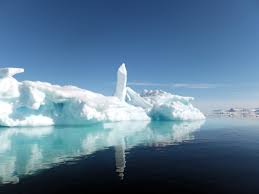 New Research Shows Rapid Ecosystem Changes in the High Arctic. A new study led by an INSTAAR postdoctoral researcher has found dramatic shifts in the ecosystem of a remote archipelago in the Arctic Ocean in response to recent climate change Published today in the open-access journal Scientific Reports, the study finds explicit links between changes in biological systems and climate change in the Arctic. In line with other studies, it shows that the high Arctic, which is warming faster than any other region on Earth, is already undergoing rapid ecosystem change and will continue to transform in the future.
Institute of Arctic and Alpine Research
UN Committee Moves Toward Banning Heavy Fuel Oil in the Arctic. The United Nations group that regulates international shipping recently
decided to move toward banning the use of heavy fuel oil in the Arctic. The thick oil presents unique challenges for cleanup in the event of a spill, especially in cold temperatures. Environmental groups are cheering the decision, but the ban is still a ways from becoming a reality. Heavy fuel oil, also called HFO, is relatively cheap. Which is why it's commonly used by big commercial ships around the world, and to a lesser but still significant degree in the Arctic.
Alaska Public Radio
Survival of First Alaskans Linked to Breast Milk. A new study published in the Proceedings of the National Academy of Sciences offers some clues into how the first Alaskans adapted to their new home. The story of how the first Alaskans survived is really a story about moms and how they adapted to care for their babies in a harsh, new world. For thousands of years, the narrator of the PBS documentary 'Great Human Odyssey,' explained, humans fought impossible odds.
Arctic Social Science...a new assessment, funded by NSF, of the goals, potentials and needs in the context of a rapidly changing Arctic.
A final report has been released (see
here
) on the Arctic Horizons' process, which was a series of six social science community workshops that took place in 2016-2017 across the U.S. to examine the state of Arctic social science research and to "assemble the diversity, needs, and priorities of the Arctic social sciences and its related disciplines and research approaches." Key recommendations include: promote, support, and enact Indigenous scholarship; promote the information sovereignty of Arctic Indigenous communities in research; pursue international and interdisciplinary research; mentor the next generation of northern scholars and promote equity in research; address rapid loss of cultural heritage, language and prehistory; and invest in data management. Learn more about this inclusive process at the Arctic Horizon website
http://www.arctichorizons.org
.
potentials and needs in the context of a rapidly changing Arctic.
A final report has been released (see
here
) on the Arctic Horizons' process, which was a series of six social science community workshops that took place in 2016-2017 across the U.S. to examine the state of Arctic social science research and to "assemble the diversity, needs, and priorities of the Arctic social sciences and its related disciplines and research approaches." Key recommendations include: promote, support, and enact Indigenous scholarship; promote the information sovereignty of Arctic Indigenous communities in research; pursue international and interdisciplinary research; mentor the next generation of northern scholars and promote equity in research; address rapid loss of cultural heritage, language and prehistory; and invest in data management. Learn more about this inclusive process at the Arctic Horizon website
http://www.arctichorizons.org
.