|
|
|
|
|
|
|
|
** New this week ** Polar Research Board Fall Meeting, 2:00 pm EDT on November 13, 2020 (virtual). The Polar Research Board will meet for their fall meeting to receive polar program updates from various federal agencies, the White House, the Arctic Funders Collaborative, and a report from the workshop Understanding and Responding to Global Health Security Risks from Microbial Threats in the Arctic.
|
Media
Moscow to Host Arctic and Antarctic Days Forum at the End of November. The international forum, Arctic and Antarctic Days in Moscow, will be held from November 25-27 via videoconference. Russia will present the program for its chairmanship of the Arctic Council in 2021-2023. The event will include an international scientific congress. The Russian Antarctic research station Vostok will be available for videoconferencing with the participants. This year's forum organizers are the Russian Ministry of Natural Resources and Environment and the Ministry for the Development of the Russian Far East and Arctic. The Arctic
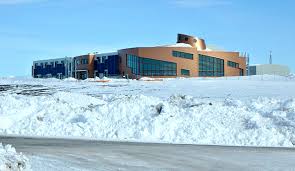 Canadian High Arctic Research Station Gains New Leadership. The Canadian High Arctic Research Station in Cambridge Bay has been largely shuttered since March to reduce the risk of spreading COVID-19. But now, Polar Knowledge Canada, the federal agency that oversees CHARS, has a new president and chief executive officer, a new board chairman and three new board members to lead the facility into 2021. Nunatsiaq Online
Tracking the Effects of Climate Change on Arctic Animals is no Easy Task. The climate in the Arctic is rapidly changing and new research offers the first large-scale look at how animal species in the region are adapting. Built by a team of international researchers, the Arctic Animal Movement Archive pulls together more than 200 animal tracking studies by universities, governments and conservationists from the last 30 years. And a large amount of data came from here in Canada. "We worked for three years to ... bring a lot of people together to create the archive," said Gil Bohrer, a civil and environmental engineer at Ohio State University and one of the lead authors of the study, which was recently published in the journal Science. CBC News
 Hunger in the Arctic Prompts Focus on Causes, Not Symptoms. The region of Nunatsiavut in Northern Labrador, Canada, is an Arctic paradise-expansive wild landscapes, rocky fjords, and pristine glacial-fed rivers rushing dramatically below towering mountain ridge lines. Nunatsiavut, in Inuttitut, translates into "Our Beautiful Land." But when it comes to food security among the couple thousands of Inuit living there, things don't look so pretty. The communities of Nunatsiavut, similar to other communities across Inuit Nunangat, the homeland of Inuit, are plagued by excessive food insecurity rates, which are estimated to be five times the level of food insecurity measured for households in Canada. NewsWise
 |
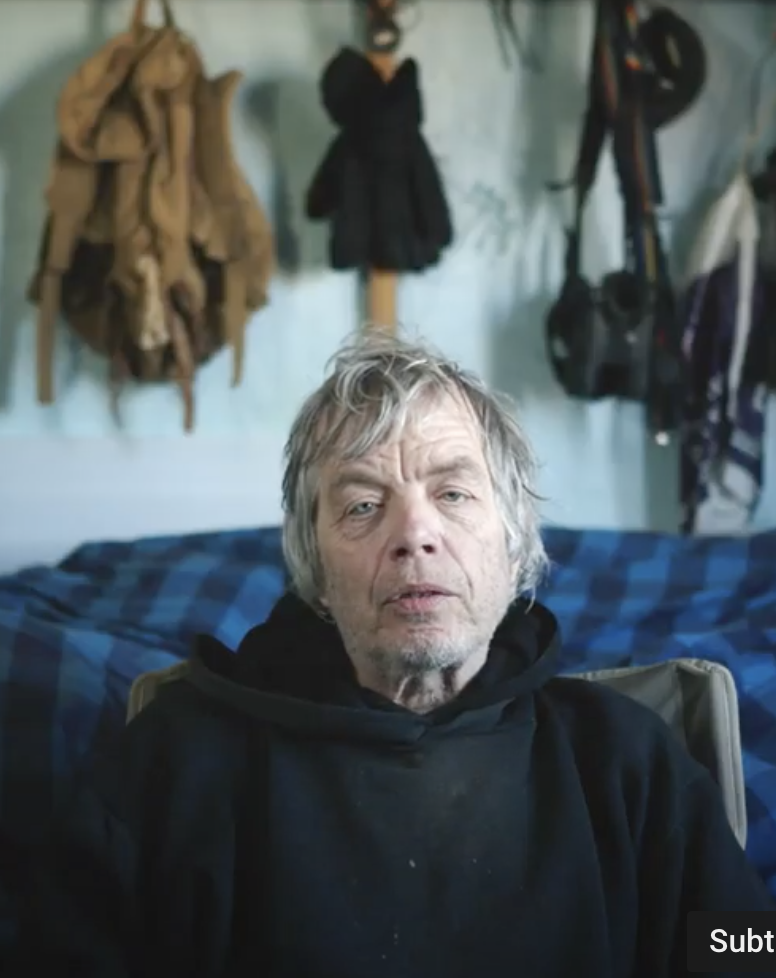
| | George Divoky in "Watching the Earth Melt Away" (by J. McNally) |
Monitoring a changing Arctic: 46 years in a row. Despite the challenges of conducting Arctic field work this summer, ornithologist Dr. George Divoky, with the support of the North Slope Borough's Department of Wildlife Management, again managed to safely study the Black Guillemot bird colony on Cooper Island, southeast of Utqiagvik. His consistency and tenacity in Arctic research are amazing and touching. A short (15 minute) documentary (by Joe McNally) titled "Watching the Earth Melt Away," about Divoky's research, and his bearing witness, can be viewed on YouTube, here. And Divoky's website, "Friends of Cooper Island, is here.
Addressing Dramatic Changes in the Bering Strait Region Requires Governance Adaptations. Authored by Fran Ulmer. These words describe the extraordinary changes happening in the Arctic region. The Arctic of today does not resemble the Arctic of fifty years ago, and the Arctic of 2070 will be different still, based on everything we know now. Warmer temperatures on land and in the ocean, retreating sea ice and glaciers, thawing permafrost, rapidly changing ecosystems, range expansion of novel species and stress in native species, changing ocean chemistry, and altered seasons all contribute to significant alteration of a region in an extremely compressed timescale. At the same time, globalization and the increasing international interest in the region add new pressures for access, development and geopolitical positioning in the Arctic. Concerns about the implications and impacts of that intensified engagement generate even more anxiety about the transformation to a brand-new Arctic in the 21st Century. Belfer Center for Science and International Affairs
|
|
Future Events
The Arctic Resilience Forum: Gender, November 18, 2020 (virtual). The Arctic Resilience Forum will be convened every Wednesday from 11:30am - 1:00pm (EST) over a series of ten weeks, beginning October 7, 2020. The online series, organized by the Arctic Council and the Harvard Kennedy School, will engage the broadest audience possible in conversations about how to build the resilience of Arctic communities and ecosystems across a variety of focus areas.
** New this week ** How Ice and Ice Breakup Shape Subarctic Streams, November 20, 2020 (virtual). Lina Polvi Sjöberg is an associate professor in physical geography with focus on rivers and streams at the Department of Ecology and Environmental Science. She examines which processes steer how Swedish streams look- past glaciation, current floods or winter ice? Her research also examines which physical factors, including local geomorphology, geomorphic complexity, and larger landscape-scale factors, affect how the ecology of streams recover after restoration. Arcum will hold an online seminar in November where she will talk about the importance of ice and ice break-up in Arctic streams. This event is organized by the Arctic Research Center at Umeå University.
The Arctic Resilience Forum: Socio-Ecological Resilience, November 25, 2020 (virtual). The Arctic Resilience Forum will be convened every Wednesday from 11:30am - 1:00pm (EST) over a series of ten weeks, beginning October 7, 2020. The online series, organized by the Arctic Council and the Harvard Kennedy School, will engage the broadest audience possible in conversations about how to build the resilience of Arctic communities and ecosystems across a variety of focus areas.
** New this week ** Arctic Futures Symposium 2020, November 30- December 2, 2020 (virtual). Arctic Futures aims to create discussions and best practice exchanges between Arctic stakeholders with diverse backgrounds and perspectives. This year's symposium will focus on: Arctic challenges; Arctic policies of the EU, Arctic states, and Arctic stakeholders; Arctic community needs and preparedness; pollution, climate change and biodiversity: challenges and solutions; community resilience through empowerment; a uniquely Arctic entrepreneurship and investment culture; and, the EU's engagement in the Arctic and implementing the EU green deal.
The Arctic Resilience Forum: Financing Resilience, December 2, 2020 (virtual). The Arctic Resilience Forum will be convened every Wednesday from 11:30am - 1:00pm (EST) over a series of ten weeks, beginning October 7, 2020. The online series, organized by the Arctic Council and the Harvard Kennedy School will engage the broadest audience possible in conversations about how to build the resilience of Arctic communities and ecosystems across a variety of focus areas.
Arctic Change 2020, December 7-10, 2020 (virtual). ArcticNet's international Arctic science conference takes place every 3 years, bringing together researchers and partners from around the world. This year the conference will be virtual. Building on the success of our previous Annual Scientific Meeting while facing the realities of our times, the organizers are pulling out all the stops to reach a bigger audience than ever before. The ArcticNet Network of Centers of Excellence and their partners warmly invite the global Arctic community to join them-from wherever you are-at the Arctic Change 2020 Virtual Conference.
The Arctic Resilience Forum: Infrastructure, December 9, 2020 (virtual). The Arctic Resilience Forum will be convened every Wednesday from 11:30am - 1:00pm (EST) over a series of ten weeks, beginning October 7, 2020. The online series, organized by the Arctic Council and the Harvard Kennedy School, will engage the broadest audience possible in conversations about how to build the resilience of Arctic communities and ecosystems across a variety of focus areas.
** New this week ** Creeping Security in the Arctic? 12:00 pm CET on December 18, 2020 (virtual). Niklas Eklund is an associate professor at the Department of Political Science and Deputy Director at the Arctic Research Center at Umeå University. His research is on public administration, security, leadership and crisis management. He has also contributed to the 'Handbook of Arctic Security' in which he introduce Sweden from a state-based security perspective. In December, Arcum is arranging an online seminar within the Umeå Arctic Seminar series, where Niklas will talk about the creeping securitization in the Arctic. This event is organized by the Arctic Research Center at Umeå University.
Alaska Native Perspectives of an Evolving Arctic Environment, 12:00 pm AKST on January 15, 2021. Join AKWorld for this discussion of climate, security, economic opportunity, science, resilience and other implications of a changing Arctic. Whether you are in Florida, California, Alaska, or another state in-between, you have experienced significant weather changes amplified by a rapidly changing Arctic. Come, listen, and join the conversation with two Alaska Native women who have firsthand knowledge and understanding of this important issue for Alaska, the United States, and the World.
2021 Alaska Marine Science Symposium, January 26-28, 2021 (virtual). The Alaska Marine Science Symposium (AMSS) has been bringing together scientists, educators, resource managers, students, and interested public for over twenty years to discuss the latest marine research being conducted in Alaskan waters. Over 700 people attend this 4-day long conference held annually during the month of January. Each day of the conference highlights important Alaskan marine ecosystems: Gulf of Alaska (Tuesday), Bering Sea & Aleutian Islands (Wednesday), and the Arctic (Thursday). Research topics discussed range from ocean physics, fishes and invertebrates, seabirds, marine mammals, to local traditional knowledge. Since its inception, NPRB has been a proud sponsor and one of the leading organizers of AMSS.
Arctic Frontiers 2021, February 1-4, 2021 (virtual). Arctic Frontiers started out in 2006 assembling the first global scientific conference on economic, societal and environmental sustainable growth in the north. In February 2021, we will arrange the 15th conference with the theme "Building Bridges". The conference has a pan arctic perspective and builds new partnerships across nations, generations and ethnic groups. Arctic Frontiers provides a forum for dialogue and communication between science, government and industry in the Arctic.
ALCOM's Arctic Senior Leader Summit, 2021, March 10-11, 2021 (virtual). In support of U.S. Northern Command's Arctic mission, please consider joining Lt General David Krumm, USAF, Commander Alaska Command, Alaska NORAD Region and 11th Air Force and a host of Defense and Security Leaders for Arctic Senior Leader Summit 2021 (ASLS 21) 10-11 March 2021. This event is oriented to addressing senior leader strategic views on the developing range of security and defense matters affecting the Arctic region. Due to the on-going complications of in-person meetings as a result of COVID 19, Arctic Senior Summit 2021 will be conducted via video conference. Day 1 of ASLS 2021 is focused on plenary presentations and follow-on strategic discussions. Day 2 ASLS 2021 is a planned tabletop exercise. Further details and registration to be provided soon via ASLS 21 planning team at the Arctic Domain Awareness Center. Please see: https://arcticdomainawarenesscenter.org/Events for more details or email ADAC center leadership at https://arcticdomainawarenesscenter.org/Team.
Arctic Science Summit Week, March 20-26, 2021 (Lisbon, Portugal). The Portuguese Minister of Science, Technology and Higher Education, the Portuguese Foundation for Science and Technology (FCT) and the Local Organizing Committee will host the Arctic Science Summit Week 2021. The Conference is organized by FCT, Ciência Viva, AIR Center, the Portuguese Arctic Community and by IASC and partners. Framed by the overarching theme for the Science Conference "The Arctic: Regional Changes, Global Impacts," Lisbon invites International experts on the Arctic and Indigenous Peoples to discuss the "New Arctic" and also its impacts and interactions to and with the lower latitudes.
2nd Symposium on Polar Microbes and Viruses, May 3-6, 2021 (Hanko, Finland). Organizers announce, that due to the coronavirus outbreak, the 2nd Symposium on Polar Microbes and Viruses has been postponed to 2021. This symposium will bring together molecular microbial ecologists specializing in different organism groups to share our latest results and discuss methodological problems, as well as future prospects in the field, including practical international collaborations. The environmental focus will be on cryospheric environments including sea ice, glaciers, ice sheets, and permafrost, but excellent research in other polar environments is also invited. The methods to be discussed will focus on 'omics' techniques, ranging from single cells to metagenomes, but research using additional methods is encouraged as well.
3rd Arctic Science Ministerial, May 8-9, 2021 (Toyko, Japan). The Japanese and Icelandic organizers of this ministerial continue to plan for an in-person ministerial, in Tokyo, but have moved the dates from November 21-22, 2020 to May 8-9, 2021 because of Covid-19. Since the last Arctic Science Ministerial in 2018, changes in the Arctic ecosystem and the resulting impacts locally and globally have been severely felt. Considering the need for climate change mitigation, adaptation, and repair measures, the relevance of an international Arctic Science Ministerial has never been greater. It is necessary to strengthen scientific cooperation and collaboration among both Arctic and non-Arctic States in order to develop our understanding of the rapid changes impacting the Arctic. The First Arctic Science Ministerial (ASM1) was hosted by the United States in 2016, and two years later, the Second Arctic Science Ministerial (ASM2) was co-hosted by Germany, Finland, and the European Commission. ASM3 will be co-hosted by Iceland and Japan.
The 2021 Alaska Marine Science Symposium (AMSS), January 26-28, 2021 (Virtual). Oral and poster presentations will continue to be the main focus of AMSS 2021. Showcasing Alaska's marine science remains the utmost priority despite the challenges we all have faced during the COVID-19 pandemic. We are also exploring some additional events (virtual panels, social hours, etc.) surrounding the virtual launch of AMSS 2021, so stay tuned! We are looking for panel ideas Topic ideas may include but are not limited to: coastal resiliency, ocean noise, marine debris, perspectives on changing ecosystems, co-production of knowledge, economics of climate change, and the future of the Arctic Research Post-COVID in local communities. (submit here: https://alaskamarinescience.org/2021-panels).
|
|

  
4350 N. Fairfax Drive, Suite 510
Arlington, VA 22203, USA
External links in this publication, and on the USARC's World Wide Web site ( www.arctic.gov) do not constitute endorsement by the US Arctic Research Commission of external Web sites or the information, products or services contained therein. For other than authorized activities, the USARC does not exercise any editorial control over the information you may find at these locations. These links are provided consistent with the stated purpose of this newsletter and the USARC Web site.
|
|
|
|
|
|
|
|
|