|
NEW THIS WEEK | 3:00 pm ET on October 21, 2021 | Virtual
IARPC Public Webinar Series: An Introduction to Polar Cyberinfrastructure at the National Science Foundation
| |
The term “Polar Cyberinfrastructure” can feel like esoteric jargon, can maybe be a bit of a mouthful, and can mean a lot of different things to the research community. In addition to the big facilities and fancy supercomputers, Polar CI aims to serve the full breadth of NSF-funded polar researchers. In a webinar on October 21 (11am AKT / 3pm ET), the NSF Polar Cyberinfrastructure Program Officer (Allen Pope) will explain what Polar CI means at NSF and introduce the core program as well as related opportunities within NSF at the intersection of polar science and computing. The webinar will also share highlights from some NSF-funded polar cyberinfrastructure projects and will finish with ample time for audience Q&A. | |
Microplastic Pollution Making Its Way to Remote Arctic Waters, Study of Belugas' Prey Suggests | |
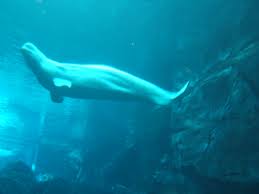
Hundreds of thousands of tiny bits of plastic waste have been found in the prey of belugas, proving that the pollution in the whales is making its way even to the most remote Arctic waters, a new study says. In the study, published in the journal Science of the Total Environment, researchers looked at five species of Arctic fish that are regular prey of belugas and found 21 percent of them had microplastic particles in their gastrointestinal tracts. | |
New Insights into Polar Stratospheric Clouds | |
During the polar winter and spring, when temperatures are very low, clouds can be observed in the stratosphere above the polar regions, typically at around 12 to 30 kilometers in altitude. Unlike tropospheric clouds, which are liquid water or ice, these “polar stratospheric clouds” (PSCs) can be ice, solid nitric acid trihydrate (NAT) crystals, supercooled liquid ternary (sulfuric acid/nitric acid/water) solution (STS) droplets, or combinations of these. An article published in Reviews of Geophysics describes how new satellite instruments have improved our understanding of PSC occurrence and composition. Here, one of the authors describes what we know about PSCs and the role they play in ozone depletion. | |
Indigenous Engagement and Communication Specialist | |
IARPC is currently seeking an Indigenous Engagement and Communication Specialist to coordinate across agencies and serve as a communication hub between IARPC federal agency members and Indigenous communities. This is a full-time position. The full position description, responsibilities, qualifications, and details of how to apply can be found on the IARPC Collaborations website. The position will remain open until filled, with initial review of applications beginning November 1. | |
Leadership Fellowship for Indigenous Peoples | |
IARPC is seeking two fellows to participate in IARPC Collaborations in a leadership capacity. IARPC Collaborations brings together communities of practice led by federal and non-federal co-leaders. Although each of our collaboration teams is discussing issues directly relevant to those living in Alaska and the Arctic and team leaders are experts in their field, very few team leaders have perspectives stemming from deep place-based knowledge in Alaska. This paid fellowship seeks to increase opportunities for Indigenous individuals to lead these communities of practice. Further information, including fellowship description, responsibilities, and how to apply, is available on the IARPC Collaborations website. The positions will remain open until filled, with initial review of applications beginning November 1. | | |
|
|
OCTOBER 24–29, 2021 | BOULDER, COLORADO, USA
2021 Regional Conference on Permafrost/19th International Conference Cold Regions Engineering
| |
For the first time, a Regional Conference on Permafrost will be combined with the bi-annual 19th International Conference on Cold Regions Engineering. This conference is hosted by the US Permafrost Association, the American Society of Civil Engineers, the International Permafrost Association, the Permafrost Young Researchers Network, and the University of Colorado Boulder. A complete list of planned sessions is available here. | |
|
NEW THIS WEEK | 3:00 pm ET on October 25, 2021 | Virtual
IARPC Program Manager Chat: NSF Office of Polar Programs
| |
IARPC and the National Science Foundation's Office of Polar Programs Arctic Science Section will host a virtual office hour to share program updates with the Arctic research community. This webinar will introduce new staff, highlight upcoming funding opportunities, and provide updates about the program's approach to mitigating the impacts of COVID-19. | |
|
November 2-4, 2021 | Virtual
The Maritime Risk Symposium
| |
|
The Maritime Risk Symposium is an annual three-day conference in which government and maritime industry leaders, port representatives, researchers, and solution providers convene to examine current and emerging threats to maritime security. Government agencies, commercial entities, institutions of research, and higher education come together to discuss various threats, challenges, and risks to international and domestic maritime sectors.
Former USARC Commissioner Major General Randy “Church” Kee USAF (retired) will be a member of two panels: “Arctic Climate Change— ‘Operationally Relevant’ Arctic-Related Research;” and the summation panel. USARC Executive Director John Farrell will also be a panelist on the “Arctic Climate Change—‘Operationally Relevant’ Arctic-Related Research” panel.
| |
|
November 10-11, 2021 | Brussels, Belgium
EU Arctic Forum and Indigenous Peoples’ Dialogue
| |
The European Commission and the European External Action Service will organize a high-level EU Arctic Forum and the Annual Arctic Indigenous Peoples’ Dialogue. The EU Arctic Forum will bring together key Arctic players and stakeholders to assess recent developments in the region and discuss challenges ahead. The event will provide a strategic outlook for the updated EU Arctic policy and delve into topics that are of particular significance for the Arctic’s inhabitants. | |
|
November 17, 2021 | Portland, Maine USA
New England Arctic Network 2021 Meeting
| |
The New England Arctic Network (NEAN) will host its 2021 meeting at the University of New England in Portland, Maine. Additional information will be published soon. | |
|
December 6-10, 2021 | Virtual
ArcticNet Annual Scientific Meeting
| |
Hosted entirely online the ArcticNet Virtual Annual Scientific Meeting 2021 (ASM2021) is a hub for Arctic research in Canada. The ASM2021 brings together researchers from the natural, health, and social sciences to meet the challenges and opportunities of a rapidly changing Arctic region, shaped by climate change and modernization. This conference will push the boundaries of our collective understanding of the Arctic and strengthen our ability to address the Arctic issues of today and tomorrow. | |
|
December 13-17, 2021 | New Orleans, LA USA & virtual
A Blue Arctic Ocean: U.S. Arctic Research and Marine Infrastructure Needs
| |
The National Academies’ Polar Research Board is convening the following session at the Fall AGU meeting. | |
|
April 5-8, 2022 | Anchorage, Alaska USA
Reducing Arctic Risks and Advancing Cooperation, Alaskan Command Arctic Symposium 2022
| |
Arctic Symposium 2022 continues momentum in Arctic defense and security collaboration established in prior ALCOM-hosted events. AAS22 seeks to address the challenges faced by the U.S. military and our allies and partners in understanding and responding to our respective national interests. AAS22 is planned and organized by the Arctic Domain Awareness Center at the University of Alaska Anchorage (UAA) in support and in compliance to guidance from Alaskan Command (ALCOM) Staff and Commander. More information available soon. | |
|
NEW THIS WEEK | April 9-11, 2022 | St. Petersburg, Russia
The Arctic: Territory of Dialogue Forum
| |
The participants in the forum will focus on improving the living standards in the Arctic region, preserving its unique ecological potential, ensuring sustainable socioeconomic development in polar territories, and strengthening international cooperation to this end. The IAF is a unique space for constructive cooperation with international and regional organizations and an opportunity to focus on Russian and international priorities, including climate change, the environment, economic cooperation in the Arctic, sustainable development of transport infrastructure, and human capital development. | |
|
MAY 9-12, 2022 | HANKO, FINLAND
2nd Symposium on Polar Microbes and Viruses
| Organizers announce, that due to the coronavirus outbreak, the 2nd Symposium on Polar Microbes and Viruses has been postponed to 2022. This symposium will bring together molecular microbial ecologists specializing in different organism groups to share our latest results and discuss methodological problems, as well as future prospects in the field, including practical international collaborations. The environmental focus will be on cryospheric environments including sea ice, glaciers, ice sheets, and permafrost, but excellent research in other polar environments is also invited. The methods to be discussed will focus on 'omics' techniques, ranging from single cells to metagenomes, but research using additional methods is encouraged as well. | |
External links in this publication, and on the USARC's World Wide Web site (www.arctic.gov) do not constitute an endorsement by the US Arctic Research Commission of external Web sites or the information, products, or services contained therein. For other than authorized activities, the USARC does not exercise any editorial control over the information you may find at these locations. These links are provided consistent with the stated purpose of this newsletter and the USARC website. | | | | |