|
|
|
|
|
|
|
|
IARPC Public Webinar Series Program Manager Chat: National Science Foundation Support for Arctic Doctoral Dissertation Research, 2:00 pm EDT on October 23, 2020. The National Science Foundation and IARPC Collaborations will host a program manager chat about a solicitation for proposals for Arctic Doctoral Dissertation Research Improvement Grants. The goal of this solicitation is to attract research proposals that advance a fundamental, process, and systems-level understanding of the Arctic's rapidly changing natural environment and social and cultural systems, and, where appropriate, to improve our capacity to project future change. During this webinar, NSF program officers will give an overview of this funding opportunity and will be available to answer questions. All are welcome to attend.
|
Media
 An Updated EU Arctic Policy is Expected Next Year. Officially, an updated European Union Arctic policy has been on the cards, if only tentatively, since December. It was then that the foreign ministers from the union's 27 member states instructed the European Commission, the bloc's executive arm, to "initiate a process" to determine whether the current policy, published in 2016, needed updating. On Monday, the commission announced that it had decided it did. Among its objectives for 2021, it lists presentation of an updated EU policy towards the Arctic, describing the region as "particularly exposed to climate change and environmental pressures and its economic and security impact." Arctic Today
Report Highlights Dramatic Increase in Fuel Consumption in Arctic Shipping. Fuel consumption by ships plying Arctic waters grew by 82 per cent in recent years, according to a new report by the Arctic Council's Protection of the Arctic Marine Environment (PAME) Working Group. The report looked at fuel consumption by marine traffic in Arctic waters as defined by the Polar Code, which includes all of North American and Russian Arctic above 60 degrees north, but excludes Iceland and large chunks of the Norwegian and Barents seas in the European Arctic. Radio Canada International
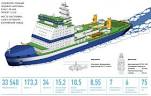 Russia Can't Test Icebreaker Because Arctic Ice is Too Thin. They were rushin' to the North Pole. Russia is still waiting to test its new nuclear-powered icebreaker because the Arctic ice wasn't thick enough on its first trip, state news agency TASS reported. The Arktika sailed from St. Petersburg on Sept. 22, traveled up to the North Pole and then arrived in the Arctic port of Murmansk on Oct. 12. But it went essentially unchallenged on the journey, the captain told TASS. New York Daily News
Destroyer Ross Treks into the Barents Sea's Arctic Waters-Again. The guided-missile destroyer Ross headed back into the Barents Sea on Monday. Despite decades of avoiding the contentious Arctic waters between Russia and Norway, four U.S. Navy ships and a U.K. Royal Navy ship completed a maritime operation in the Barents Sea in May - marking the first time the service said a U.S. Navy surface ship has done so since the mid-1980s. NavyTimes
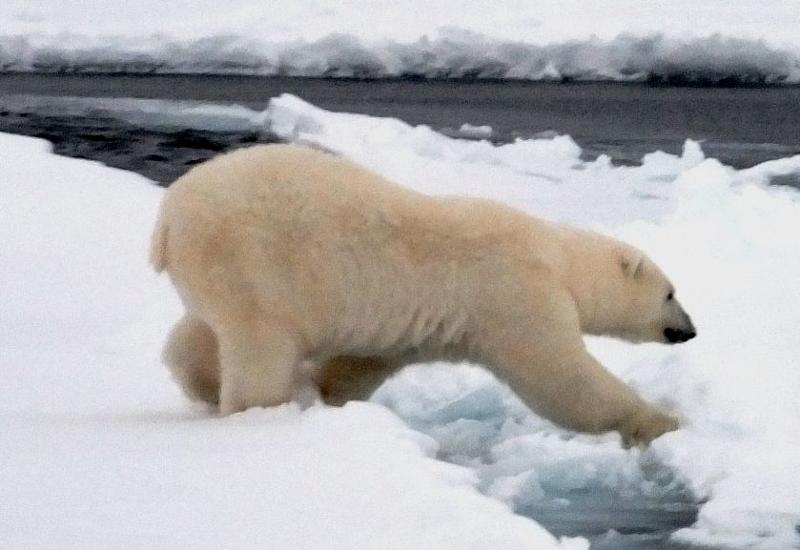 Leaving a Blank in Churchill: Pandemic Travel Ban Breaks Decades-long Chain of Federal Polar Bear Research. Federal polar bear research near Churchill has been put on hold for the first time since 1980 because of restrictions on travel due to the global coronavirus pandemic. Nick Lunn, an Alberta research scientist with Environment and Climate Change Canada, travels to northern Manitoba every year in September to conduct polar bear monitoring programs. Lunn's work involves sedating more than 100 bears so measurements and other biological samples can be taken. Winnipeg Free Press
|
|
Future Events
11th Maritime Risk Symposium 2020, October 26-30, 2020 (virtual). The Critical Infrastructure Resilience Institute (CIRI), a Department of Homeland Security Center of Excellence, will host the 11th Annual Maritime Risk Symposium (MRS 2020) in collaboration with the National Academy of Sciences. The theme of MRS 2020 is "Maritime Resilience." DHS defines resilient infrastructure systems as the "ability of systems, infrastructures, government, business, communities, and individuals to resist, tolerate, absorb, recover from, prepare for, or adapt to an adverse occurrence that causes harm, destruction, or loss of national significance." Through presentations, panels and open forums, the symposium will focus on the attributes of resilience to adversarial events of national significance in the maritime domain, using our experience with COVID-19 as a driver for the discussion. The objective is less about the specific impacts COVID-19 had and is having, and more on how that event informs us on resiliency for future global upsets, in terms of what works, what gaps have been exposed, and what research questions ought to be studied as a first step towards enhancing Maritime Resilience.
** New this week ** Smithsonian Event Breaking the Ice Ceiling: Trailblazing Women in the Arctic and Antarctic Science, 2:30 EDT on October 27, 2020. The Smithsonian hosts a panel to illuminate polar research and achievements by those who identify as women. The panel will foster discussion on the systemic changes in polar sciences to advance diversity, equity, and inclusion, weave connections and collaborations between many roles in a social change ecosystem to develop tools and methods to reach new audiences and inspire the next generation of women polar knowledge holders, researchers, and scientists, and create a space that values and incorporates Indigenous women's oral histories and traditional knowledge as a fundamental component of scientific research. This discussion will continue in 2021 with a series of free monthly webinars showcasing past, present, and future trailblazing women in the Arctic and Antarctic online from The Arctic Institute.
The Arctic Resilience Forum: Human Health and Pandemics, October 28, 2020 (virtual). The Arctic Resilience Forum will be convened every Wednesday from 11:30am - 1:00pm (EST) over a series of ten weeks, beginning October 7, 2020. The online series, organized by the Arctic Council and the Harvard Kennedy School, will engage the broadest audience possible in conversations about how to build the resilience of Arctic communities and ecosystems across a variety of focus areas.
Maine and the Arctic: Building Bridges to the Future, 6:30 pm EDT on October 28, 2020 (virtual). The Camden Conference and Portland Press Herald will host a virtual panel discussion on the Maine's growing engagement in Arctic affairs and the importance of the Arctic to Maine's economy. This event is an opportunity to learn more about increasing trade, investment, educational exchanges, and collaborative activity between Maine entities and those of the North Atlantic. The panel will be moderated by Carol Coultas, business projects editor of Portland Press Herald/Maine Sunday Telegram. Panelists include Dana Eidsness, Director of the Maine North Atlantic Development Office (MENADO), Holly Parker, Director of UNE North, Jon Nass, CEO of the Maine Port Authority, and Peter Handy, President and CEO of Bristol Seafood.
The Arctic Resilience Forum: Gender, November 18, 2020 (virtual). The Arctic Resilience Forum will be convened every Wednesday from 11:30am - 1:00pm (EST) over a series of ten weeks, beginning October 7, 2020. The online series, organized by the Arctic Council and the Harvard Kennedy School, will engage the broadest audience possible in conversations about how to build the resilience of Arctic communities and ecosystems across a variety of focus areas.
The Arctic Resilience Forum: Socio-Ecological Resilience, November 25, 2020 (virtual). The Arctic Resilience Forum will be convened every Wednesday from 11:30am - 1:00pm (EST) over a series of ten weeks, beginning October 7, 2020. The online series, organized by the Arctic Council and the Harvard Kennedy School, will engage the broadest audience possible in conversations about how to build the resilience of Arctic communities and ecosystems across a variety of focus areas.
The Arctic Resilience Forum: Financing Resilience, December 2, 2020 (virtual). The Arctic Resilience Forum will be convened every Wednesday from 11:30am - 1:00pm (EST) over a series of ten weeks, beginning October 7, 2020. The online series, organized by the Arctic Council and the Harvard Kennedy School will engage the broadest audience possible in conversations about how to build the resilience of Arctic communities and ecosystems across a variety of focus areas.
The Arctic Resilience Forum: Infrastructure, December 9, 2020 (virtual). The Arctic Resilience Forum will be convened every Wednesday from 11:30am - 1:00pm (EST) over a series of ten weeks, beginning October 7, 2020. The online series, organized by the Arctic Council and the Harvard Kennedy School, will engage the broadest audience possible in conversations about how to build the resilience of Arctic communities and ecosystems across a variety of focus areas.
2021 Alaska Marine Science Symposium, January 26-28, 2021 (virtual). The Alaska Marine Science Symposium (AMSS) has been bringing together scientists, educators, resource managers, students, and interested public for over twenty years to discuss the latest marine research being conducted in Alaskan waters. Over 700 people attend this 4-day long conference held annually during the month of January. Each day of the conference highlights important Alaskan marine ecosystems: Gulf of Alaska (Tuesday), Bering Sea & Aleutian Islands (Wednesday), and the Arctic (Thursday). Research topics discussed range from ocean physics, fishes and invertebrates, seabirds, marine mammals, to local traditional knowledge. Since its inception, NPRB has been a proud sponsor and one of the leading organizers of AMSS.
Arctic Frontiers 2021, February 1-4, 2021 (virtual). Arctic Frontiers started out in 2006 assembling the first global scientific conference on economic, societal and environmental sustainable growth in the north. In February 2021, we will arrange the 15th conference with the theme "Building Bridges". The conference has a pan arctic perspective and builds new partnerships across nations, generations and ethnic groups. Arctic Frontiers provides a forum for dialogue and communication between science, government and industry in the Arctic.
Arctic Science Summit Week, March 20-26, 2021 (Lisbon, Portugal). The Portuguese Minister of Science, Technology and Higher Education, the Portuguese Foundation for Science and Technology (FCT) and the Local Organizing Committee will host the Arctic Science Summit Week 2021. The Conference is organized by FCT, Ciência Viva, AIR Center, the Portuguese Arctic Community and by IASC and partners. Framed by the overarching theme for the Science Conference "The Arctic: Regional Changes, Global Impacts," Lisbon invites International experts on the Arctic and Indigenous Peoples to discuss the "New Arctic" and also its impacts and interactions to and with the lower latitudes.
2nd Symposium on Polar Microbes and Viruses, May 3-6, 2021 (Hanko, Finland). Organizers announce, that due to the coronavirus outbreak, the 2nd Symposium on Polar Microbes and Viruses has been postponed to 2021. This symposium will bring together molecular microbial ecologists specializing in different organism groups to share our latest results and discuss methodological problems, as well as future prospects in the field, including practical international collaborations. The environmental focus will be on cryospheric environments including sea ice, glaciers, ice sheets, and permafrost, but excellent research in other polar environments is also invited. The methods to be discussed will focus on 'omics' techniques, ranging from single cells to metagenomes, but research using additional methods is encouraged as well.
3rd Arctic Science Ministerial, May 8-9, 2021 (Toyko, Japan). The Japanese and Icelandic organizers of this ministerial continue to plan for an in-person ministerial, in Tokyo, but have moved the dates from November 21-22, 2020 to May 8-9, 2021 because of Covid-19. Since the last Arctic Science Ministerial in 2018, changes in the Arctic ecosystem and the resulting impacts locally and globally have been severely felt. Considering the need for climate change mitigation, adaptation, and repair measures, the relevance of an international Arctic Science Ministerial has never been greater. It is necessary to strengthen scientific cooperation and collaboration among both Arctic and non-Arctic States in order to develop our understanding of the rapid changes impacting the Arctic. The First Arctic Science Ministerial (ASM1) was hosted by the United States in 2016, and two years later, the Second Arctic Science Ministerial (ASM2) was co-hosted by Germany, Finland, and the European Commission. ASM3 will be co-hosted by Iceland and Japan.
|
|

  
4350 N. Fairfax Drive, Suite 510
Arlington, VA 22203, USA
External links in this publication, and on the USARC's World Wide Web site ( www.arctic.gov) do not constitute endorsement by the US Arctic Research Commission of external Web sites or the information, products or services contained therein. For other than authorized activities, the USARC does not exercise any editorial control over the information you may find at these locations. These links are provided consistent with the stated purpose of this newsletter and the USARC Web site.
|
|
|
|
|
|
|
|
|