A Solar Project in Rural Alaska Takes Aim at Sky-High Electric Bills. A new renewable energy project in the Northwest Alaska village of Buckland aims to demonstrate solar and wind power's potential to reduce the region's sky-high utility costs. The village-run electric utility is set to switch on three new solar arrays this week, and a new battery system next year. Boosters say systems like Buckland's have huge potential to reduce the cost of power in rural Alaska, where electricity prices can be six times the national average and monthly light bills can top $1,000. But major obstacles remain, too, from the technology's cost to the region's remoteness.
KTOO
 White House Appoints OSU- Cascades Researcher to Arctic Conference. Elizabeth Marino, a social scientist at Oregon State University-Cascades, has been appointed by the White House Office of Science and Technology Policy as a delegate to the Second Arctic Science Ministerial, an international meeting in Berlin... Marino is one of 10 scientists and the only social scientist on the United States delegation to the ministerial. Her contributions will focus on the role of risk distribution and risk perception in strategic planning for sea level rise.
KTVZ
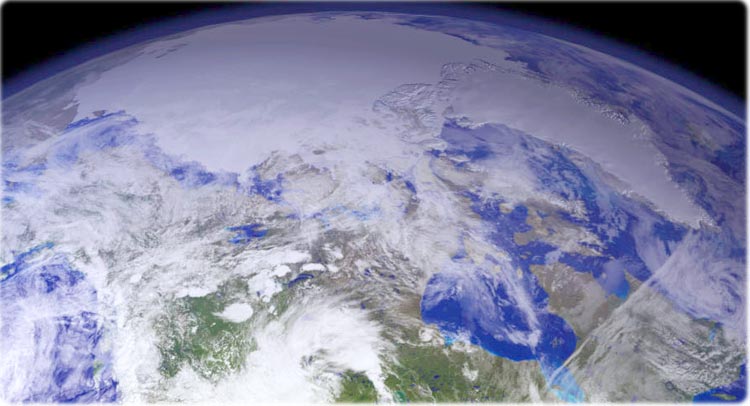
Changes in Snow Coverage Threatens Biodiversity of Arctic Nature. Many of the plants inhabiting northern mountains depend on the snow cover lingering until late spring or summer. Snow provides shelter for plants from winter-time extreme events but at the same time it shortens the length of growing season, which prevents the establishment of more southern plants. This is why the reduced snow cover may be an even larger threat to the Arctic plants than rising temperatures. In a study published in the renowned scientific journal Nature Climate Change, researchers from the University of Helsinki and the Finnish Environment Institute analyzed how projected changes in temperature and snow cover duration will affect the risk for extinction in northern flora.
EurekAlert!
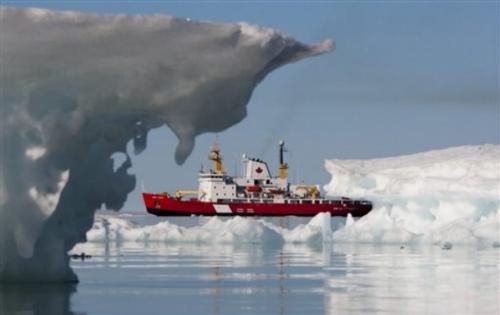 Canadian Coast Guard to Increase Focus on Arctic Through Creation of New Branch. The federal Liberal government is turning its face to the North with changes in a major ministry and at the Canadian Coast Guard. "It is definitely a step toward a northern strategy," Fisheries and Oceans Minister Jonathan Wilkinson said Wednesday in Iqaluit, Nunavut. "This is a pretty significant step forward."
Canada's National Observer
Arctic Climate Research Mostly Takes Place Near Just Two Locations. Why? The Arctic is a hotbed of climate change research and a vast and varied place, much of it remote and difficult to reach. That may explain why nearly one-third of study citations focusing on Arctic research were based on data collected within 50 kilometers, about 31 miles, of just two locations: Toolik Lake in Alaska and Abisko in Sweden.
Yale Climate Connections
Trump Administration Approves First Oil Production in Federal Arctic Waters. Three years after Shell abandoned its oil exploration program in the Chukchi Sea, and with much less fanfare and controversy, another company has taken a big step toward being the first to produce oil from federal Arctic waters. The Trump administration today handed a key approval to the Texas-based Hilcorp for a proposed oil development in the Beaufort Sea, east of Prudhoe Bay.
Alaska Public Radio
 must-attend event to gain a wide perspective on challenges, opportunities and policies related to the Arctic and North Atlantic maritime environments. The
 leaders in Washington, D.C. As the largest Earth and space science gathering in the world, the Fall Meeting places you in the center of a global community of scientists drawn from myriad fields of study whose work protects the health and welfare of people worldwide, spurs innovation, and informs decisions that are critical to the sustainability of the Earth.