|
|
|
|
|
|
|
|
No Arctic-science events are scheduled for today.
|
(Inuit Circumpolar Council Alaska) Food Sovereignty and Self-Governance: Inuit Role in Managing Arctic Marine Resources (2020). For thousands of years, Inuit have been part of the Arctic ecosystem. Inuit have thrived and built their culture rooted in values that shape the relationships they have held with everything within this ecosystem. Those values-including respect, collaboration, and sharing-all aid in supporting healthy and harmonious relationships and communities. A core element of Inuit culture that incorporates these values is hunting, gathering, and preparing foods. Discussions about food security require an understanding of the far-reaching implications of how issues of food security interact with culture, history, management systems, and world views. The interconnections between all peoples, wildlife, and the environment within the Arctic ecosystem directly influences food security, and food sovereignty is distinctly tied to food security.
(Friends of Europe) After the Ice: The Arctic and European Security (Fall 2020). For most of the three decades since the end of the Cold War, the Arctic has been a zone of low tension, a glacial oasis of multilateral cooperation and a geopolitical backwater. That relative harmony is now under growing strain chiefly because of the resurgence of great power competition worldwide against a backdrop of accelerating global warming which is melting the polar ice cap at a record pace. This threatens disaster for the environment and the indigenous peoples of the Arctic, but also whets appetites for new shipping routes and access to undeveloped oil, gas and mineral resources.
|
Media
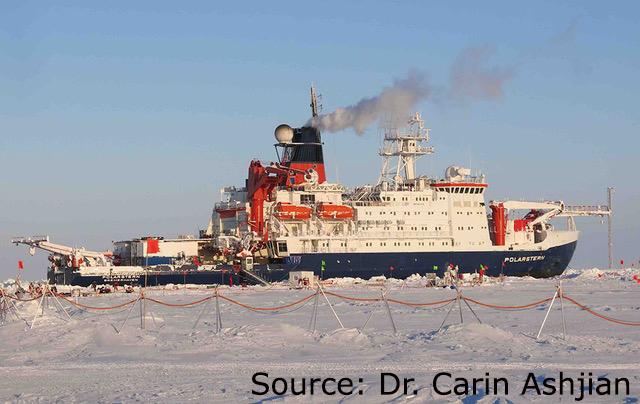 Arctic Odyssey Ends, Bringing Home Tales of Alarming Ice Loss. The biggest Arctic expedition in history will return to the German port of Bremerhaven on Monday after a year-long mission, bringing home observations from scientists that sea ice is melting at a "dramatic rate" in the region. Coronavirus restrictions mean there will be no grand fanfare when the German Alfred Wegener Institute's Polarstern ship docks. Phys.org
Russia Launches Educational Online Platform on Climate Change. Russia has launched a new online platform that will allow school and university students, environmental activists and anyone who is interested to receive the latest scientific information on climate change. Anyone can learn how to acclimatize, how to contribute to countering climate change and to adapt to its consequences in everyday life. The Arctic
 Low Supplies of Pacific Salmon are Pushing Up Prices. Now that the 2020 pack of Alaska salmon has been caught and put up, stakeholders will get a better picture of how global prices may rise or fall. Nearly 75% of the value of Alaska's salmon exports is driven by sales between July and October. And right now, lower supplies of wild Pacific salmon by the major producers are pushing up prices as the bulk of those sales are made. The Arctic Sounder Shipbuilding and Arctic Exploration to be Discussed in St. Petersburg. The International Exhibition and Conference for Shipbuilding and Equipment and Technologies for Development of the Arctic and Continental Shelf (OMR) will take place on October 6-9, 2020 in St. Petersburg. The event will include the plenary session, "Strategic goals and priorities for the sustainable development of the Russian Arctic," as well as panel sessions and discussions and a Youth Forum on the digital transformation in the industry and preparations of cases to draft Development Concepts for the Northern Sea Route and the Northern Sea Transport Corridor, a competition for scientific and technical innovations aimed at developing and exploring the Arctic and the continental shelf, and various technical sessions. The Arctic Russia Opens Criminal Investigation Over Far East Marine Pollution. Russia on Wednesday opened a criminal investigation to establish the cause of unexplained toxic pollution off its far eastern coast that has killed sea creatures and led to their carcasses being washed ashore... Scientists told regional authorities on Tuesday that nearly all marine life on the seabed of the Avacha Bay - located on the Kamchatka Peninsula's southern coast - had been killed, with only a small number of large fish, shrimp and crab surviving. Arctic Today
|
|
Future Events
** New this week ** Arctic Policy Study Group: Powering Alaska's Arctic, 8:00 am AKDT on October 14, 2020 (virtual). Alaska's Arctic communities are innovating toward new and renewable energy opportunities. This panel will provide an overview of the trends that are driving clean energy and electrification projects in the Arctic as well as showcase several projects that demonstrate how communities and energy providers are using the Arctic environment and new technologies to expand electrification, decarbonization, and a brighter energy future. This event is hosted by Commonwealth North
The Arctic Resilience Forum: Food Security, October 14, 2020 (virtual). The Arctic Resilience Forum will be convened every Wednesday from 11:30am - 1:00pm (EST) over a series of ten weeks, beginning October 7, 2020. The online, organized by the Arctic Council and the Harvard Kennedy School, series will engage the broadest audience possible in conversations about how to build the resilience of Arctic communities and ecosystems across a variety of focus areas.
Alaska Federation of Natives 2020 Convention, October 15-16, 2020 (Virtual). The annual convention serves as the principal forum and voice for the Alaska Native community in addressing critical issues of public policy and government. The convention convenes thousands of official delegates and participants from membership organizations across the state. At the Convention, delegates discuss strategic opportunities and challenges, listen to memorable keynote speeches, hear reports from political leaders and presentations from expert panels, and share stories resilience, experiences, strengths, knowledge and hope for the future.
The Arctic Resilience Forum: Renewable Energy, October 21, 2020 (virtual). The Arctic Resilience Forum will be convened every Wednesday from 11:30am - 1:00pm (EST) over a series of ten weeks, beginning October 7, 2020. The online series, organized by the Arctic Council and the Harvard Kennedy School, will engage the broadest audience possible in conversations about how to build the resilience of Arctic communities and ecosystems across a variety of focus areas.
** New this week ** IARPC Public Webinar Series Program Manager Chat: National Science Foundation Support for Arctic Doctoral Dissertation Research, 2:00 pm EDT on October 23, 2020. The National Science Foundation and IARPC Collaborations will host a program manager chat about a solicitation for proposals for Arctic Doctoral Dissertation Research Improvement Grants. The goal of this solicitation is to attract research proposals that advance a fundamental, process, and systems-level understanding of the Arctic's rapidly changing natural environment and social and cultural systems, and, where appropriate, to improve our capacity to project future change. During this webinar, NSF program officers will give an overview of this funding opportunity and will be available to answer questions. All are welcome to attend.
11th Maritime Risk Symposium 2020, October 26-30, 2020 (virtual). The Critical Infrastructure Resilience Institute (CIRI), a Department of Homeland Security Center of Excellence, will host the 11th Annual Maritime Risk Symposium (MRS 2020) in collaboration with the National Academy of Sciences. The theme of MRS 2020 is "Maritime Resilience." DHS defines resilient infrastructure systems as the "ability of systems, infrastructures, government, business, communities, and individuals to resist, tolerate, absorb, recover from, prepare for, or adapt to an adverse occurrence that causes harm, destruction, or loss of national significance." Through presentations, panels and open forums, the symposium will focus on the attributes of resilience to adversarial events of national significance in the maritime domain, using our experience with COVID-19 as a driver for the discussion. The objective is less about the specific impacts COVID-19 had and is having, and more on how that event informs us on resiliency for future global upsets, in terms of what works, what gaps have been exposed, and what research questions ought to be studied as a first step towards enhancing Maritime Resilience.
The Arctic Resilience Forum: Human Health and Pandemics, October 28, 2020 (virtual). The Arctic Resilience Forum will be convened every Wednesday from 11:30am - 1:00pm (EST) over a series of ten weeks, beginning October 7, 2020. The online series, organized by the Arctic Council and the Harvard Kennedy School, will engage the broadest audience possible in conversations about how to build the resilience of Arctic communities and ecosystems across a variety of focus areas.
The Arctic Resilience Forum: Gender, November 18, 2020 (virtual). The Arctic Resilience Forum will be convened every Wednesday from 11:30am - 1:00pm (EST) over a series of ten weeks, beginning October 7, 2020. The online series, organized by the Arctic Council and the Harvard Kennedy School, will engage the broadest audience possible in conversations about how to build the resilience of Arctic communities and ecosystems across a variety of focus areas.
The Arctic Resilience Forum: Socio-Ecological Resilience, November 25, 2020 (virtual). The Arctic Resilience Forum will be convened every Wednesday from 11:30am - 1:00pm (EST) over a series of ten weeks, beginning October 7, 2020. The online series, organized by the Arctic Council and the Harvard Kennedy School, will engage the broadest audience possible in conversations about how to build the resilience of Arctic communities and ecosystems across a variety of focus areas.
The Arctic Resilience Forum: Financing Resilience, December 2, 2020 (virtual). The Arctic Resilience Forum will be convened every Wednesday from 11:30am - 1:00pm (EST) over a series of ten weeks, beginning October 7, 2020. The online series, organized by the Arctic Council and the Harvard Kennedy School will engage the broadest audience possible in conversations about how to build the resilience of Arctic communities and ecosystems across a variety of focus areas.
The Arctic Resilience Forum: Infrastructure, December 9, 2020 (virtual). The Arctic Resilience Forum will be convened every Wednesday from 11:30am - 1:00pm (EST) over a series of ten weeks, beginning October 7, 2020. The online series, organized by the Arctic Council and the Harvard Kennedy School, will engage the broadest audience possible in conversations about how to build the resilience of Arctic communities and ecosystems across a variety of focus areas.
2021 Alaska Marine Science Symposium, January 26-28, 2021 (virtual). The Alaska Marine Science Symposium (AMSS) has been bringing together scientists, educators, resource managers, students, and interested public for over twenty years to discuss the latest marine research being conducted in Alaskan waters. Over 700 people attend this 4-day long conference held annually during the month of January. Each day of the conference highlights important Alaskan marine ecosystems: Gulf of Alaska (Tuesday), Bering Sea & Aleutian Islands (Wednesday), and the Arctic (Thursday). Research topics discussed range from ocean physics, fishes and invertebrates, seabirds, marine mammals, to local traditional knowledge. Since its inception, NPRB has been a proud sponsor and one of the leading organizers of AMSS.
Arctic Frontiers 2021, February 1-4, 2021 (virtual). Arctic Frontiers started out in 2006 assembling the first global scientific conference on economic, societal and environmental sustainable growth in the north. In February 2021, we will arrange the 15th conference with the theme "Building Bridges". The conference has a pan arctic perspective and builds new partnerships across nations, generations and ethnic groups. Arctic Frontiers provides a forum for dialogue and communication between science, government and industry in the Arctic.
Arctic Science Summit Week, March 20-26, 2021 (Lisbon, Portugal). The Portuguese Minister of Science, Technology and Higher Education, the Portuguese Foundation for Science and Technology (FCT) and the Local Organizing Committee will host the Arctic Science Summit Week 2021. The Conference is organized by FCT, Ciência Viva, AIR Center, the Portuguese Arctic Community and by IASC and partners. Framed by the overarching theme for the Science Conference "The Arctic: Regional Changes, Global Impacts," Lisbon invites International experts on the Arctic and Indigenous Peoples to discuss the "New Arctic" and also its impacts and interactions to and with the lower latitudes.
2nd Symposium on Polar Microbes and Viruses, May 3-6, 2021 (Hanko, Finland). Organizers announce, that due to the coronavirus outbreak, the 2nd Symposium on Polar Microbes and Viruses has been postponed to 2021. This symposium will bring together molecular microbial ecologists specializing in different organism groups to share our latest results and discuss methodological problems, as well as future prospects in the field, including practical international collaborations. The environmental focus will be on cryospheric environments including sea ice, glaciers, ice sheets, and permafrost, but excellent research in other polar environments is also invited. The methods to be discussed will focus on 'omics' techniques, ranging from single cells to metagenomes, but research using additional methods is encouraged as well.
3rd Arctic Science Ministerial, May 8-9, 2021 (Toyko, Japan). The Japanese and Icelandic organizers of this ministerial continue to plan for an in-person ministerial, in Tokyo, but have moved the dates from November 21-22, 2020 to May 8-9, 2021 because of Covid-19. Since the last Arctic Science Ministerial in 2018, changes in the Arctic ecosystem and the resulting impacts locally and globally have been severely felt. Considering the need for climate change mitigation, adaptation, and repair measures, the relevance of an international Arctic Science Ministerial has never been greater. It is necessary to strengthen scientific cooperation and collaboration among both Arctic and non-Arctic States in order to develop our understanding of the rapid changes impacting the Arctic. The First Arctic Science Ministerial (ASM1) was hosted by the United States in 2016, and two years later, the Second Arctic Science Ministerial (ASM2) was co-hosted by Germany, Finland, and the European Commission. ASM3 will be co-hosted by Iceland and Japan.
|
|

  
4350 N. Fairfax Drive, Suite 510
Arlington, VA 22203, USA
External links in this publication, and on the USARC's World Wide Web site ( www.arctic.gov) do not constitute endorsement by the US Arctic Research Commission of external Web sites or the information, products or services contained therein. For other than authorized activities, the USARC does not exercise any editorial control over the information you may find at these locations. These links are provided consistent with the stated purpose of this newsletter and the USARC Web site.
|
|
|
|
|
|
|
|
|