|
|
|
|
|
|
|
|
** New this week ** Advancing Collaboration in Canada- US Arctic Regional Security, September 17-18, 2020 (virtual). This event is hosted by the North American and Arctic Defense and Security, The Arctic Domain Awareness Center, Trent University, and the University of Alaska Anchorage. Focusing on emerging trends in medium- and long-term North American Arctic security environment, the mix of academics and practitioners at this workshop will anticipate potential North American Arctic futures to identify potential gaps and shortfalls in current strategies, capabilities, and research.
|
High Sensitivity of Bering Sea Winter Sea Ice to Winter Insolation and Carbon Dioxide Over the Last 5500 Years, Science Advances (September 2020). Anomalously low winter sea ice extent and early retreat in CE 2018 and 2019 challenge previous notions that winter sea ice in the Bering Sea has been stable over the instrumental record, although long-term records remain limited. Here, we use a record of peat cellulose oxygen isotopes from St. Matthew Island along with isotope-enabled general circulation model (IsoGSM) simulations to generate a 5500-year record of Bering Sea winter sea ice extent. Results show that over the last 5500 years, sea ice in the Bering Sea decreased in response to increasing winter insolation and atmospheric CO2, suggesting that the North Pacific is highly sensitive to small changes in radiative forcing. We find that CE 2018 sea ice conditions were the lowest of the last 5500 years, and results suggest that sea ice loss may lag changes in CO2 concentrations by several decades.
|
Media
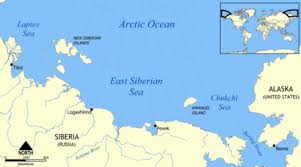 MSU Geographers Compile Database of Sea Level Changes in Russian Arctic. Scientists from the Faculty of Geography of Lomonosov Moscow State University have compiled and registered a database of postglacial sea level changes in the western and central parts of the Russian Arctic since the Last Glacial Maximum 25,000 years ago. The database includes historical data and the results of field studies conducted by the Geoecology of the Northern Territories laboratory of the MSU Faculty of Geography, such as the location of geological and geomorphological indicators of sea level changes in the period under review. The Arctic
"US Security Policy Change in the Arctic Places Denmark Under Pressure," says Foreign Policy Researcher. At a conference this week about Denmark's foreign policy challenges, Senior Researcher Mikkel R. Olesen at the Danish Institute for International Studies pointed out increased Russian, Chinese and American engagement in the Arctic as a clear development trend in the region. Olesen nevertheless argued that it is the American reaction to Russian and Chinese activity in the Arctic that has the largest direct impact on Denmark and the biggest shift felt from the Danish side. High North News
Artifacts Discovered by Northern Fleet and Russian Geographical Society Expedition Donated to Museum of the Arctic and Antarctic. A collection of historical artifacts, found during a multipurpose expedition made by the Northern Fleet together with the Russian Geographical Society to islands of the Arctic archipelagos, has been donated to the Russian State Museum of the Arctic and Antarctic in St. Petersburg. The commander of the Northern Fleet, Hero of Russia, Vice-Admiral Alexander Moiseyev proposed sending the unique historical finds to the State Museum. The Arctic
Marine Animals Live Where Ocean is Most Breathable, Ranges May Shrink with Climate Change. New research shows that a wide variety of marine animals -- from vertebrates to crustaceans to mollusks -- already inhabit the maximum range of breathable ocean that their physiology will allow. The findings provide a warning about climate change: Since warmer waters will harbor less oxygen, some stretches of ocean that are breathable today for a given species may not be in the future. Science Daily
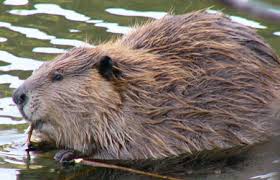 Meet Nunavut's Newest Arrival: the Beaver. A recent beaver catch in Baker Lake, along with this summer's earlier beaver sighting near Kugluktuk, more than 1,000 kilometers northwest of Baker Lake, have some wondering whether beavers are expanding their range into Nunavut. The short answer is yes, said Glynnis Hood, a beaver expert and environmental science professor at the University of Alberta. Nunatsiaq Online
|
|
Future Events
** New this week ** United States Coast Guard Capabilities for Safeguarding National Interests and Promoting Economic Security in the Arctic, 2:30 pm EDT on September 22, 2020 (streamed and in Washington, DC USA). US Sen. Dan Sullivan, R-Alaska, chairman of the Subcommittee on Security of the US Senate Committee on Commerce, Science, and Transportation, will convene this hearing. This hearing will examine how the United States Coast Guard (USCG) 2019 Arctic Strategic Outlook is being resourced through acquisition plans, training exercises, and infrastructure investments and the importance of USCG presence in the Arctic as commercial sea traffic increases. The hearing will also address the security implications of Chinese and Russian interests in the Arctic and the current state of the USCG's icebreaking
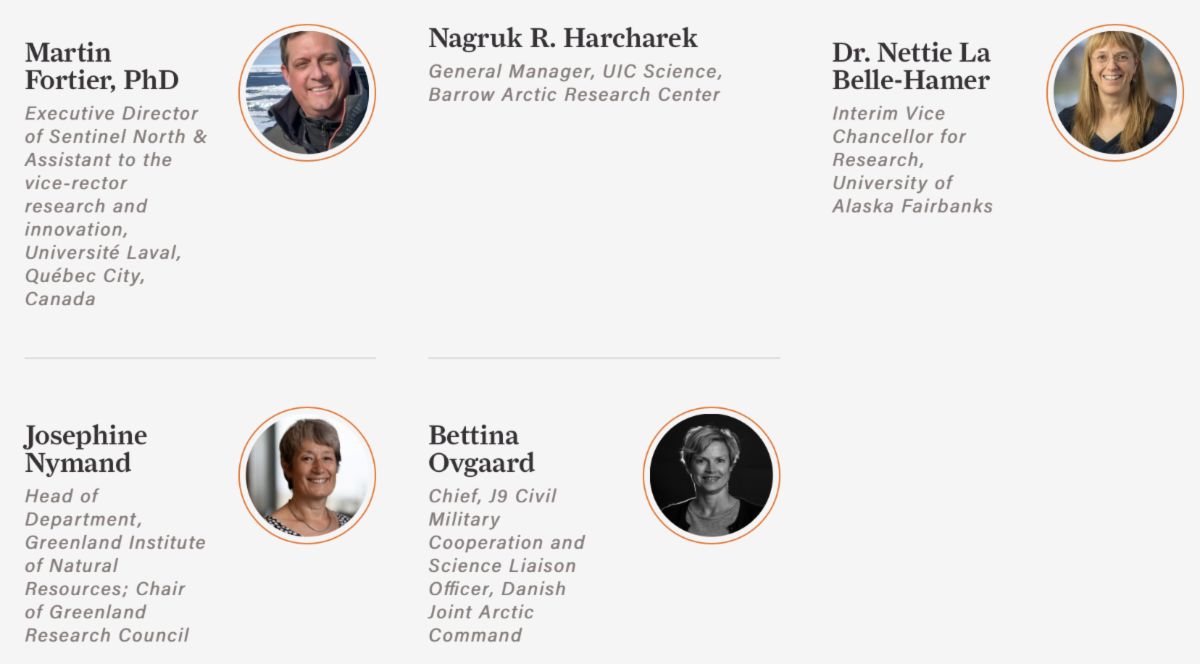
** New this week ** Arctic Research Infrastructure and Capabilities in North America, 1:30 pm EDT on September 23, 2020 (virtual). Research stations in Alaska, Canada and Greenland provide critical science and information about Arctic climate and environment in North America. Scientists continue to call for increased monitoring and research capabilities in the region. Hosted by the Wilson Center's Polar Institute, in partnership with Sandia National Laboratories, this panel aims to assess the existing gaps and opportunities for research capabilities and aspirations in the North American Arctic. Panelists will provide overviews of current research infrastructure in their countries. Moreover, they will highlight reasons for close, international cooperation between North American research institutions.
The discussion will be introduced by Mike Sfraga (Polar Institute) and moderated by Sherri Goodman (Polar Institute) and John Farrell (USARC). Panelists include:
 ** New this week ** United States Air Force Arctic Strategy: Perspectives and Insights, 12:00 pm EDT on October 5, 2020 (virtual) . This event is hosted by the Polar Institute of the Wilson Center and the Arctic Domain Awareness Center. The Air Force Arctic Strategy was released in July 2020.  According to the Department of the Air Force, "The strategy outlines the Department's unique regional role and efforts to optimize Air and Space capabilities throughout the region in support of the National Defense Strategy." We are honored to host a group of distinguished military leaders for a facilitated round table discussion regarding the Air Force Arctic Strategy to include contextual perspectives about the new Arctic, the Arctic in context of Great Power Competition, and the role and importance of the Air Force in Alaska and the Arctic.
 ** New this week ** Arctic Circle VIRTUAL: Dialogue with US Senator Lisa Murkowski, 9:30 am EDT on October 6, 2020 (virtual) . This event is hosted by Arctic Circle. In this Dialogue, which takes place only four weeks from the Presidential election, Senator Murkowski will discuss the importance of the election for the Arctic. Participants will be able to send in their questions and comments, both before and during the event, to be addressed in the Dialogue. Arctic Circle's own Chairman and former President of Iceland, Ólafur Ragnar Grímsson will moderate this event.
2021 Alaska Marine Science Symposium, January 26-28, 2021 (virtual). The Alaska Marine Science Symposium (AMSS) has been bringing together scientists, educators, resource managers, students, and interested public for over twenty years to discuss the latest marine research being conducted in Alaskan waters. Over 700 people attend this 4-day long conference held annually during the month of January. Each day of the conference highlights important Alaskan marine ecosystems: Gulf of Alaska (Tuesday), Bering Sea & Aleutian Islands (Wednesday), and the Arctic (Thursday). Research topics discussed range from ocean physics, fishes and invertebrates, seabirds, marine mammals, to local traditional knowledge. Since its inception, NPRB has been a proud sponsor and one of the leading organizers of AMSS.
Arctic Frontiers 2021, February 1-4, 2021 (virtual). Arctic Frontiers started out in 2006 assembling the first global scientific conference on economic, societal and environmental sustainable growth in the north. In February 2021, we will arrange the 15th conference with the theme "Building Bridges". The conference has a pan arctic perspective and builds new partnerships across nations, generations and ethnic groups. Arctic Frontiers provides a forum for dialogue and communication between science, government and industry in the Arctic.
Arctic Science Summit Week, March 20-26, 2021 (Lisbon, Portugal). The Portuguese Minister of Science, Technology and Higher Education, the Portuguese Foundation for Science and Technology (FCT) and the Local Organizing Committee will host the Arctic Science Summit Week 2021. The Conference is organized by FCT, Ciência Viva, AIR Center, the Portuguese Arctic Community and by IASC and partners. Framed by the overarching theme for the Science Conference "The Arctic: Regional Changes, Global Impacts," Lisbon invites International experts on the Arctic and Indigenous Peoples to discuss the "New Arctic" and also its impacts and interactions to and with the lower latitudes.
2nd Symposium on Polar Microbes and Viruses, May 3-6, 2021 (Hanko, Finland). Organizers announce, that due to the coronavirus outbreak, the 2nd Symposium on Polar Microbes and Viruses has been postponed to 2021. This symposium will bring together molecular microbial ecologists specializing in different organism groups to share our latest results and discuss methodological problems, as well as future prospects in the field, including practical international collaborations. The environmental focus will be on cryospheric environments including sea ice, glaciers, ice sheets, and permafrost, but excellent research in other polar environments is also invited. The methods to be discussed will focus on 'omics' techniques, ranging from single cells to metagenomes, but research using additional methods is encouraged as well.
3rd Arctic Science Ministerial, May 8-9, 2021 (Toyko, Japan). The Japanese and Icelandic organizers of this ministerial continue to plan for an in-person ministerial, in Tokyo, but have moved the dates from November 21-22, 2020 to May 8-9, 2021 because of Covid-19. Since the last Arctic Science Ministerial in 2018, changes in the Arctic ecosystem and the resulting impacts locally and globally have been severely felt. Considering the need for climate change mitigation, adaptation, and repair measures, the relevance of an international Arctic Science Ministerial has never been greater. It is necessary to strengthen scientific cooperation and collaboration among both Arctic and non-Arctic States in order to develop our understanding of the rapid changes impacting the Arctic. The First Arctic Science Ministerial (ASM1) was hosted by the United States in 2016, and two years later, the Second Arctic Science Ministerial (ASM2) was co-hosted by Germany, Finland, and the European Commission. ASM3 will be co-hosted by Iceland and Japan.
|
|

  
4350 N. Fairfax Drive, Suite 510
Arlington, VA 22203, USA
External links in this publication, and on the USARC's World Wide Web site ( www.arctic.gov) do not constitute endorsement by the US Arctic Research Commission of external Web sites or the information, products or services contained therein. For other than authorized activities, the USARC does not exercise any editorial control over the information you may find at these locations. These links are provided consistent with the stated purpose of this newsletter and the USARC Web site.
|
|
|
|
|
|
|
|
|