Take the NSF Arctic science survey. The Office of Polar Programs at the National Science Foundation is seeking responses from the Arctic research community for its Portfolio Review Committee, which is considering the successes and potential future changes in its program structure and funding balance of the Arctic Science Section (ARC).
ARC funds research within and across a wide range of disciplines, all affected by rapidly changing natural and social Arctic systems. Please consider taking the survey,
here, as the responses will be crucial to the future of ARC programs.
OPP is seeking frank, constructive and informative responses. The
deadline to respond is September 30th.
Survey responses will be anonymous, as the results are identified only by a computer-generated ID number. Only aggregate findings will be included in the final report.
The survey should take less than 15 minutes to complete. There are some interesting questions, such as, "NSF ARC should fund research primarily in the U.S. Arctic," and "NSF ARC should fund only natural science projects." (i.e., not fund social science projects in ARC).
NSF Survey
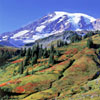 Global Study Finds Taller Plant Species Taking Over as Mountains and the Arctic Warms. A study by more than 100 global researchers is linking the effects of climate change to new and taller plant species in the Arctic and alpine tundra, where low-growing grasses and dwarf shrubs typically grow. Their findings have been published in Nature. Simon Fraser University biology professor David Hik, whose research is focused on the terrestrial ecology of northern mountains, was part of the massive team. A former PhD student from his lab, Isla Myers-Smith, now at the University of Edinburgh, is one of the study's three lead authors.
EurekAlert
2018 Arctic Summertime Sea Ice Minimum Extent Tied for Sixth Lowest on Record. Arctic sea ice likely reached its 2018 lowest extent on Sept. 19 and again on Sept. 23, according to NASA and the NASA-supported National Snow and Ice Data Center (NSIDC) at the University of Colorado Boulder. Analysis of satellite data by NSIDC and NASA showed that, at 1.77 million square miles (4.59 million square kilometers), 2018 effectively tied with 2008 and 2010 for the sixth lowest summertime minimum extent in the satellite record. Arctic sea ice, the cap of frozen seawater blanketing most of the Arctic Ocean and neighboring seas in wintertime, follows seasonal patterns of growth and decay. It thickens and spreads during the fall and winter and thins and shrinks during the spring and summer.
Phys.org
More Persistent Weather Patterns in US Linked to Arctic Warming. Persistent weather conditions, including dry and wet spells, generally have increased in the United States, perhaps due to rapid Arctic warming, according to a new study. Persistent weather conditions can lead to weather extremes such as drought, heat waves, prolonged cold and storms that can cost millions of dollars in damage and disrupt societies and ecosystems, the study says.
Science Daily
Extra Arctic Observations Can Improve Predictability Tropical Cyclones. Scientists have found that additional weather observations in the Arctic can help predict the track and intensity of tropical and mid-latitude cyclones more accurately, improving weather forecasting of extreme weather events.
Science Daily
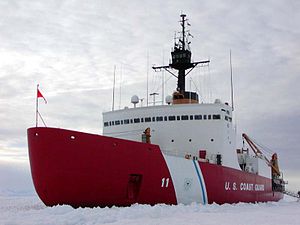 Coast Guard Renames New Icebreaker Program 'Polar Security Cutter.' The U.S. Coast Guard changed the name of its heavy icebreaker program to highlight its importance to national security, as funding for the first-in-class ship may be in jeopardy. Now dubbed the Polar Security Cutter, Coast Guard leadership and backers on Capitol Hill are determined to secure funding for the planned new class of heavy icebreaker - the first for the Coast Guard in more than four decades - by marketing its vital role protecting the nation's sovereignty. "When we talk about icebreaking capability, that doesn't sell very well to all audiences," Rear Adm. Melvin Bouboulis, the Coast Guard's Assistant Commandant for Engineering and Logistics, said during the recent American Society of Naval Engineers (ASNE) Fleet Maintenance and Modernization Symposium.
USNI News
 leaders in Washington, D.C. As the largest Earth and space science gathering in the world, the Fall Meeting places you in the center of a global community of scientists drawn from myriad fields of study whose work protects the health and welfare of people worldwide, spurs innovation, and informs decisions that are critical to the sustainability of the Earth.