|
Are You Winning Work
Or Giving Profit Away
Small and mid-sized business owners work tirelessly to improve profitability. They reduce waste, negotiate better supplier terms, increase productivity, manage payroll, and seek efficiency throughout the business.
Yet one of the most powerful profit levers often receives far less attention: the price the company charges.
When pricing lacks discipline, the consequences may not be immediately obvious on the P&L. Revenue can grow. The production schedule can be full. Employees can be working overtime.
Still, the owner may be left asking an important question: If we are this busy, why are we not generating more cash?
The answer is often not volume. It is the quality of the revenue being earned.
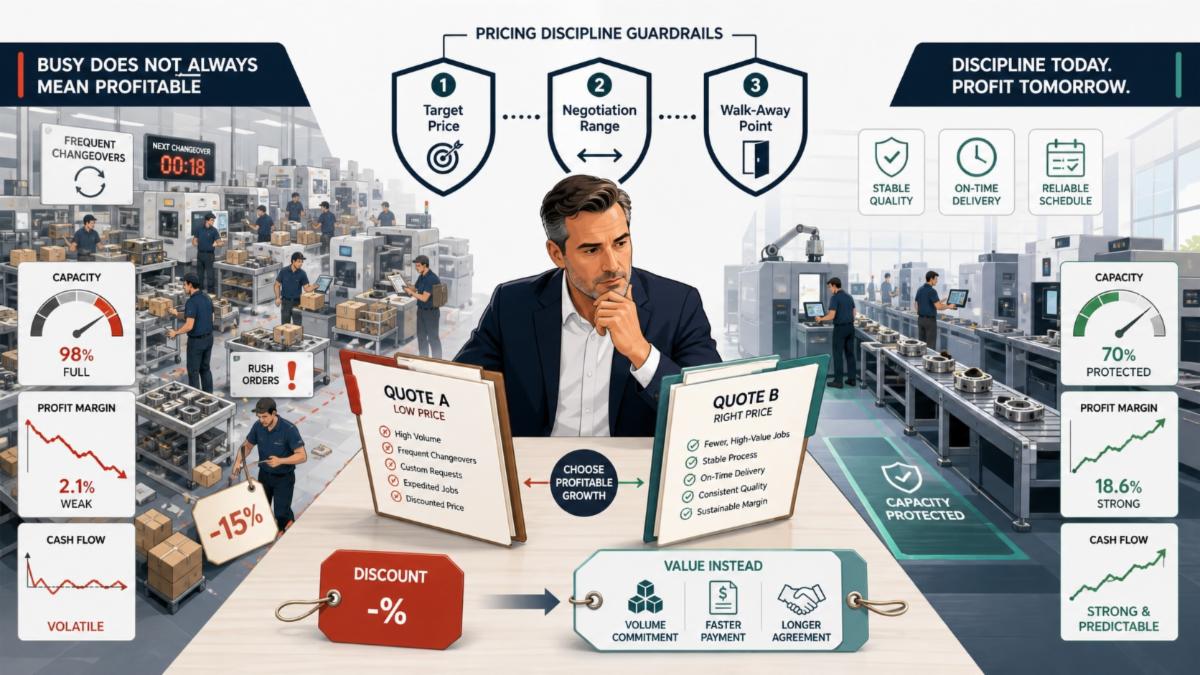
Busy Does Not Always Mean Profitable
A full schedule can create a false sense of security. Activity is not the same as profitability, and a busy operation is not necessarily a healthy one.
Small, rushed, customized, or low-dollar orders frequently require a disproportionate share of company resources. They may involve additional quoting, setup, changeovers, purchasing, scheduling, customer communication, material handling, shipping coordination, invoicing, and follow-up.
When a job produces only a thin margin, the company may be using valuable people and limited capacity to create activity rather than meaningful profit.
Before accepting work simply to keep the team busy, owners and leaders should ask:
- Does this job contribute enough after accounting for its full setup, service, and administrative costs?
- Will it interrupt or displace more profitable work?
- Is this customer likely to become more valuable over time, or are we training them to expect discounted pricing?
- Does this work fit our strategy and capabilities, or are we accepting it because open capacity makes us uncomfortable?
Revenue that consumes capacity without delivering an adequate return can make a company larger, busier, and less valuable at the same time.
How Discounts Become a Habit
Discounting rarely begins as a deliberate strategy. More often, it starts with reasonable intentions.
A salesperson wants to win a new account. A long-time customer asks for help. A competitor submits a lower quote. An owner wants to avoid losing a job or seeing capacity sit idle.
Taken individually, these decisions can be understandable. Over time, however, exceptions become expectations.
Customers begin to assume that the first price is negotiable. Salespeople learn that reducing price is the quickest way to overcome resistance. Managers review discounts one transaction at a time, but no one steps back to ask whether the original price reflected the value the company provides.
That is the central issue.
A business should be able to explain why its price is justified—not simply why its costs require it. Reliable delivery, technical expertise, responsiveness, consistent quality, flexibility, problem-solving, and reduced customer risk all create value.
When a company delivers those advantages but prices like a commodity supplier, it gives much of that value away for free.
Give Your Team Clear Boundaries
Improving pricing discipline does not require a large pricing department, complicated software, or lengthy approval processes. It begins with a clear and repeatable framework.
For important opportunities, the team should understand three things:
- Target price: The preferred price based on the value delivered, the work required, and the company’s desired return.
- Negotiation range: The amount of flexibility available if the customer requests a concession.
- Escalation or walk-away point: The price at which leadership review is required—or the business should decline, redesign, or re-scope the work.
This framework gives salespeople room to exercise judgment without leaving them to negotiate from instinct alone.
It also improves coaching. Rather than simply asking why a salesperson discounted, a manager can ask what the business received in exchange for the concession.
Did the customer commit to greater volume? Better payment terms? A longer-term agreement? Reduced service requirements? A strategic opportunity that fits the company’s goals?
If the answer is “nothing,” it was not a negotiation. It was a giveaway.
Price for the Business You Want
The objective is not to charge the highest possible price in every situation. It is to make intentional choices about the customers you serve, the work you pursue, the capacity you protect, and the return the business requires.
Pricing discipline helps owners improve cash flow, protect scarce capacity, invest in people and equipment, and create a more valuable company over time.
Conclusion
Price should not be the easiest lever your team pulls when a customer hesitates.
Before granting a discount or accepting low-margin work, pause and ask whether the decision supports the business you are trying to build. The right revenue is not simply revenue that fills the schedule. It is revenue that rewards the company for the value it provides.
The question is not whether your team has permission to discount.
It is whether they understand the value of the work—and the value of the business—before the customer asks for a lower price.
Question for You to Ponder
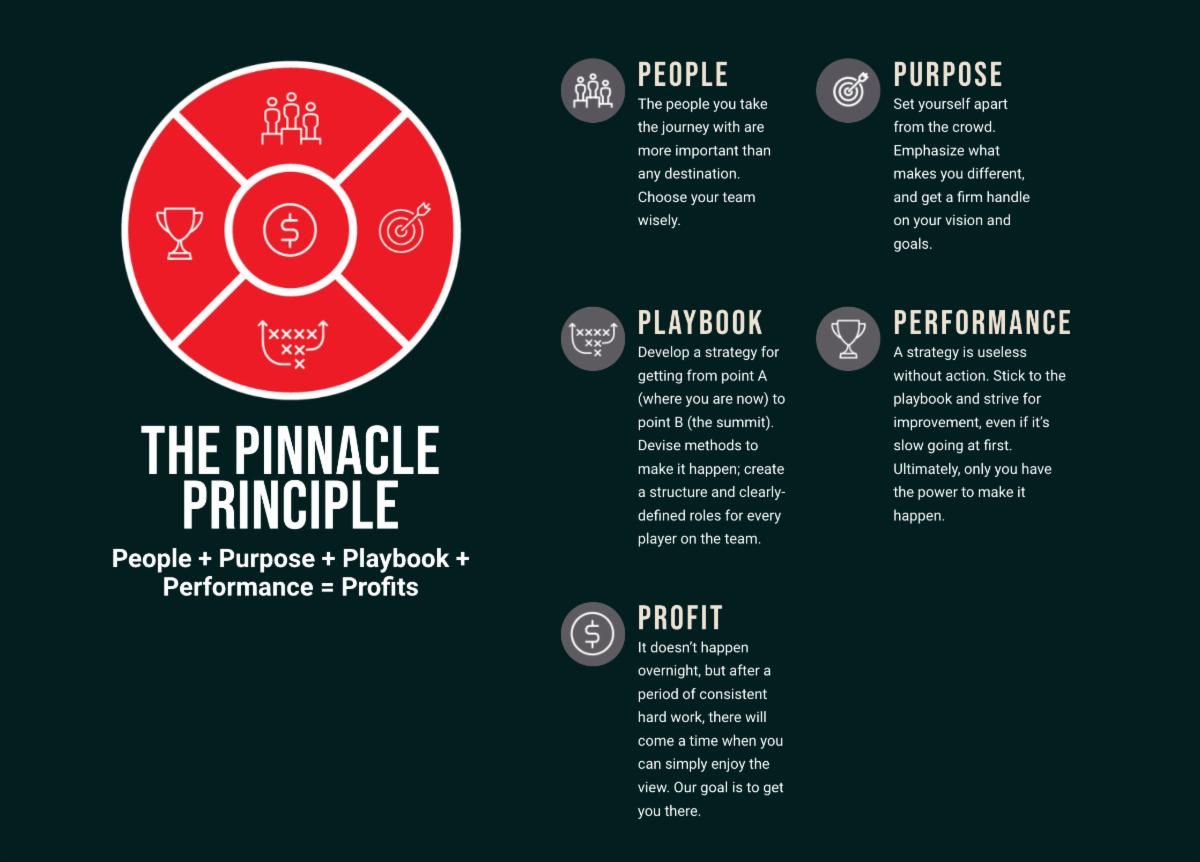
Are you ready to lead your business to its Pinnacle?
Outcome (if you act)
More valuable company, higher profit, and a better quality of life.
Call to Action
-
Ask me for a copy of the Path to Pinnacle
- Schedule a Meeting with Me
Our Mission: Accelerate Profitable Growth and Improve Execution
|