|
Teaching & Leading with Intention
Bi-Weekly Insights from Research for Better Teaching
| |
Success Starts with Clarity
Empowering Every Learner with Visible, Actionable Criteria for Success
| | |
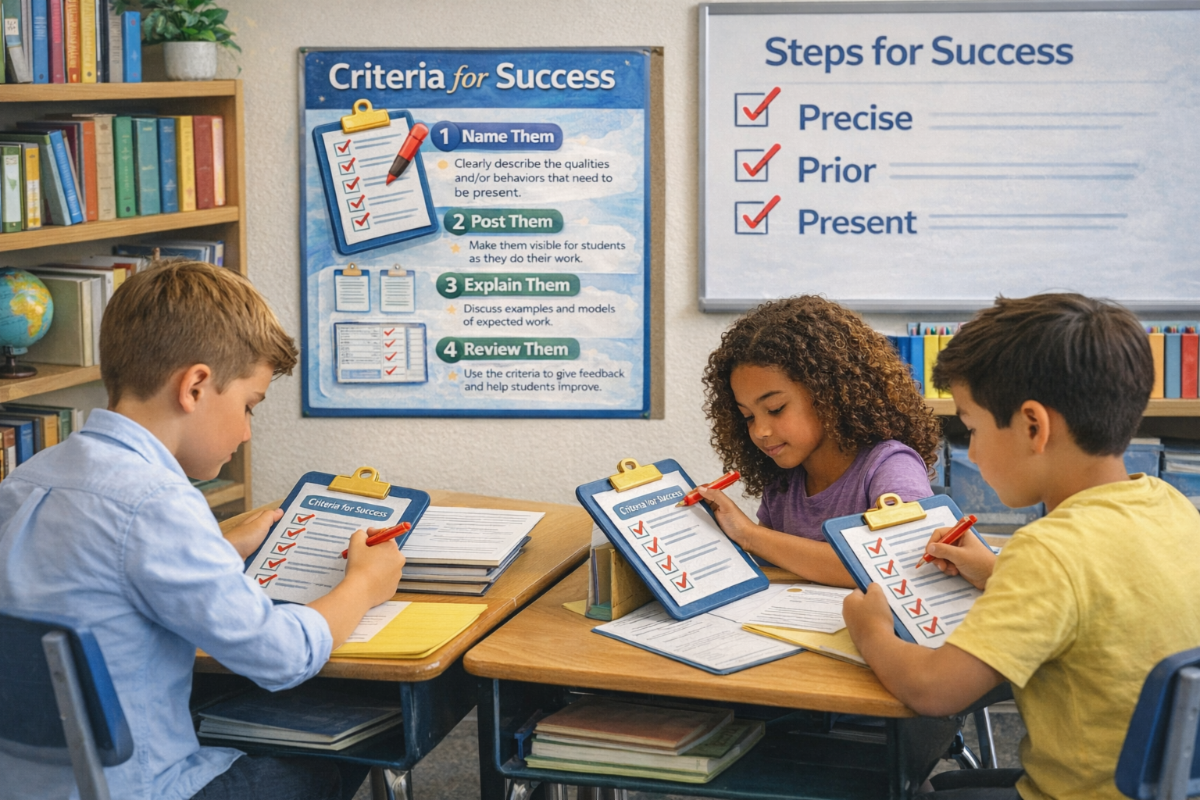
In recent editions, we’ve focused on writing clear learning objectives—what students are learning and why it matters. But even a strong objective isn’t enough if students don’t know what success looks like.
Criteria for success translate objectives into something students can see, understand, and use. When quality is explicit, students are more likely to persist, self-monitor, revise, and take ownership of their learning. When it isn’t, expectations remain hidden—and inequities grow.
| | |
“When students know what good work looks like and what it will be judged against, they are in a much better position to produce it. This is the logic behind criteria for success.”
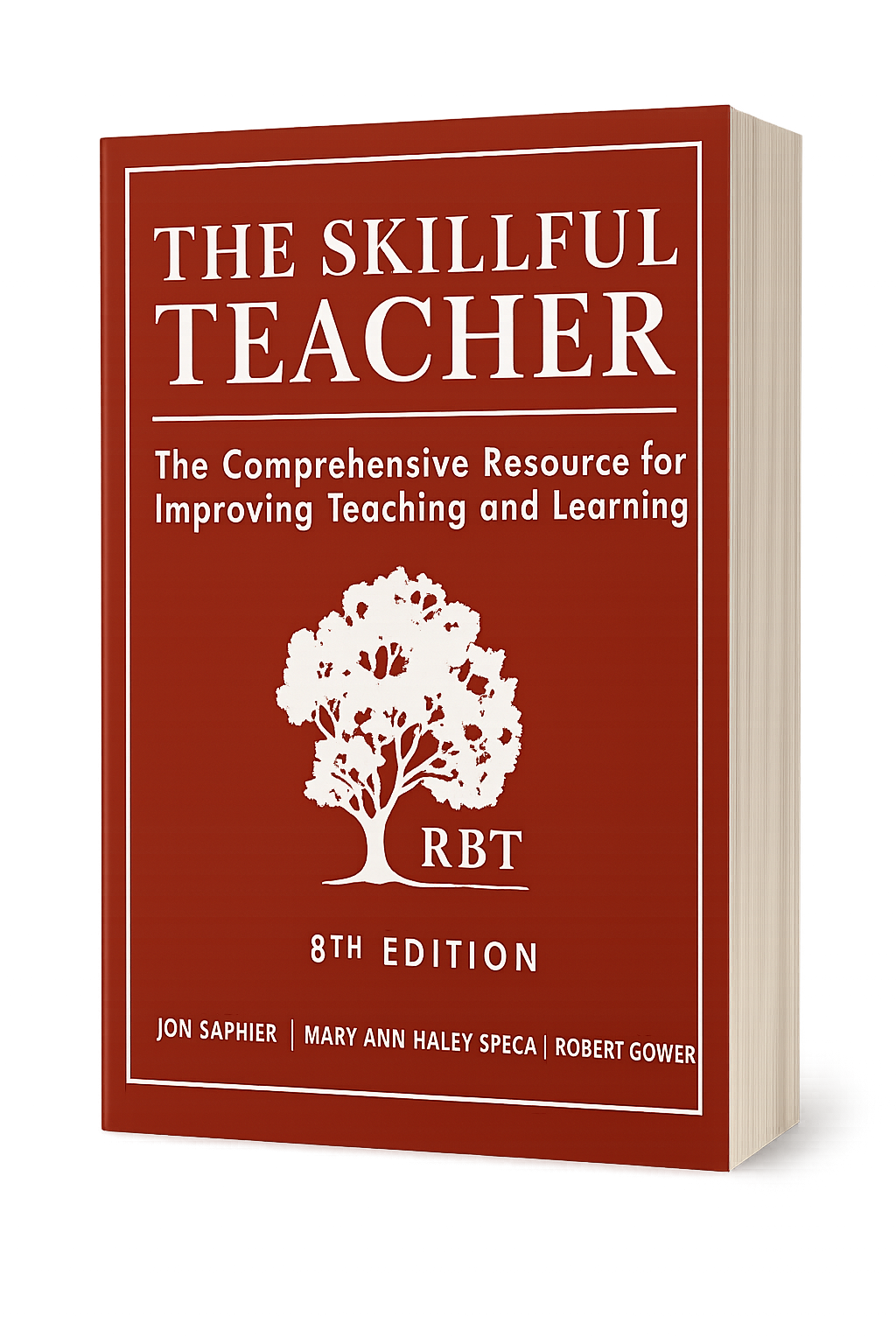
The Skillful Teacher, Eighth Edition
| |
Why It Matters:
Criteria for success answer a critical student question:
“How will I know if I’m doing this well?”
| | |
Without clear criteria:
- Students guess what the teacher wants
- Feedback feels vague or personal
- Effort may be misdirected
With clear criteria:
- Students understand what quality work looks like
- Feedback is specific and actionable
- Learning becomes transparent and attainable
| |
| |
“For many students, hearing the words of criteria isn’t enough. They need examples, non-examples, and guided analysis of what makes one piece of work higher quality than another.”
The Skillful Teacher, Eighth Edition
| |
Try This: Start with the Work
Instead of starting with a list of criteria, begin with the end in mind. Choose a strong, proficient example of student work—ideally one that matches the type of task your students will do.
Then ask yourself:
- What makes this work strong?
- What did the student do that demonstrates understanding?
- What specific qualities would I want to see again in future student work?
- Are the qualities observable and measurable—would a student know if they’ve done it?
From there, create a list of criteria for success. Write them in student-friendly language, and share them before students begin the task. You can even involve your class in the process—analyzing the sample together and co-constructing the criteria as a way to build clarity and ownership.
| | |
“Criteria are more powerful when students are involved in generating them, or when they engage in analyzing sample work and discussing how the criteria apply.”
The Skillful Teacher, Eighth Edition
| | If students have the assignment directions, they know what success looks like. | |  | Directions tell students what to do. Criteria clarify how well the work should be done. | | | |
Sharing criteria limits creativity.
| | | Clear criteria free students to focus on thinking and problem-solving rather than guessing expectations. | | | Criteria are only for graded work. | | | Criteria are most powerful when used during learning—for self-checks, peer feedback, and revision. |
| |
Small Shifts, Big Impact:
- Shifting from implicit expectations to explicit criteria helps all students access quality.
- Shifting from teacher-only judgment to student self-assessment builds agency.
- Shifting from end-of-task feedback to criteria-referenced feedback during learning accelerates growth.
For Instructional Leaders:
When observing or coaching, look for:
- Are criteria for success visible or clearly articulated?
- Do students reference criteria when working or revising?
- Is feedback tied directly to the criteria?
Coaching question to try:
“How did students know what quality looked like during this task?”
| |
Research Connection:
Wiliam (2011) and Hattie (2012) are cited in The Skillful Teacher to emphasize that clarity of expectations and success criteria are essential for increasing student achievement. Hattie's meta-analysis found that when students understand what success looks like and how to achieve it, the effect size on learning is 0.75, a high-impact strategy for improving learning outcomes. Brookhart (2011) is cited to reinforce that students benefit most when criteria are measurable, specific, and aligned with the learning objective.
For more see Chapter 11, Clarity in The Skillful Teacher, 8th Edition
| | |
“Students are more motivated and more likely to revise their work when they know the criteria for quality and see them as attainable.”
The Skillful Teacher, Eighth Edition
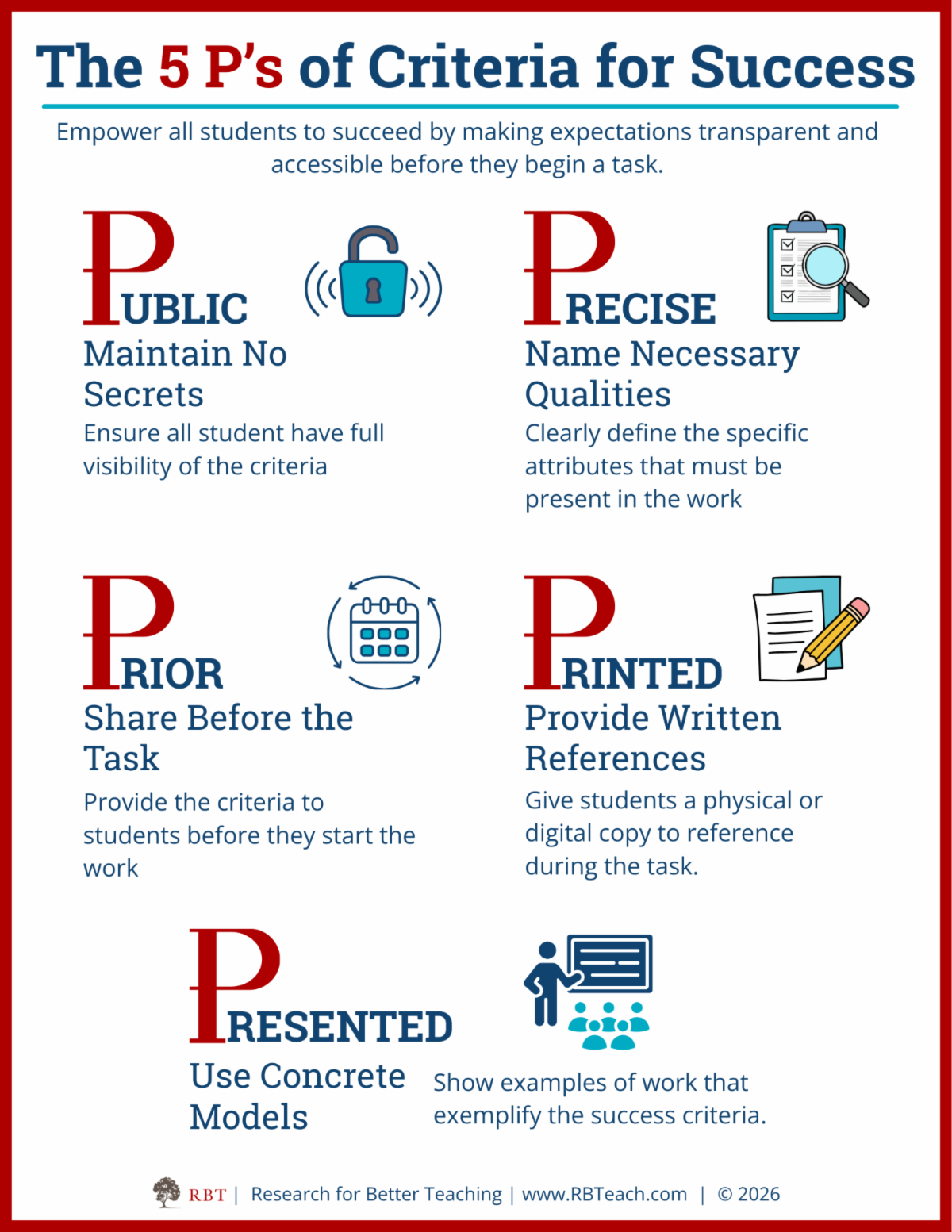
| | The 5 P's of Criteria For Success | | |
Clear criteria aren’t just a support—they’re a catalyst for student success. This visual guide distills five essential moves that help make expectations visible, understandable, and actionable for all learners. Use it to strengthen your planning, guide student self-assessment, or spark discussion in PLCs.
From making success criteria Public and Printed, to ensuring they are Precise, Presented with models, and shared Prior to task launch—this tool helps teachers empower students to meet rigorous standards with clarity and confidence
| | | Be sure to check out all the other chapter resources | |
Spread the Word:
Teaching and Leading with Intention
| | Missed an issue of the newsletter? You can find archived copies here. | |
Now Open:
RBT’s Summer Courses for Teachers & Leaders
| | Looking to deepen your expertise, refresh your practice, or grow your leadership impact this summer? RBT’s Summer Open Courses are now open for enrollment! These courses are designed for individuals or small groups (fewer than 25) . | | | |
Studying Skillful Teaching
Hybrid
Instructor: Chris Olansen-Rilli
In-Person Dates: June 23 - 26
Time: 8:30am - 3:30pm EST
Location: 1 Acton Place, Acton, MA
Virtual Dates:
Tuesdays: Sept. 22, Oct. 6, Oct. 20, Nov. 3
Time: 4:00pm - 6:30pm EST
Location : Zoom
| | | | |
Analyzing Teaching for Student Results
In-Person
Instructor: Deb Reed
In-Person Dates: July 7-10, September 30, October 22, November 18
Time: 8:30am - 3:30pm EST
Location: 1 Acton Place, Acton, MA
| | | | | |