|
Written by Kieran Delamont, Associate Editor, London Inc. | |
CULTURE
Who’s mimicking whom?
It’s happening: People are starting to talk like ChatGPT
| | |
MANY OF US believe that even though we exist firmly in the age of the AI chatbot, that we fleshy humans possess some innate quality that will always set us a step apart from what large language models are able to produce.
They will always sound a little bit like LLMs, even if the tone is more convincing than it once was; we will always sound like humans, for better or worse. Right?
Evidence is mounting, however, that the way that LLMs ‘speak’ is starting to change the way humans speak. In July, researchers at the Max Planck Institute for Human Development published research that suggested human speech was being influenced, gradually, by the way LLMs were communicating.
“I realized I was using ‘delve’ more,” said researcher Hiromu Yakura, referencing one of the early quirks of ChatGPT, which famously overused the word. “I wanted to see if this was happening not only to me but to other people.”
Their research found a surge in ChatGPT-isms used in human YouTube videos and podcast episodes — terms like ‘delve,’ ‘boast,’ and ‘meticulous.’ Analysts had already been tracking the rise in these words in academic papers, but the assumption had been it was due solely to a rise in the use of LLM output. What Yakura’s research suggests it is also because humans are starting to speak more like the LLM outputs they’re reading so frequently.
“The patterns that are stored in AI technology seem to be transmitting back to the human mind,” said researcher Levin Brinkmann in Scientific American.
One of the front lines for this is Reddit of all places, where moderators of long-standing subreddits like r/AmItheAsshole are having an increasingly difficult time distinguishing between what is AI slop and what is a human who just writes like AI.
But it’s not just down in the muck of Reddit. A New York Times Magazine essay by writer Sam Kriss noted that British politicians suddenly started using the phrase ‘I rise to speak’ — a common phrase in among American lawmakers, not British ones. It wasn’t necessarily the case that MPs were having ChatGPT write their speeches, but it might be the case that all political speech is being inflected with certain AI-isms.
So, we may be approaching something like a tonal convergence point for human and AI text. AIs are mimics, but so are humans.
“The more we’re exposed to AI, the more we unconsciously pick up its tics, and it spreads from there,” Kriss wrote. “Perhaps that day will come for us, too. Soon, without really knowing why, you will find yourself talking about the smell of fury and the texture of embarrassment. You, too, will be saying ‘tapestry.’ You, too, will be saying ‘delve.’”
| |
LEADERSHIP
Excuse me?
CEO of Canadian Museum of Immigration at Pier 21 steps down after report of her calling employees ‘sluts’
| | |
IF YOU WERE ever looking for a masterclass in what not to do as an executive, look no further than the famed Pier 21 Museum in Halifax, which last week ousted its CEO Maria Chapman (pictured) for what the federal integrity watchdog is calling a “serious breach” of the code of ethics.
Much of it started with some, ah, unfortunate nicknames Chapman had for other member of the “senior leadership team,” which you might call your SLT. “I call them sluts,” Chapman is alleged to have told a visiting delegation (she claimed rather improbably the comment was “made in solidarity,” according to the report).
Additionally, Chapman was said to have made comments that included ranking female employees by age; noting there were “no good-looking men” at the museum; and referring to some employees not by their names but by nicknames based on physical or behavioural traits.
And when the museum wanted to feature a woman athlete in an ad campaign, Chapman got a little grumpy and complained the athlete “looked like a man.” When staff were engaged in a union drive, she allegedly “threw a stack of union cards at an employee.”
This behaviour, the integrity report noted, “persisted for over a decade,” and caused several employees to quit.
The report from the federal integrity watchdog is illustrative, if nothing else, of how not to manage a workplace. It was so strong in its conclusions that it offered up only one recommendation: for Chapman to be relieved of her duties and for a third party to determine how to patch things up going forward.
Unsurprisingly, it’s curtains for Chapman at Pier 21 — although she initially did not step down, the museum board eventually pushed her into what they are calling “retirement” at the end of last week.
It is, perhaps, a lesson — if one was really necessary — that you simply cannot call your colleagues sluts and expect to hold on to your $221k a year job.
| |
| |
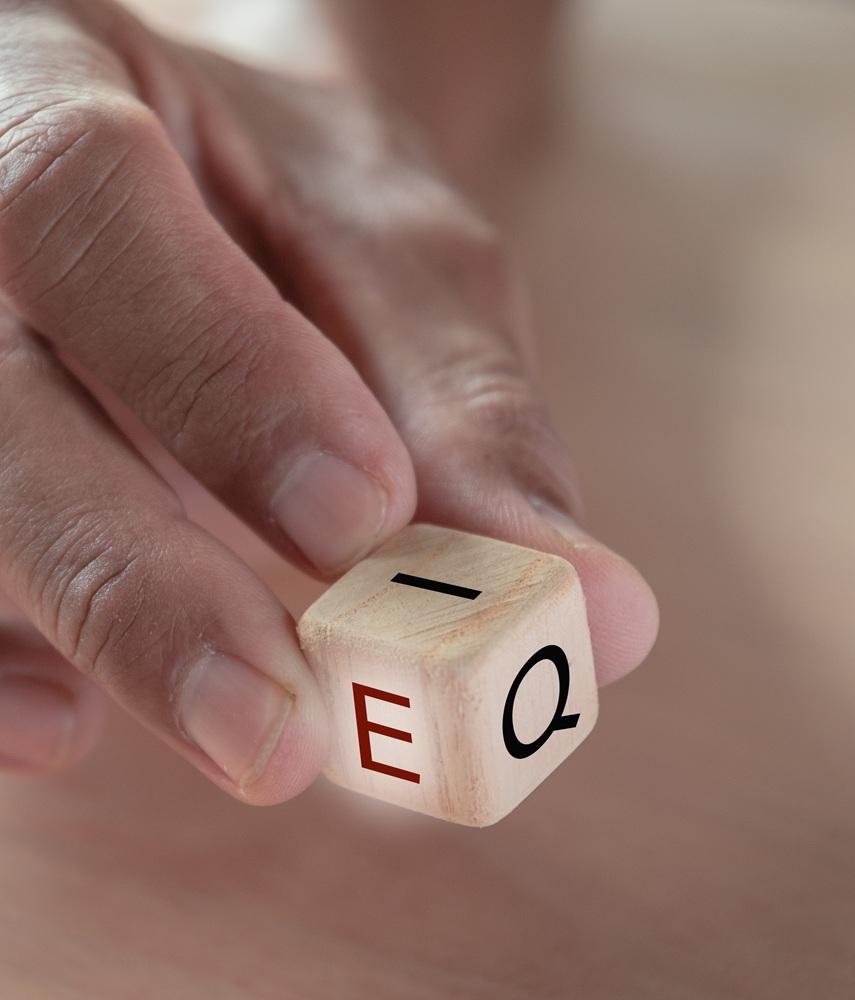
Terry Talk: Want to lead better? Stop flexing IQ and start building EQ
| Does being the smartest person in the room make you the best leader? In this Terry Talk, Ahria Consulting president & CEO Terry Gillis looks at why emotional intelligence (EQ) beats raw IQ when it comes to trust, influence and real leadership. We might equate “smart” with analyzing, problem-solving and having the answers, but real leadership isn’t just what you know, it’s how you connect. EQ is what helps people feel heard, valued and understood — and that’s what keeps the door open. | | | |
TECHNOLOGY
Is this how the AI bubble will pop?
Despite the hype, demand for AI in the workplace seems to be drying up fast
| | |
WE’RE ALL WELL aware of the full-court press to try to get people to use AI at work, which makes this trend in census and survey data particularly interesting: over the last few months, the usage of AI at work has suddenly started to drop.
After steadily climbing to a high of 12 per cent of businesses using AI to produce goods and services, AI adoption has stalled in official statistics, reports The Economist. “Adoption has fallen sharply at the largest businesses, those employing over 250 people,” the publication stated at the end of November, noting that adoption had fallen by a full percentage point over 2025.
Informal surveys track the same. Stanford University professor Jon Hartley found that the percentage of individual workers using AI peaked at 46 per cent in June but had fallen to 37 per cent by September. In almost every data point they were able to review, AI usage had plateaued or had fallen over the past six to eight months.
So, what’s the deal? The Economist proposes a few explanations. One is that there is a clear enthusiasm gap between senior leaders, who love AI, and rank-and-file workers, who view it with much more skepticism. Other explanations question how useful the tech actual is.
“Changing perceptions of AI’s usefulness could be another reason for the adoption stagnation,” they wrote. “Evidence is mounting that the current generation of models is not able to transform the productivity of most firms. To the extent that existing users of AI come to believe that it has an unimpressive return, potential users may hold off on adopting it.”
The tech publication Futurism looked at the data from the opposite direction as well, reading in the data not just apathy towards adoption but a spike in rejection. More workers are comfortable telling surveyors that they don’t use AI in their work at the end of 2025 than were telling them that at the start of 2025.
“The survey results show a steady uptick in ‘no’ results over the past few months, culminating in a dreadful 81.4 per cent as of the latest poll,” Futurism writer Joe Wilkins explained. “Though various non-government surveys…vary wildly in their numbers, they all seem to spell out the same results.”
The rate of adoption is one of the many metrics to watch as more talk of an AI bubble swirls. “Whether AI adoption is fast or slow has profound consequences,” wrote The Economist. “It is also the most important question in determining whether or not the world is in an AI bubble.”
| |
TRAVEL
The case for skipping the airport lounge
The appeal of airport lounges is the cachet of stepping into an “exclusive” area away from the terminal turmoil. Good luck finding that
| | |
|
ONCE UPON A time, it was the height of business class luxury to stroll into the serenity of the airport lounge. You kick your feet up, grab a coffee or perhaps a glass of bubbly and leave the chaos of the economy masses behind.
But lately, that has changed. The lounges always seem full, and you can’t get your work done in there because all the outlets are taken. Everybody and their dog seem to have scored entry into the premium lounge. What’s the point anymore?
If you’re looking for someone to blame, it might be the credit card companies, wrote The Globe and Mail’s Barry Choi. “What was once an exclusive privilege has become a standard benefit for dozens of credit cards in Canada,” he noted. “That means more people with lounge access — a lot more.”
And if you’ve travelled lately and noticed an increase in construction inside terminals, this is likely the reason: now that everyone is cramming into the lounge, airports need to create new lounges that are even more exclusive than the other lounges. Some airport lounges have lounges within lounges, like in Vancouver, where you can pay to enter the Plaza Premium Lounge, and then pay again to enter the Plaza Premium First Lounge. At Toronto’s Pearson International, there’s now the Air Canada Café, which is basically a lounge, and the Signature Suite, a lounge with à la carte dining.
It's reflective of what some observers are calling an Airport Lounge War, underwritten by what seems like unlimited demand for lounge space. Airports and airlines have sought to satiate that demand, but have screwed up the core product in the process. “Most people at an airport don’t visit a lounge. If they did, it would kind of defeat the purpose,” wrote Zach Helfand. “But we’re getting there.”
So, if you’re planning a little bit business-class travel in 2026, the message here might be to temper your expectations. If your last business trip was pre-pandemic, expect the airport lounge to be a little less exclusive than you might expect — but it also might be a lot more glam than you remember.
“With interest through the roof, little wonder that the lounge industry is becoming embroiled in something of an arms race,” said David Mack in The New York Times. “Credit card companies race to erect fancier lounges to satisfy increasing domestic demand. If the people in economy found out how the one per cent were being pampered, there would probably be another French Revolution.”
|
| | | | |