|
This is a newsletter created by the Gender Team of the UNFCCC | | |
The 64th Subsidiary Body session will take place in Bonn, Germany from 8-18 June 2026.
At this session, three mandated events in implementation of the Belém Gender Action Plan are to take place - some of which require prior registration!
Check the details below for more information:
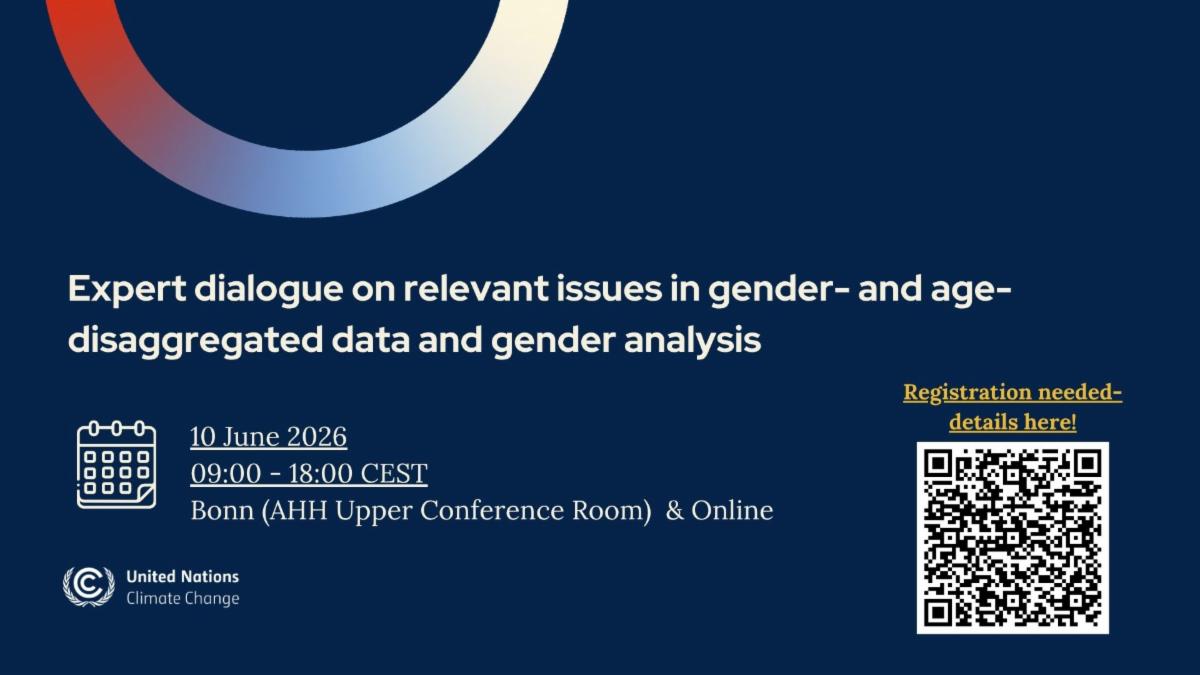
| | Expert dialogue on relevant issues in gender- and age-disaggregated data and gender analysis | | |
The Expert dialogue on relevant issues in gender- and age-disaggregated data and gender analysis will convene experts specializing in gender- and age-disaggregated data and gender analysis in the context of climate change, as well as the practitioners who utilize this data for climate policy and action. It aims to map the landscape of gender- and age-disaggregated data relevant to climate change — including existing datasets, frameworks, and good practices at global and national levels — while identifying gaps, barriers, and opportunities to enhance coherence, as well as to integrate multidimensional factors in data collection, use and analysis.
Featuring panel discussions as well as interactive group work, the dialogue is an early and foundational step in supporting the GAP’s coherent, multi-year architecture for strengthening the robust evidence base required for gender-responsive climate policy and action and for ensuring that climate policy is grounded on the best available data.
Find more information about the event and the full agenda here.
❗️ Registration is needed to participate in this event. Register by May 24th here.
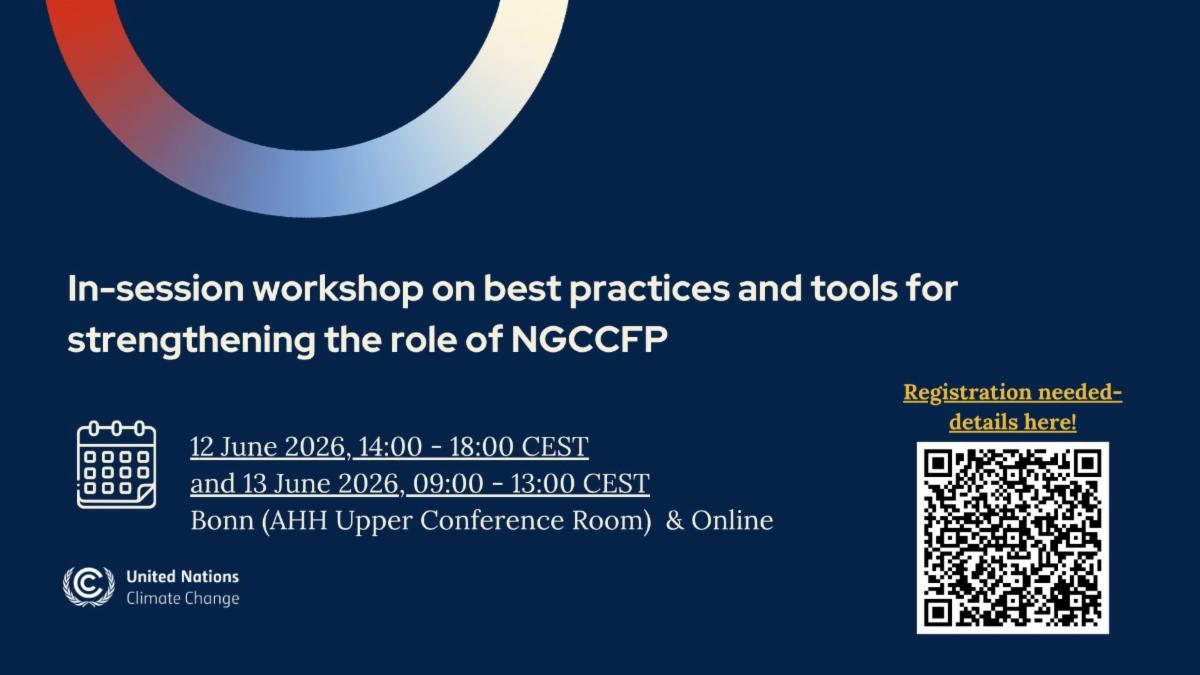
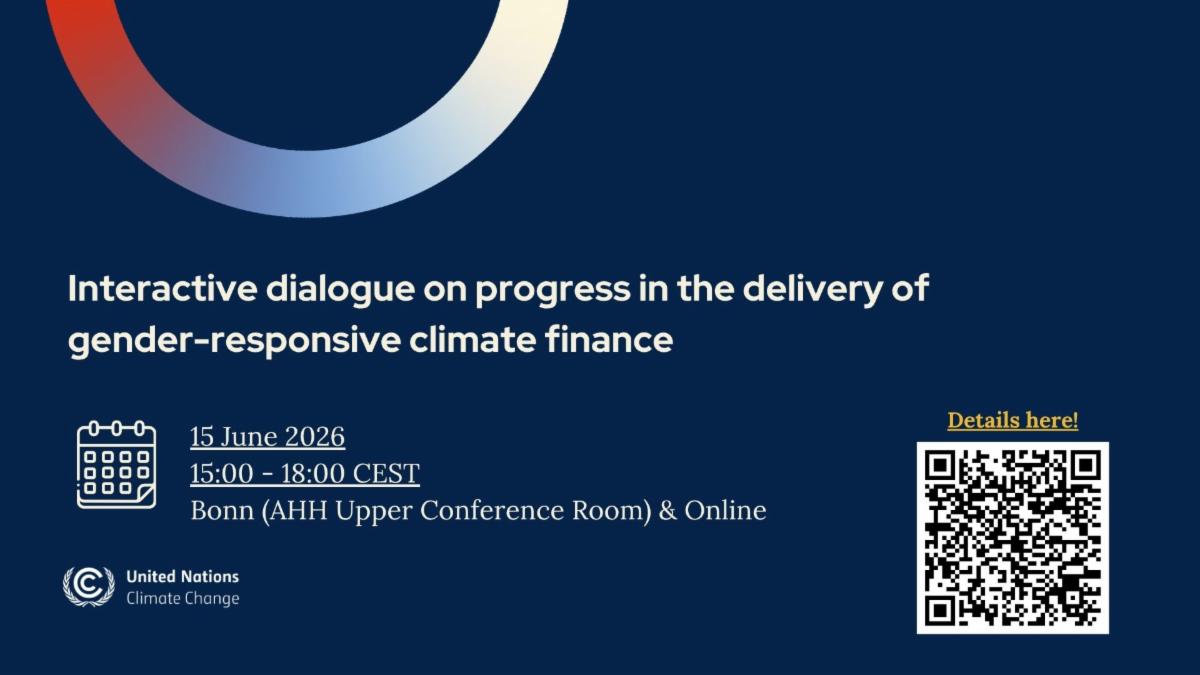
| In-session workshop on best practices and tools for strengthening the role of national gender and climate change focal points (NGCCFP) | | Interactive Dialogue on Progress in the Delivery of Gender-Responsive Climate Finance | | |
The first annual Dialogue on progress in the delivery of gender-responsive climate finance aims to provide a platform for an evidence-based exchange, bringing together operating entities of the Financial Mechanism, multilateral climate funds, national focal points including NGCCFPs, and other stakeholders to assess progress, identify gaps, and inform future action in the delivery of gender-responsive climate finance.
Find more information about the event and the full agenda here.
No registration is needed for this event.
| | 💡 Where to find more information on SB 64 | | |
There are many ways to explore and engage at SB 64. Check out all of the resources on event schedules, agendas, and more. Save this list so you have easy access to all the information you need while attending SB 64.
| | Recording of the Information Session on Gender and Climate Change at SB 64 | | | | |
On May 19th, the secretariat held an information session on what to expect on gender and climate change at SB 64. We thank all participants once again for joining the session and for the fruitful discussions!
📽️If you missed it, the recording of the information session and the slides presented are now available here.
| |
Women and Gender Constituency at SB 64 | |
The Women and Gender Constituency (WGC) will host its traditional UNFCCC 101 - an in-depth capacity-strengthening session for women’s rights organizations and gender advocates. Interested civil society representatives should contact sinead@wedo.org.
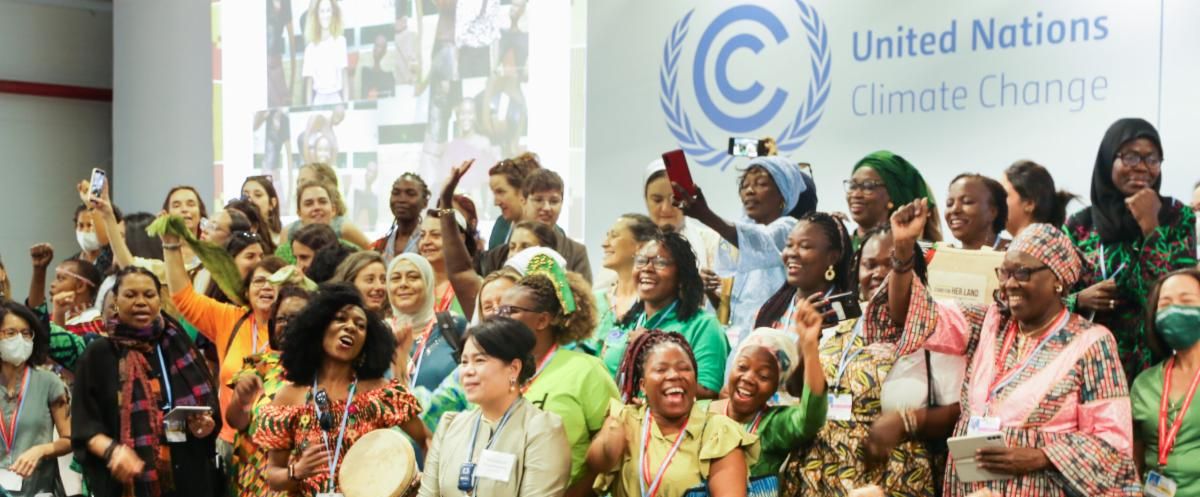
The WGC has also launched the “Act on the Belém GAP” Campaign, mobilizing members and allies to engage key actors responsible for the effective and timely implementation of Belém GAP, including through meetings with National Gender and Climate Change Focal Points happening across the world this week. Their collective SB 64 demands across workstreams will be available on their website, where you can also subscribe to their newsletter, The Caucus, via the sign-up field at the bottom of the page.
| | Updates from Climate Week 3 in Yeosu | | |
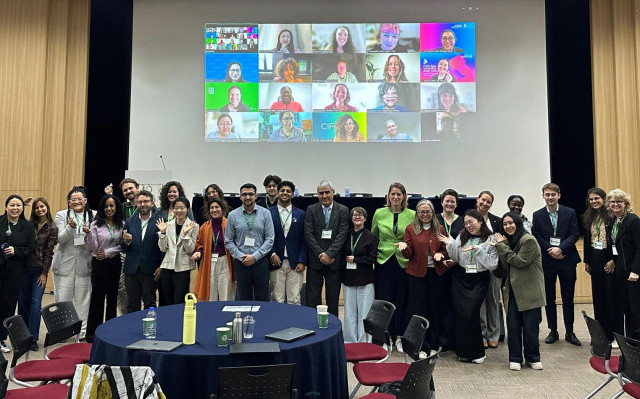
Our full-day hybrid event on financing the implementation of the Belém Gender Action Plan at the national level was held on April 22nd as part of Climate Week 3 in Yeosu.
The objective of the event was to strengthen national capacities for accessing gender-responsive climate finance to support the implementation of the Belém GAP at the national level.
Image: UNFCCC
Participants learned about funding windows, readiness support, and tailored opportunities for gender-responsive climate finance offered by climate funds and multilateral development banks, as well as private sector finance for gender-responsive climate action and innovative finance solutions.
📽️ The presentation and recordings of the event are now available in English, French, and Spanish here.
| |
📢 Reminder on Open Call for Submissions on Climate Change and Gender Responsive Finance | | | | |
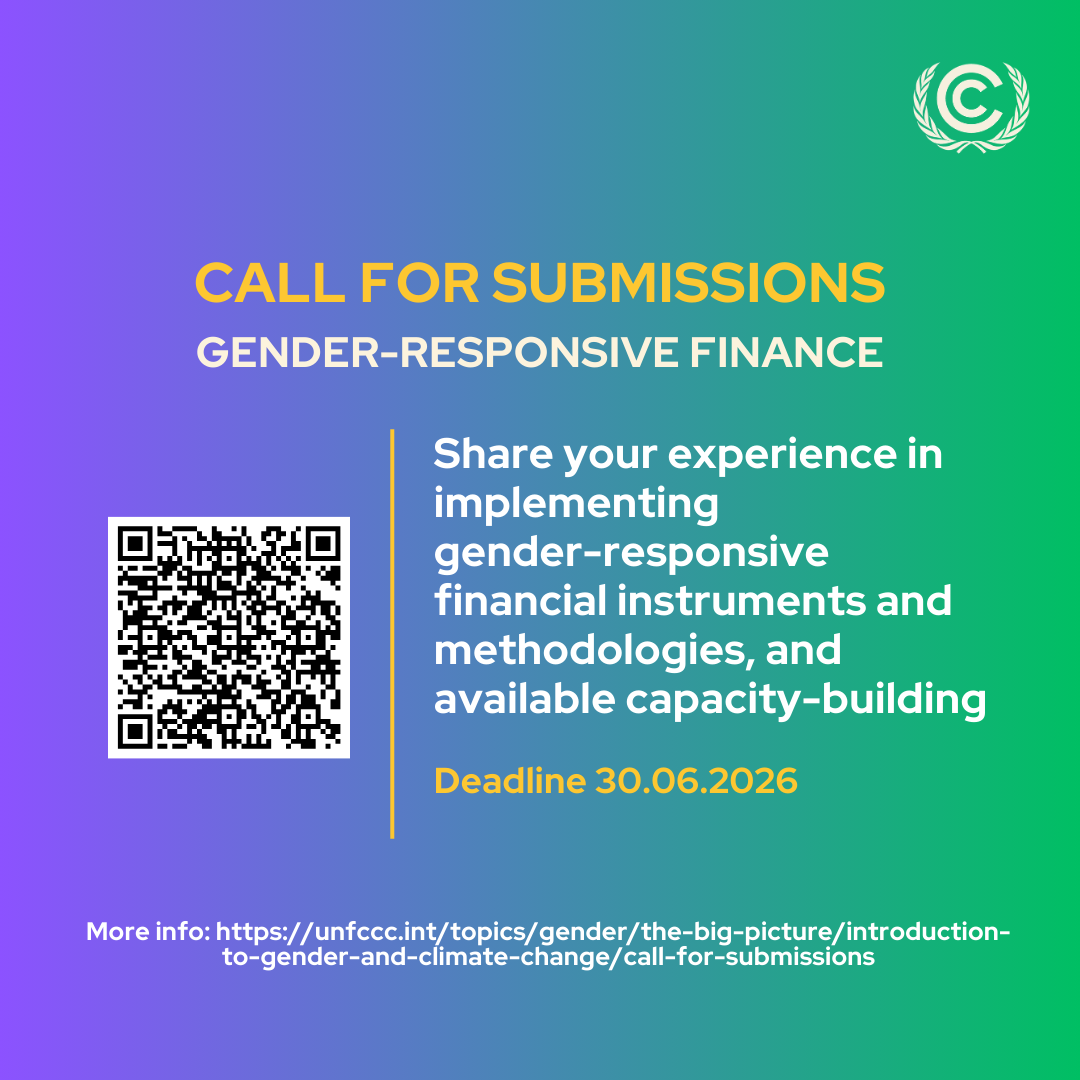
The Belém GAP calls on Parties and relevant organizations to submit their experience in implementing gender-responsive financial instruments, methodologies, and available capacity-building in this regard to advance climate policies, plans, strategies and actions.
📅 The submissions are due by June 30th and will inform a synthesis report that will be presented at COP 31 (2026).
For more information, scan the QR code or follow the link below 👇
| | Resources and Opportunities | |
-
Applications are open for the UNCCD Women Delegates Fund (WDF) Negotiation Training for UNCCD COP17 in Mongolia this August! Deadline is 8 June 2026. Find more details here.
-
The United Nations Climate Technology Centre & Network is looking for Gender experts in Digitalization and on Business and Industry Sector. Find more information below:
○ Sector-specific Gender Consultant on Digitalization
○ Sector-specific Gender Consultant
-
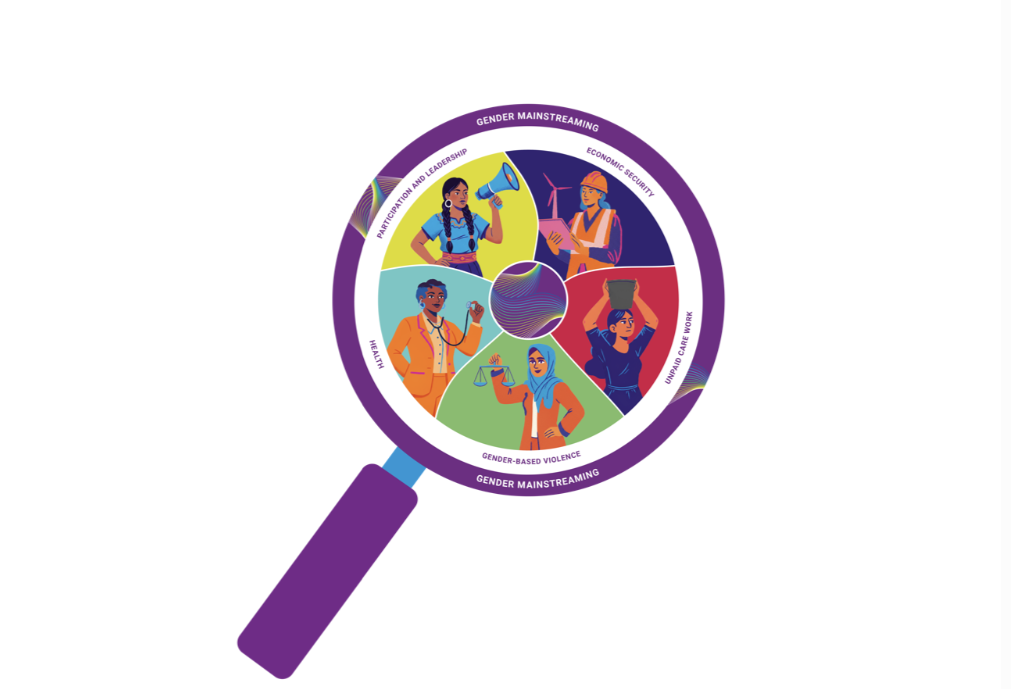
Earth Day’s call this year – Our Power, Our Planet – serves as a reminder that taking action on climate change is about more than simply ambition: it's about who will benefit from it. The Gender Equality and Climate Policy Scorecard by UN Women is a useful tool to monitor whether climate policies are beneficial for women and girls and to implement commitments. Learn more about how it assesses the gender-responsiveness of climate policies across six dimensions: economic security, unpaid care work, gender-based violence, health, participation and leadership, and gender mainstreaming.
-
Why link social protection to climate-risk management? FAO's e-certificate course on managing climate risks through social protection offers data, examples and evidence to better understand how these two approaches can come together to support the 2030 Agenda for Sustainable Development.
-
In the context of the International Year of the Woman Farmer, UN Women is holding the three-part international webinar series titled Cultivating Change: Women Reclaiming and Transforming in June 2026, bringing together policy-makers, development practitioners, civil society organisations and researchers to highlight the realities of women farmers and discuss solutions for more inclusive and gender-responsive food systems. The series places a particular focus on gender-transformative approaches that address power relations and social norms. More information on registration will follow soon.
| | Promote best practices, share resources and foster knowledge exchange focused on the nexus of Gender and Climate Change with our LinkedIn Community. Join us here. | | | | |