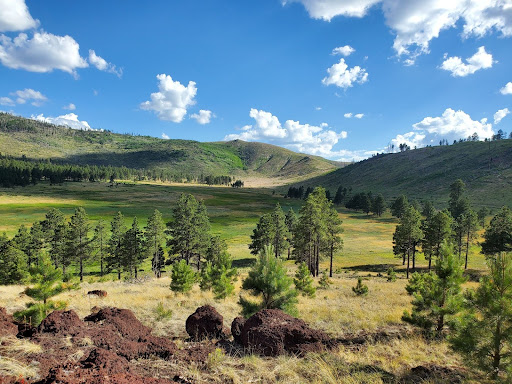
Monthly News & Updates from DFFM's Specialized Forestry Programs | | This month's feature: the Arizona Forest Legacy Program | | What is a Forest Legacy Conservation Easement? | | Image: This 160-acre inholding within the Kaibab National Forest was protected in 2023 through the Forest Legacy Program. Surrounded by public land, this forested property helps preserve scenic views, wildlife habitat, and landscape connectivity in northern Arizona. | | |
Arizona’s forests provide clean water, wildlife habitat, scenic beauty, and space for outdoor recreation. As these lands face increasing pressure from development and fragmentation, the Forest Legacy Program helps ensure they remain forests for future generations. Funded by the U.S. Forest Service, the Forest Legacy Program is implemented in Arizona by the Department of Forestry and Fire Management (DFFM). By working with willing landowners and local partners, this program supports voluntary, long-term land conservation.
A Forest Legacy conservation easement is a permanent, legal agreement that limits certain types of development on private land to protect its working forest values. Landowners retain ownership and can continue traditional uses such as ranching, timber harvest, forestry, or recreation, while ensuring the land’s natural values are protected forever.
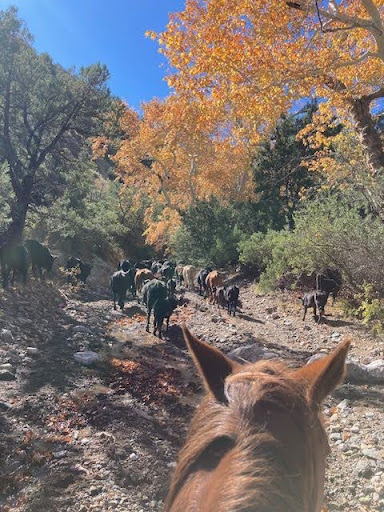
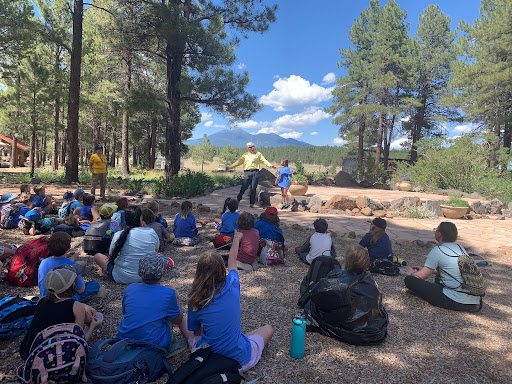
| | Image: A working cattle operation on a potential Forest Legacy project site demonstrates how the program supports rural livelihoods and traditional land uses while conserving Arizona’s forest landscapes. Photo credited to A. Morin. | | Arizona collaborates with counties, towns, and other public entities to secure and manage lands for long-term conservation purposes. These local governments are committed to long-term stewardship and see forest conservation as part of their broader community goals, ensuring meaningful and locally driven conservation. The Forest Legacy Program is about partnership—bringing together landowners, local leaders, and agencies to conserve the places that matter most. Together, we’re helping keep Arizona’s forests working, open, and healthy for future generations. Contact Matthew Jewell, DFFM’s Forest Legacy Program Manager, or visit our website. | Image: Local students participate in summer camp activities on a forested property that may soon be protected through the Forest Legacy Program, helping ensure continued public benefit and outdoor education for generations to come. Photo credited to N. O'Meara. | | Resources, Reads and Engagement | |
Happening this Weekend!
DFFM Tree Measuring Workshop in Tucson, AZ
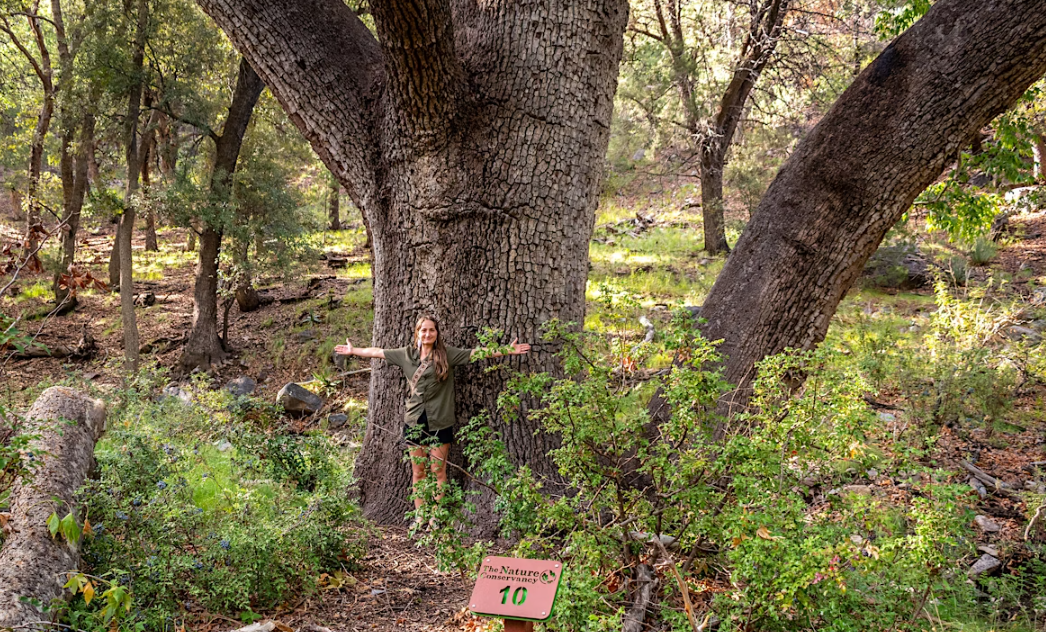
Arizona's Magnificent Tree Program recognizes those trees throughout our state that stand apart from the rest!
Join this workshop at the University of Arizona Campus Arboretum to learn about what it means when a tree is designated a Champion, Heritage, or Witness Tree. You will gain hands-on practice using professional forestry tools to measure tree height, canopy, and trunk circumference.
This workshop is open to the public and requires pre-registration as space is limited. You can register here.
What to bring: Be prepared for warm weather! Our learning space is indoors, but we will move outside to walk around and measure trees that are part of the Campus Arboretum. Please bring water, comfortable walking shoes, sunscreen and anything else you might need to remain comfortable during the hands-on portion of the morning.
See flyer for further details!
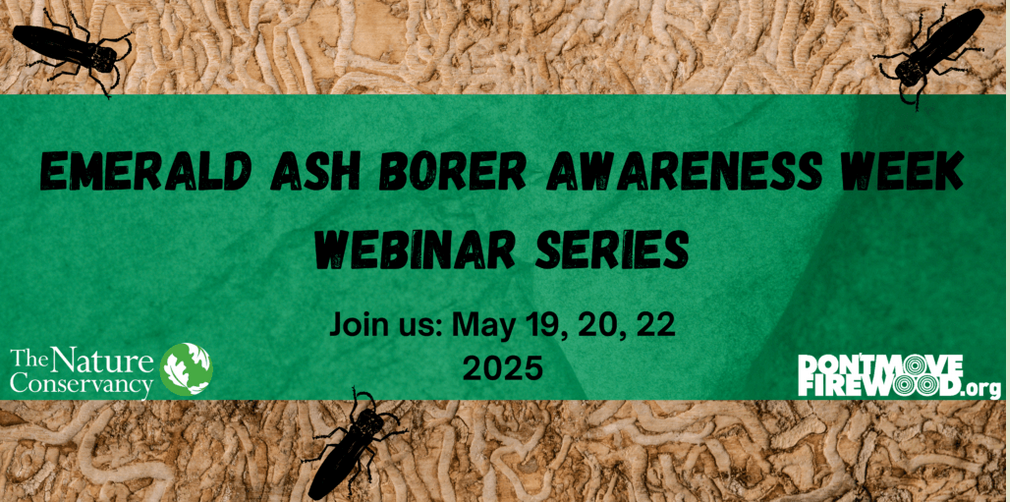
| | | Emerald Ash Borer Awareness Week is May 18-25, 2025 | Protect the places you love! Emerald Ash Borer has not been found in Arizona, but has been identified in the neighboring state of Colorado. Check out this webinar series to stay informed on this invasive insect spreading westward, including effective communication framing for social media. |
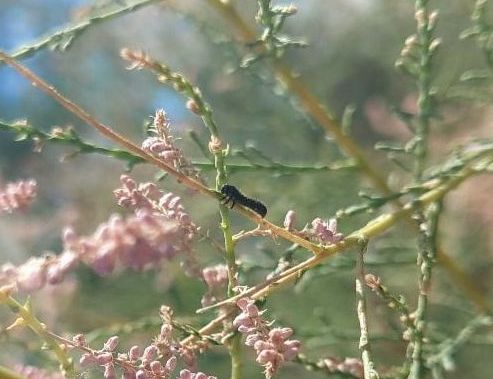
Image: A tamarisk leaf beetle in the larva stage. |
2024 Tamarisk Beetle Map
The tamarisk beetle (Diorhabda spp.) is a biological control agent introduced in 2001 to target invasive tamarisk (Tamarix spp.).
RiversEdge West has published a Tamarisk Beetle Map each year since 2007 with beetle presence and absence data submitted by observers across the southwestern US and Mexico. In 2024, they received 199 observations of tamarisk beetles and 63 absence observations. Observations were submitted by partners in 7 states plus Mexico. Check out the map and learn more using the button below.
| | AZ DFFM 2024 Wildland Fire Report | Each year, AZ DFFM produces a report on Wildland Fire Conditions and Information. This includes total fires, the number of acres burned, and a projected outlook for 2025. |
New Guide Helps Communities Find Funding For Open Space
The Center for Creative Land Recycling and WRT, a team of urban planners and landscape architects, partnered to create a guide designed to address a lack of financial strategy and institutional capacity, the top concerns communities have when approaching park development. This guide includes tips, examples, helpful resources and case studies to inspire and propel your park, land reuse, and/or brownfield projects to completion.
| | |
-
DFFM Invasive Plant Grant - Funding for the prevention, control, and eradication of nonnative invasive plants in Arizona - Deadline: May 28, 2025
-
National Fish and Wildlife Foundation: Acres for America - Funding for projects in the United States that conserve important large-scale habitats for fish, wildlife, and plants through voluntary land acquisitions and perpetual conservation easements- Deadline: May 20, 2025 for pre-proposals
| | | |
-
May 14: Soil Solutions for Water Scarcity - Hear from successful ranchers and scientists about practical strategies to improve soil health and what that means for drought resilience, profitability, and the health of working lands and watersheds.
| | | |
-
Weekly on Saturdays: Nature Play for kids at the Boyce Thompson Arboretum - Superior, AZ
| | | |
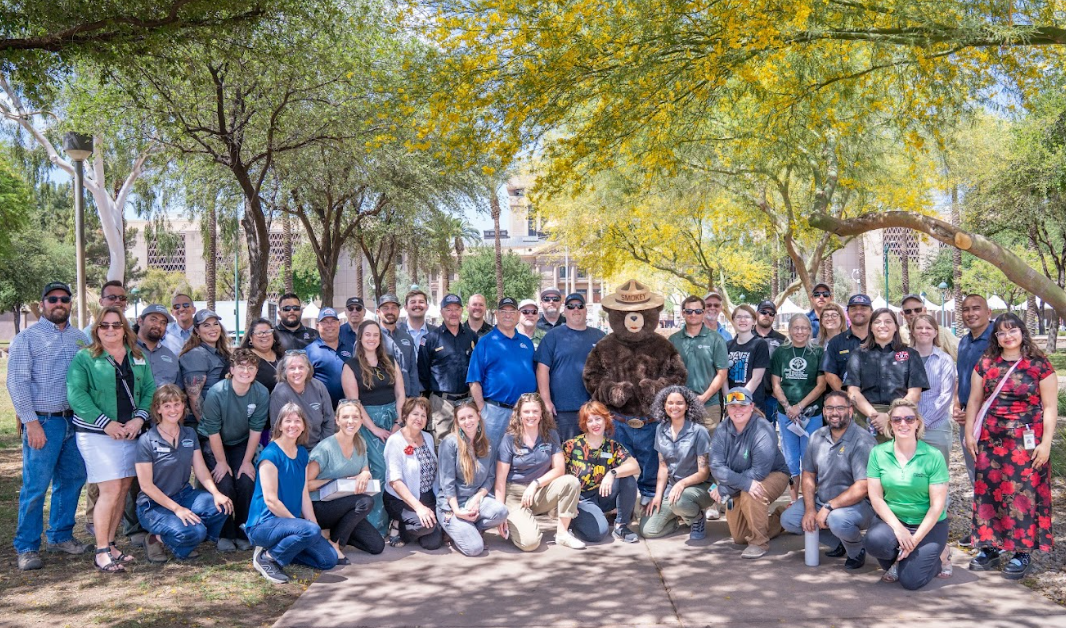
Image: A group photo from the 2025 Arizona Arbor Day Celebration.
Thank you to everyone who joined us to celebrate, in-person and virtually!
| | Next month, our Forest Health team will share information regarding invasive plants. Stay tuned! | | | |
Our Statewide Forestry Programs are made possible with assistance from the USDA Forest Service.
In accordance with Federal law and U.S. Department of Agriculture policy, this
institution is prohibited from discriminating on the basis of race, color, national origin, sex, age, or disability.
Suggestions or comments? Contact Megan Lasley, Forestry Outreach Coordinator at mlasley@dffm.az.gov
| | |
John Richardson, Assistant State Forester - Forestry Programs
jrichardson@dffm.az.gov
(602) 771-1420
Cori Dolan, Deputy Assistant State Forester
cdolan@dffm.az.gov
(520) 262-5519
LoriAnne Barnett Warren, Specialized Forestry Program Administrator
lwarren@dffm.az.gov
(602) 399-9447
Madeline Burton, Urban and Community Forestry Program Manager
mburton@dffm.az.gov
(480) 769-4184
Alison Faller, Urban and Community Forestry Specialist
afaller@dffm.az.gov
(602) 739-9763
Timara Crichlow, Urban and Community Forestry Specialist
tcrichlow@dffm.az.gov
(480) 978-6551
| |  | |
Aly McAlexander, Forest Health Program Manager
amcalexander@dffm.az.gov
(602) 290-9644
Viri Quinonez, Forest Health Specialist
vquinonez@dffm.az.gov
(480) 349-7585
Mike Juarez, Forest Health Technician
mjuarez@dffm.az.gov
(623-606-2624)
Jessi Szopinski, Invasive Plant Program Specialist
jszopinski@dffm.az.gov
(602) 291-4167
Matthew Jewell, Forest Legacy Program Manager
mjewell@dffm.az.gov
(520) 260-0476
Megan Lasley, Forestry Outreach Coordinator
mlasley@dffm.az.gov
(602) 206-9830
Wolfgang Grunberg, GIS & Data Supervisor
wgrunberg@dffm.az.gov
(602) 399-1886
| | | | |