|
Public Policy Center | uaex.uada.edu/ballot | |
| Federal Judge Pauses Canvasser Laws | |
New election laws requiring Arkansas voters to read ballot titles and show their photo ID before signing ballot measure petitions are on hold after a Nov. 19 federal judge said the laws likely violate the First Amendment of the U.S. Constitution.
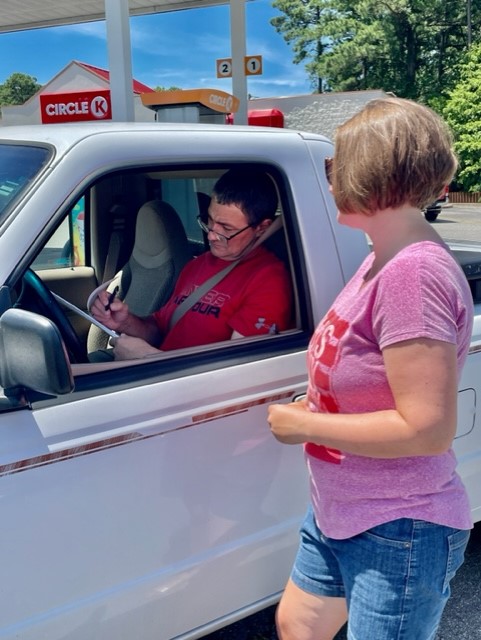
Arkansans volunteering to collect voter signatures for potential 2026 ballot issues faced misdemeanor and felony charges if they did not check identification, tell voters that petition fraud was a crime, and witness voters read the petition’s ballot.
U.S. District Court Judge Timothy Brooks issued a 77-page memorandum opinion and order on Nov. 19, nearly two months after a day-long court hearing in Fayetteville over the constitutionality of multiple laws passed by Arkansas legislators regulating the citizen initiative process. The laws, including an eighth-grade reading level limit on ballot measure titles, did not apply to constitutional amendments referred by the legislature.
“In the General Assembly’s book, high rates of signature invalidation under the existing, highly regulated petition validation system are only evidence that the system has failed, not that the system has worked,” Brooks wrote in his memorandum. “These high rates of invalidation are used to justify more regulation, which will inevitably result in even higher rates of invalidation, justifying even more regulation and steadily chipping away at the right to direct democracy enshrined in the Arkansas Constitution.”
At the beginning of the year, Secretary of State Cole Jester gave the citizen initiative process a "D" grade on his Election Security Assessment Report Card because of invalid signatures, voters not proving their identity, and voters not being aware of what they were signing when putting their signature on a petition. During the 2025 legislative session, sponsors of many of the paused laws said they were pursuing them as a way to reinforce voters' trust in the citizen initiative process. Over the summer, the Heritage Foundation, a conservative research and policy advocacy organization, hailed Arkansas for passing various election laws. The foundation ranked Arkansas first out of states for election integrity.
Attorney General Tim Griffin, who was dismissed as a defendant in the federal lawsuit, can appeal the judge’s ruling on behalf of the state to the 8th Circuit Court of Appeals. But in the meantime, citizen-led campaigns involved in the lawsuit can go forward without many of the new laws that they’d described as burdensome.
"I feel good," said David Couch, one of the attorneys representing the League of Women Voters of Arkansas and others in a lawsuit against Jester. The League of Women Voters of Arkansas is part of Save AR Democracy, a ballot question committee seeking a spot on the 2026 statewide ballot for a constitutional amendment clarifying components of Arkansas' citizen initiative process. Arkansans have had the citizen initiative process for more than 100 years and is the only state in the south where citizens can propose referendums, state laws and constitutional amendments.
"I thought it was right and even on the things he did not enter a preliminary injunction on, like residency, and disqualifying offenses, I think that from the comments that he made on his opinion that at the final hearing on the merits we can prove those matters to be unconstitutional as well," Couch said on Nov. 20.
As of today, records show the Attorney General's Office has certified five ballot titles for signature gathering. Sponsors of three of those ballot titles were involved in the federal lawsuit.
Brooks said in his order he plans to make a final ruling in the lawsuit before the November 2026 General Election. On Friday, Nov. 21, he set a Dec. 2 scheduling conference with attorneys.
Laws On Hold
Brooks issued a preliminary injunction temporarily preventing the state from enforcing several laws against the people involved in the lawsuit. His Nov. 19 ruling specified that the following laws were enjoined against one or all of the lawsuit parties.
All Groups Involved
-
Brooks wrote that the Secretary of State's Office could not disclose or facilitate disclosure "to any member of the public any information provided" by the three plaintiffs to satisfy Arkansas Code § 7-9-601, which requires paid canvassers to submit their names and residences to the Secretary of State before collecting voter signatures. He wrote that the law was likely unconstitutional.
-
Act 218 - A 2025 law that requires canvassers to inform voters that “petition fraud is a criminal offense,” and makes it a misdemeanor to fail to tell voters before they sign a petition.
-
Act 240 - A 2025 law that requires voters to prove their identity by showing their photo ID to canvassers before signing a petition.
-
Act 274 - A 2025 law that requires canvassers to read the ballot title to voters before collecting their signatures, and makes it a misdemeanor for canvassers to knowingly accept signatures when they have not read the ballot title.
Save AR Democracy
-
Act 241 - A 2025 law that requires canvassers to submit an affidavit alongside the voter signatures they collected certifying they complied with the law. After the canvasser submits the affidavit, they may not collect additional signatures until the Secretary of State certifies the ballot title for a cure period.
-
Act 453 - This 2025 law requires paid canvassers collecting signatures for statewide ballot measures be "domiciliaries of Arkansas. Domicile requires actual residence in a place plus the intent to make that place one’s fixed and permanent abode."
Protect AR Rights
-
Act 602 - This law requires ballot titles for statewide citizen initiatives to score no higher than an 8th grade reading level on the Flesch Kincaid Grade Level Formula test. Although Protect AR Rights had its ballot title certified by the Attorney General, the federal judge recognized the Secretary of State could technically reject voter signatures over questions related to the ballot title's reading level. The Attorney General said the ballot title scored at Grade 9.2 but "I have made a few minor changes to the ballot title that enable it to meet the requirements of Act 602." Brooks' order said the Secretary of State could not enforce Act 602 against Protect AR Rights.
Additional Unconstitutional Laws
-
Brooks said the law prohibiting people with certain criminal offenses from collecting voter signatures is likely unconstitutional. However, Arkansas Code § 7-9-601(d) is not on hold as the lawsuit moves forward to a final resolution.
-
A law requiring citizen initiative groups to reimburse the state for the cost of publishing ballot titles in a newspaper is likely unconstitutional, Brooks wrote. However, Arkansas Code § 7-9-113(a)(2)(A) is not on the list of enjoined laws. This part of the process doesn't come into play until next fall. "Selection of ballot measures on the basis of ability to pay publication costs without providing any alternatives means is likewise not a reasonable and nondiscriminatory method of furthering the State’s important regulatory interests," Brooks wrote in the Wednesday ruling.
Laws Not on Hold
-
Ballot issue groups will still have to collect voter signatures from 50 counties. Protect AR Rights and For AR Kids challenged the law, which legislators passed in 2023. The Arkansas Constitution says signatures must come from at least 15 counties, which legislators said was a "floor" rather than the limit of how many counties could be required. Brooks said the law, Arkansas Code § 7-9-126(e) did not violate the First Amendment. A separate lawsuit challenge continues in state court.
-
Brooks wrote that plaintiffs didn't convincingly show that Arkansas Code § 7-9-601(g)(1), a law banning campaigns from paying canvassers based on the number of voter signatures they gathered, was likely unconstitutional.
|
| | Status Update - Arkansas Ballot Issue Lawsuits | | |
Name: League of Women Voters of Arkansas, Save AR Democracy, Bonnie Heather Miller and Danielle Quesnell vs. Secretary of State Cole Jester (5:25-cv-05087)
Intervening Plaintiffs: Protect AR Rights and For AR Kids
Date Filed: April 21, 2025
Court: Judge Timothy L. Brooks, U.S. District Court for the Western District of Arkansas in Fayetteville
Complaint: The lawsuit challenges Act 218, Act 240, Act 241 and Act 274 of 2025. The complaint also lists specific state laws, including § 7-9-601, § 7-9-103(a)(6), § 7-9-126(4), and § 7-9-113(a)(2)(A). Intervenors are also challenging: Act 602 of 2025, § 7-9-126(e), and § 7-9-601(a)(2)(C).
Status: Judge Brooks issued a preliminary injunction on Nov. 19 on several challenged laws. See the main article above.
Note: The federal court system uses an online record system that is behind a paywall. Some lawsuit documents that have already been "purchased" are publicly available at https://www.courtlistener.com/docket/69919853/league-of-women-voters-of-arkansas-v-jester/.
| | |
Name: Bryan King and The League of Women Voters of Arkansas vs. Secretary of State John Thurston (presumably now Cole Jester) (60CV-23-1816)
Date Filed: March 10, 2023
Court: Circuit Court Judge Shawn Johnson, Pulaski County Circuit Court
Complaint: The lawsuit challenges Act 236 of 2023, which increased the number of counties that citizens needed to collect voter signatures from to qualify constitutional amendments and state laws for the statewide ballot—from 15 counties to 50 counties.
Status: On Nov. 5, attorney David Couch submitted a letter to the court along with an Arkansas Supreme Court opinion and a law journal article to support the League of Women Voters of Arkansas' argument that the law is unconstitutional. Judge Johnson held a court hearing on Sept. 3. No decision has been filed with the court yet. Johnson inherited the two-year-old lawsuit after the original judge changed elected office.
Note: Sen. King is no longer a party to the lawsuit as his role was dismissed, but his name remains on the case.
| | |
Name: State of Arkansas vs. Good Day Farm (CV-24-704)
Date Filed: Oct. 21, 2024
Court: Arkansas Supreme Court
Complaint: The state appealed a Pulaski County Circuit Court judge's 2023 decision that Arkansas legislators did not have the authority to make changes to the constitutional amendment voters approved in 2016 that allowed medical marijuana sales and possession in Arkansas. Good Day Farm and Capital City successfully argued that legislators were required to ask voters through the statewide ballot to make changes to Amendment 98. They based their claim on a 1951 Arkansas Supreme Court decision that said it was "inconceivable" that Arkansans meant to give legislators the ability to repeal or change constitutional amendments in the very amendment that allowed citizens to refer measures to the voters to decide. Amendment 98 allowed legislators to make limited changes without voter approval but the two licensed marijuana businesses said the legislature went beyond that scope. The legislature has made 28 changes to the medical marijuana amendment since 2016.
Status: The online court docket shows a Nov. 20 entry of "case submitted" by an attorney for the state.
| | On the 2026 Ballot - From the Legislature | | |
Arkansas voters will see three proposed constitutional amendments from the legislature on their November 2026 statewide ballot along with one bond issue question. The Arkansas Secretary of State will assign ballot issue numbers to the three amendments in 2026.
HJR1018 - The Citizens Only Voting Amendment
SJR11 - A Constitutional Amendment to amend Arkansas Constitution, Article 2, § 5, to protect the right to keep and bear arms.
SJR15 - A Constitutional Amendment concerning economic development in the state of Arkansas; and authorizing the General Assembly to provide for the creation of economic development districts to promote economic development.
Question 1 - Arkansas Water, Waste Disposal, and Pollution Abatement Facilities Financing Act of 2025
| | Citizen Proposals for the 2026 Ballot | | |
Arkansas is one of 15 states where citizens have the right to put constitutional amendments, state laws and referendums on the ballot for voters to decide. It is the only state in the south with this robust form of direct democracy.
The citizen initiative process involves filing a ballot title with the Attorney General's Office, collecting voter signatures across the state and submitting the petitions to the Secretary of State's Office for verification.
Referendums require voter signatures equaling 6% of the number of people who voted in the last governor's election. State laws require 8%, and constitutional amendments require 10%
Attorney General Opinions
The Attorney General is responsible for reviewing the language and titles of potential ballot issues submitted to voters by the public. Ballot issue groups can circulate petitions only after the Attorney General verifies that the ballot title and popular name honestly, intelligibly and fairly describe the purpose of a proposed constitutional amendment or act, and that the wording of ballot titles scores at an eighth grade reading level on the Flesch-Kincaid test.
Find the full list: Tracking Arkansas 2026 Ballot Issues
Ballot Proposals Rejected
Nov. 4, 2025 - The Clean and Healthy Natural Environment Amendment
A proposed constitutional amendment proposing to give Arkansans the fundamental right to a clean and healthy environment was rejected because of flaws with the proposed text of the amendment, including the uncertainty of which government agencies would be affected and the meaning of "fundamental right," according to Opinion No. 2025-110. Jennifer Waymack Standerfer submitted the proposed amendment.
This is the second time the AG has rejected the proposal. See Opinion No. 2025-098 (October 2025).
Ballot Proposals Approved for Signature Gathering
July 28, 2025 - The Arkansas Ballot Measure Rights Amendment
A proposed constitutional amendment regarding changes to the citizen initiative process was approved for signature gathering, according to Opinion No 2025-056. Jennifer Waymack Standerfer with Protect AR Rights submitted the proposed amendment.
May 21, 2025 - An Amendment Concerning Constitutional Amendments, Initiated Acts, and Referendums
A proposed constitutional amendment regarding changes to the citizen initiative process was approved for signature gathering, according to Opinion No. 2025-033. David Couch of Little Rock submitted the proposed amendment.
Feb. 26, 2025 - The Arkansas Educational Rights Amendment of 2026
A proposal to require identical academic and accreditation standards for schools receiving state or local funds was approved for signature gathering, according to Opinion No. 2025-016. April Reisma and Kwami Abdul-Bey of Little Rock submitted the proposed amendment. Note: This proposal is identical to the ballot title approved Sept. 19, 2024.
July 18, 2024 - The Arkansas Government Disclosure Amendment of 2026
A proposal establishing government's obligation to share and deliver information to citizens as a right was approved for signature gathering, according to Opinion No. 2024-070. Robert Steinbuch submitted the proposed amendment.
July 18, 2024 - An Act to Exempt Feminine Hygiene Products and Diapers from Sales and Use Tax
A proposal to exempt period products and diapers from local and state sales tax was approved, according to Opinion No. 2024-068. David Couch of Little Rock submitted the proposed law.
| |
PPC's Online County Government Course Now Live
| | | | |
Want to learn more about the roles and responsibilities of elected county officials? Interested in how counties pay for services?
Sign up for Introduction to County Government in Arkansas, a free online course offered by the University of Arkansas System Division of Agriculture.
This self-guided course includes four sections.
- An overview of county government
- Mandated and non-mandated services
- Roles and responsibilities of elected county officials
- How counties are funded
To sign up for the course, create a free account at https://learn.uada.edu.
| | | |
The Public Policy Center is part of the Community, Professional and Economic Development unit at the Arkansas Cooperative Extension Service in Little Rock. As the blog's editor, we wanted to share recent publications.
| | We use #ARballot on Social Media | | Voter Education Resources | | |
Did someone share this email with you?
Subscribe to find Arkansas Ballot Issues News & Notes in your inbox every month.
| | |
The Public Policy Center was established in 2004 to provide Arkansans with timely, credible, unaligned and research-based information and education about public issues. Public issues are defined as pressing and emerging issues that involve multiple points of view and have widespread consequences.
Our goals are to:
- Increase citizen knowledge, awareness and understanding of public issues;
- Enhance public participation in decisions regarding public issues, and
- Help citizens craft, evaluate and implement alternative solutions to public issues.
We are part of the Community, Professional and Economic Development unit at the University of Arkansas System Division of Agriculture, Cooperative Extension Service in Little Rock.
News & Notes Volume 12, Issue 11. This e-mail newsletter is shared with Cooperative Extension Service agents, subscribers from the general public and election officials or educators identified by the Public Policy Center. To unsubscribe, click below on "instant removal with SafeUnsubscribe."
Pursuant to 7 CFR § 15.3, the University of Arkansas System Division of Agriculture offers all its Extension and Research programs and services (including employment) without regard to race, color, sex, national origin, religion, age, disability, marital or veteran status, genetic information, sexual preference, pregnancy or any other legally protected status, and is an equal opportunity institution.
| | | | |