Public Policy Center | uaex.uada.edu/ballot

Facebook  Instagram  LinkedIn

April 2026

Debate Over How Voters Sign Registration Forms Heads to Federal Appeals Court

Arkansans routinely sign their name digitally for a purchase at the store or to check in for a doctor's appointment. On Election Day, they use a stylus to sign their name on electronic poll books before casting votes on touch-screen voting machines. But whether Arkansans can use their finger, a computer mouse or a stylus to electronically sign their name on a voter registration form is at the center of an appeal headed to the full 8th U.S. Circuit Court of Appeals.


Arkansas is one of eight states that does not allow people to register to vote online. Forty-two other states, in addition to Washington, D.C., Guam and the Virgin Islands, offer online registration, according to the National Conference of State Legislators.


To register to vote in Arkansas, adults must complete a paper form with a pen and mail the document. They can also drop off the form in person at their county clerk's office. Arkansans are also asked if they want to register to vote when they obtain a driver's license or state identification card at a DMV. There, the request is done electronically.


Arkansas legislators introduced proposed laws at least three times to create an online voter registration system - during the 2025, 2023, and 2021 legislative sessions - but those proposals died when the sessions ended.


Background


In January 2024, Get Loud Arkansas began offering Arkansans an online option to fill out the Arkansas voter registration application form, which was then printed off and mailed to county clerks to process. The civic engagement group pursued an online option to increase voter registration in Arkansas, which with 1.7 million registered voters has one of the lowest election turnout rates in the country. Organization leaders had contacted the Secretary of State's Office to confirm that electronic signatures on the forms would be accepted.


Amendment 51 to the state's 1874 constitution regulates voter registration and calls for applicants to complete the form with a "signature or mark" to confirm they are legally able to register to vote in Arkansas.


Several days after a news article featured Get Loud Arkansas voter registration efforts, the Arkansas Secretary of State's Office told county election officials to stop accepting paper registration forms completed with an electronic signature. The State Board of Election Commissioners passed an emergency rule and later a final rule requiring potential voters to complete registration forms with a "wet signature," or a signature created by a person physically moving an ink pen across the form.


Get Loud Arkansas and several Arkansans who had registered to vote with an electronic signature filed a lawsuit on June 5, 2024, saying the new rule violated the Civil Rights Act of 1964. A section of the federal law says "no person acting under the color of law" can deny a person to vote because of "an error or omission on any record or paper relating to any application, registration, or other act requisite to voting, if such error or omission is not material in determining whether such individual is qualified under state law to vote."


Civil Rights Violation or Proof of Identity?


A U.S. district court judge in Fayetteville put the rule on hold in August 2024. In September 2024, a three-judge panel from the 8th U.S. Circuit Court of Appeals allowed the state to enforce its rule while a second panel reviewed the lawsuit.


While attorneys for Get Loud Arkansas shared how county officials didn't use application signatures to determine a person's identity or their eligibility to vote, attorneys for the state said hand-written signatures reduced voter registration fraud and helped prove people's identities.


On March 31, 2026, in a 2-1 decision, the appeals panel ruled in favor of Get Loud Arkansas. The majority opinion ruled that Get Loud Arkansas and the others who sued were harmed by the rule and inability to register voters, and that the district court judge had not erred in stopping the rule's enforcement.


On April 8, the Arkansas State Board of Election Commissioners voted to appeal the panel decision. State election officials want the full 11-member 8th U.S. Circuit Court of Appeals to hear the facts and decide whether Get Loud Arkansas or anyone else can fill out voter registration application forms in Arkansas with an electronic signature. The state's appeal was filed April 14. This lawsuit is No. 5:24-cv-05121.


In the meantime, Get Loud Arkansas has revived their online voter registration application form.


Note: The federal government uses an online court record system called PACER, which requires users to create an account and provide a credit card number. There is a charge for court record searches and to view results. Because of this, we may link to other organizations that provide copies of the documents involved.

Plan Ahead - Important 2026 Election Dates

  • July 3 - Deadline for citizen initiative groups to submit voter signature petitions to Secretary of State's Office
    
  • July 29 - Filing starts for candidates for city offices


  • August 20 - Deadline for Secretary of State to send out the official statewide ballot to county election officials, including the assignment of ballot issue numbers


  • September 18 - Absentee ballots are available for people who submitted applications.


  • October 5 - Deadline to register to vote ahead of November General Election
    
  • October 19 - Early voting starts in Arkansas
    
  • October 27 - Last day for Arkansans to request absentee ballots be mailed to them


  • October 30 - Last day to return absentee ballot in person
    
  • November 3 - Election Day and last day for absentee ballot to be delivered by mail from local voters


  • November 13 - Last day for absentee ballot to arrive in mail from overseas or military voters


Status Update - Arkansas Ballot Issue Lawsuits

Name: League of Women Voters of Arkansas, Save AR Democracy, Bonnie Heather Miller and Danielle Quesnell vs. Secretary of State Cole Jester (5:25-cv-05087)


Intervening Plaintiffs: Protect AR Rights and For AR Kids


Date Filed: April 21, 2025


Court: Judge Timothy L. Brooks, U.S. District Court for the Western District of Arkansas in Fayetteville


Complaint: The lawsuit challenges Act 218, Act 240, Act 241 and Act 274 of 2025. The complaint also lists specific state laws, including § 7-9-601, § 7-9-103(a)(6), § 7-9-126(4), and § 7-9-113(a)(2)(A). Intervenors are also challenging: Act 602 of 2025, § 7-9-126(e), and § 7-9-601(a)(2)(C).


Status: On April 1, 2026, attorneys for the state asked Judge Brooks to dismiss the lawsuit. On April 17, 2026, all plaintiffs asked Brooks to issue a final decision finding the challenged laws unconstitutional. Previously, the judge had said he would hold a bench trial during his scheduled two weeks for trials starting July 20. He has issued a temporary stay ahead of the trial.


Note: The federal court system uses an online record system that is behind a paywall. Some lawsuit documents that have already been "purchased" are publicly available at https://www.courtlistener.com/docket/69919853/league-of-women-voters-of-arkansas-v-jester/.

Appeal of Brooks' pause on new Arkansas canvassing laws shown above (No. 25-3389)


Name: League of Women Voters of Arkansas, et al v. Cole Jester


Date Filed: Dec. 1, 2025


Court: U.S. Court of Appeals 8th Circuit


Complaint: The appeal challenges Brooks' order to pause enforcement of several new Arkansas canvasser laws ahead of a July trial. See court case above for list of laws.


Status: State attorneys filed a brief on April 20 arguing Brooks was wrong in his decision to issue a stay and asked the federal appeals court to reverse Brooks' decision.


Note: The federal court system uses an online record system that is behind a paywall.

Name: Bryan King and The League of Women Voters of Arkansas vs. Secretary of State John Thurston (presumably now Cole Jester) (60CV-23-1816)


Date Filed: March 10, 2023


Court: Circuit Court Judge Shawn Johnson, Pulaski County Circuit Court


Complaint: The lawsuit challenges Act 236 of 2023, which increased the number of counties that citizens needed to collect voter signatures from to qualify constitutional amendments and state laws for the statewide ballotfrom 15 counties to 50 counties.


Status: On Feb. 24, an attorney for the state filed a notice that the state would appeal the judge's recent decision that Act 236 was unconstitutional with the Arkansas Supreme Court, as well as the judge's decision not to dismiss the lawsuit. On March 15, attorney David Couch filed a notice that the 2024 decision to dismiss Sen. King from the lawsuit would be appealed. A previous judge on the case, Herbert Wright, Jr., dismissed King from participating. Johnson inherited the lawsuit when Wright was elected to another position.

On the 2026 Ballot - From the Legislature

Arkansas legislature

Arkansas voters will see three proposed constitutional amendments from the legislature on their November statewide ballot along with one bond issue question. The Arkansas Secretary of State will assign ballot issue numbers to the three amendments later this year.


HJR1018 - The Citizens Only Voting Amendment


SJR11 - A Constitutional Amendment to amend Arkansas Constitution, Article 2, § 5, to protect the right to keep and bear arms.


SJR15 - A Constitutional Amendment concerning economic development in the state of Arkansas; and authorizing the General Assembly to provide for the creation of economic development districts to promote economic development.


Question 1 - Arkansas Water, Waste Disposal, and Pollution Abatement Facilities Financing Act of 2025


Download our handout

Citizen Proposals for the 2026 Ballot

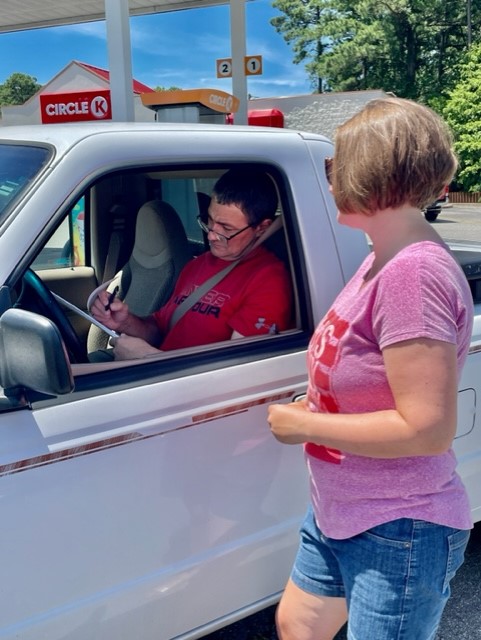
A man sitting in a truck signs a petition while the canvasser stands next to the truck window.

Arkansas is one of 15 states where citizens have the right to put constitutional amendments, state laws and referendums on the ballot for voters to decide. It is the only state in the south with this robust form of direct democracy.


The citizen initiative process involves filing a ballot title with the Attorney General's Office, collecting voter signatures across the state and submitting the petitions to the Secretary of State's Office for verification.


Referendums require voter signatures equaling 6% of the number of people who voted in the last governor's election. State laws require 8%, and constitutional amendments require 10%


Attorney General Opinions

The Attorney General is responsible for reviewing the language and titles of potential ballot issues submitted to voters by the public. Ballot issue groups can circulate petitions only after the Attorney General verifies that the ballot title and popular name honestly, intelligibly and fairly describe the purpose of a proposed constitutional amendment or act, and that the wording of ballot titles scores at an eighth grade reading level on the Flesch-Kincaid test.


Find the full list: Tracking Arkansas 2026 Ballot Issues


Recently Rejected Ballot Proposals


April 7, 2026 - The Natural Environment Amendment

A proposed constitutional amendment to give Arkansans the right to a clean and healthy natural environment was rejected because the ballot title contains "material provisions that do not appear in the ballot title, and these provisions would likely give voters 'serious ground for reflection,' and their absence from the ballot title could render it misleading by omission, according to Opinion No. 2026-034. The ballot title did score at an eighth grade reading level as required by Act 602 of 2025. Jennifer Waymack Standerfer submitted the proposed amendment.


Ballot Proposals Approved for Signature Gathering


April 3, 2026 - The Constable Amendment of 2026

A proposed constitutional amendment eliminating the role of constable from the Arkansas Constitution was approved for signature gathering, according to Opinion No. 2026-031. David E. Dinwiddie of Pine Bluff submitted the proposed amendment.


April 2, 2026 - The Justice of the Peace Terms of Office Amendment of 2026

A proposed constitutional amendment seeking to change Justice of the Peace terms from two years in office to four years was approved for signature gathering, according to Opinion No. 2026-030. David E. Dinwiddie of Pine Bluff submitted the proposed amendment.


July 28, 2025 - The Arkansas Ballot Measure Rights Amendment

A proposed constitutional amendment regarding changes to the citizen initiative process was approved for signature gathering, according to Opinion No 2025-056. Jennifer Waymack Standerfer with Protect AR Rights submitted the proposed amendment.


May 21, 2025 - An Amendment Concerning Constitutional Amendments, Initiated Acts, and Referendums

A proposed constitutional amendment regarding changes to the citizen initiative process was approved for signature gathering, according to Opinion No. 2025-033. David Couch of Little Rock submitted the proposed amendment. 


Feb. 26, 2025 - The Arkansas Educational Rights Amendment of 2026

A proposal to require identical academic and accreditation standards for schools receiving state or local funds was approved for signature gathering, according to Opinion No. 2025-016. April Reisma and Kwami Abdul-Bey of Little Rock submitted the proposed amendment. Note: This proposal is identical to the ballot title approved Sept. 19, 2024.


July 18, 2024 - The Arkansas Government Disclosure Amendment of 2026

A proposal establishing government's obligation to share and deliver information to citizens as a right was approved for signature gathering, according to Opinion No. 2024-070. Robert Steinbuch submitted the proposed amendment.


July 18, 2024 - An Act to Exempt Feminine Hygiene Products and Diapers from Sales and Use Tax

A proposal to exempt period products and diapers from local and state sales tax was approved, according to Opinion No. 2024-068. David Couch of Little Rock submitted the proposed law.

Online Course: County Government 101

Want to learn more about the roles and responsibilities of elected county officials? Sign up for Introduction to County Government in Arkansas, a free online course offered by the University of Arkansas System Division of Agriculture.


This self-guided course includes four sections:


  • An overview of county government
  • Mandated and non-mandated services
  • Roles and responsibilities of elected county officials
  • How counties are funded


Create a free account at https://learn.uada.edu.

PPC On the Radio

In case you missed it: Kristin Higgins from the Public Policy Center recently sat down with KUAF reporter Casey Mann to discuss low voter turnout in Arkansas.


"Oftentimes when we're learning about history, we're learning about national government. We're learning about the past of the United States. But we might not be learning about the past of our community and how that past has shaped the current day. So the gap is there - we're not talking enough or being educated enough about local government and the role it plays in people's lives," Higgins said.


Listen

New On Our Blog

The Public Policy Center is part of the Community, Professional and Economic Development unit at the Arkansas Cooperative Extension Service in Little Rock. As the blog's editor, we wanted to share recent publications.


We use #ARballot on Social Media

Voter Education Resources


State Ballot Issues

Access Our Information

Learn About Arkansas Process


Voter Resources

Link to Arkansas Election Resources & Handouts


Local Ballot Issues

Access Local Election

Fact Sheets


Blog

Read our department blog at Strengthening Arkansas Communities


Ballot Issue Tracker

Links to AG Opinions for 2026 ballot

Approved & Rejected Ballot Titles

Archive

Research past Arkansas ballot issues in our Archive


Did someone share this email with you? 

Subscribe to find Arkansas Ballot Issues News & Notes in your inbox every month.


The Public Policy Center was established in 2004 to provide Arkansans with timely, credible, unaligned and research-based information and education about public issues. Public issues are defined as pressing and emerging issues that involve multiple points of view and have widespread consequences.


Our goals are to:

  • Increase citizen knowledge, awareness and understanding of public issues;
  • Enhance public participation in decisions regarding public issues, and
  • Help citizens craft, evaluate and implement alternative solutions to public issues.


We are part of the Community, Professional and Economic Development unit at the University of Arkansas System Division of Agriculture, Cooperative Extension Service in Little Rock.


News & Notes Volume 13, Issue 4. This e-mail newsletter is shared with Cooperative Extension Service agents, subscribers from the general public and election officials or educators identified by the Public Policy Center. To unsubscribe, click below on "instant removal with SafeUnsubscribe."


Pursuant to 7 CFR § 15.3, the University of Arkansas System Division of Agriculture offers all its Extension and Research programs and services (including employment) without regard to race, color, sex, national origin, religion, age, disability, marital or veteran status, genetic information, sexual preference, pregnancy or any other legally protected status, and is an equal opportunity institution.