One Vision, One Mission. Community Banks.

Wednesday, December 17, 2025

Sponsored by: SHAZAM | BHG Financial | Sawyers & Jacobs


 No copyright infringement intended

Having trouble viewing? " View as Webpage"

Vendor * Spotlight

Click logo to hear more or click

here visit their website

Consumer harm from credit union acquisitions


new op-ed from ICBA President and CEO Rebeca Romero Rainey breaks down ICBA’s data analysis showing that when credit unions purchase community banks, consumers and local communities are harmed. 


ICBA’s analysis shows that tax-exempt credit union purchases of tax-paying community banks results in diminished lending, reduced opportunities for small businesses, and fewer resources for the high-poverty areas that Congress subsidizes credit unions to serve.


To expand the tax base and encourage a competitive financial services marketplace, lawmakers should treat credit unions with over $1 billion in assets the way they operate—like tax-paying commercial banks. 


The American Prospect details how some credit unions are taking advantage of their industry’s tax and regulatory exemptions to stray from their roots and acquire tax-paying competition.


Tyfone op-ed from ICBA Past Chairman Brad Bolton and ICBA leadership community banker Ken Hale spotlights why policymakers should examine credit union acquisitions of community banks.  


In previous op-eds in the Natchitoches Parish Journal and the Shreveport Bossier Journal, Hale details how credit union acquisitions of community banks harm local communities.  


Recent op-eds in American Banker and RealClear Markets target the credit union tax exemption following ongoing ICBA advocacy.  

Source: ICBA

Executive order proposes national AI framework


The order proposed removing state-level artificial intelligence laws and installing a national standard and said:


  • State-by-state regulation creates a patchwork of 50 different regulatory regimes that makes compliance more challenging.
  • The administration must act with Congress to ensure there is a minimally burdensome national standard, and the resulting framework must forbid state laws that conflict with the national policy.


ICBA in October called on the White House to harmonize the regulatory framework for AI to address ambiguities inhibiting its adoption.


ICBA in September told Congress that while AI has the potential to help community banks meet regulatory burdens and expand access to credit, thoughtful regulation is needed to ensure innovation does not come at the expense of consumer protection or financial stability.


Prior to the release of an AI Action Plan earlier this year, ICBA told the National Science Foundation that AI has the potential to improve efficiency, strengthen risk management, and enhance customer service, but regulatory frameworks must evolve.

Source: ICBA

More concentration of authority


The US Supreme Court appears ready to give the administration greater authority over independent federal agencies, questioning a long-standing precedent that protects agency officials from at-will removal, Bloomberg News reported.


During recent arguments, the Supreme Court's conservative majority signaled support for allowing the president to fire members of independent agencies, such as the Federal Trade Commission, at will.


The challenge targets the 1935 Humphrey's Executor decision, which upheld job protections for independent agency commissioners and paved the way for the creation of many such agencies.

Source: S&P Global Market Intelligence


An article from Celerit


Machine Learning vs. AI:
Ironing Out the Confusion


"The terms Artificial Intelligence (AI) and Machine Learning (ML) are often used interchangeably, but they’re not the same. In fact, most of the time people say “AI,” they’re actually talking about Machine Learning (ML). Understanding the distinction is crucial for anyone navigating the modern tech landscape."


In this article from ACB Associate Member Celerit, they drill into the difference between AI and ML, demystify common misconceptions, and explore why clarity in this terminology matters - ESPECIALLY FOR PEOPLE WANTING TO AVOID AI. Machine Learning is not the same thing.


Click here to learn more.

Source: Celerit

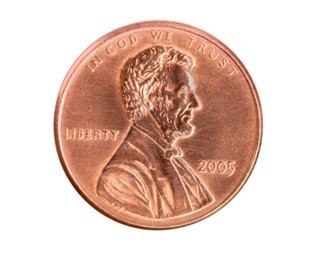
How community banks are navigating the end of penny production


new ICBA article spotlights how community bankers are responding to the federal government officially discontinuing production of new pennies.


Based in part on conversations on ICBA Community, the new article notes that community bankers are applying rounding rules for cash transactions, limiting penny withdrawals, working with core providers, engaging community members, and more.


The end of minting pennies was called for in February given the cost, though there has not been any formal announcement from the Treasury Department. The U.S. Mint last month struck the final circulating one-cent coin, marking the official end of the penny’s 232-year production run.


recent blog post from the Federal Reserve Bank of Atlanta examines possible rounding methods the United States could use when penny production is phased out.


The Federal Reserve Board previously released frequently asked questions on anticipated changes to penny ordering and deposits following the Treasury Department decision to end penny production.

Source: S&P Global Market Intelligence

IORB is vital to financial system


Ahead of a hearing on the Federal Reserve’s policy of paying interest on reserve balances (IORB) to financial institutions that maintain balances at the Fed, ICBA told senators that the IORB is important to community banks and the financial system.


In a statement for the record for Thursday’s Senate Homeland Security and Governmental Affairs Committee  hearing on the IORB, ICBA:

  • Said it hopes the hearing will dispel misunderstandings concerning IORB, including the mistaken argument that IORB costs taxpayers and that its elimination would save taxpayer dollars.
  • Noted IORB’s importance to effective monetary policy and to community banks and the broader financial system.
  • Said disruption and interest rate spikes would result if the program was eliminated.


The Senate in October voted against adding a ban on interest on reserves to the National Defense Authorization Act. Senators voted 83-14 against an amendment sponsored by Sen. Rand Paul (R-Ky.) that would have banned the Fed from paying interest on reserves and the overnight reverse repo program. 

Source: ICBA

CISA cybersecurity performance goals


The Cybersecurity and Infrastructure Security Agency released updated Cross-Sector Cybersecurity Performance Goals (CPG 2.0), which include actions for critical infrastructure owners and operators to achieve a foundational level of cybersecurity. 


CISA said the update:

  • Incorporates lessons learned, aligns with recent National Institute of Standards and Technology Cybersecurity Framework revisions, and addresses the most common and impactful threats facing critical infrastructure today.
  • Includes a new component focused on the essential role of governance in managing cybersecurity.


Source: CISA

OCC confirms permissible principal cryptoasset transactions activities


The OCC confirmed permissible bank activities related to riskless principal transactions in cryptoassets.  


In an interpretive letter, the OCC said:  

  • A national bank may engage in riskless principal cryptoasset transactions as part of the business of banking.  
  • Such transactions involve a bank acting as principal in a cryptoasset transaction with one customer while entering into an offsetting transaction with another customer. 
  • In these transactions, the bank does not hold the cryptoassets in inventory, serving as an intermediary in a capacity equivalent to a broker acting as an agent. 


The interpretive letter is the latest step by prudential and markets regulators to issue guidance on a variety of cryptoasset products and services.

  • The OCC last month confirmed permissible bank activities related to paying cryptoasset network fees and said that a national bank may hold amounts of cryptoassets as principal necessary for testing otherwise permissible cryptoasset-related platforms.  
  • The SEC in October indicated it would permit registered funds and advisers to use state trust companies to custody cryptoassets.
  • The federal banking agencies in July issued a joint statement to provide clarity on banks' engagement in cryptoasset-related activities, highlighting potential risk-management considerations related to holding cryptoassets on customers' behalf.
  • The Working Group on Digital Asset Markets in July released recommendations for digital financial technology. 

Source: OCC

FHA extends MFA deadline for Connection system


The Federal Housing Administration extended its phishing-resistant multi-factor authentication implementation requirement for the FHA Connection system to Jan. 5.

The FHA said users must implement the phishing-resistant MFA to be able to continue accessing FHAC. Users can click “OKTA Setup” on the FHAC home page to start the process. 


Source: FHA

FDIC delays signage rule compliance until 2027Your 


At its board meeting, the FDIC 
extended the compliance date for its final rule on signage and advertising requirements.


The rule sets forth signage requirements on insured depository institutions’ digital deposit-taking channels, ATMs, and like devices. The compliance date, which was initially slated for Jan. 1, 2025, has been delayed until Jan. 1, 2027.


The FDIC in August proposed amending regulations governing the display of the FDIC official digital sign and non-deposit signage. The proposed changes were intended to revise requirements adopted in a 2023 final rule that established FDIC official digital sign and required signage for ATMs and digital banking channels.


ICBA Education offers an FDIC Signage and Advertisement Requirements Policy designed to help community banks adhere to the regulations.


Source: FDIC; ICBA

ACB Logo no tag